Add your name here to check for editing access:
- Ghina Absi
- Andrew Jernejcic
- Luis Ortega
- Spencer Gribben
- Katia Floyd
- Ellery Schulz
- Maura Walldorf
- Adrienne Stone
- Ethan Clark
- Charlotte Cruickshank
- Megan Kapacs
- Mukhammad Jumaboev
So much good art in Spain!
Day 0: Flying to Madrid
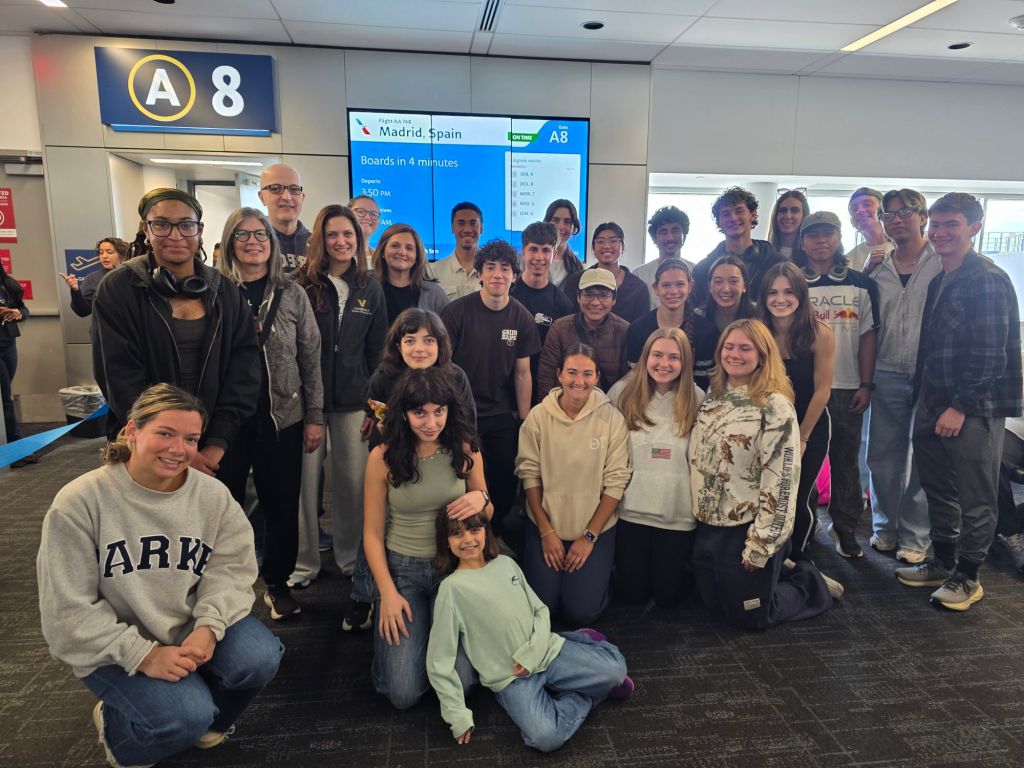
It is 2.44Est, we are gathering at our gate to board our Madrid flight.
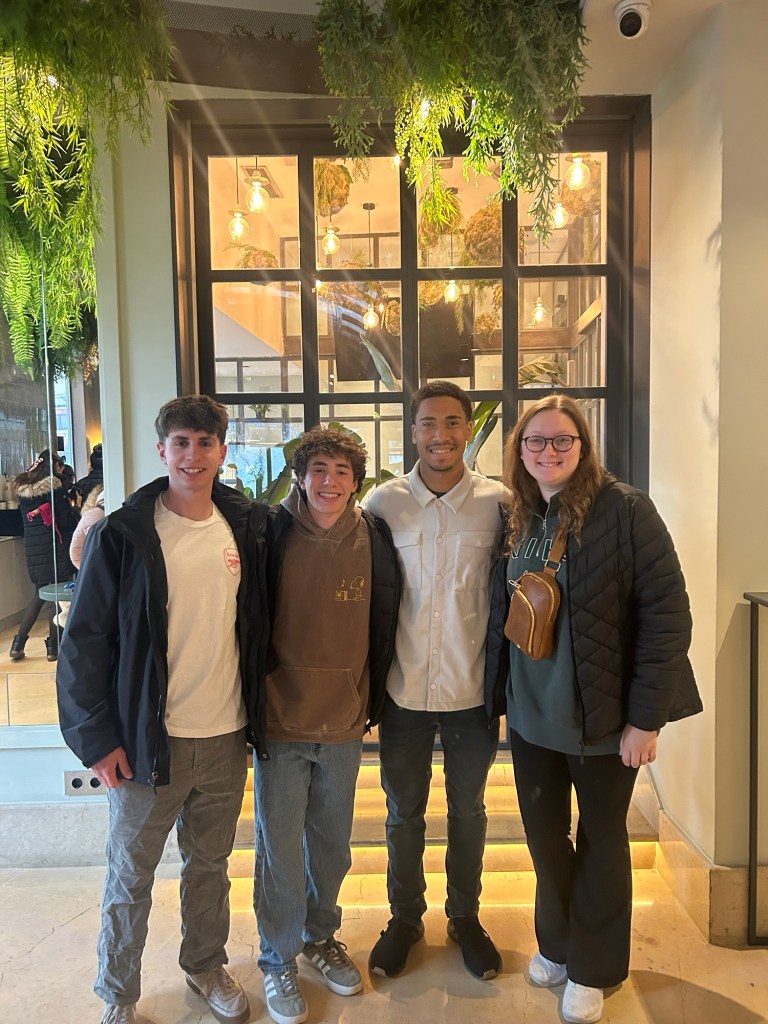
The Charlotte flight was short and smooth, everyone’s excited for the trip! One last group picture and we will be headed out!
It is 5.30am in Madrid, and we just landed safely! Smooth flight also. Not much sleep, so it will be a long (but awesome!) day 😀
It’s now 10.30am. We had a quick breakfast at the airport earlier, took a bus to the hotel and had out API orientation. We are on a walking tour of our neighborhood now:
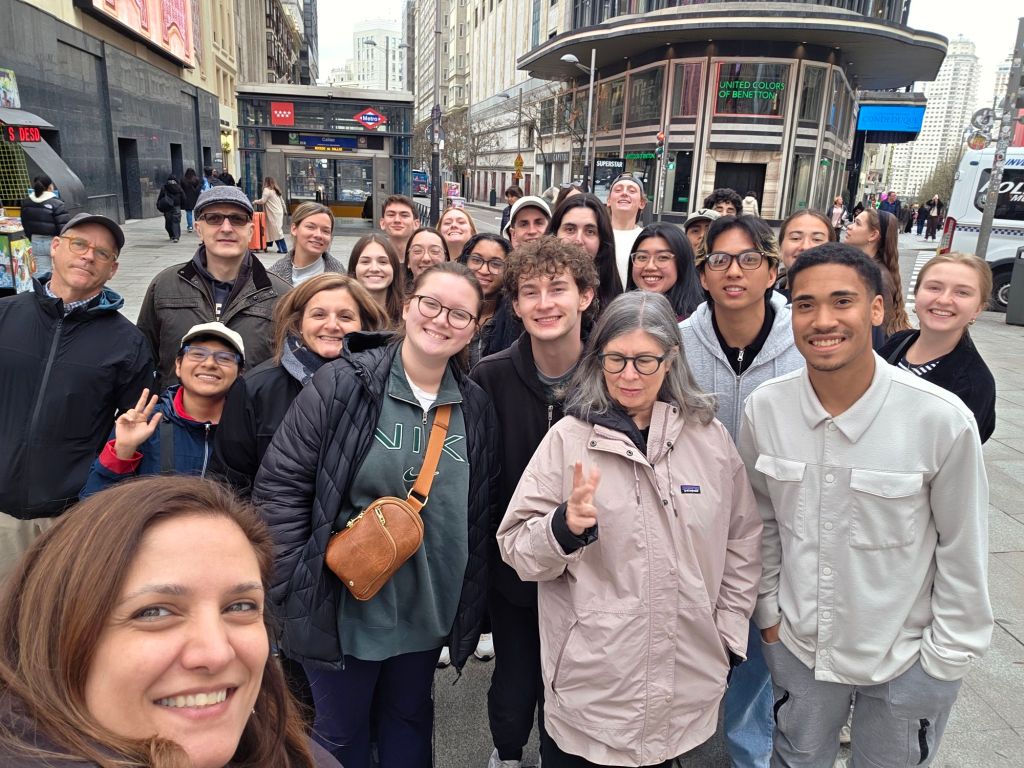
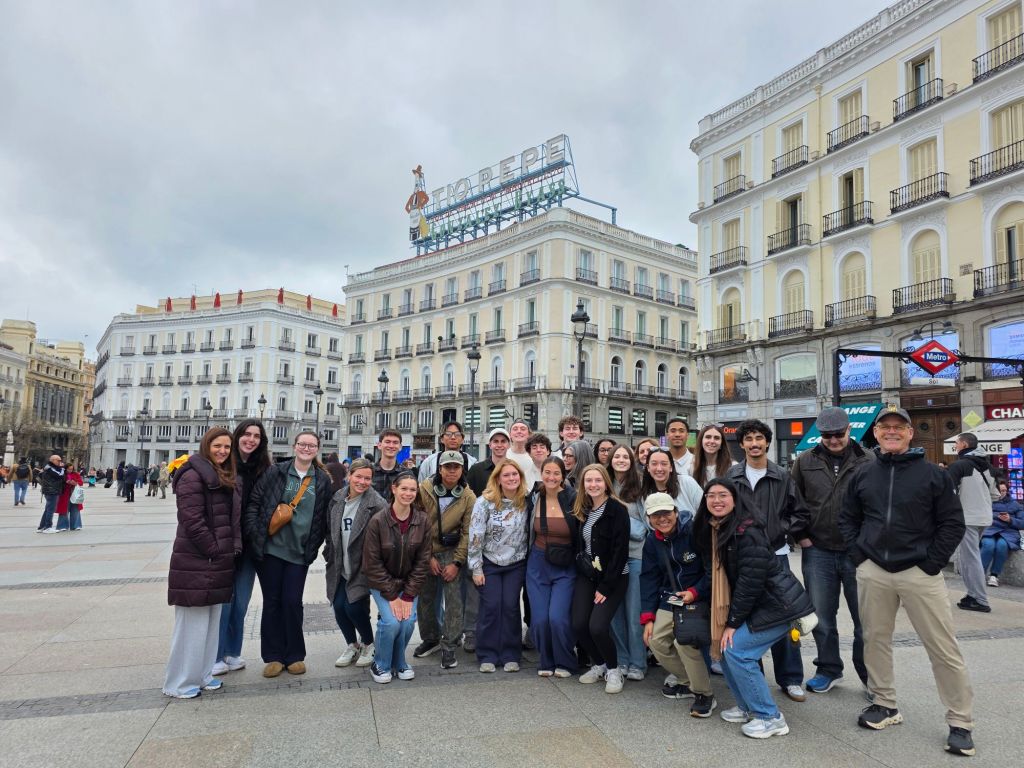
Puerta del Sol is so close to our hotel!
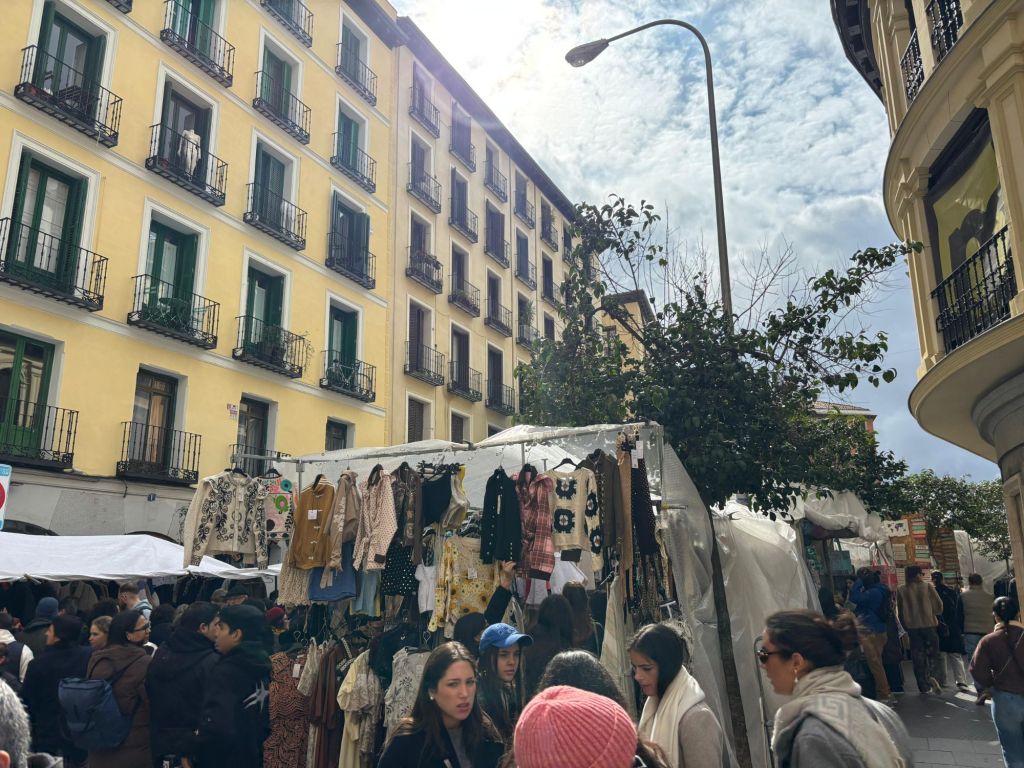
Some of us wanted to go to the flea market, and some of us found it a bit overwhelming… it was SO crowded…
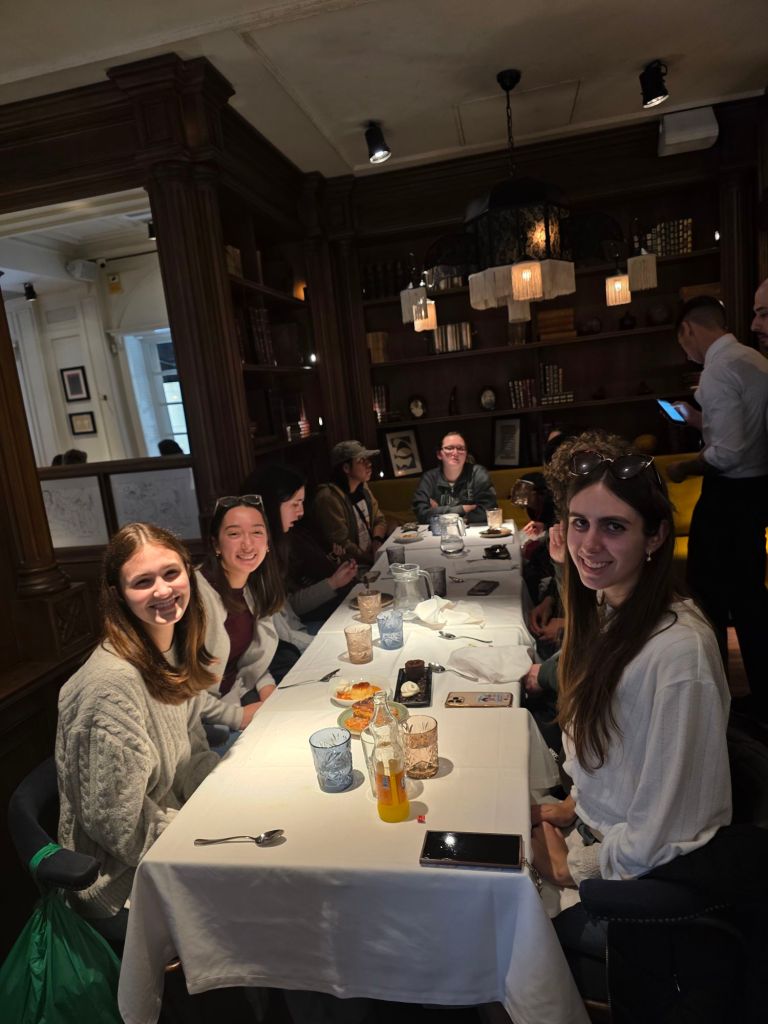
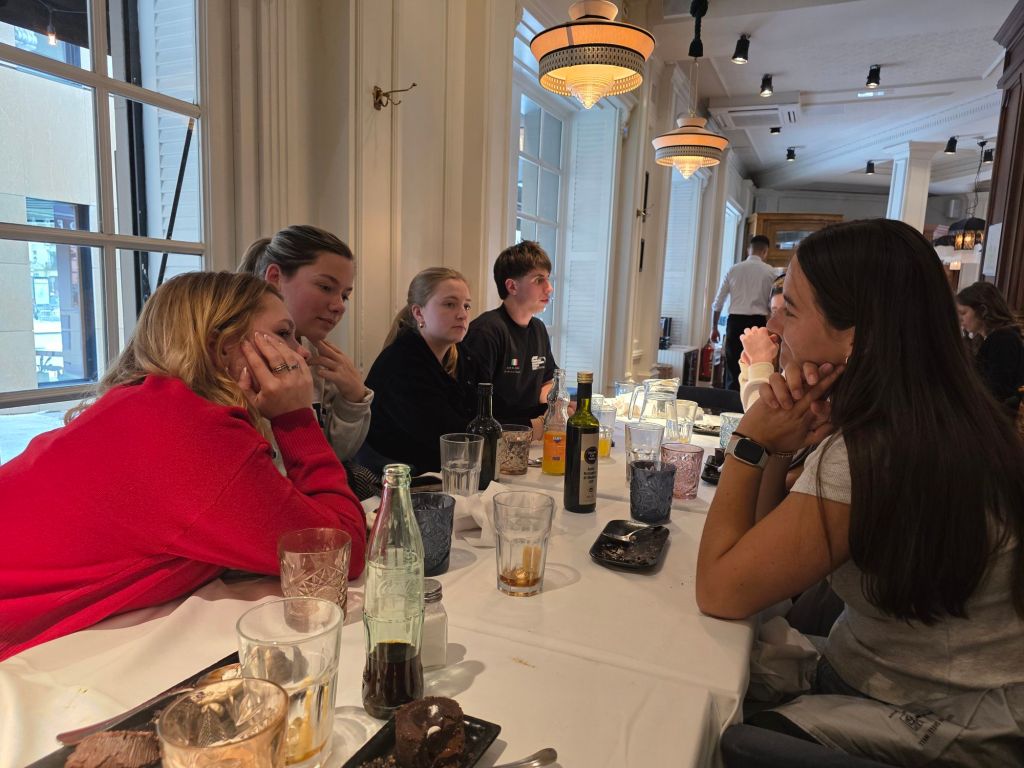
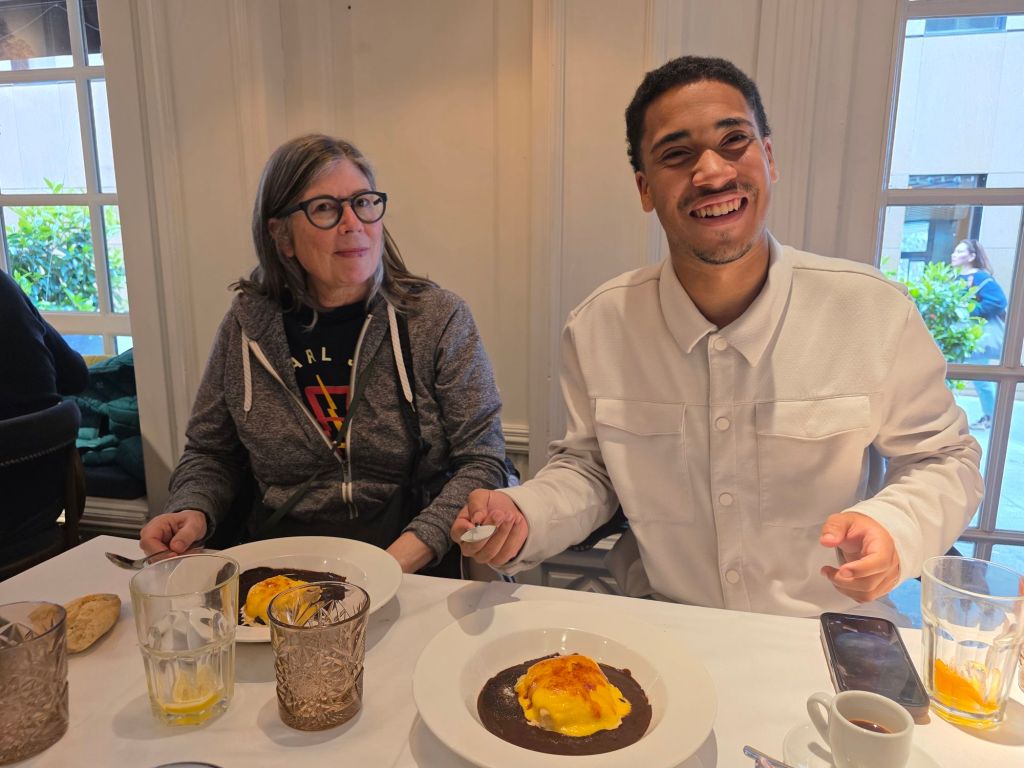
We then went to the Opera Victoria for lunch (that felt more like a late dinner to this exhausted bunch). We had some really good food options, and some exotic ones too: fried pork ears, baby octopus… We were way too hungry to stop for food pictures.
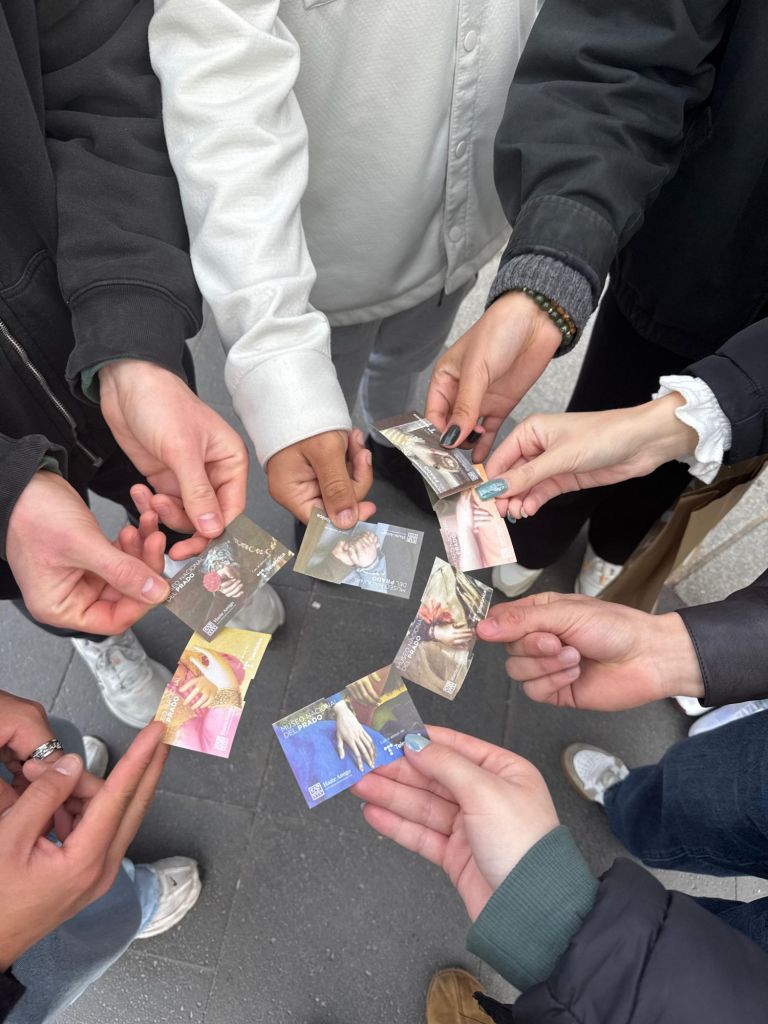
Some made it to the Prado Museum in the evening
Day 1: Group 1
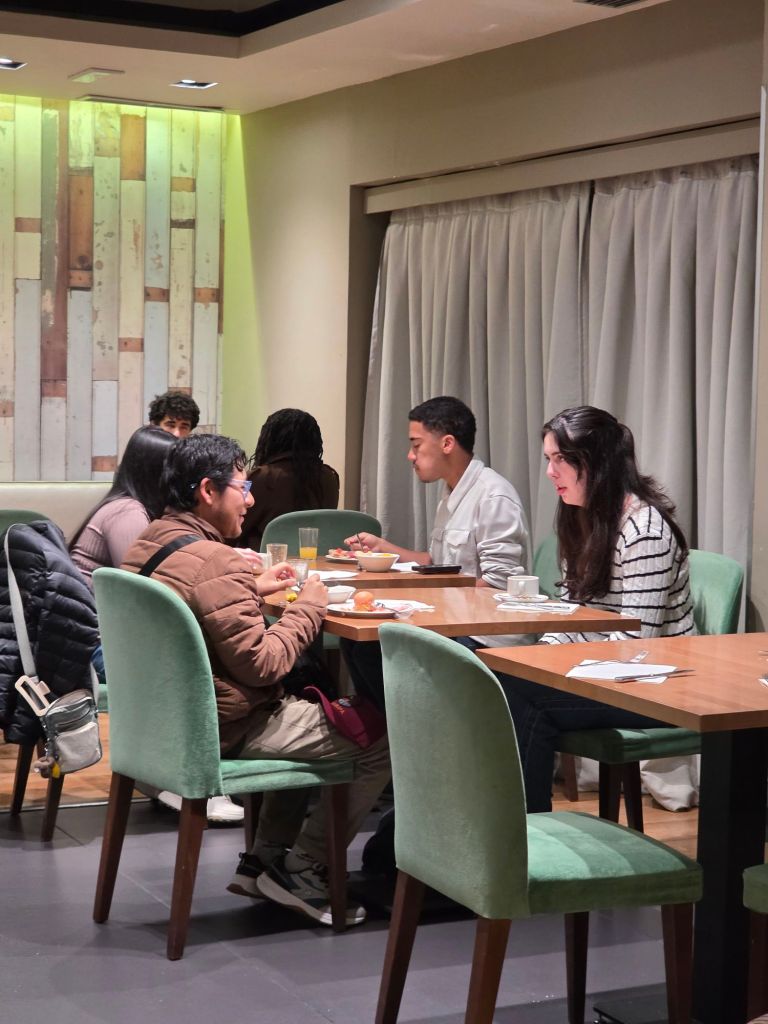
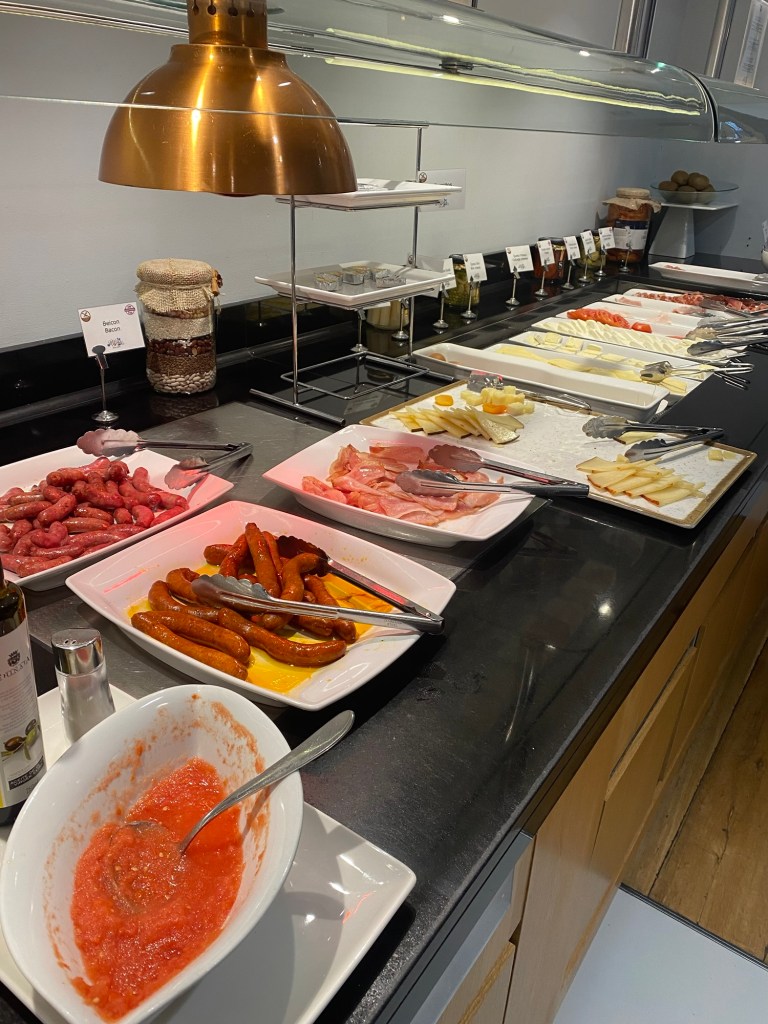
Breakfast time!
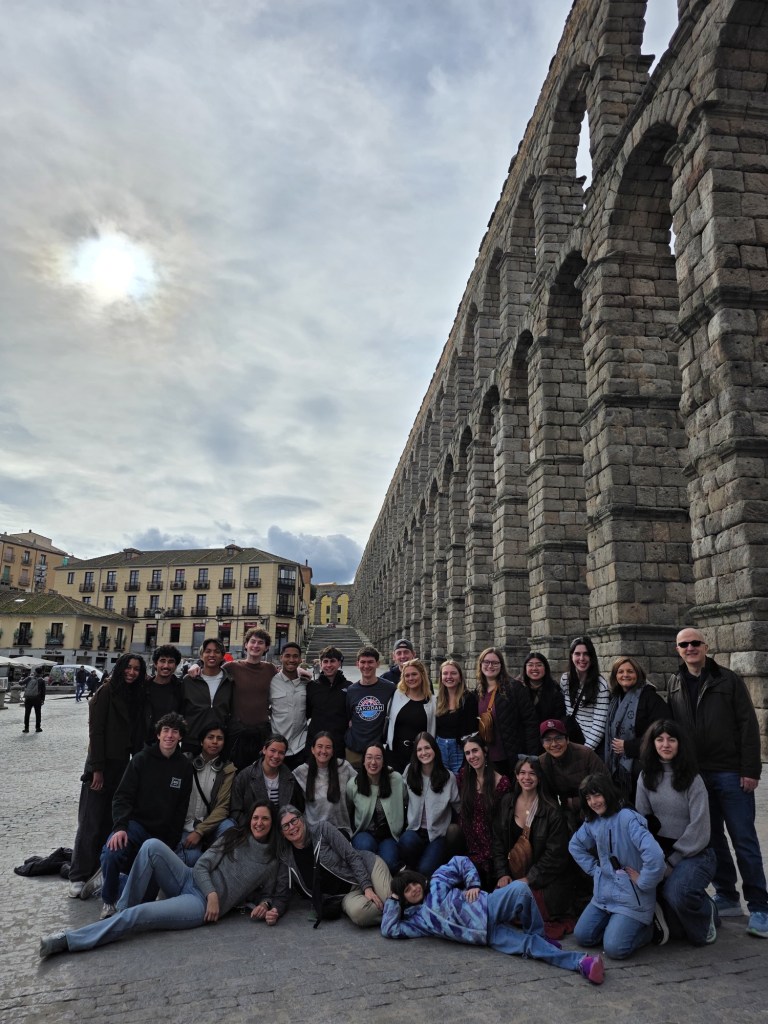
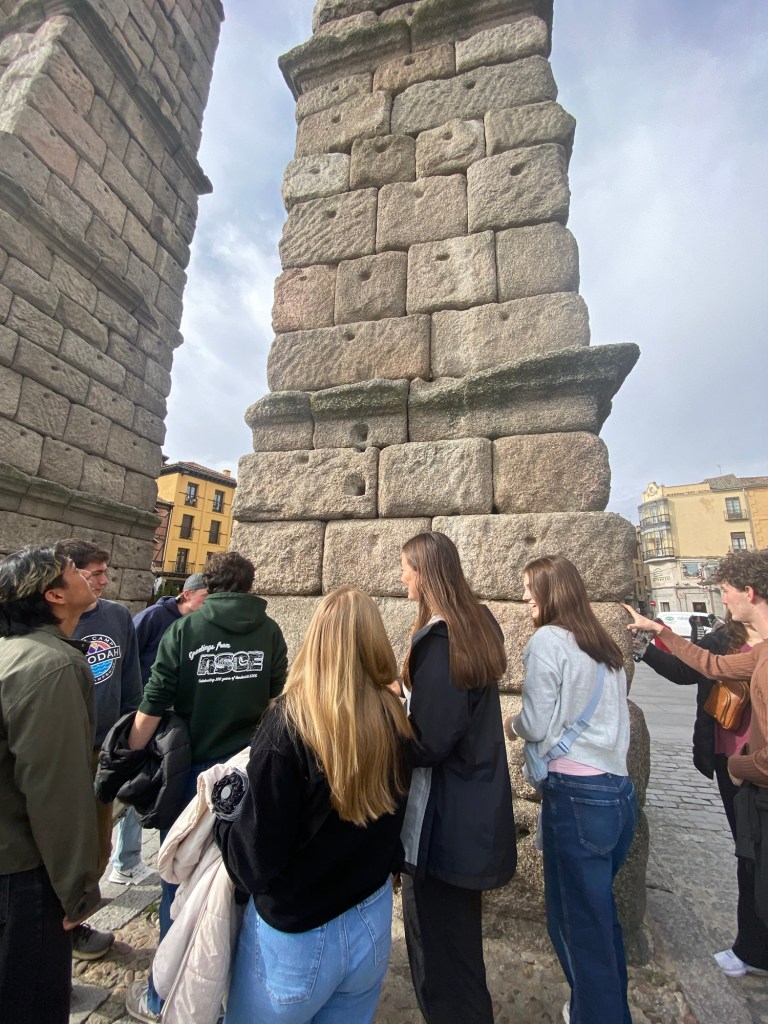
Our tour of Segovia began at the aqueducts. Our tour guide passed out the ear pieces, and we began the walking tour!
Our Segovia tour guide, Javier, was amazing! He was very enthusiastic for every single thing to see.
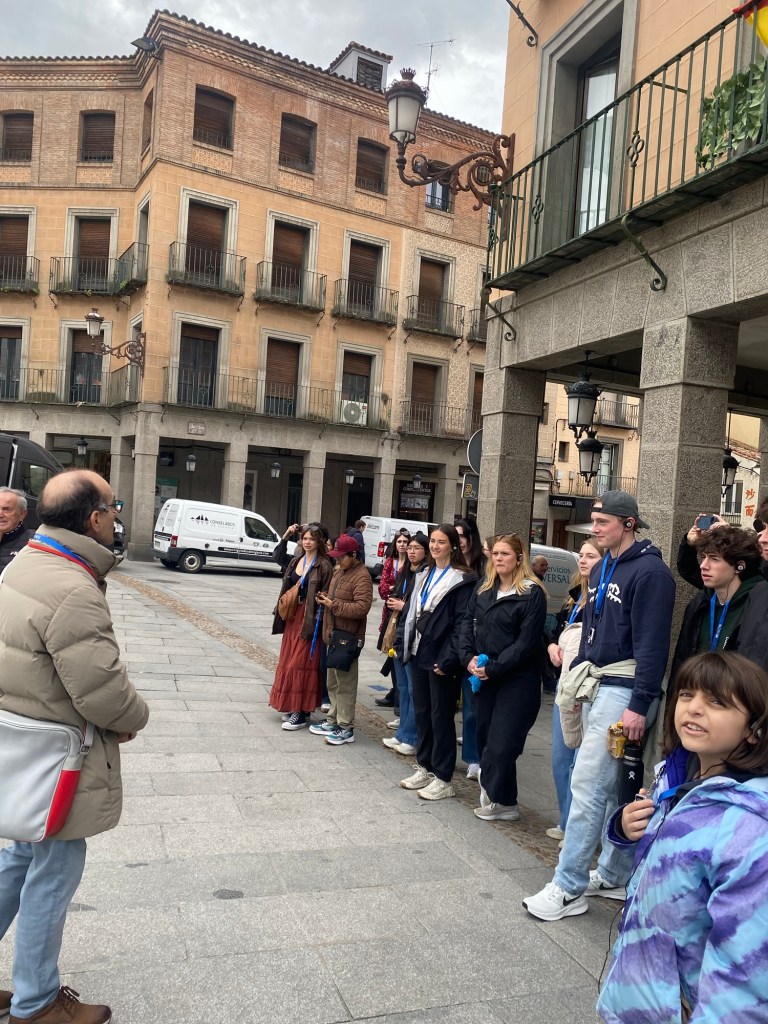
Javier stated that the slope of the aqueduct was between 0.3%-0.6% slope.
How tall is the aqueduct? 90 feet!
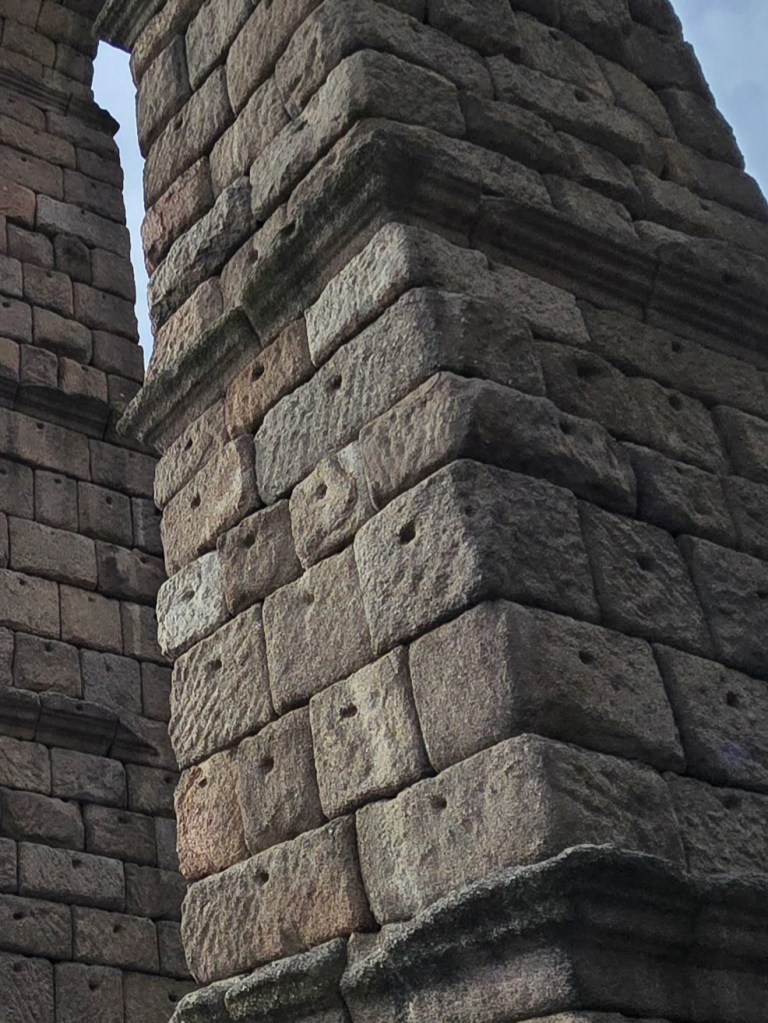
Each base stone is 2,000 kg! These holes were drilled to hook each stone and to lift it using a simple pulley system. Every stone was placed one by one using this method.
The Plaza Mayor of Segovia had buildings (restuarants and little shops) in a rectangular outline. This design allowed for the walkways to be blocked off, and allow for bull fighting to take place in the square. The balconies on the second level of the buildings were perfect for viewing of the events.
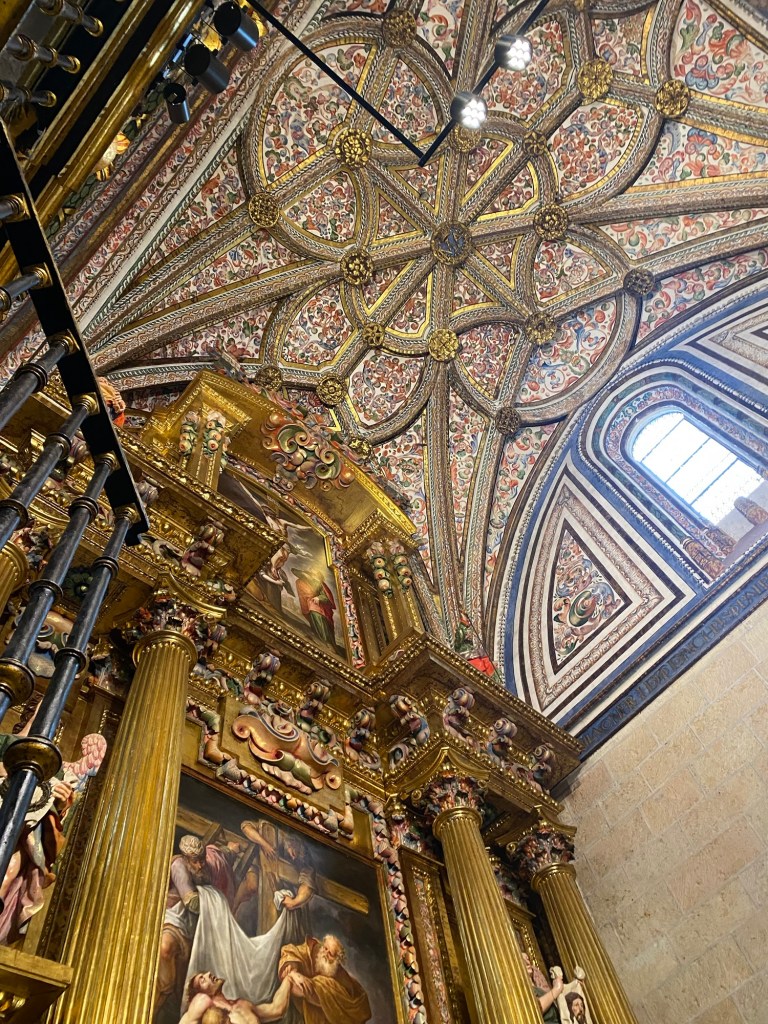
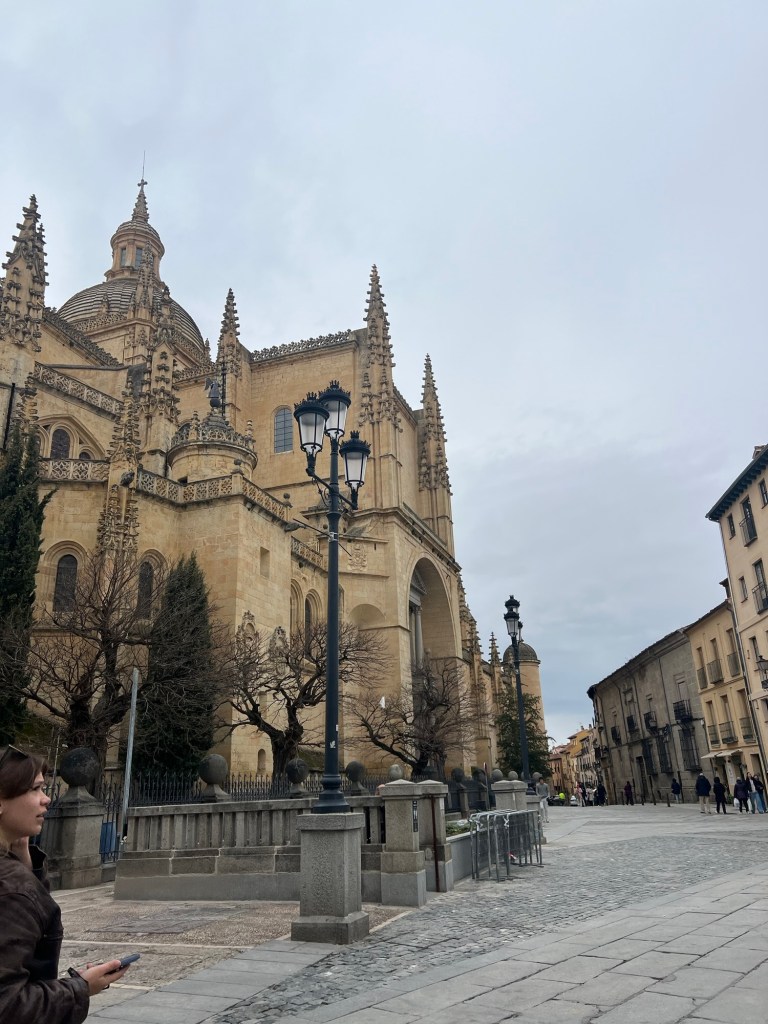
The baroque architecture was elaborate and beautiful. Notice that columns are a prominent feature. Inside the cathedral we saw multiple stained glass windows, painting, and 2 traditional Spanish organs (horizontal pipes) also called Spanish horns.
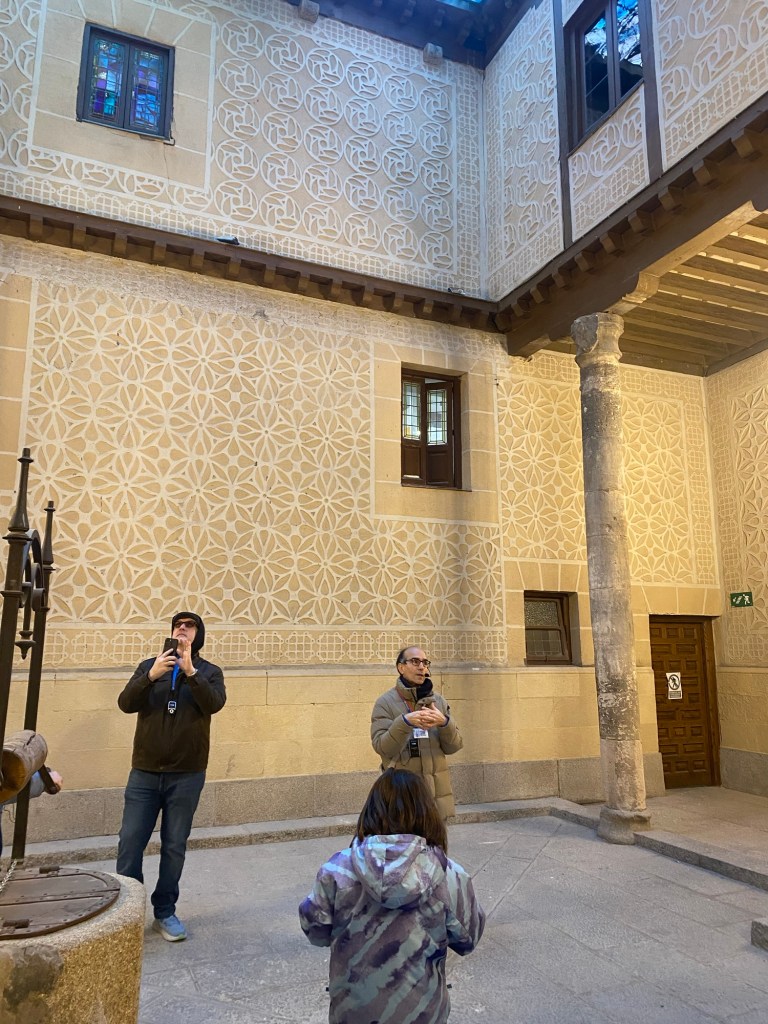
We learned about how Jewish, Christian, and Muslim people lived in ancient Segovia, and how each neighborhood had their own gates to enter their homes so that they did not have to cross into the other ethnic neighborhoods. Such as the Porta de Sol in the Jewish neighborhood of Segovia.
“One two three, uno dos tres, un deux trois, forward we go!” -Javier
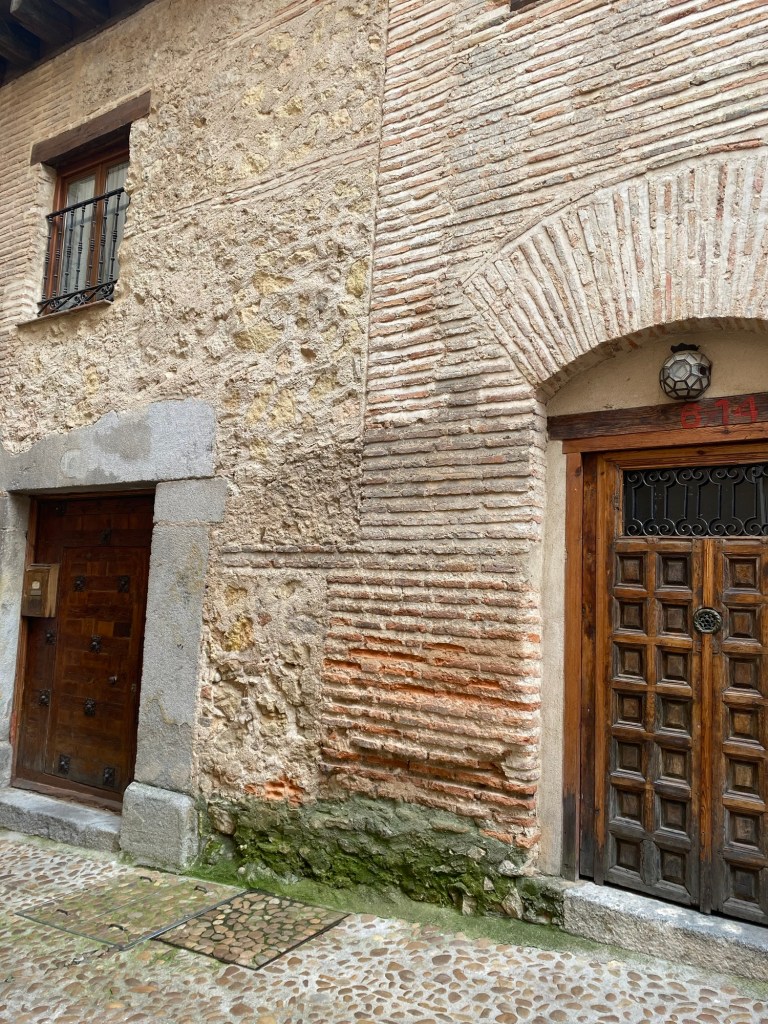
The door on the left was for Christian people (rectangular outline, made out of granite) and the right door was for Jewish people (arch made out of brick and mortar).
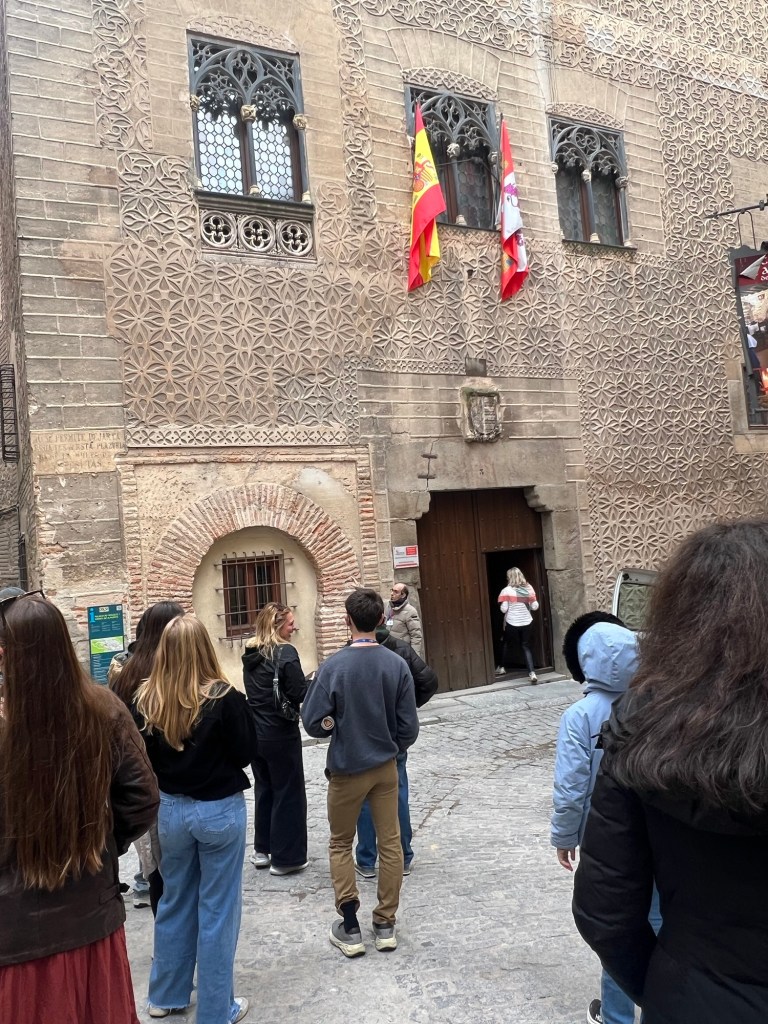
A lot of the buildings in Segovia had facades of etched sand stone despite being built of granite or other stronger materials. This was to make the front look more impressive and decorative so those inside were perceived as more affluent.
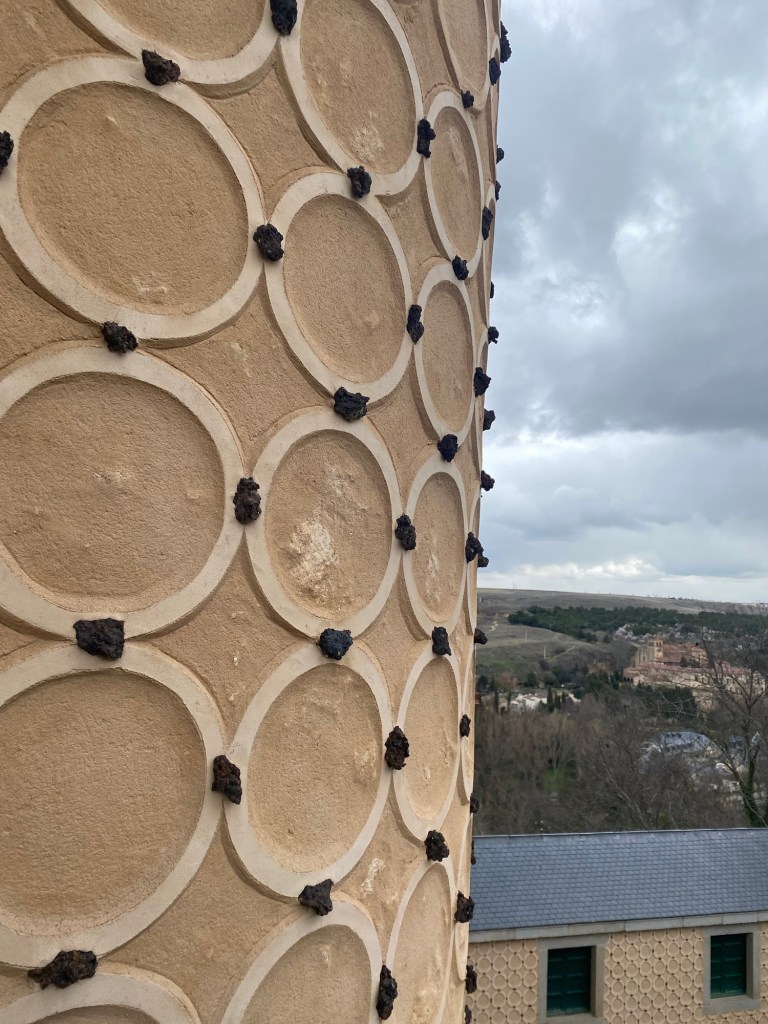
The walls of the castle (and many buildings in the town) are decorated with light circles, and pieces of metal scraps which is an indicator of Muslim architecture and design.
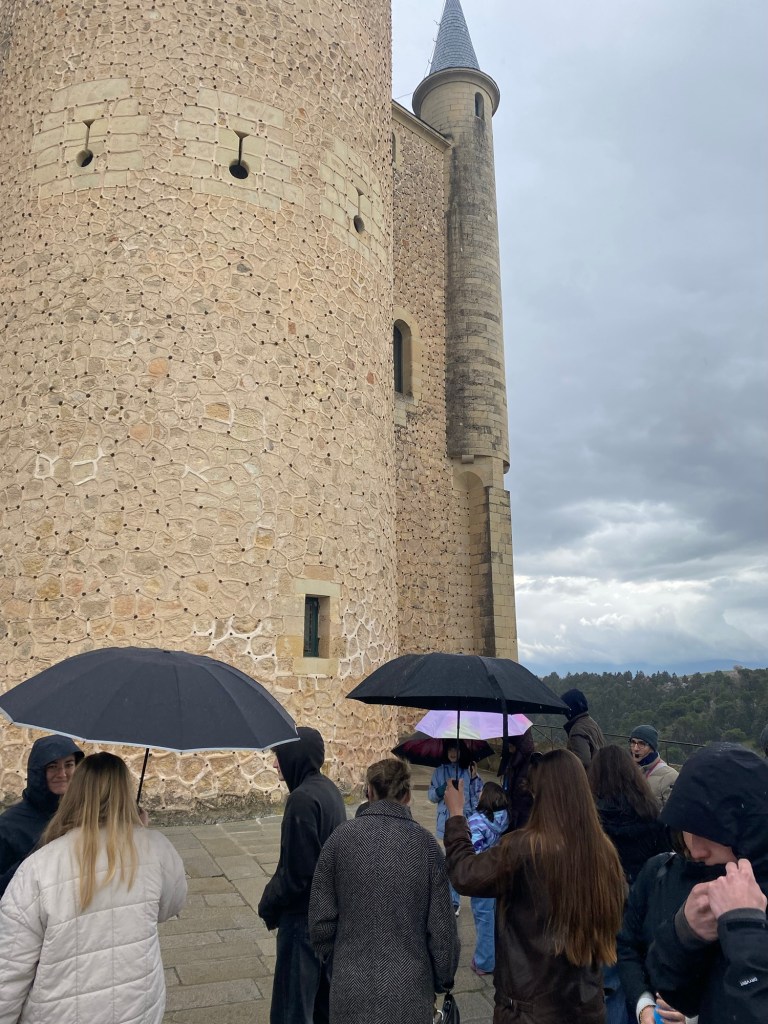
It rained for a few minutes during our tour of the castle, but (contrary to the forecast) most of the day was clear! Fun fact, the view pictured in this photo was the inspiration for many of Walt Disney’s castle designs, and was where the recent Snow White promotional content was filmed.
The climb to and from the tower!
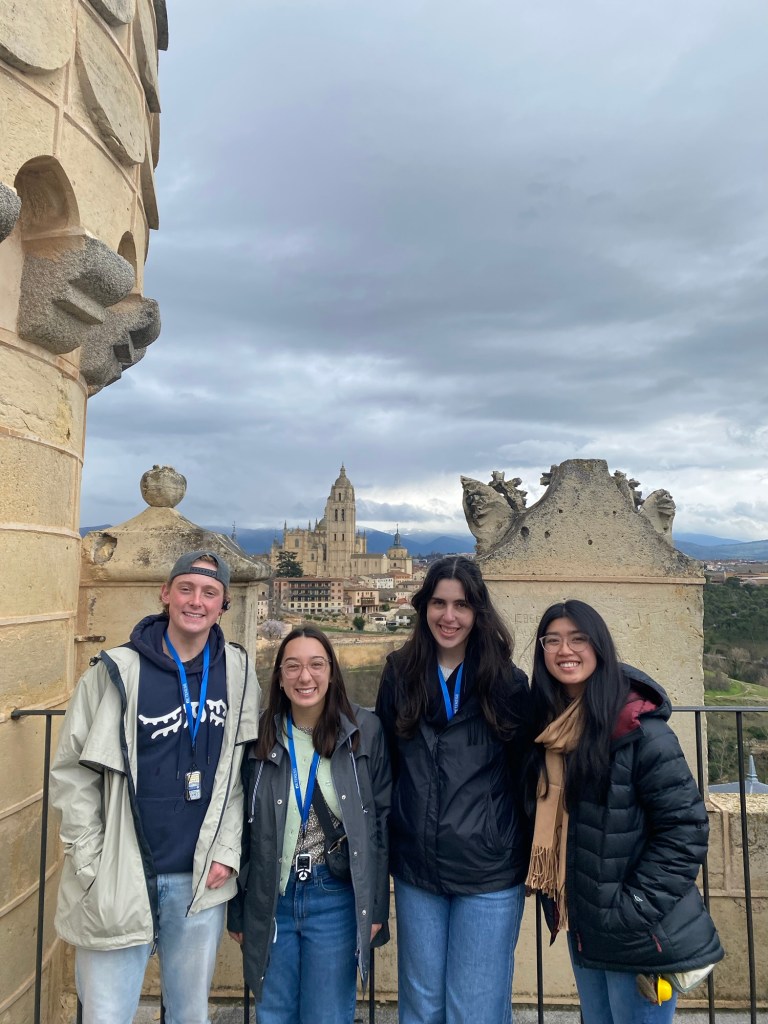
After finishing up the guided tour at the Alcazar de Segovia, we were given 2 hours of free time. Student were able to wander around the streets of Segovia, get lunch, and shop at little gift shops. Some students went to lunch a Jose Maria’s, and others chose to eat in the Plaza Mayor in Segovia.
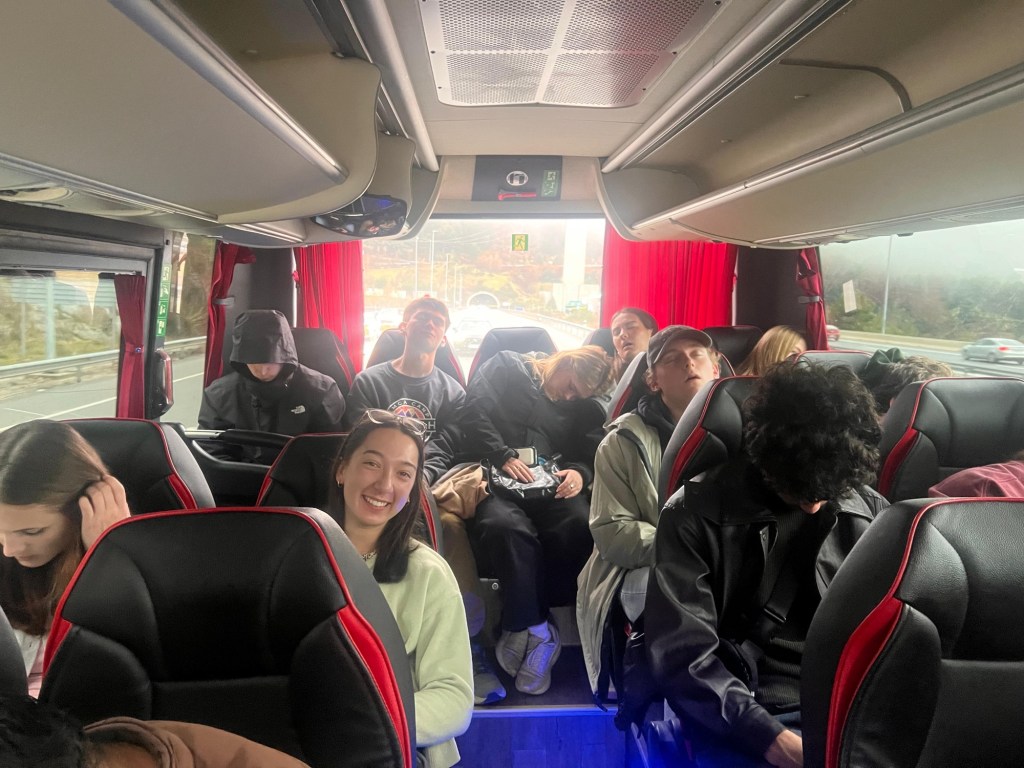
The bus left Segovia at 4:15pm. We headed straight to the Reina Sofia, which was about a 1.5 hour bus ride. Perfect opportunity for some much needed rest!
Once arriving at the Reina Sofia, we checked our bags at the front, got our ear pieces, and headed in!
The Reina Sofia has famous works from Dalí, Miró, Juan Gris, and Pablo Picasso. The most famous piece of art here is Picasso’s massive “Guernica”.
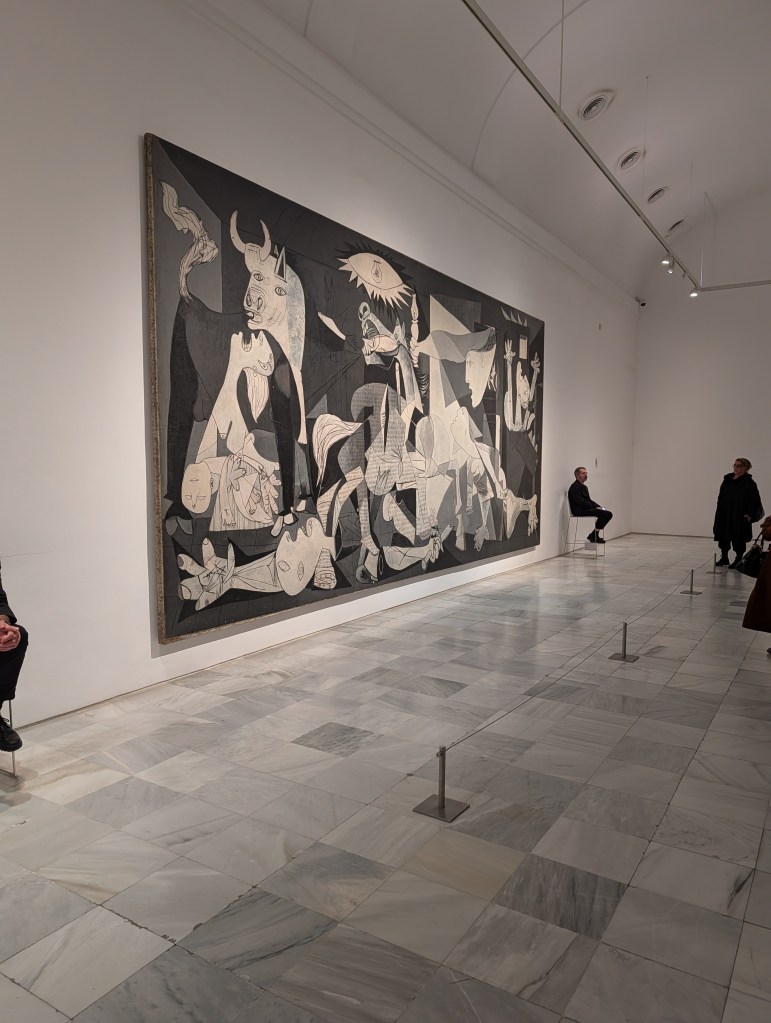
For every hour that the Reina Sofia is open, there are two workers stationed to monitor the massive piece of art, Guernica. We were able to scan each piece of art using devices on a lanyard. This connected to our ear piece, which gave us an audio guide to the artwork.
After finishing up at the museum, groups split up to go to dinner. There was a little bit of rain on the way to dinner, but it cleared up pretty quickly! A group of 10 students went to Triciclo, which is a Michelin Guide restaurant. This was a very fancy dinner. Some favorite dishes were the pigeon (yes- the bird!) and steak tartar.
After dinner, some students went to the Chocolatería San Ginés for some fresh churros!
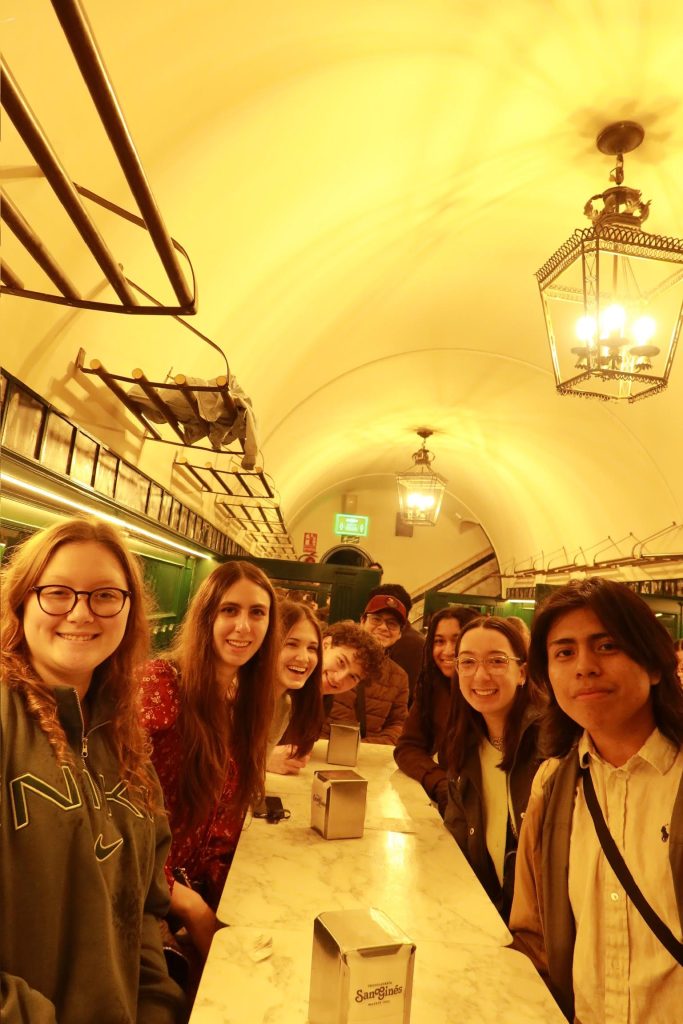
Group 1 signing off! See you in the morning Group 2!
Day 2: Group 2
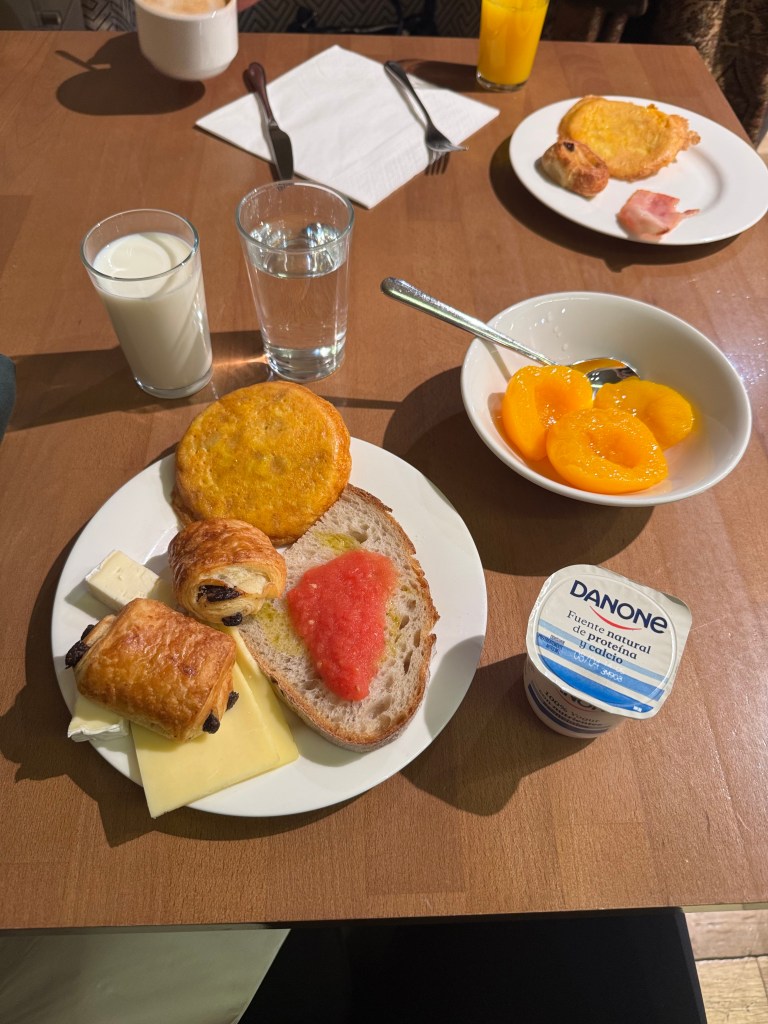
Breakfast in our Madrid hotel was very delicious. The bread with tomato paste, better known as Pan con Tomate, is a traditional Spanish food eaten during all parts of the day. In our opinion the best Pan con Tomate had olive oil mixed in with the tomato paste. The egg patty at the top of the plate is also a very traditional Spanish dish called Tortilla de Patatas or the Spanish omelet, which as the word patatas would suggest is characterized by its potato filling.
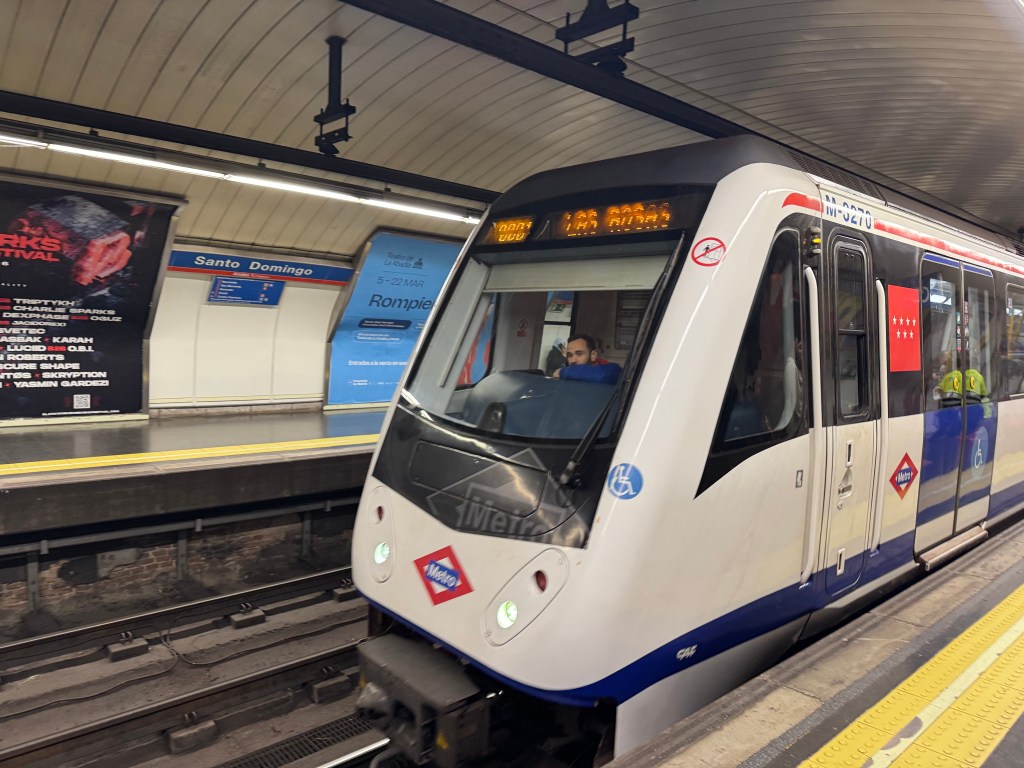
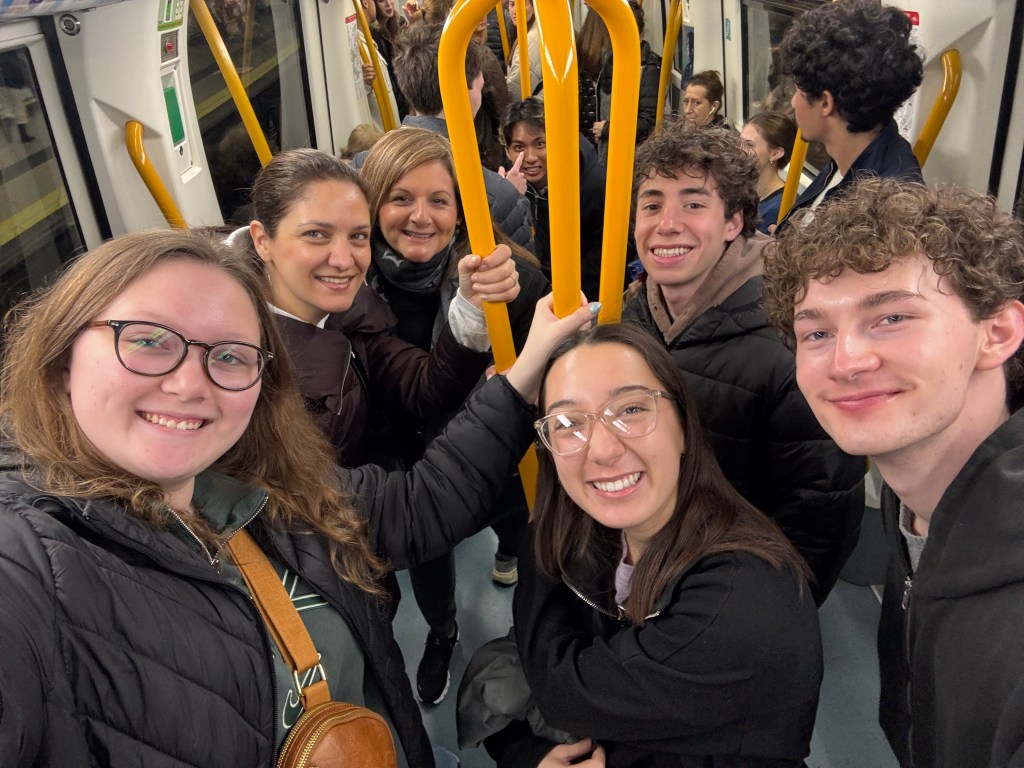
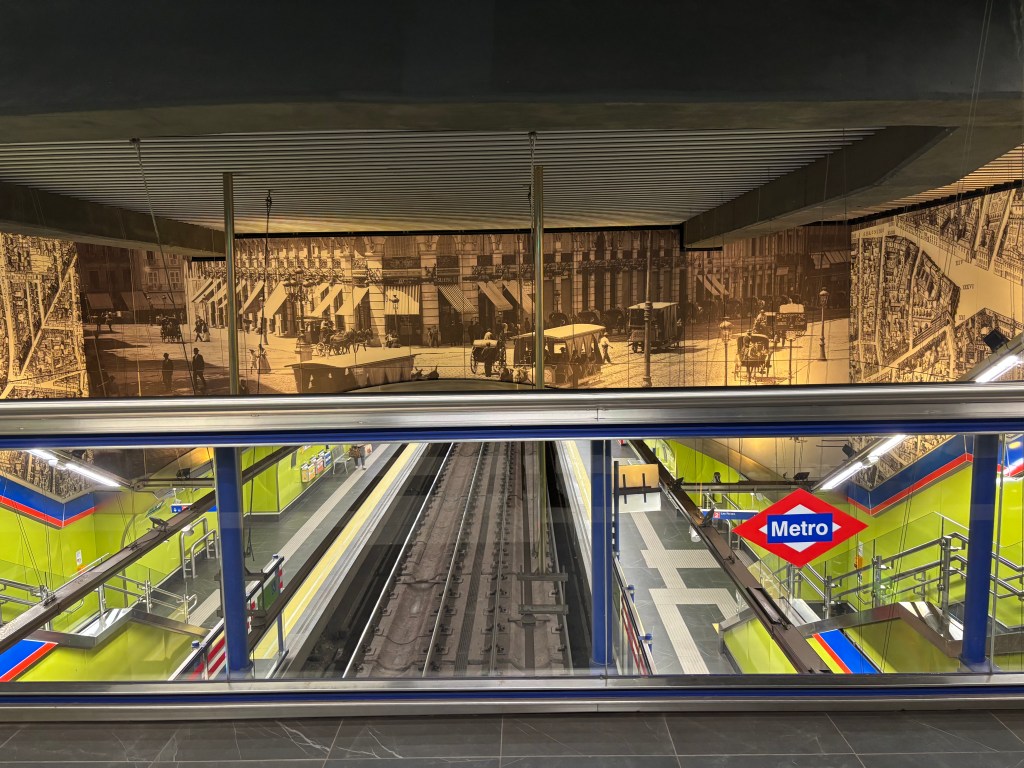
Taking the metro to head to our walking tour! Last year, 736 million people rode the Madrid Metro, which is the most extensive subway system in the European Union, with 303 stations and 297 kilometers of track.
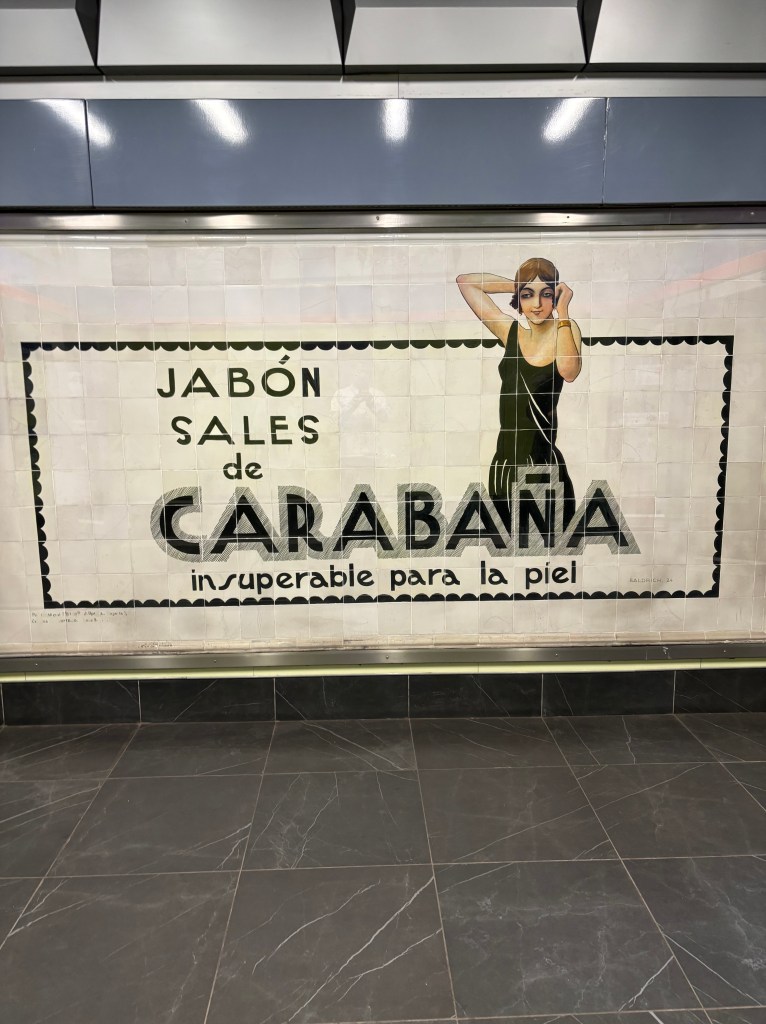
Subway station, 1920s art ad for soap
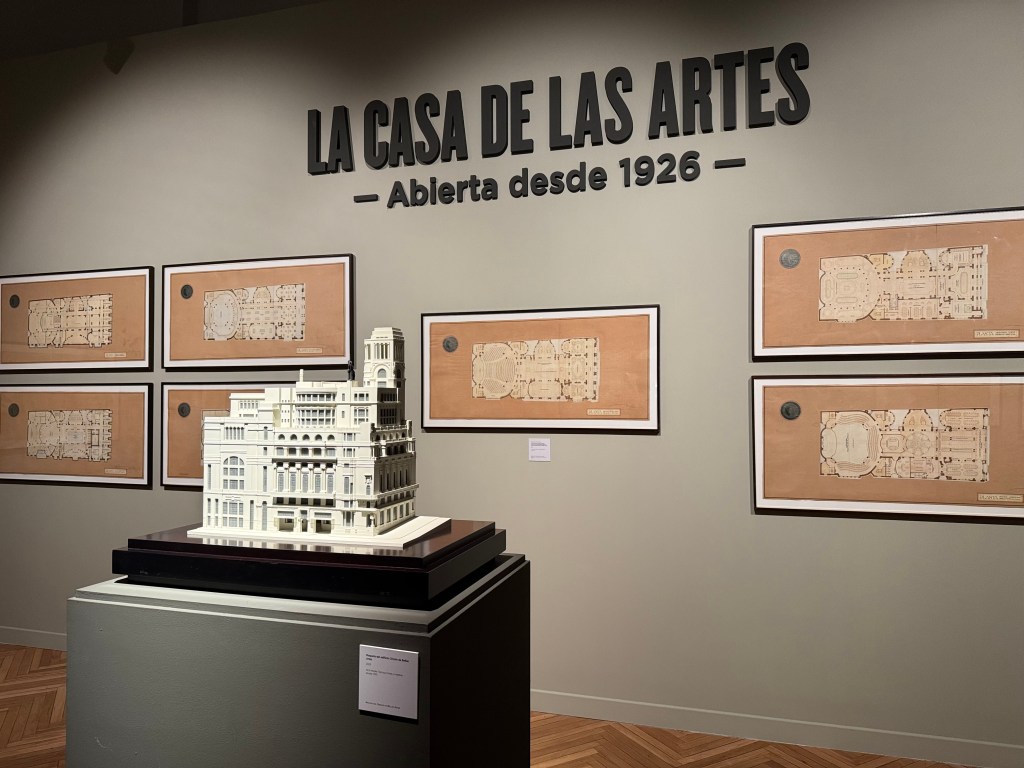
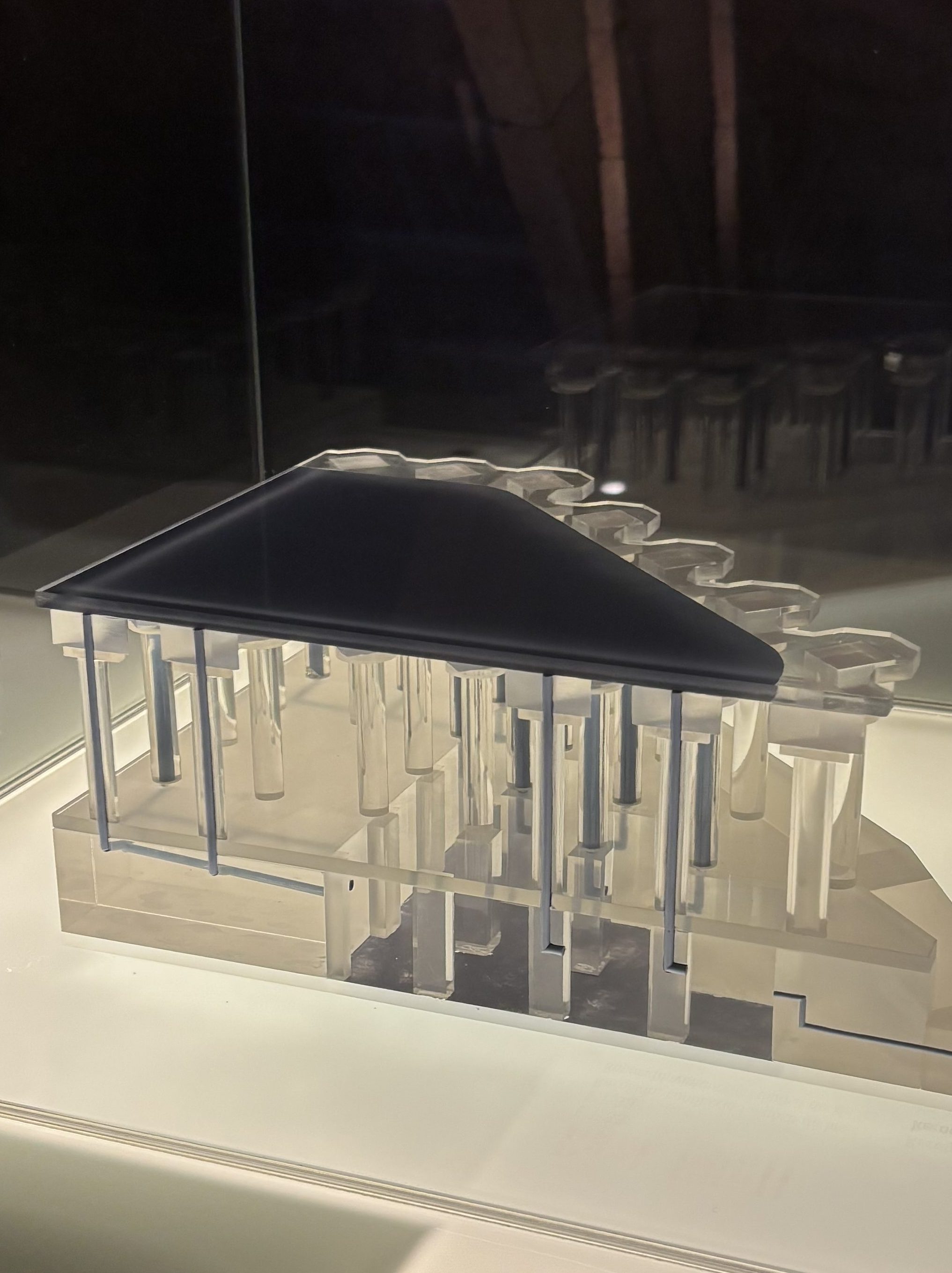
Circulo Bellas Artes floor plan concepts and building model. There were many different architects who made design proposals for the building, one of whom was a young Antonio Palacios. For this bid, Palacios was also one of the judges so his submission was unbeknownst to the other judges, so despite having the winning design, he was disqualified due to a conflict of interests dilemma. But the people weren’t sold on any other designs eventually revisiting Palacios’ and voted without him. This time he won fairly and the current building stems from his vision.
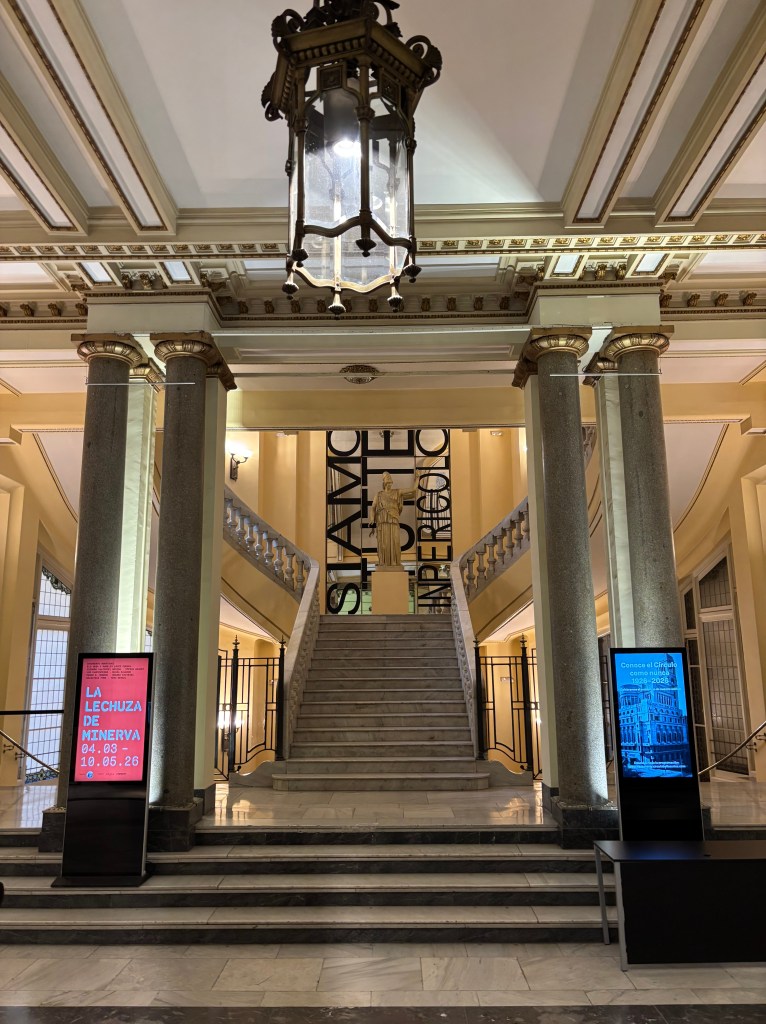
Currently, the building is used by a private nonprofit as a center of the arts. The scope of work that goes on in the building is impressively diverse as students study painting, architecture, dance, theater, and many other forms of expression. While we visited, parts of the building were dressed in gold and purple and green colors paying homage to Carnaval. Carnaval, like many holidays, heavily involves dancing and music, so it made sense that classes related to it would have been taking place. Depending on the country the date Carnaval is celebrated differs, but Spain traditionally celebrates around late February to early March, aligning with the time we visited.
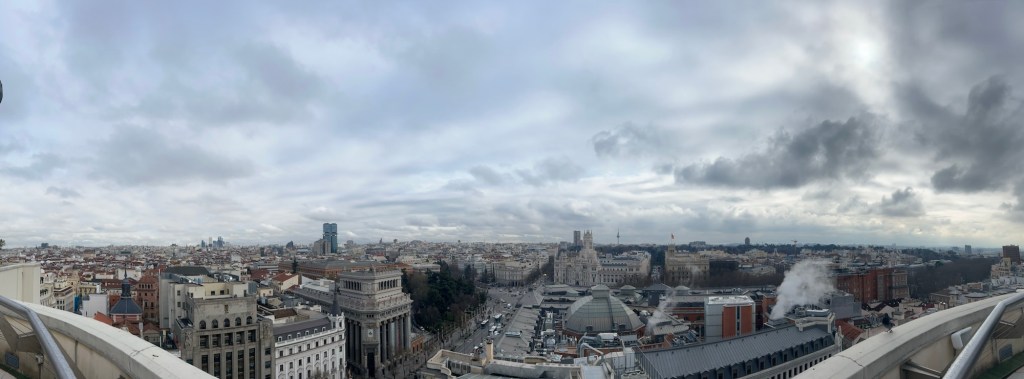
Here is a panoramic view from the rooftop of the Circulo de Bellas Artes overlooking the city of Madrid. The notable palace in the middle is Palacio de Cibeles.
The greenery that can be seen behind Palacio de Cibeles, is Retiro Park, a 350 acre public park. It was originally gardens for the Royal Palace, but the Palace and many of the gardens were destroyed in the Peninsular War from 1807-1814. Afterwards, the land and garden were urbanized and publicized to create Retiro Park
While it’s very difficult to see in this photo, there are two leaning, twin towers called Torre Realia in the far back left area. We learned that these structures were created using foundations as counter-weights in order to balance the building.
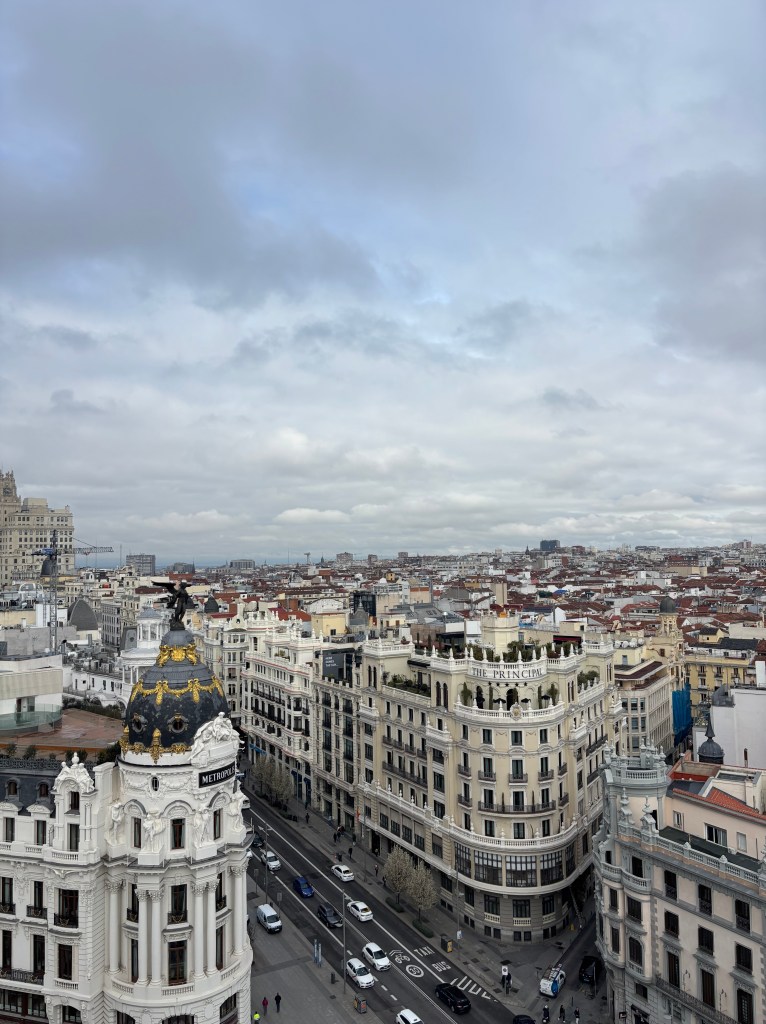
The central part of the city, as seen in this photo, was built in the late 19th century in the Beaux Arts and Art Nouveau style, featuring Corinthian pilasters in the facade and highly decorative sculptural elements. The street running between the Metropolitano and The Principal is Gran Vía and is undeniably the most famous street in the Spanish capital.
As explained by our tour guide Daniel shared that development of this street was promoted as a 19th-century modernization project, but was instead an urbanization effort in reaction to the French Revolution. Key observers of the revolution noticed that the narrow streets traditionally found in European cities were vulnerable to uprisings of the masses so Gran Vía was built to alleviate this weakness.
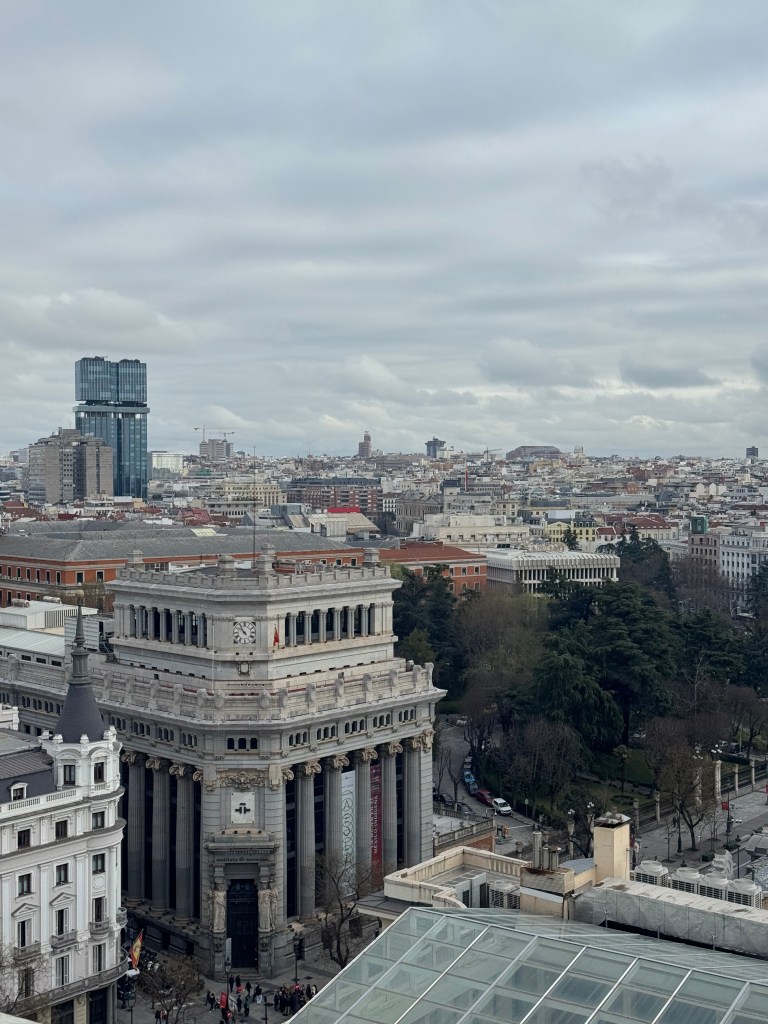
The city of Madrid has about 3.4 million residents and including the neighboring towns, there are about 10 million people.
Video of city view from rooftop terrace of
Circulo de Bellas.
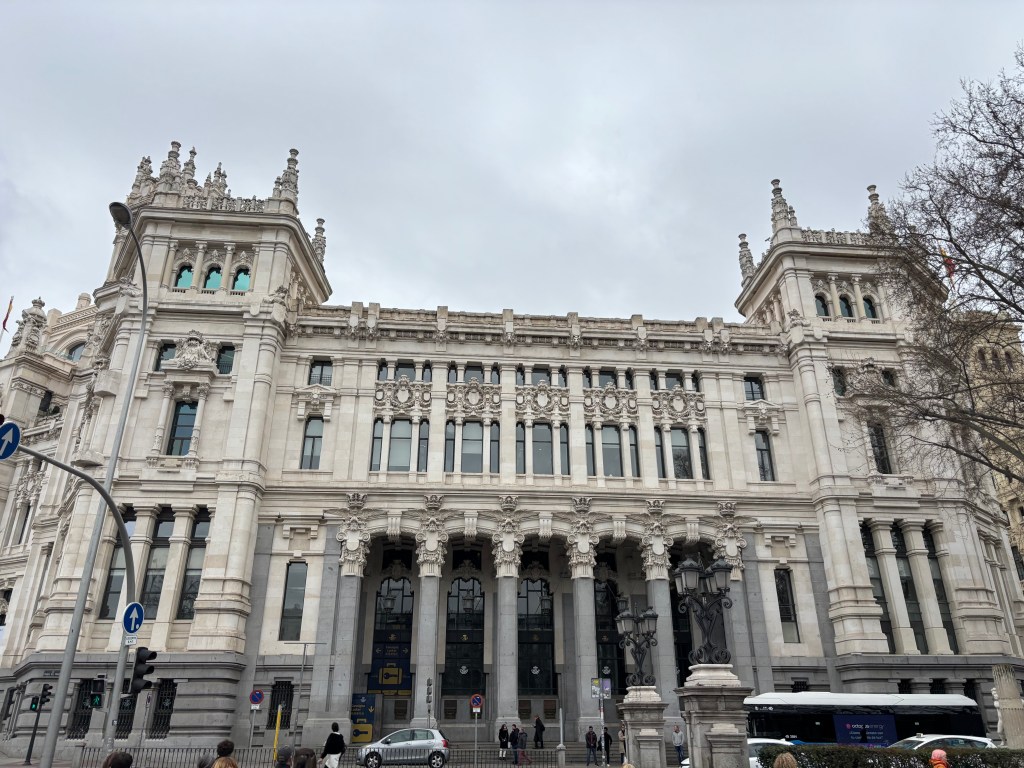
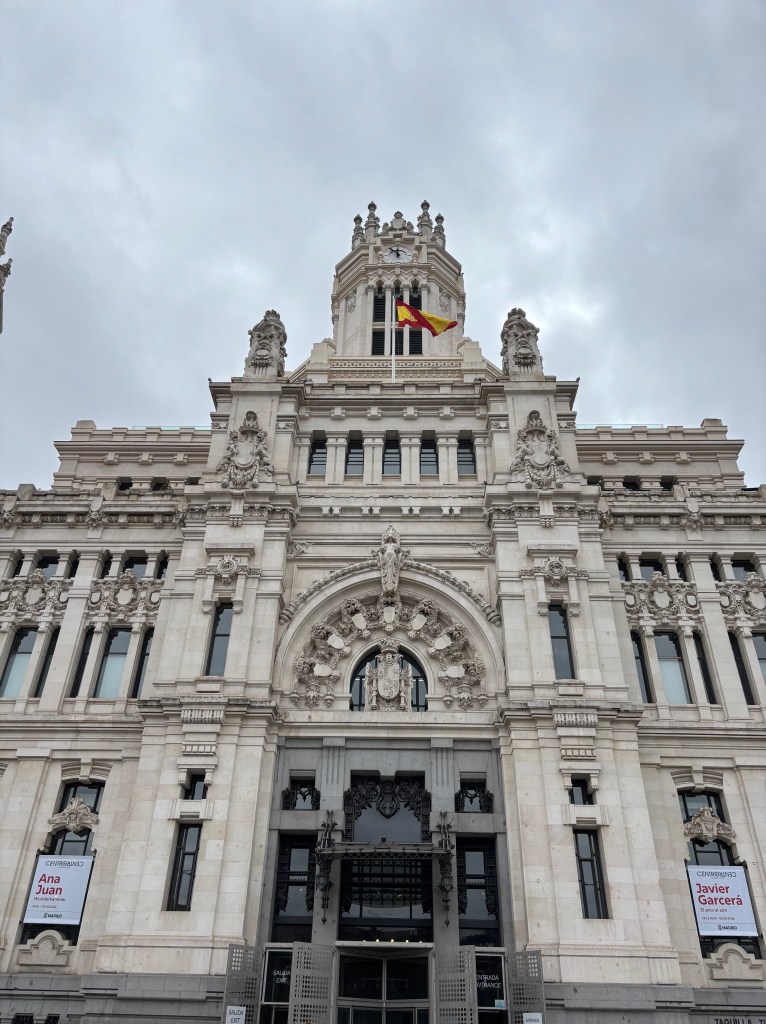
Photos of Palacio de Cibeles in Central Madrid. The building is open to the public and is the town hall building in Madrid. When originally built, it served as a sort of communications palace which more or less is a glorified post office. Original letter intake boxes are still present on certain sides of the building and were historically used to send letters domestically all across the Iberian.
This was constructed in a Spanish Art Nouveau style that is stylistically similar, but still independent from the more renowned French designs. Some common similarities are the blending of gothic cathedral-like elements and opulent palace-like ones. On the other hand, this building similarly to the Circulo de Bellas Artes was designed by Palacios who made a point to include traditional Spanish imagery and also used materials such as sandstone that weren’t as common in the French Art Nouveau.
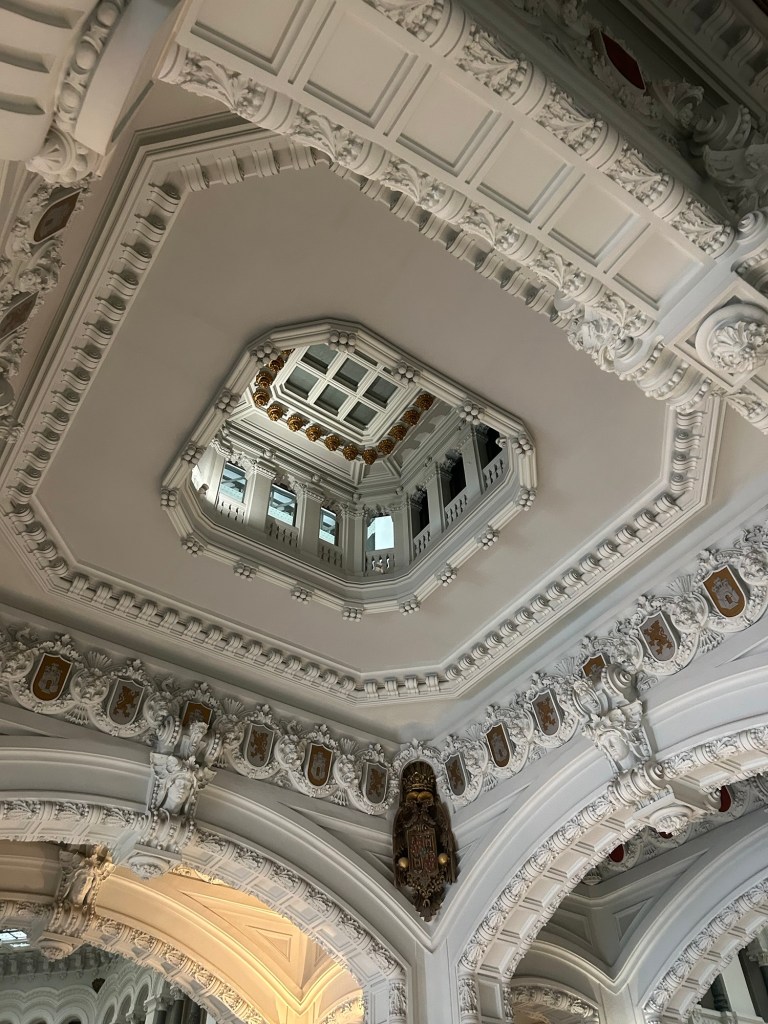
These banners show the Coat of Arms for the city of Madrid.
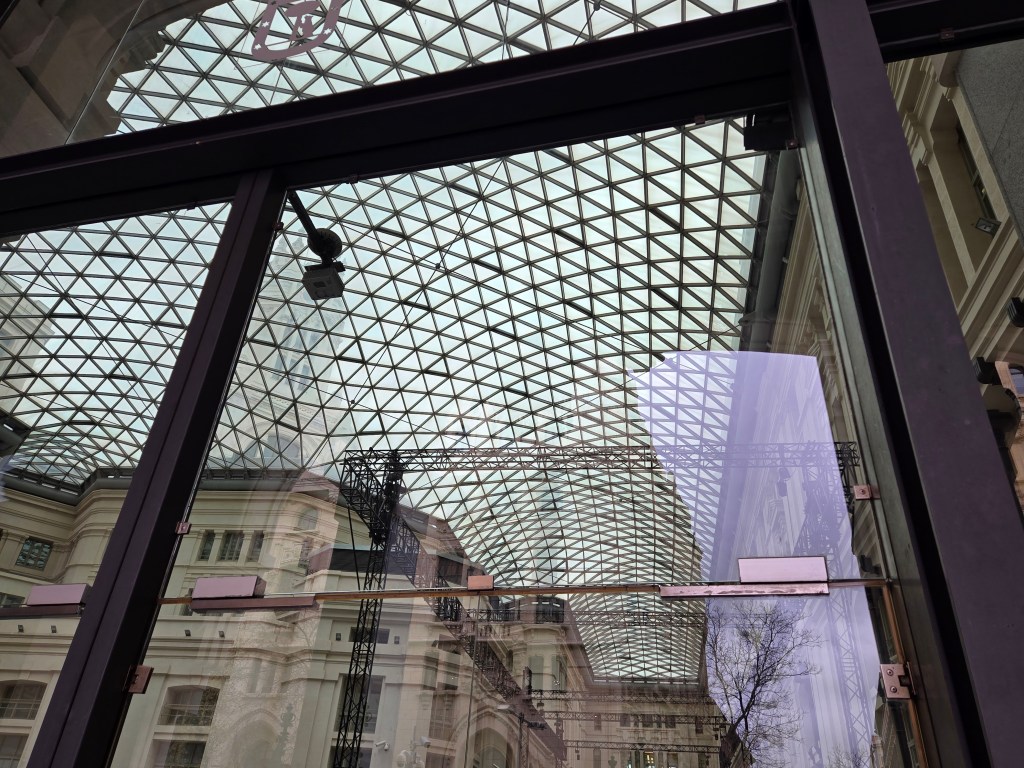
The Palacio de Cibeles is actually a system of three distinct buildings, two of which are connected by the geodesic dome pictured above. This complex form evokes the style of famous English architect Norman Foster who used similar techniques on many of his projects. At the core of its structural function, the dome is composed of many triangles all oriented to different stress levels making structural calculations regarding this roof very complex. Similarly to bridge truss design, triangles are used here because they are the strongest rigid shape since they distribute loads in a way that resists deformation.
As with any dome, the pieces are in a constant state of compression meaning the dome wants to open up. To counteract this, large metal cables are run across to provide tension needed to maintain this intricate shape.
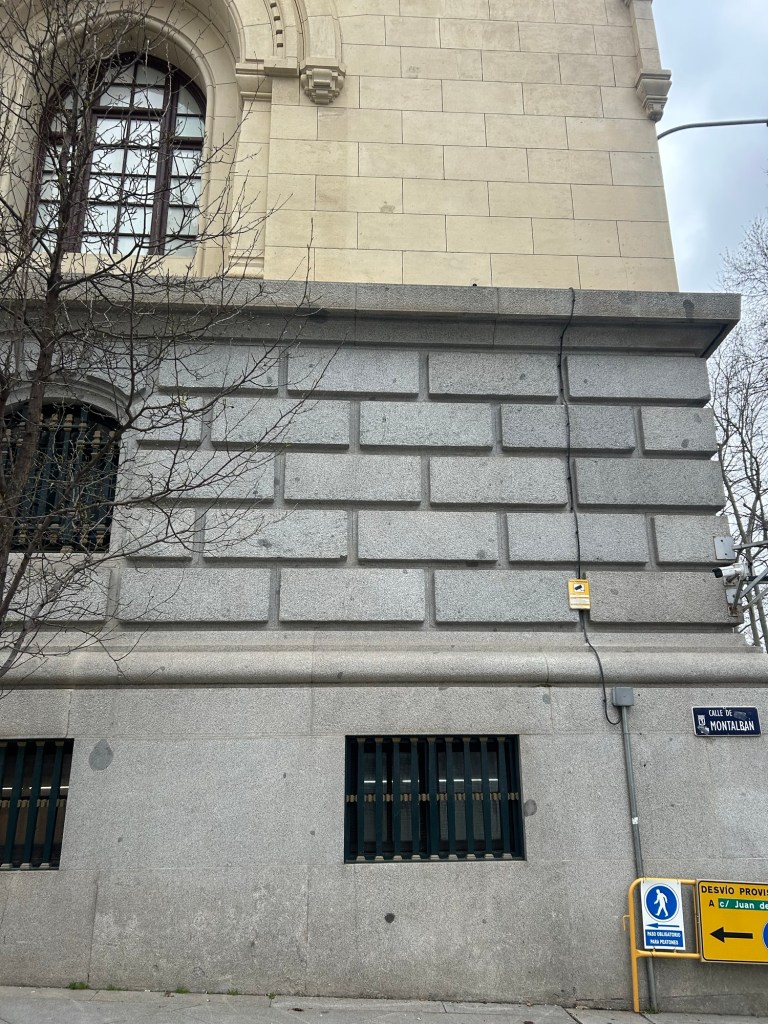
Granite was used at the bottom of many buildings because it is more resistant to erosion from the groundwater in Madrid.The sandstone above is sedimentary rock that has larger grain size and is much more porous. This means sandstone can absorb water which greatly impacts its structural integrity, making it more unsafe as a bottom layer than ganite.
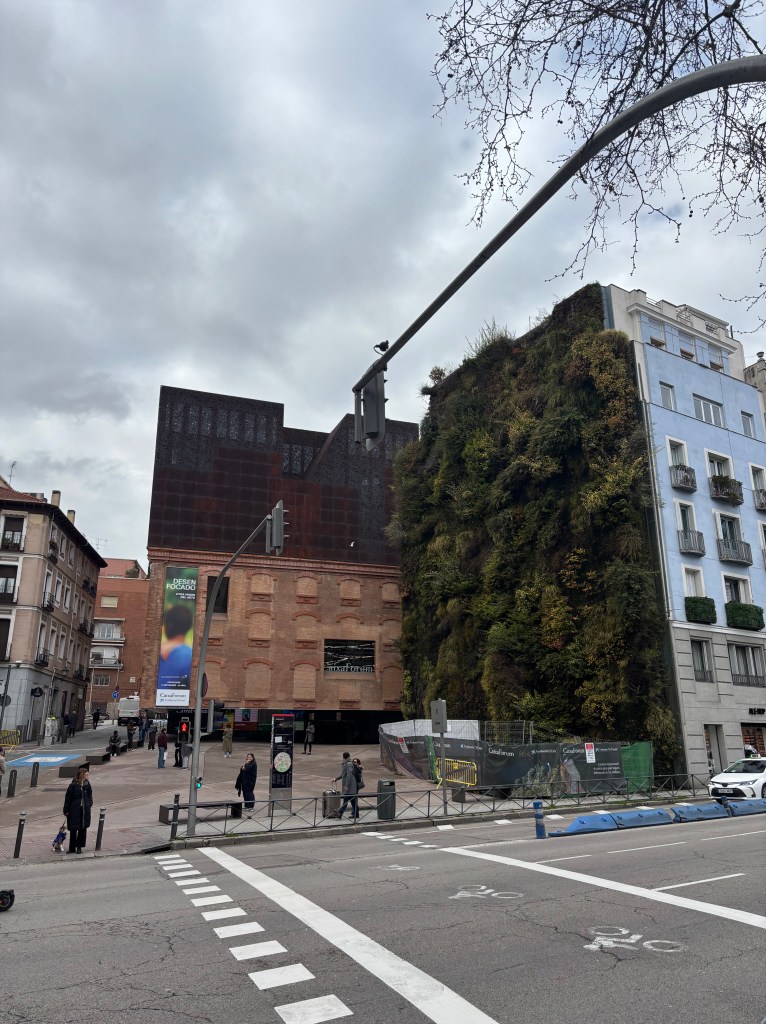
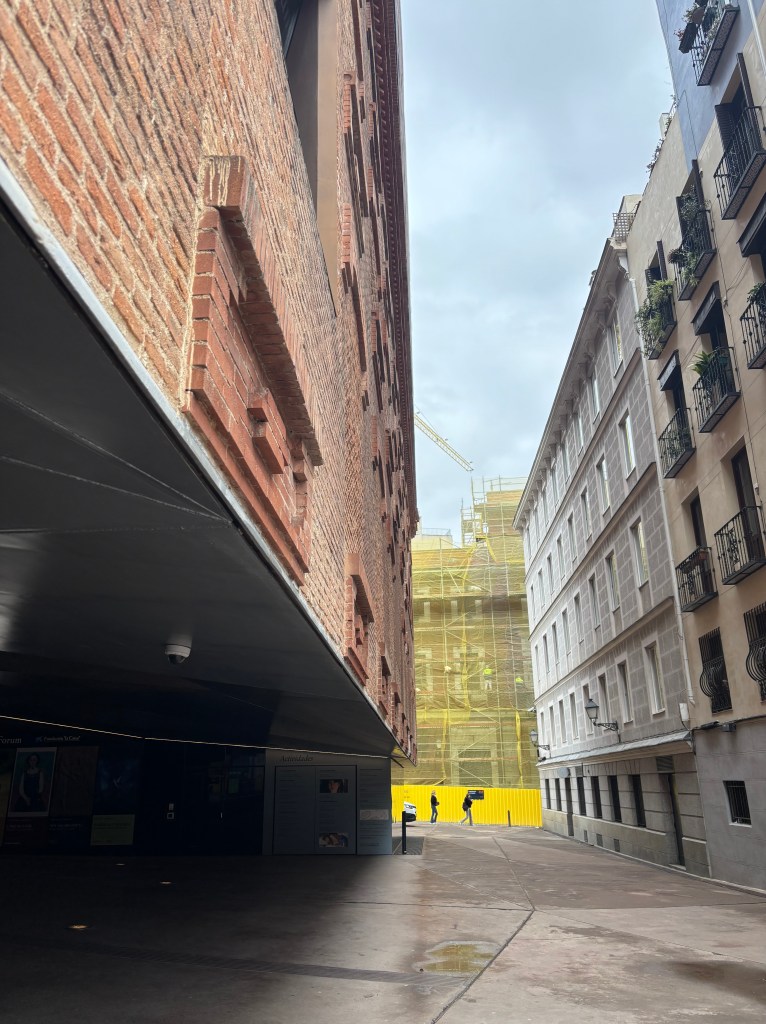
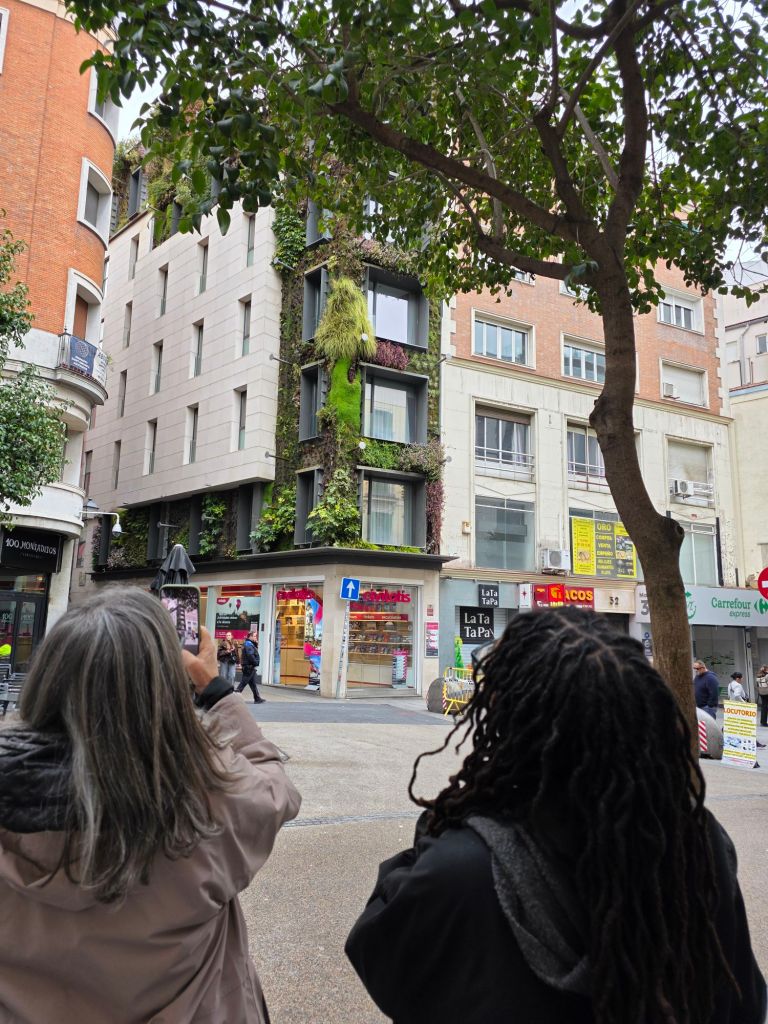
Seeing the building in person after researching the renovation was amazing! We loved comparing the actual building to our drawings from the homework assignment. Ambitiously, the bottom level of the existing building was removed to create a shaded plaza that is filled with people during warm Madrid summers. To accomplish this, the original roof was removed, and three large concrete blocks were installed with stairwells. These massive blocks serve as the main structural ground and enable the “floating” outer edges seen in the images above. An impressive green wall is also present on a neighboring building creating a very eye-catching exterior facade.
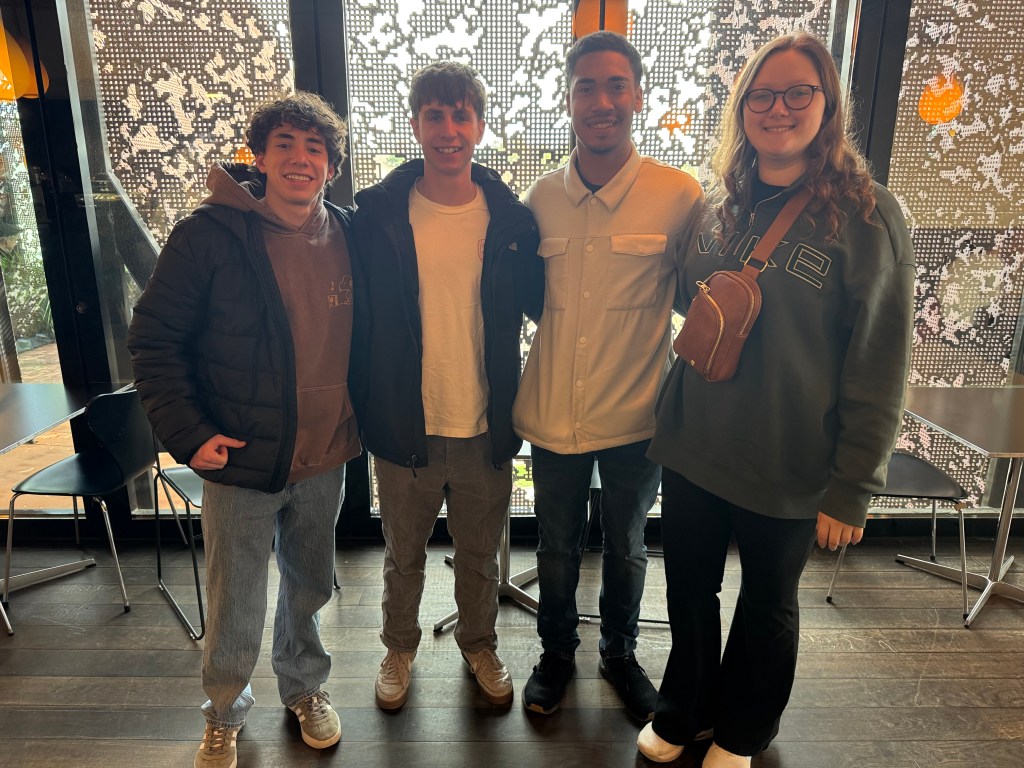
Blog group picture inside of the Caxia Forum. After this, everyone split up for lunch.
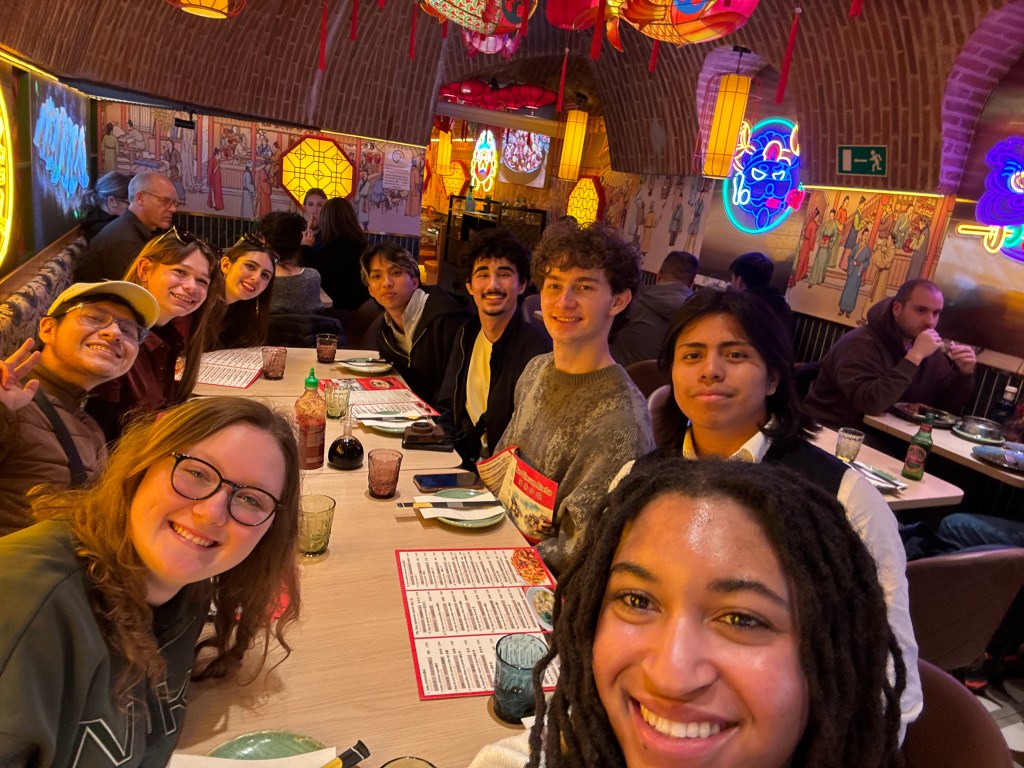
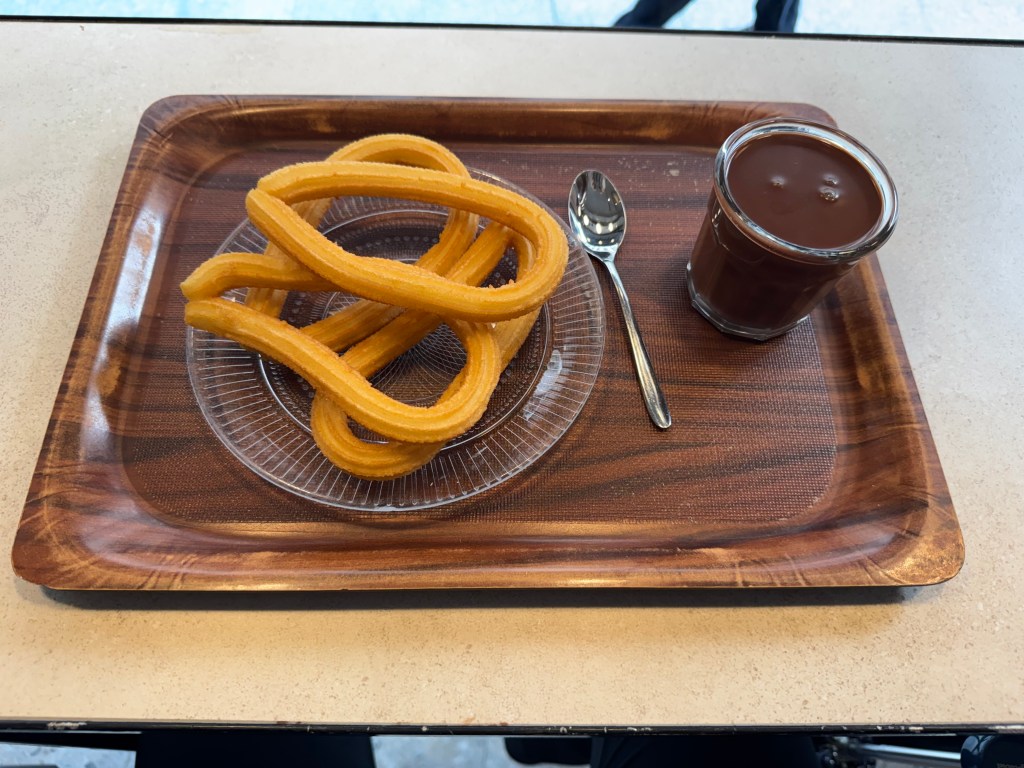
Some got lunch at a restaurant near the Caxia Forum and the food was delicious! After lunch some of us enjoyed chocolate churros!
Others went to an Irish Pub on the way back to the hotel. There were many Tottenham fans for the game that night.
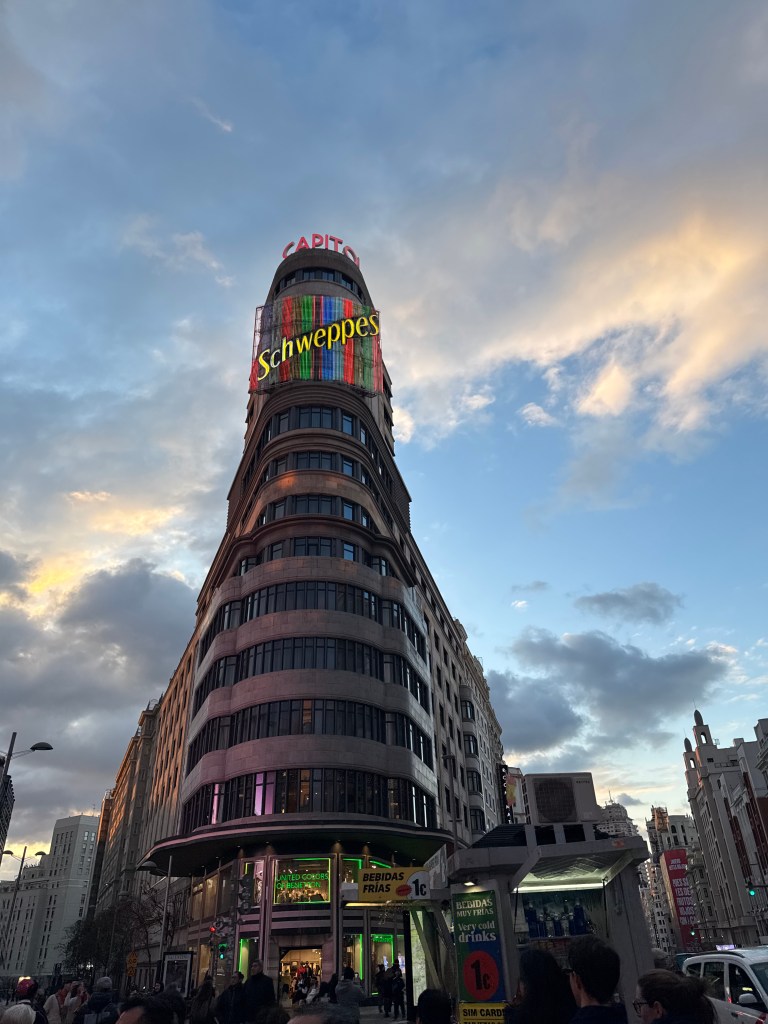
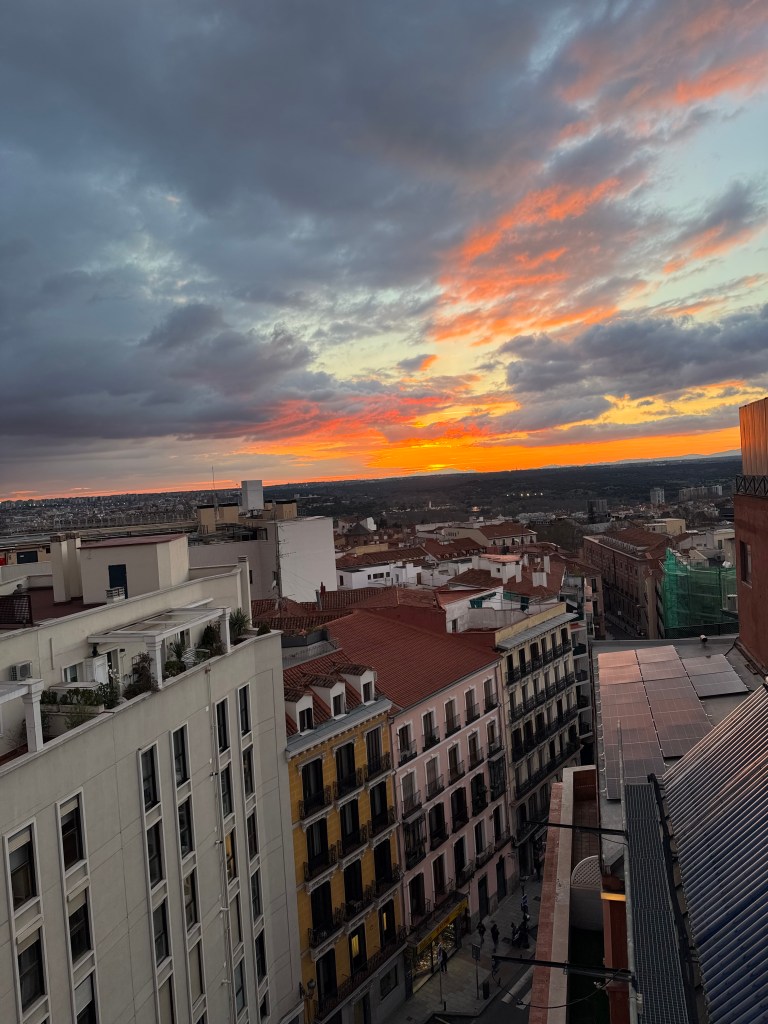
After lunch, some enjoyed walking around Madrid for the last night here and watched the sunset from the rooftop terrace of the hotel! The city is so beautiful during the evening.
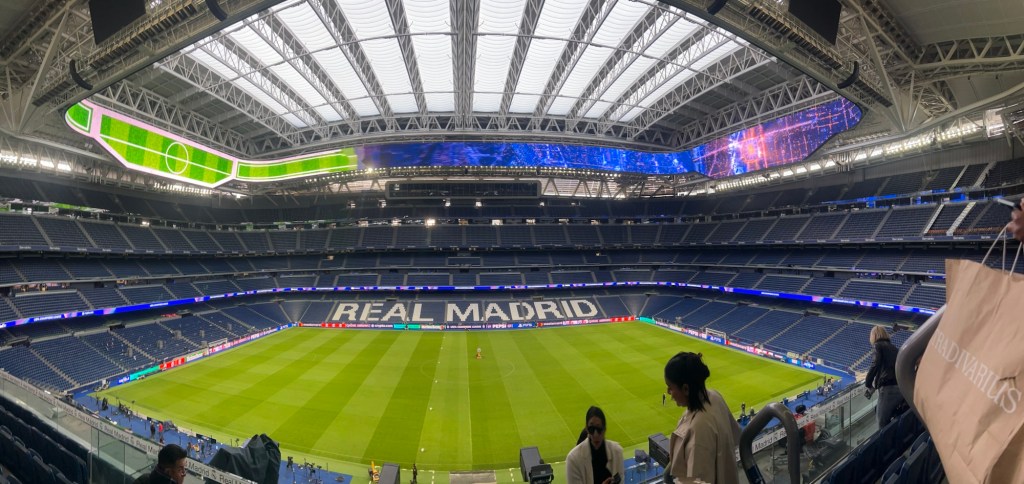
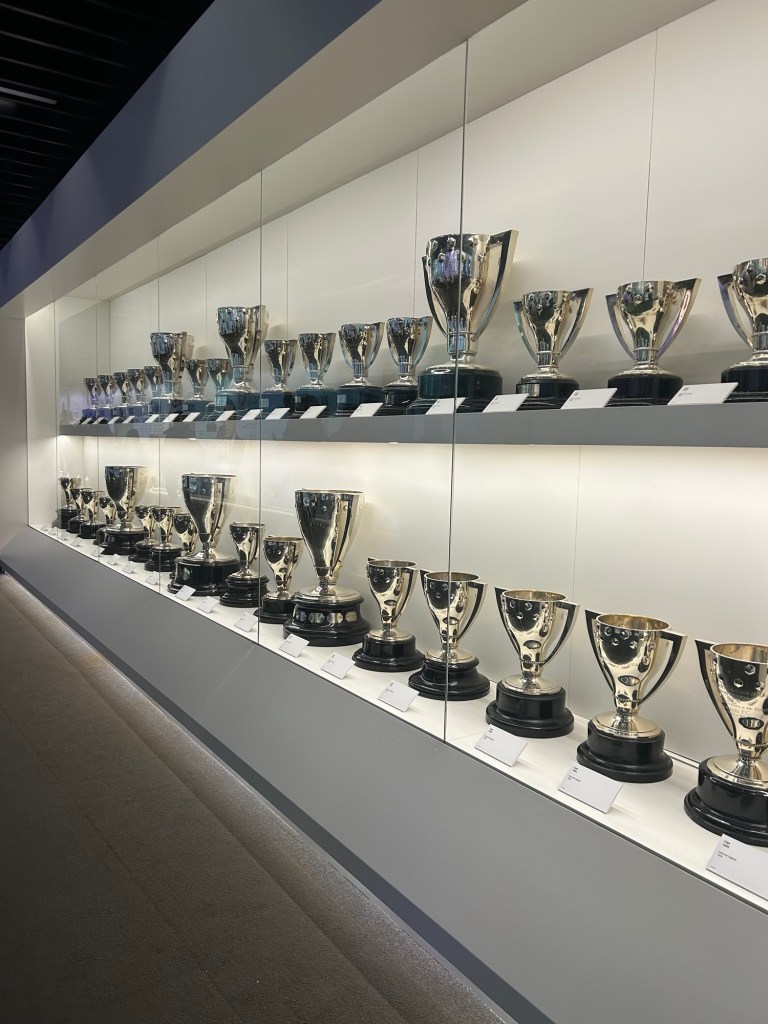
Others headed to Bernebau Stadium for a tour of the home of Real Madrid. Real Madrid was named the FIFA Club of the Century in 2000, and was the only club to ever receive this award.
The stadium uses a retractable system to store grass underground, where LED lights and sprinklers are used to grow the grass in a controlled setting. Additionally, this allows the grass to be stored when the stadium is used for other purposes besides soccer/fútbol.
We then headed to Riyadh Air Metropolitano, for the Atletico Madrid vs Tottenham Champions League match.
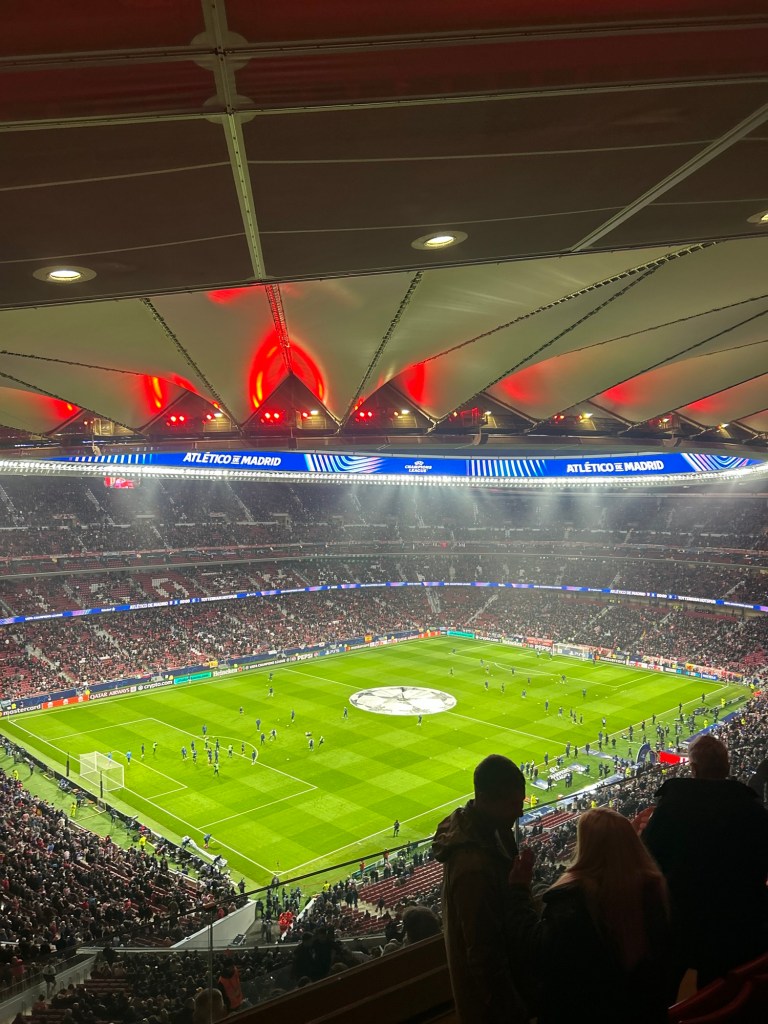
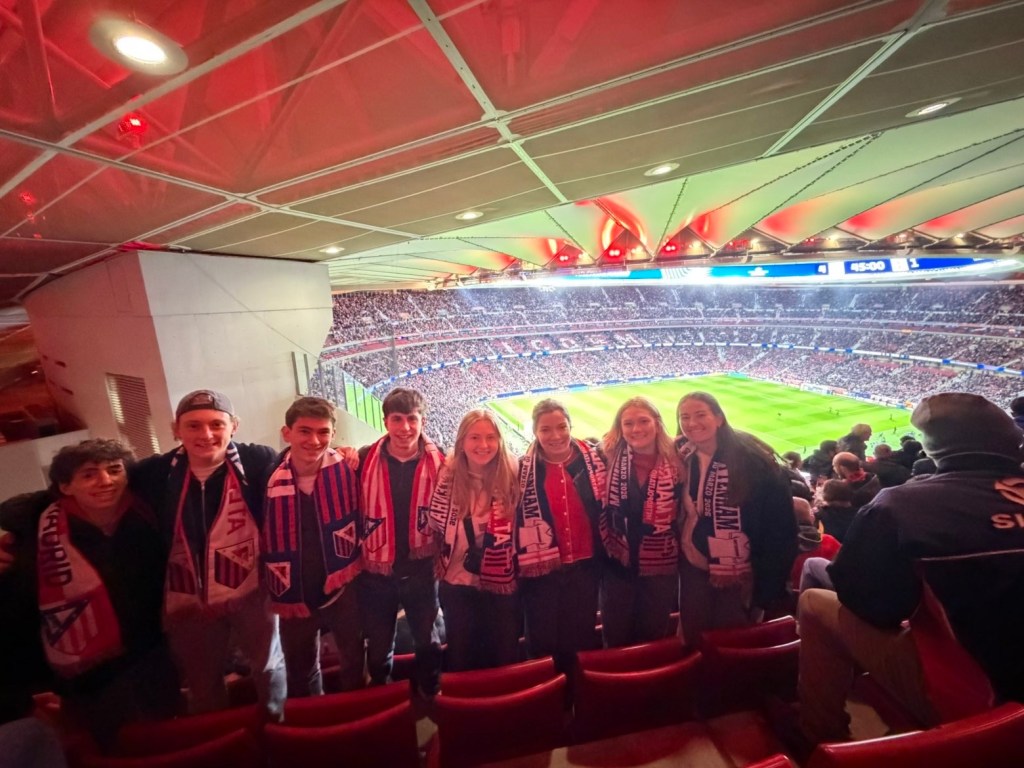
The atmosphere was incredible, as fans chanted and sang songs all game long. It was a thrilling game, with a final score of 5-2 and Atletico Madrid winning at home.
The metro station is directly next to the stadium, allowing for easy and efficient travel for fans. Instead of massive parking lots surrounding the stadium, there were large walking areas, shops, and restaurants.
Day 3: Group 3
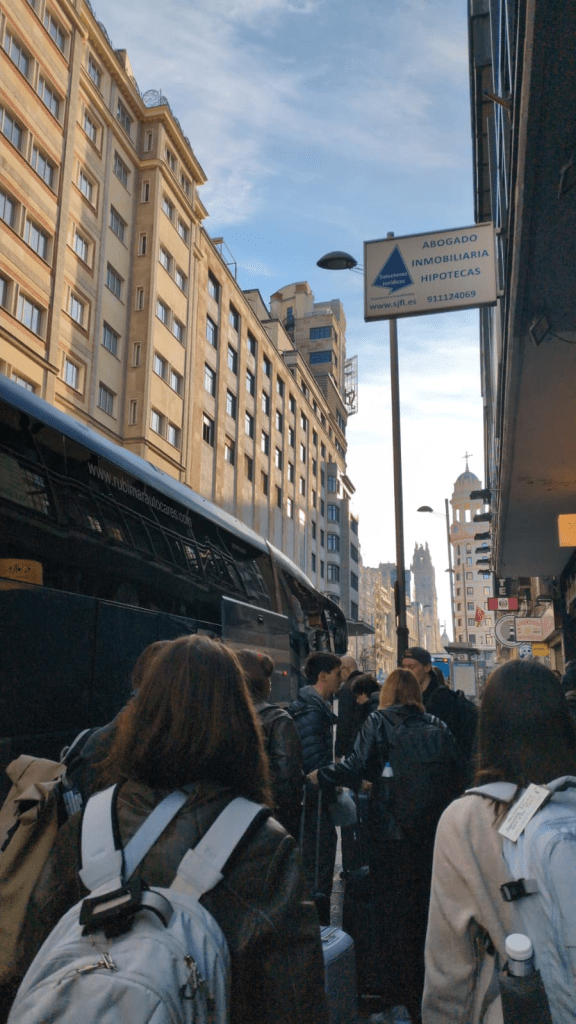
We left the hotel at 8:00 am and embarked on our journey to Barcelona. Saying goodbye to Madrid on a shining day. We took the bus and arrived at the Barcelona Sants train station in just 3 hours.
Many refreshers were bought while waiting for our gate station to appear (7 minutes before departure).
We departed from Madrid-Puerta de Atocha railway station, the largest in Madrid, operating since 1851. It has undergone various reconstruction activities over time.
It serves high-speed AVE and AVLO trains, reaching 100-150 high-speed services every day
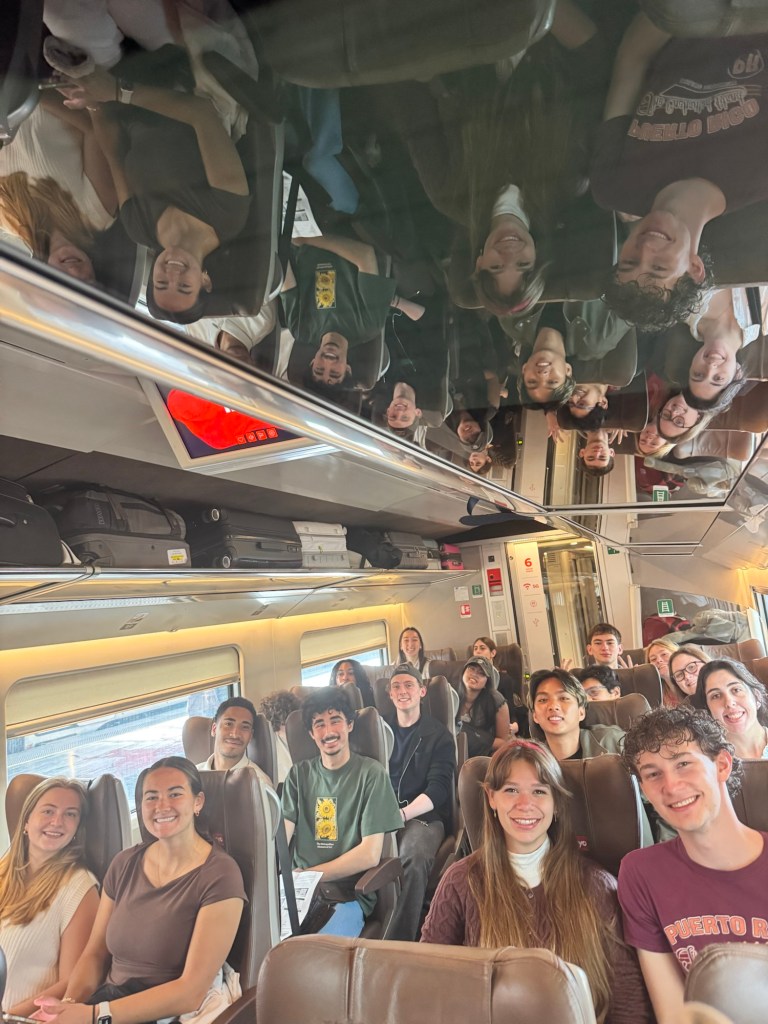
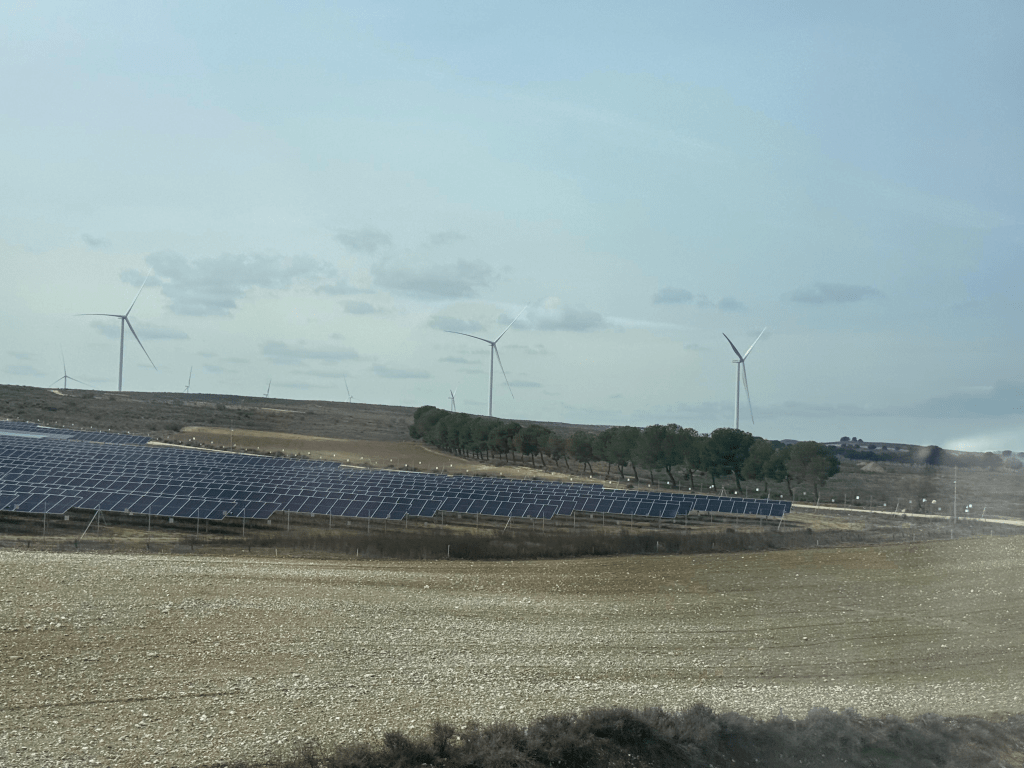
On our journey, we enjoyed the breathtaking views of Spain, journaled in our blogs, and listened to (Spanish) music!
Fun Fact: Barcelona is the only city in the world to win the Royal Gold Medal for Architecture from the Royal Institute of Architects. It was recognized for transforming neglected areas into high-quality public spaces and blending modern designs with historical heritage.
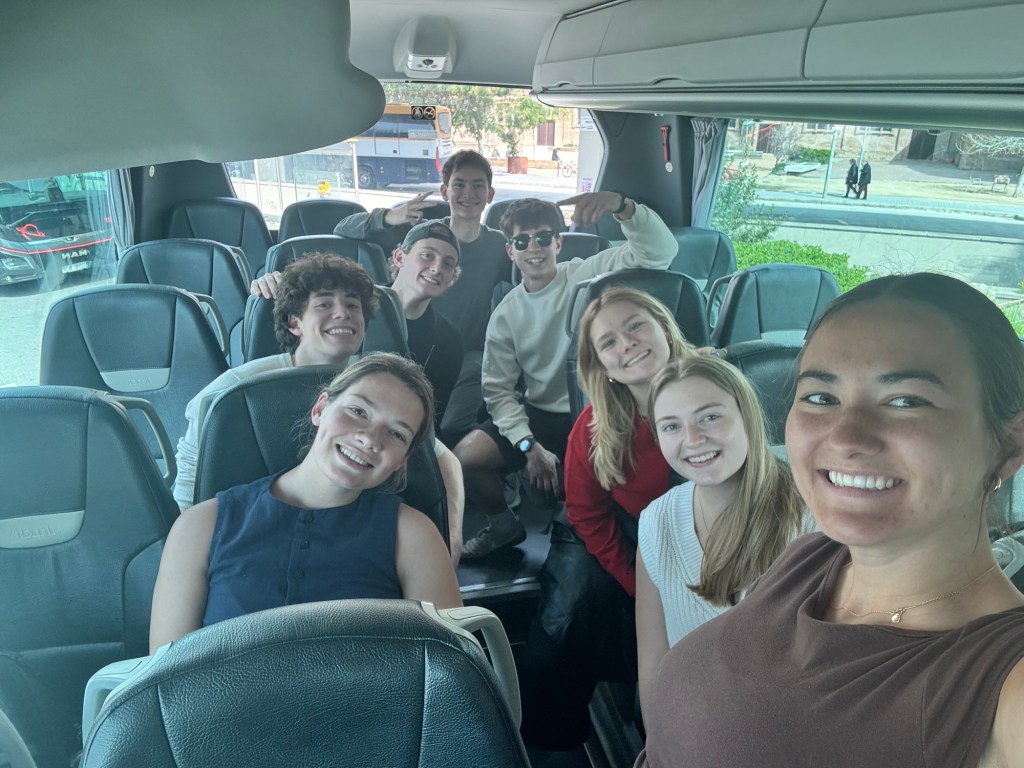
We met Carla 🌟, and embarked on our bus in the center of Catalonia 💯. Barcelona is next to the Mediterranean Sea and the mountainous region. With 1.6 million people in the metropolitan area, it is one of the densest cities in Europe.
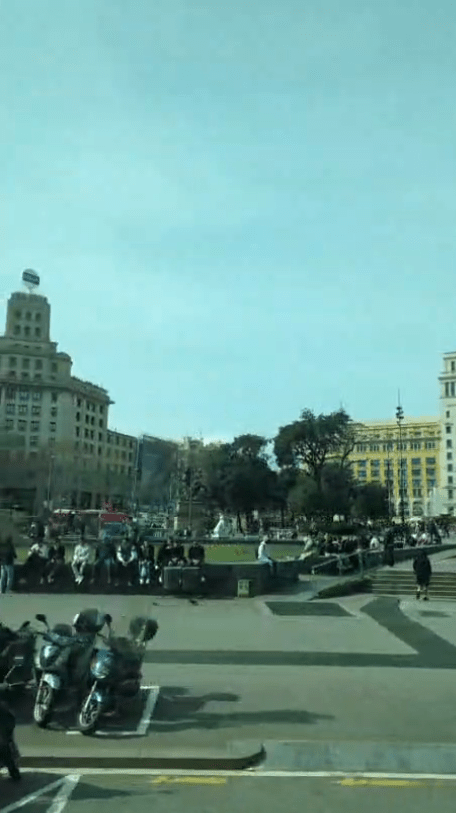
Then, we arrived at our already Gaudi-inspired hotel, HCC Montblanc, and grabbed a quick lunch before going to our IAAC visit!.
Bar la Pla is known for their modern Catalan tapas and is located in the heart of the El Born neighborhood, a neighborhood known for its narrow streets filled with cafes, shopping, and art.
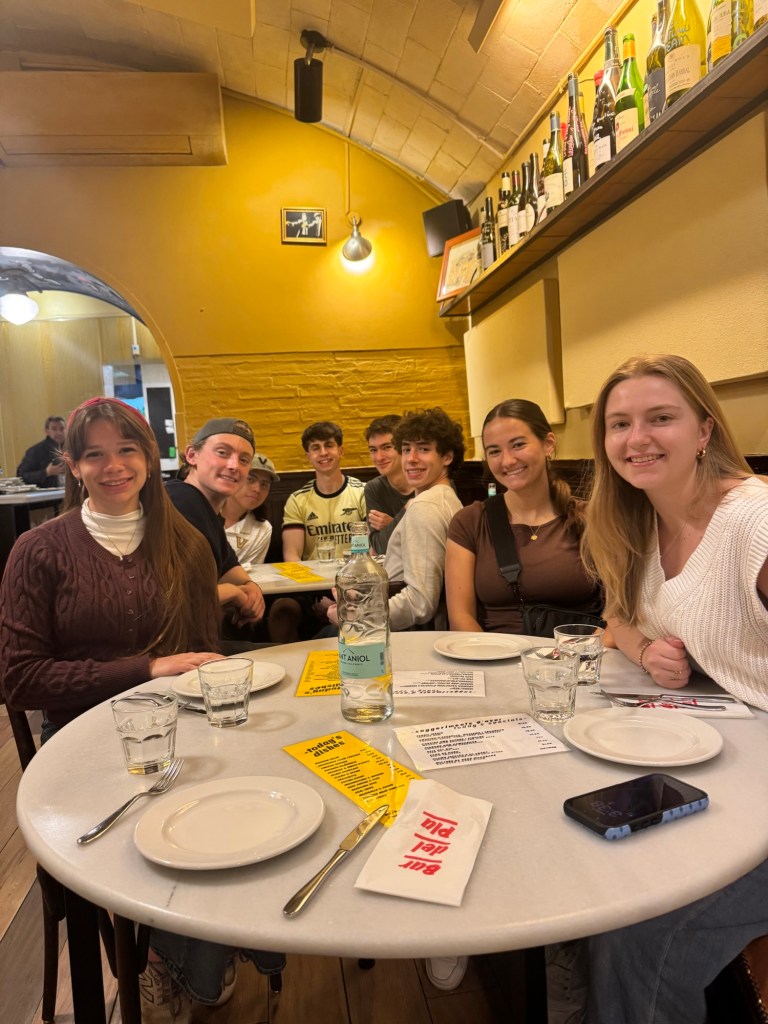
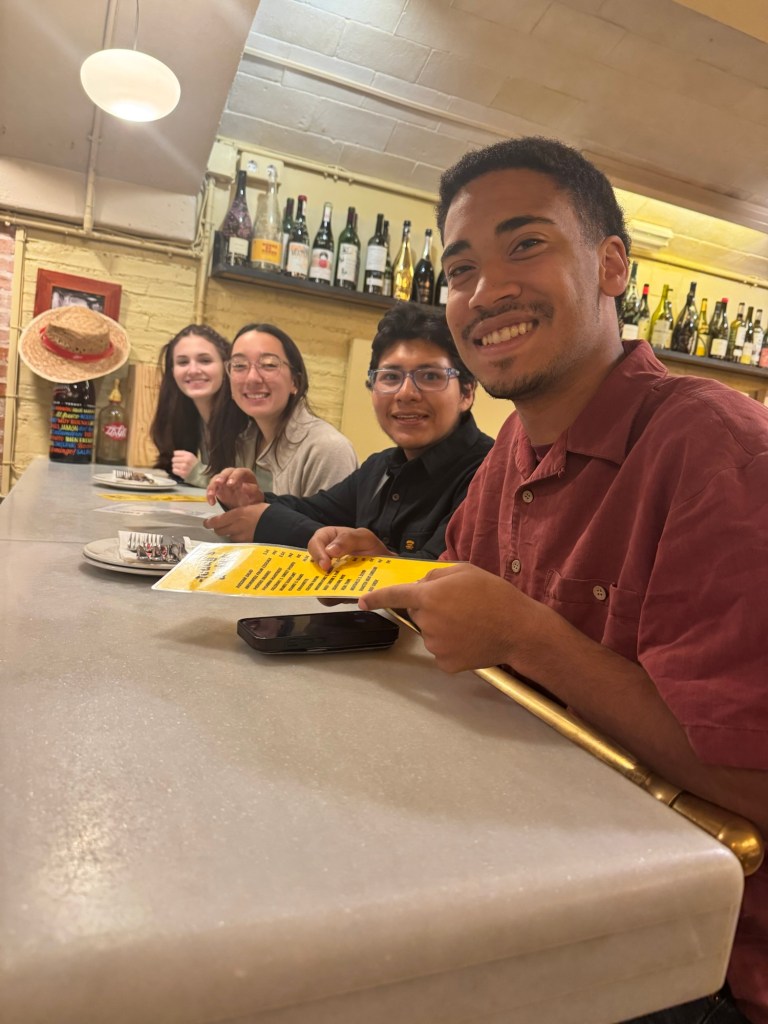
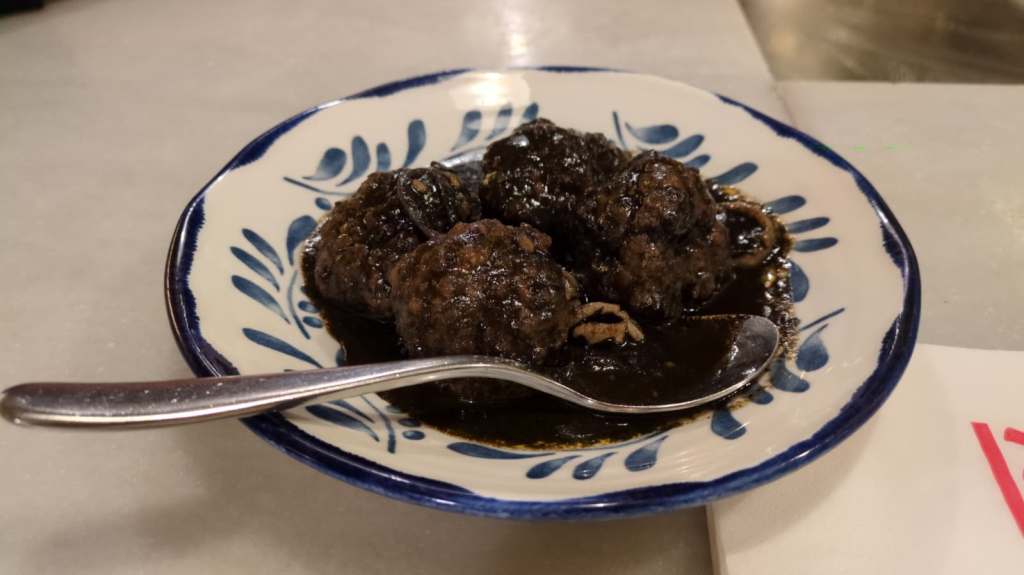
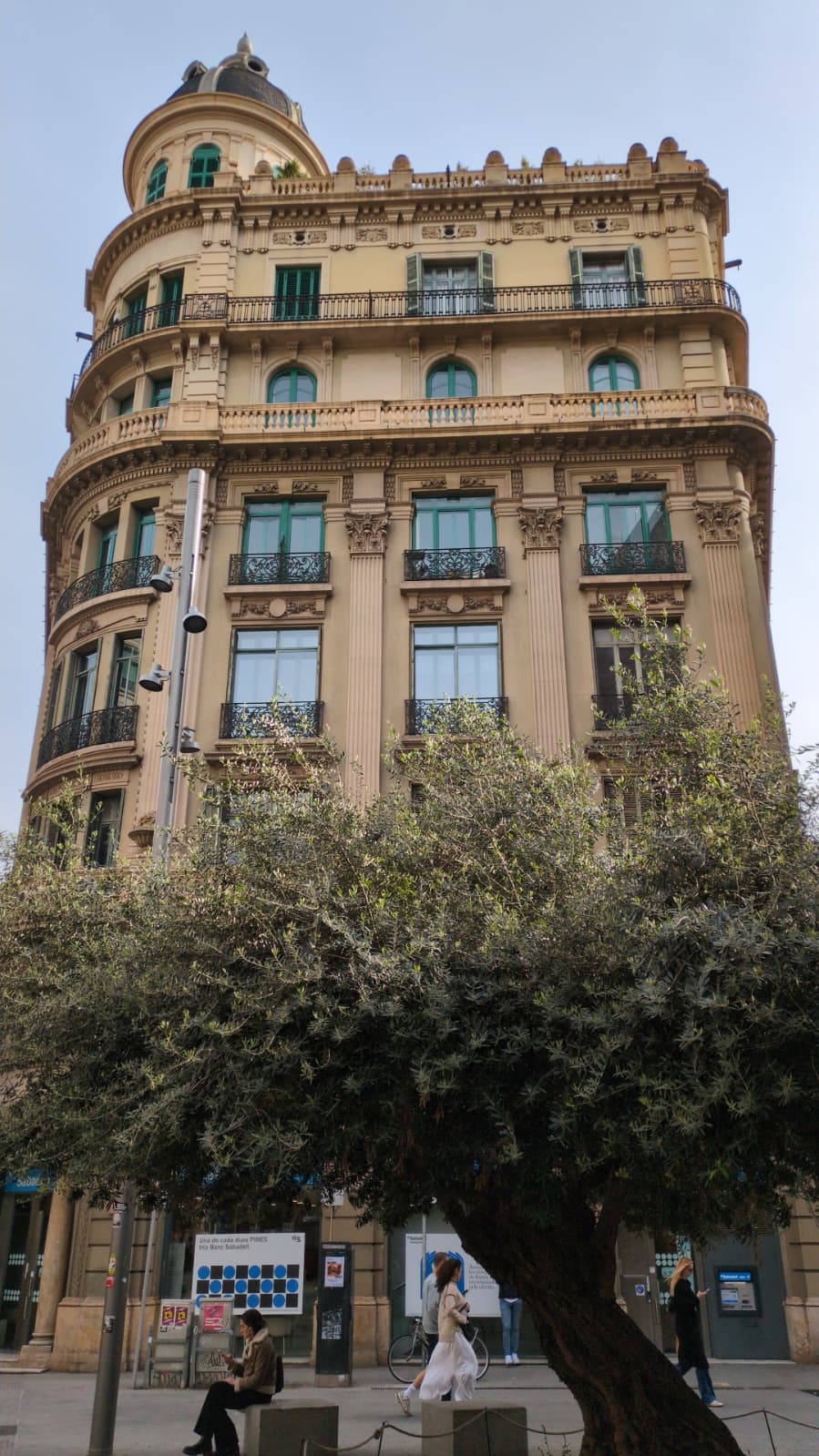
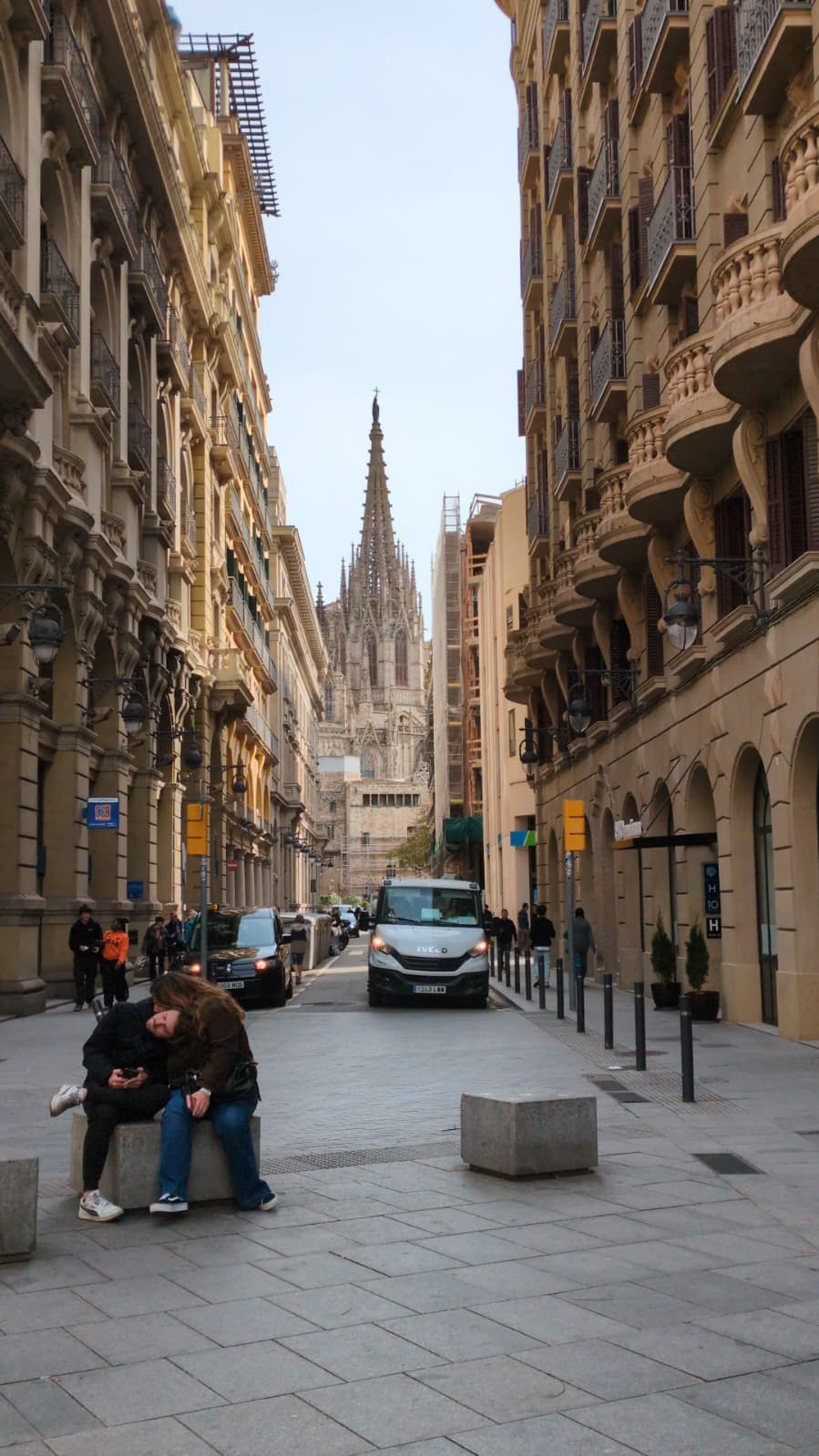
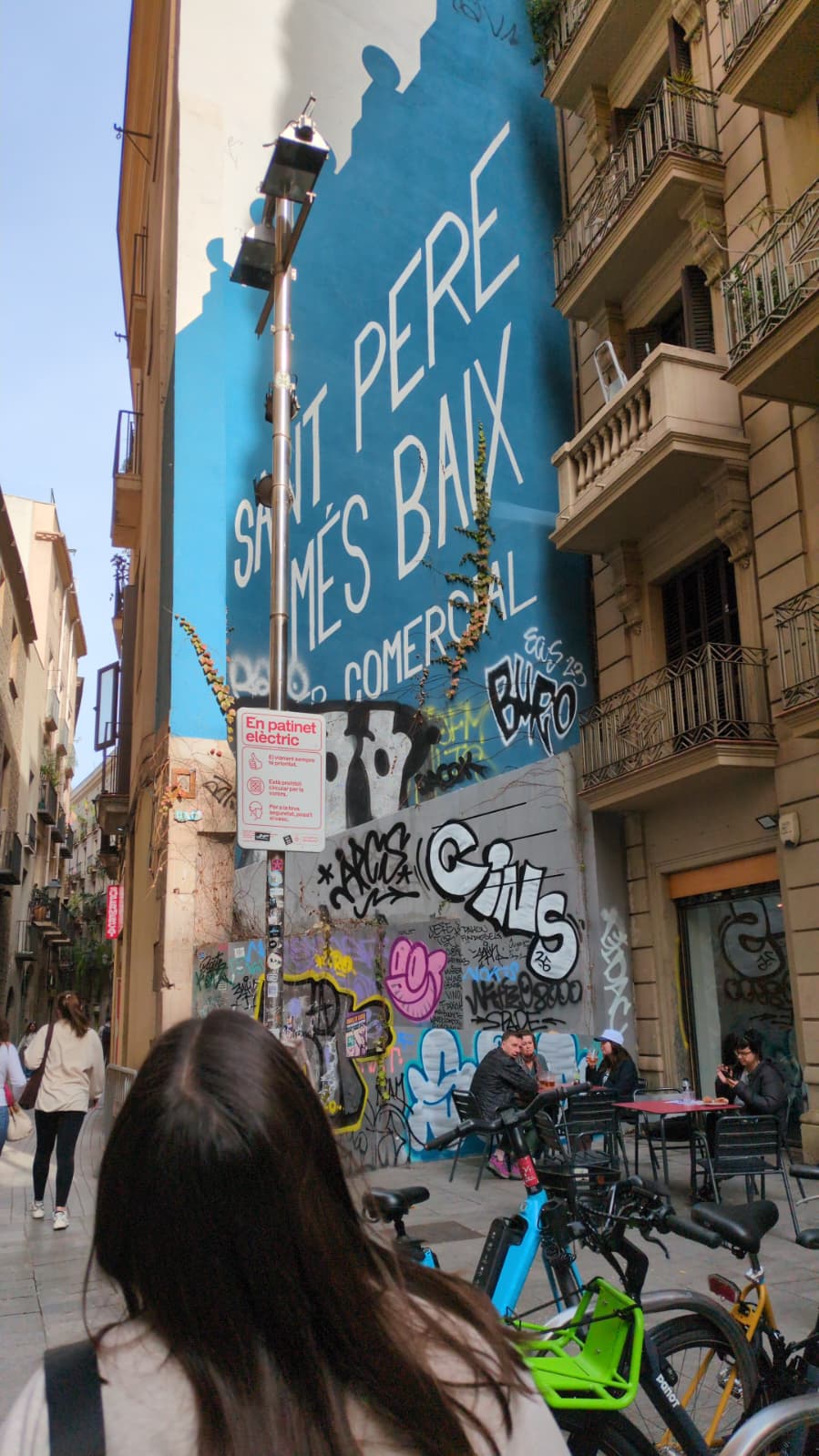
Then, we met back at the hotel and embarked on our journey to learn about one of the most fun and educational architectural centers in Barcelona, the Fab Lab!
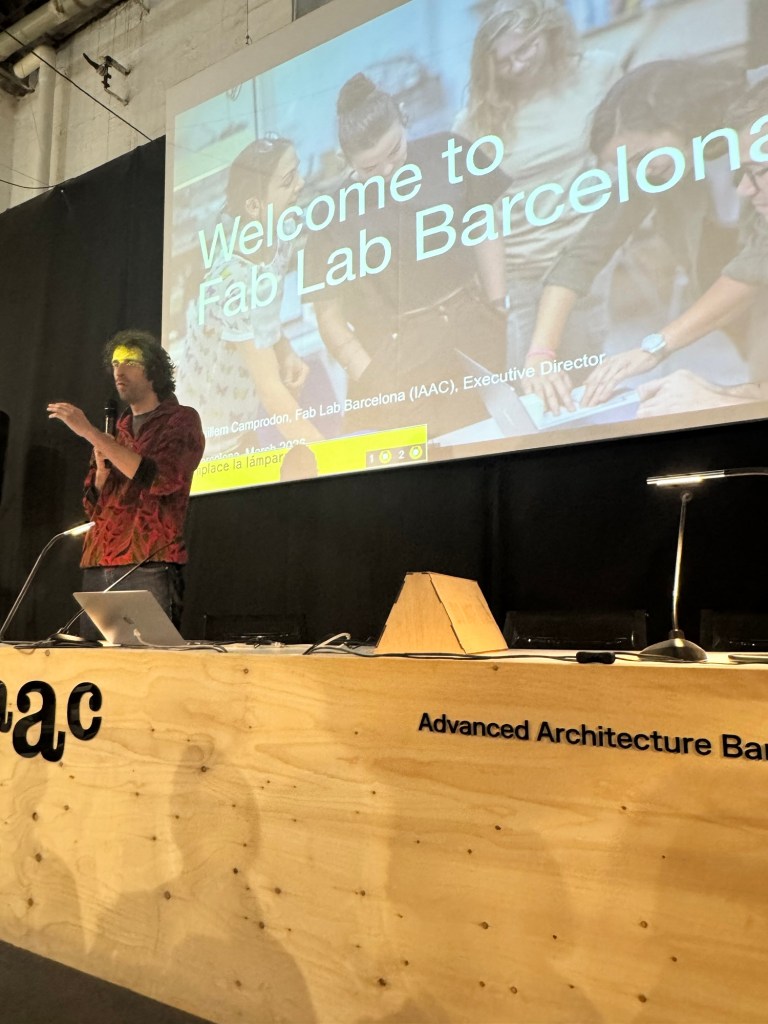
We heard from the executive director of Advanced Architecture in Catalonia (IAAC), Guillem Camprodon, on the type of work and cool projects going on at the Fab Lab Barcelona. The Fab Lab was founded in 2007 as the first European node of the MIT-funded Fab Lab network. They are part of a global community of over 2,500 labs, developing hands-on solutions and engaging citizens.
This education and research center has worked on multiple scales of human habitat for over 20 years. It serves as a resource and part of a network to help make anything.
The goal is to solve big problems through small actions. They stress manufacturing locally while spreading knowledge globally. Their 3 main sources of funding are education workshop fees, research grants, and equipment from company partnerships.
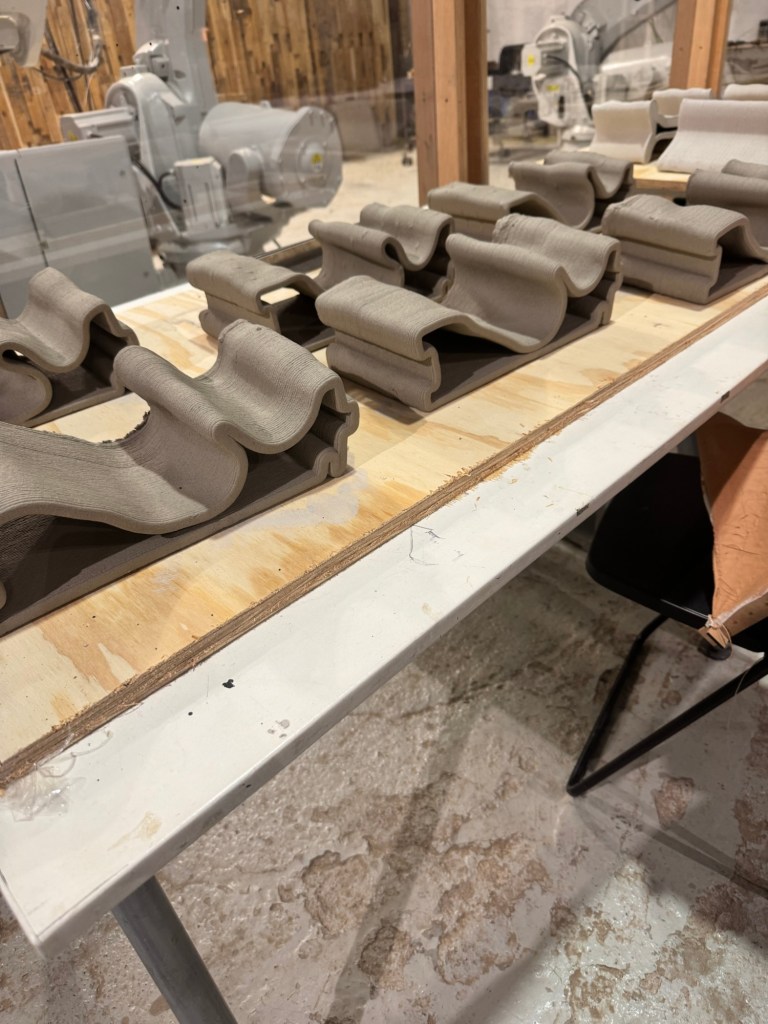
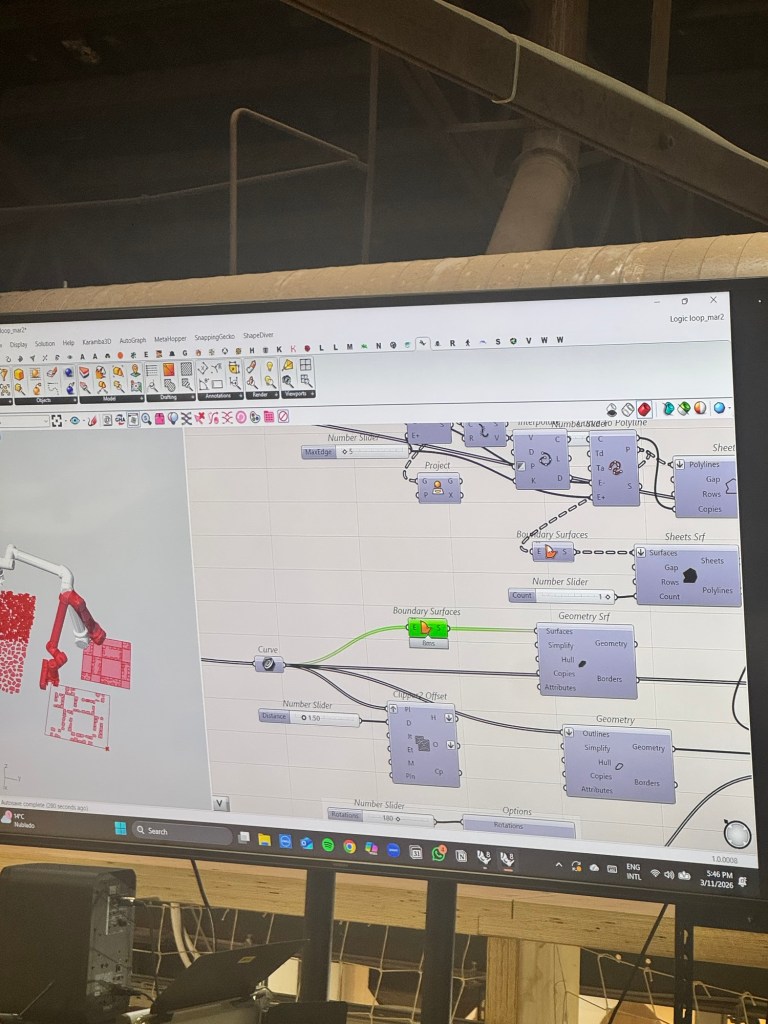
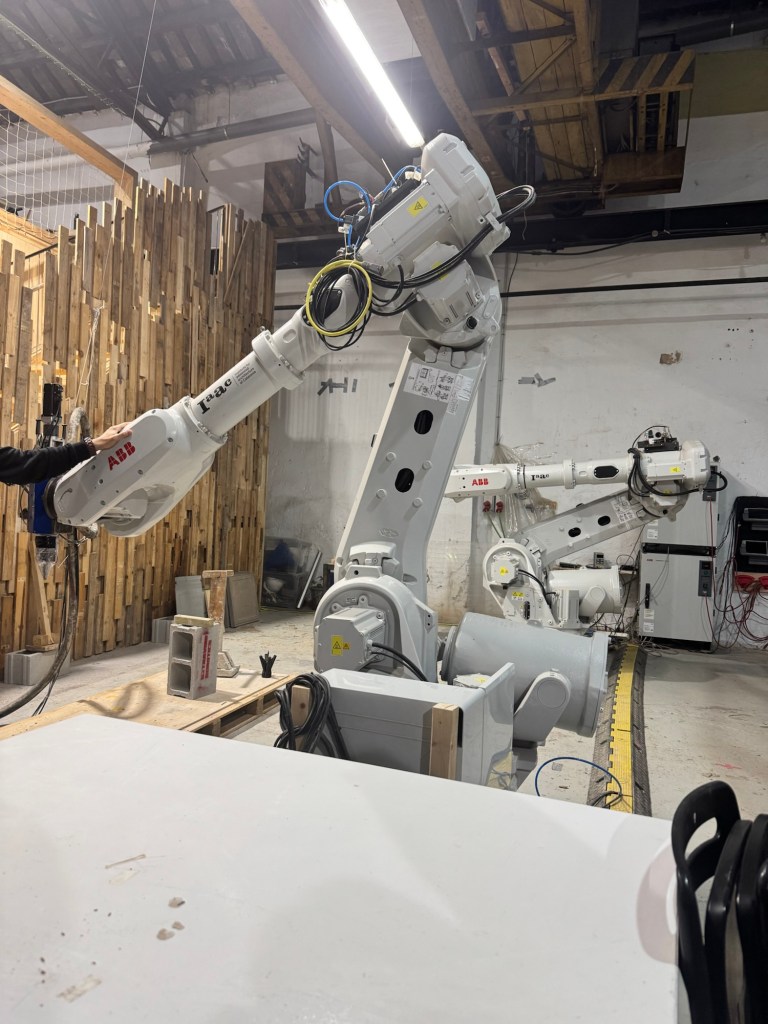
During our tour of the Fab Lab, we visited the digital fabrication spaces on the inside, including the electronics, clay, wood, and organic waste conversion spaces!
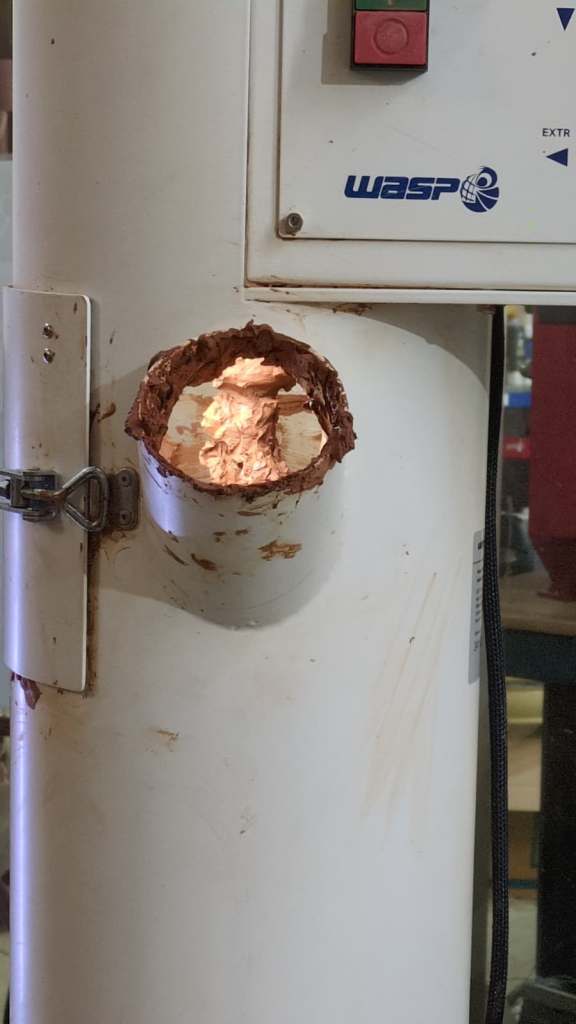
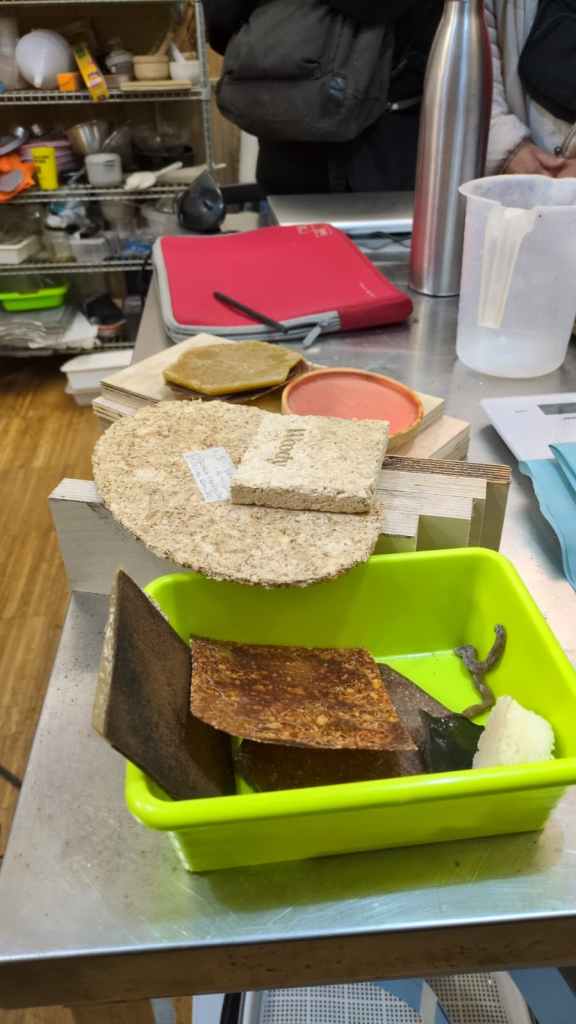
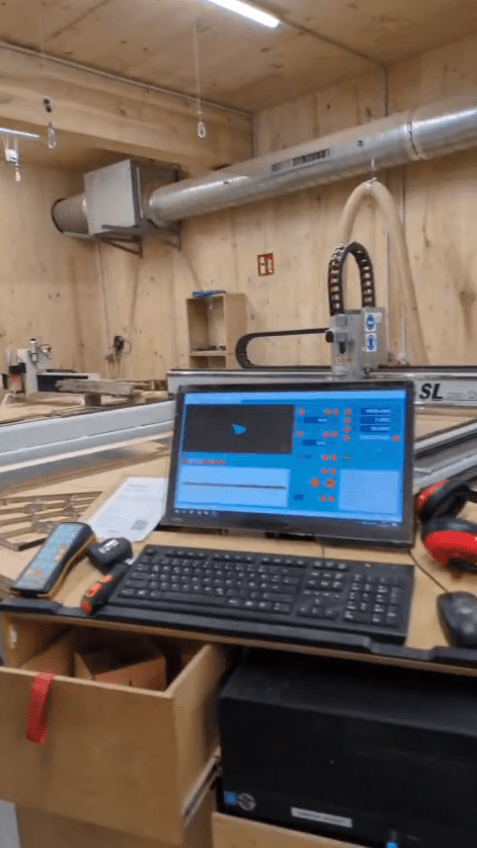
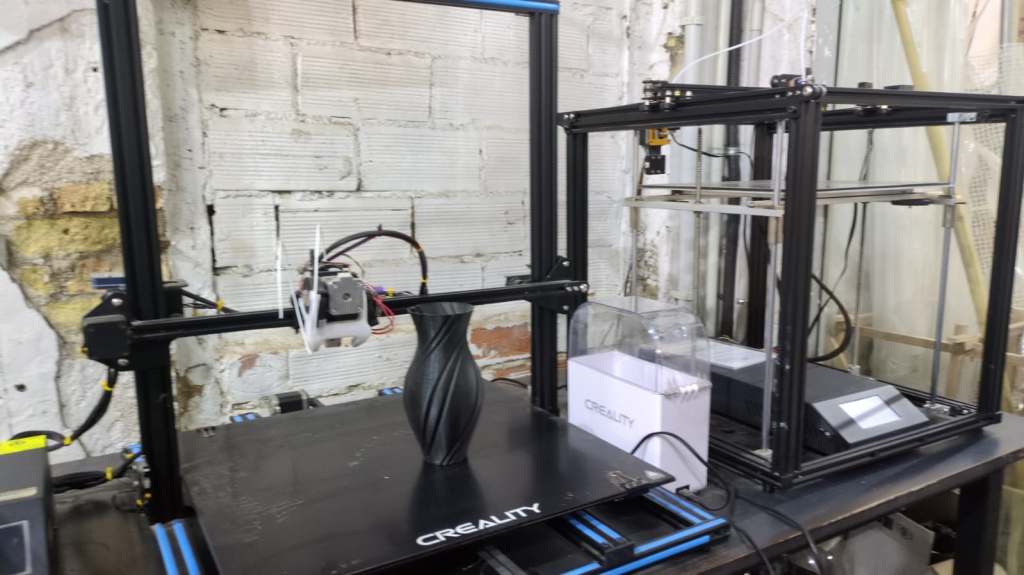
“Waste is just material that hasn’t found its place” – Guillermo
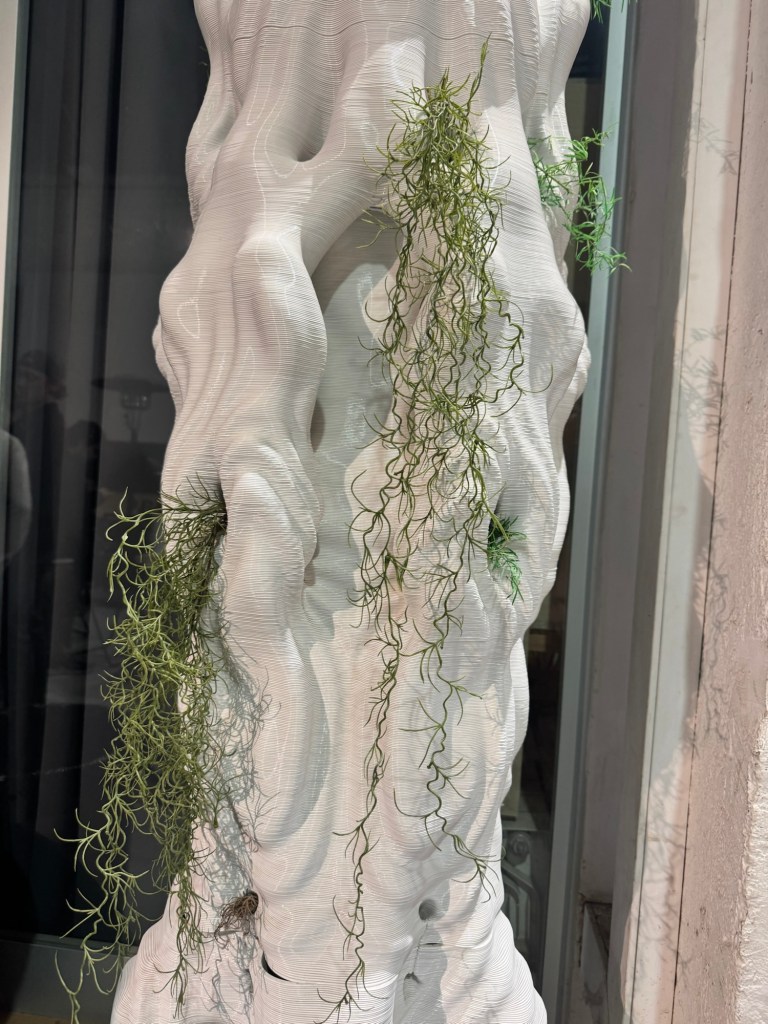
Cool Projects of Fab Lab Barcelona!
- ROMI uses robotic tools to support farmers in urban areas through micro-farming.
- RAWS is a deck of 5 card types designed to help define emergency situations and innovate during crises
- Remix el Barrio has made a jacket out of orange peels.
- Keratin protein from hair has been turned into new materials.
- Sawdust turned into boards.
- Recycled wind turbine blades into furniture.
- Clay 3D printers, some the size of a house.
- Robot arm with 6+ axes.
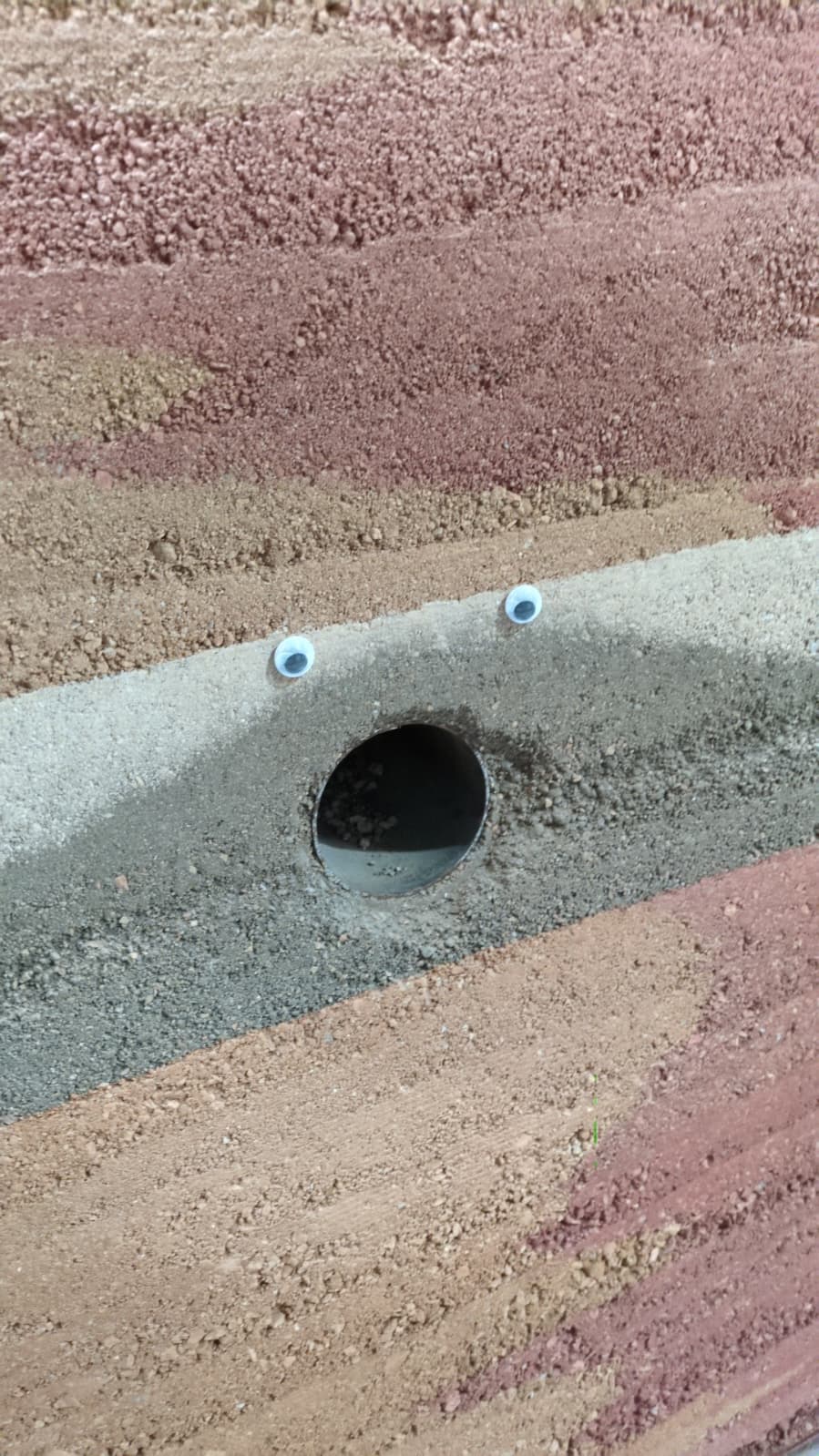
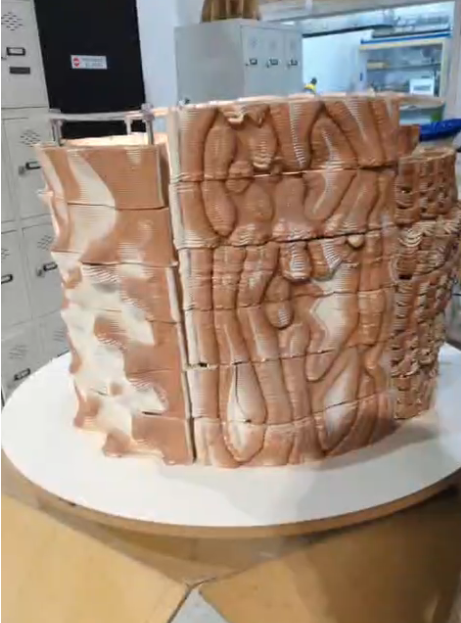
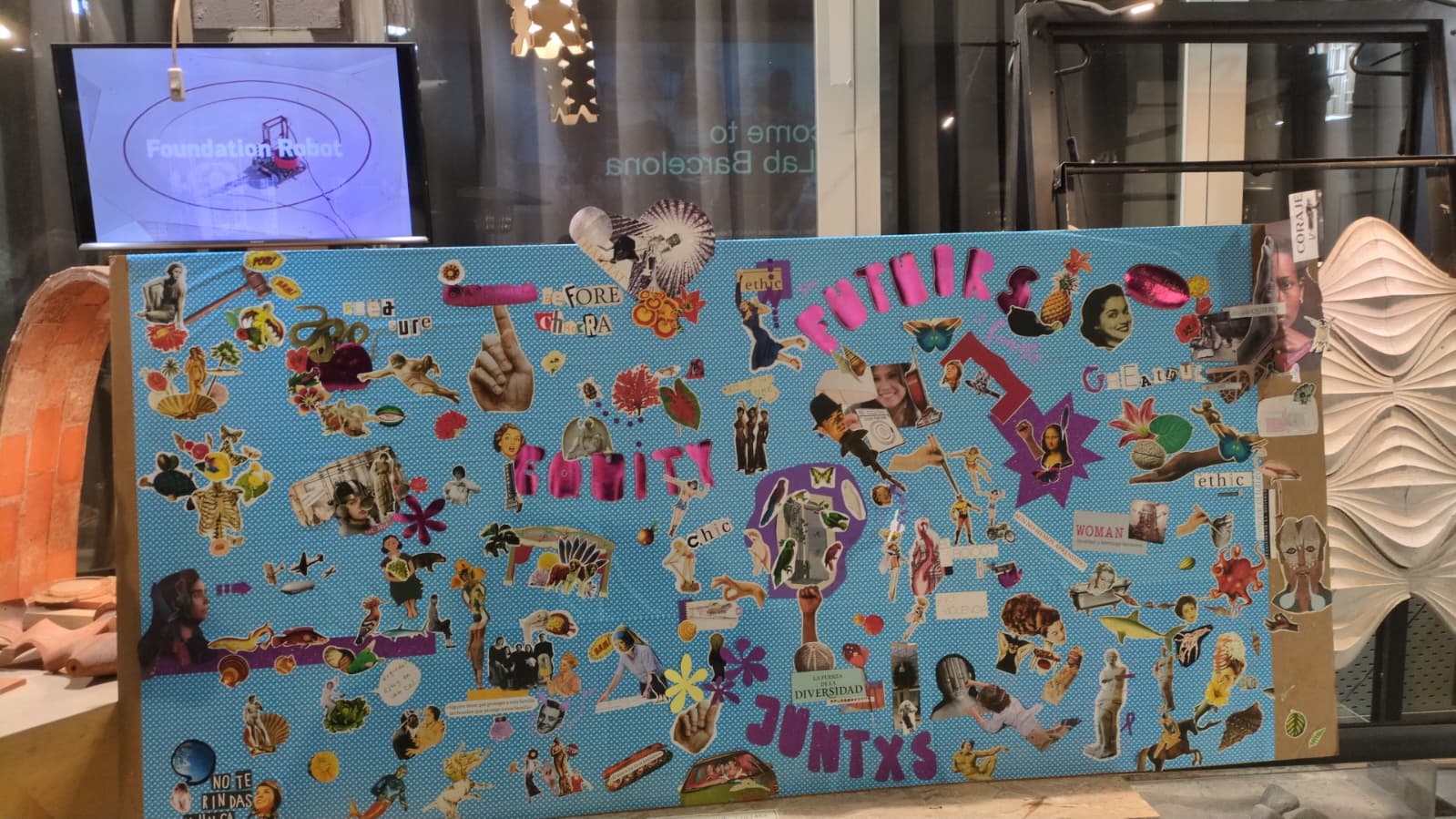
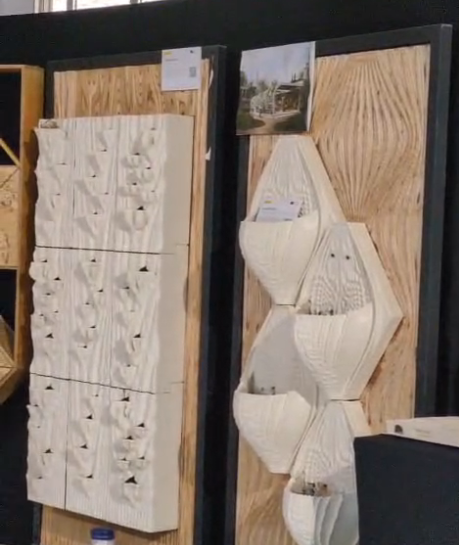
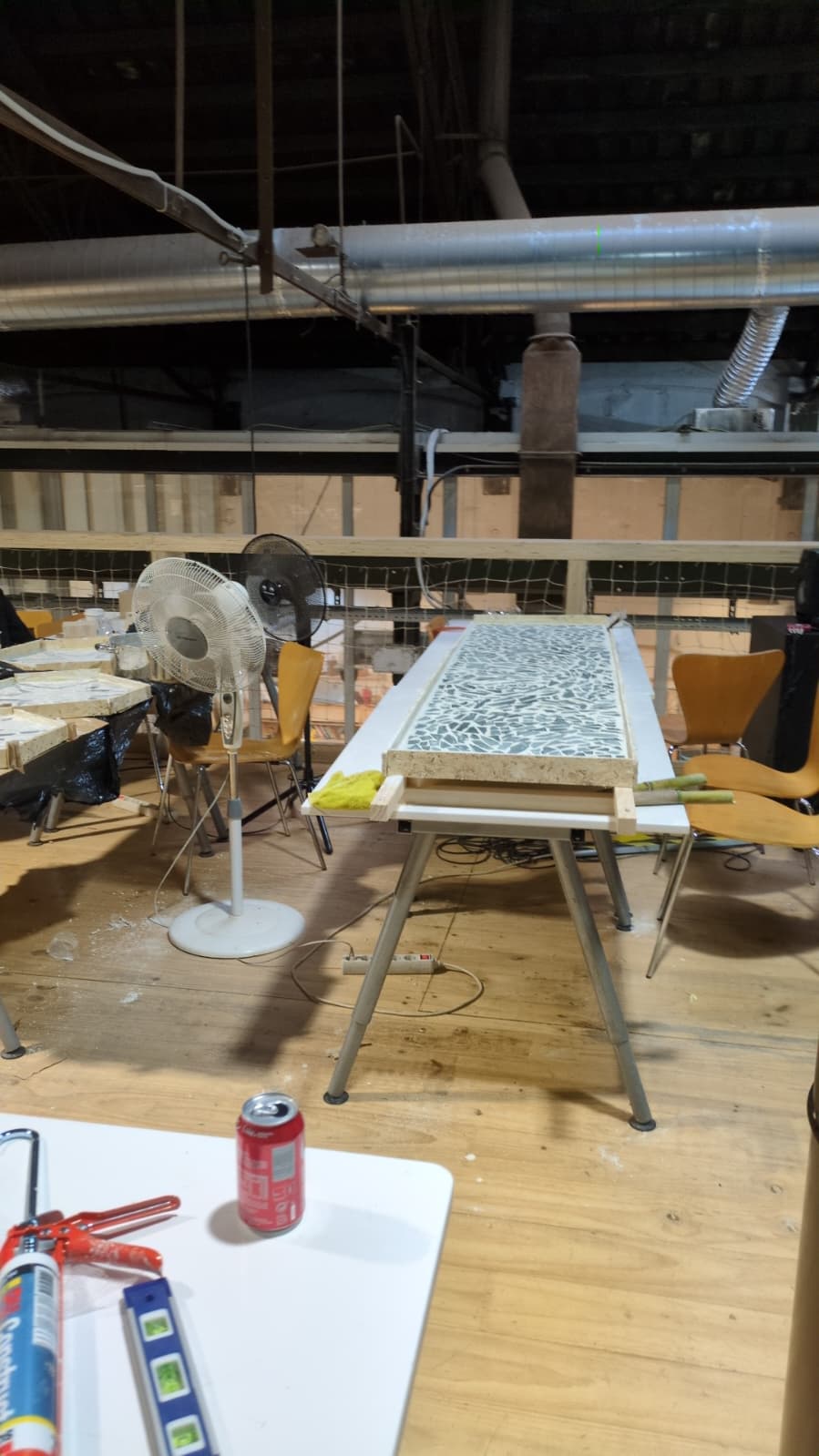
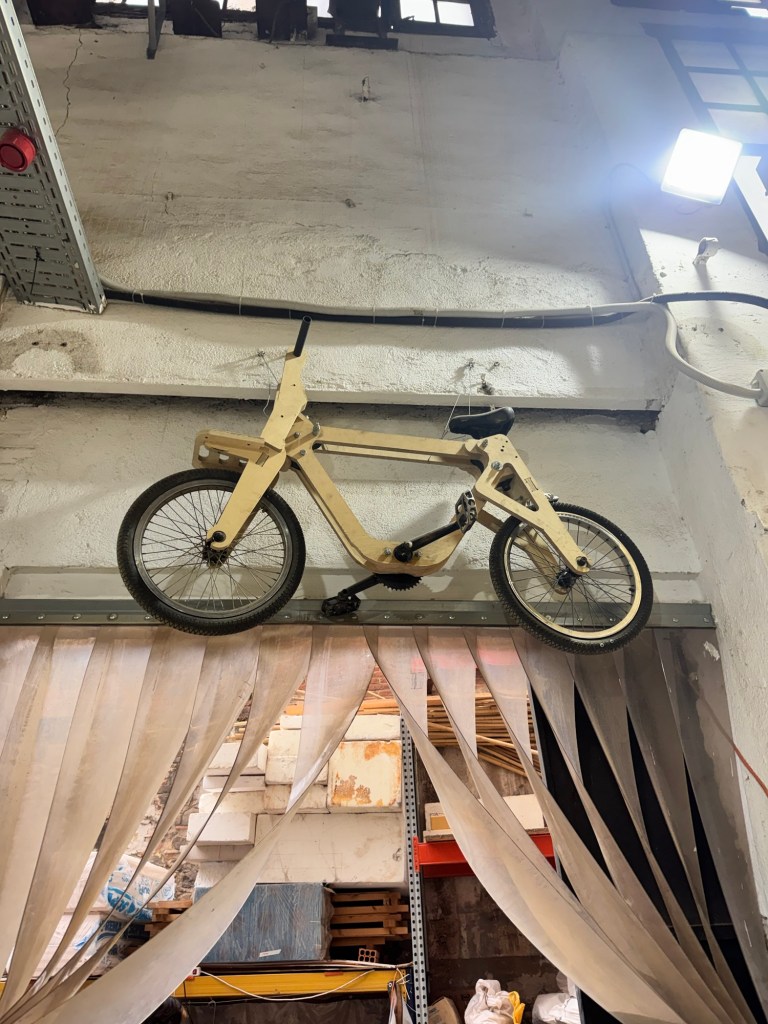
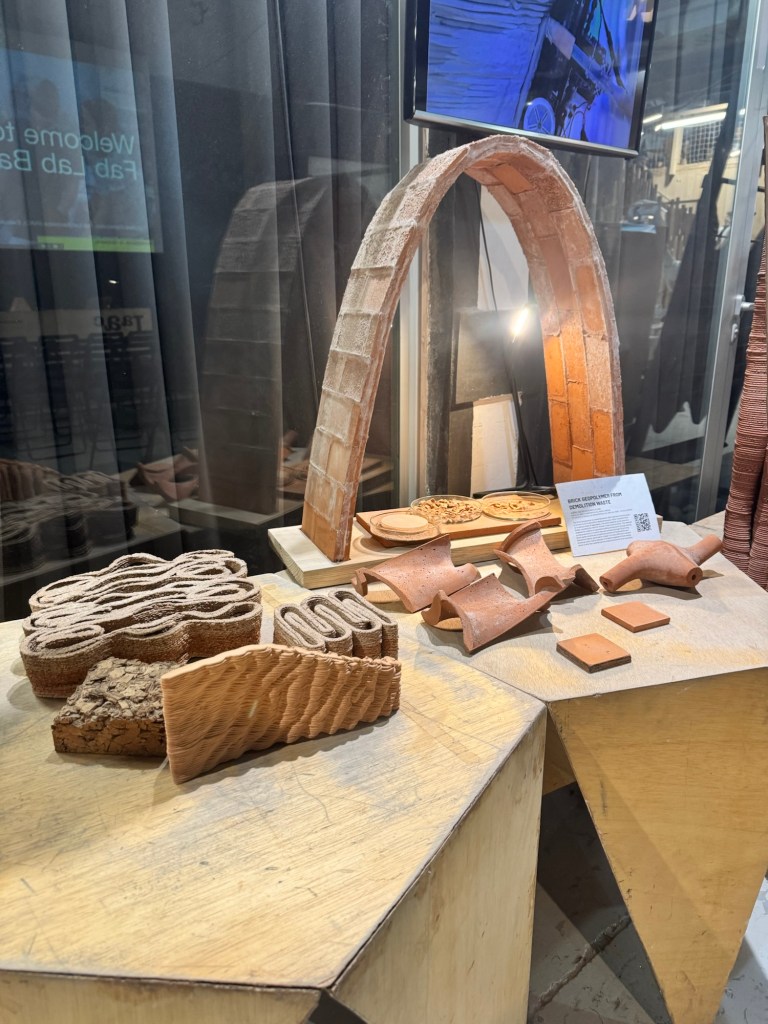
After that, we took the cinematic route back to the hotel! We found many structures and designs along the way, including the Arc de Triomf of Barcelona, the historic Central Catalana de Electricidad (neo-baroque cast-iron style), la Estacio del Nord (bus station), and graffiti!. So much Catalan modernism and classic architecture at the same time!
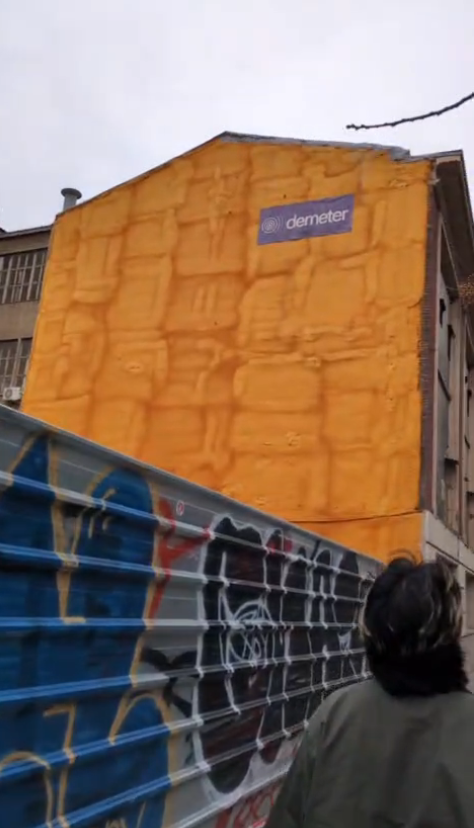
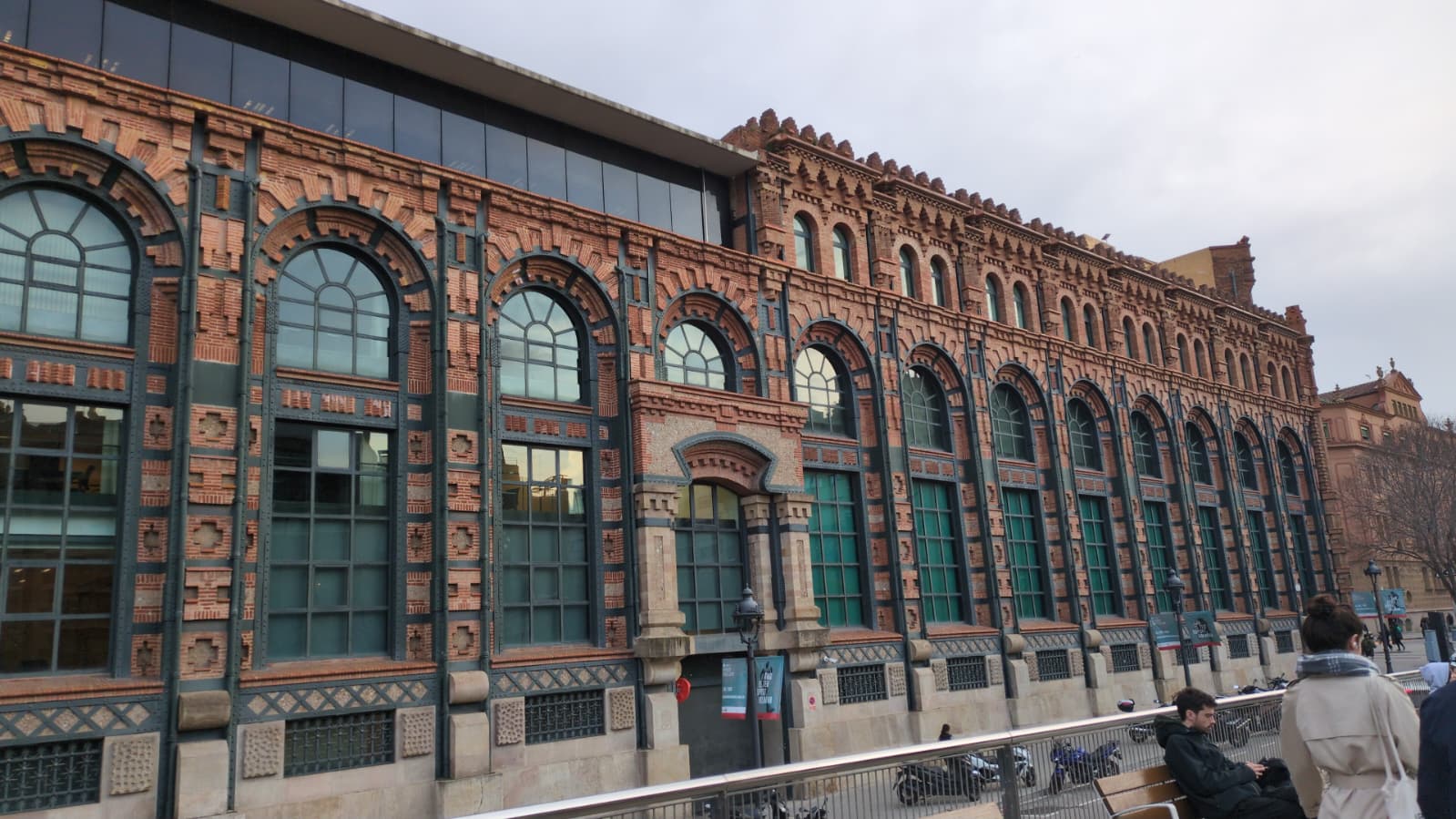
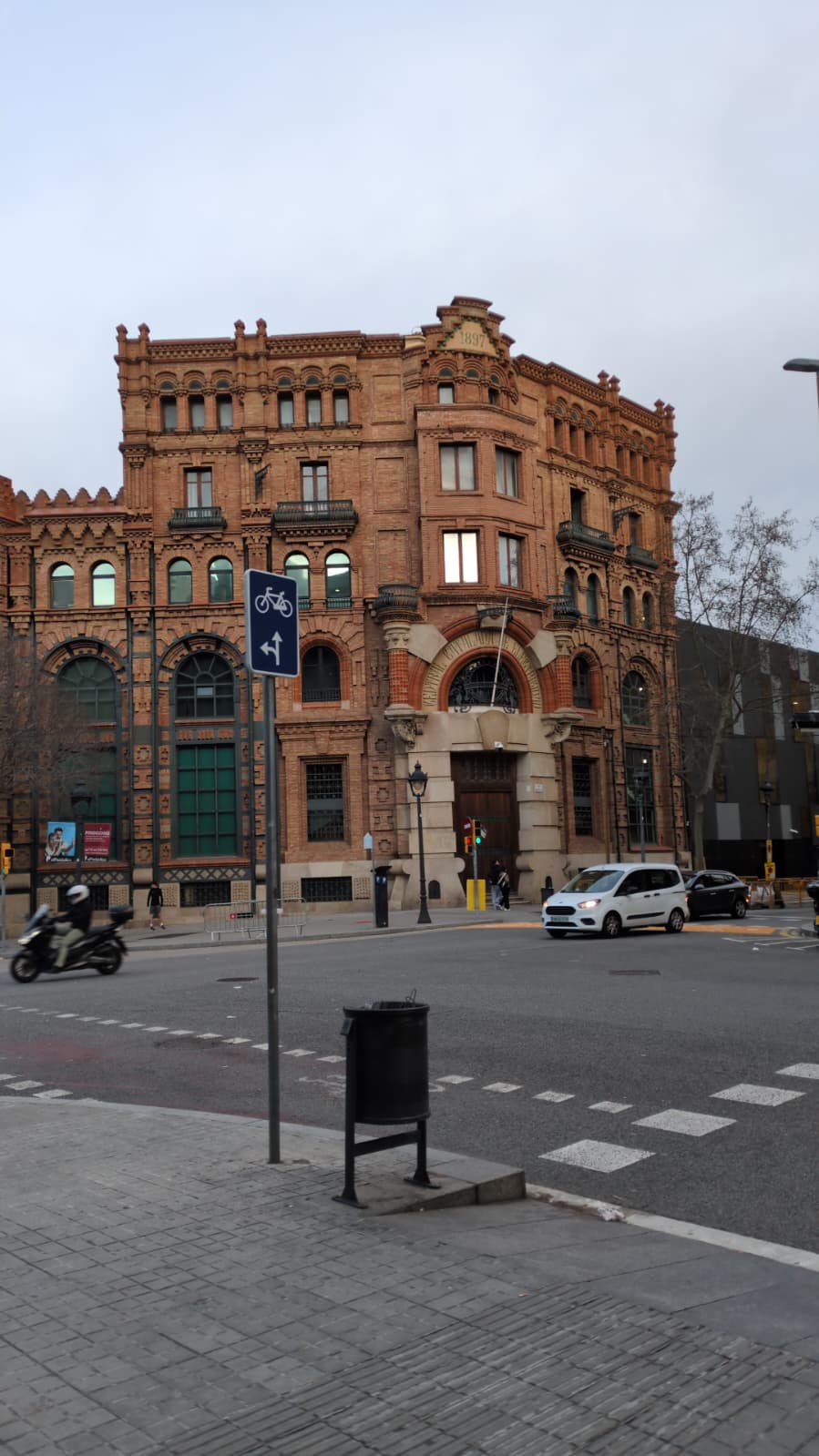
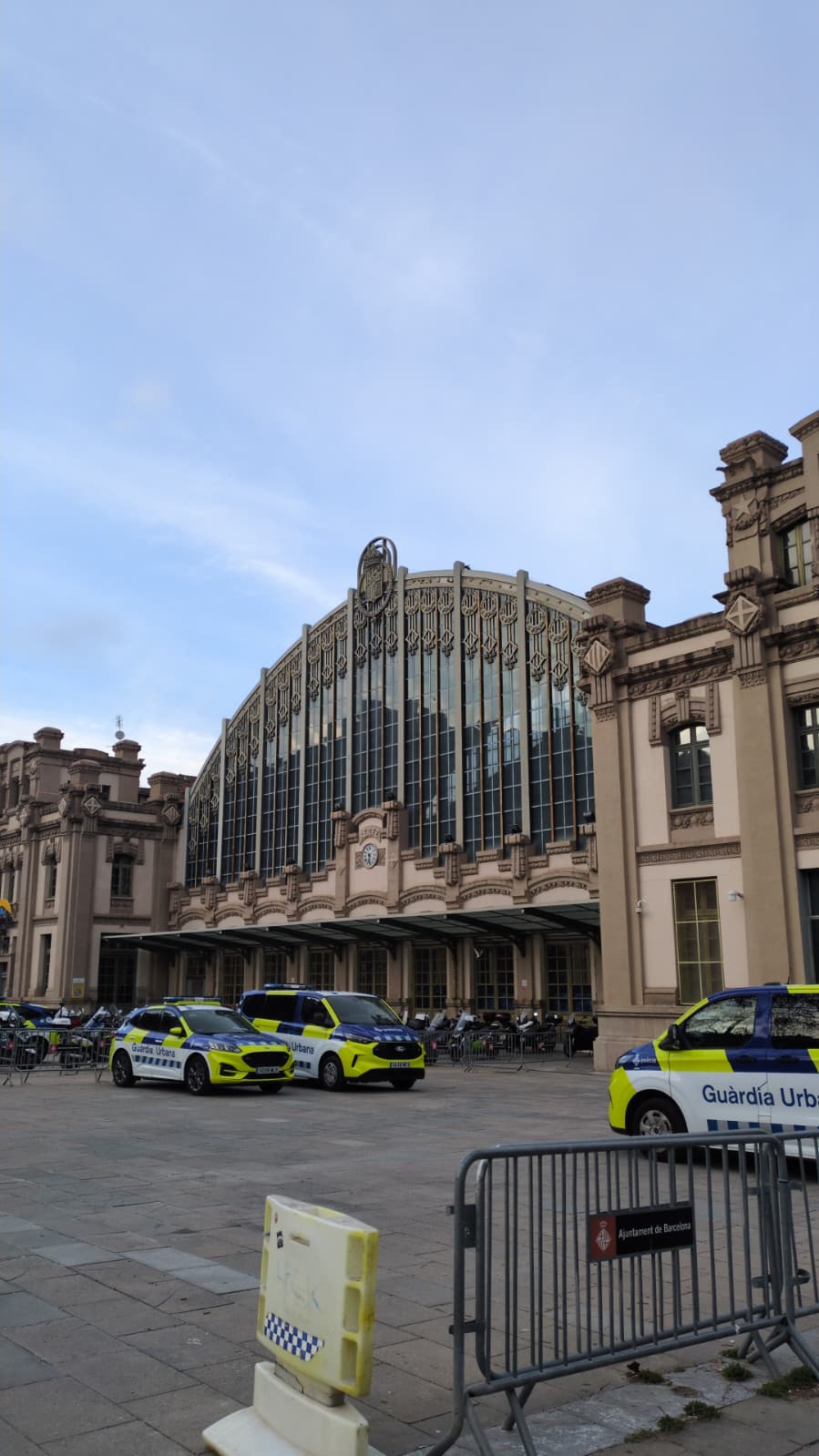
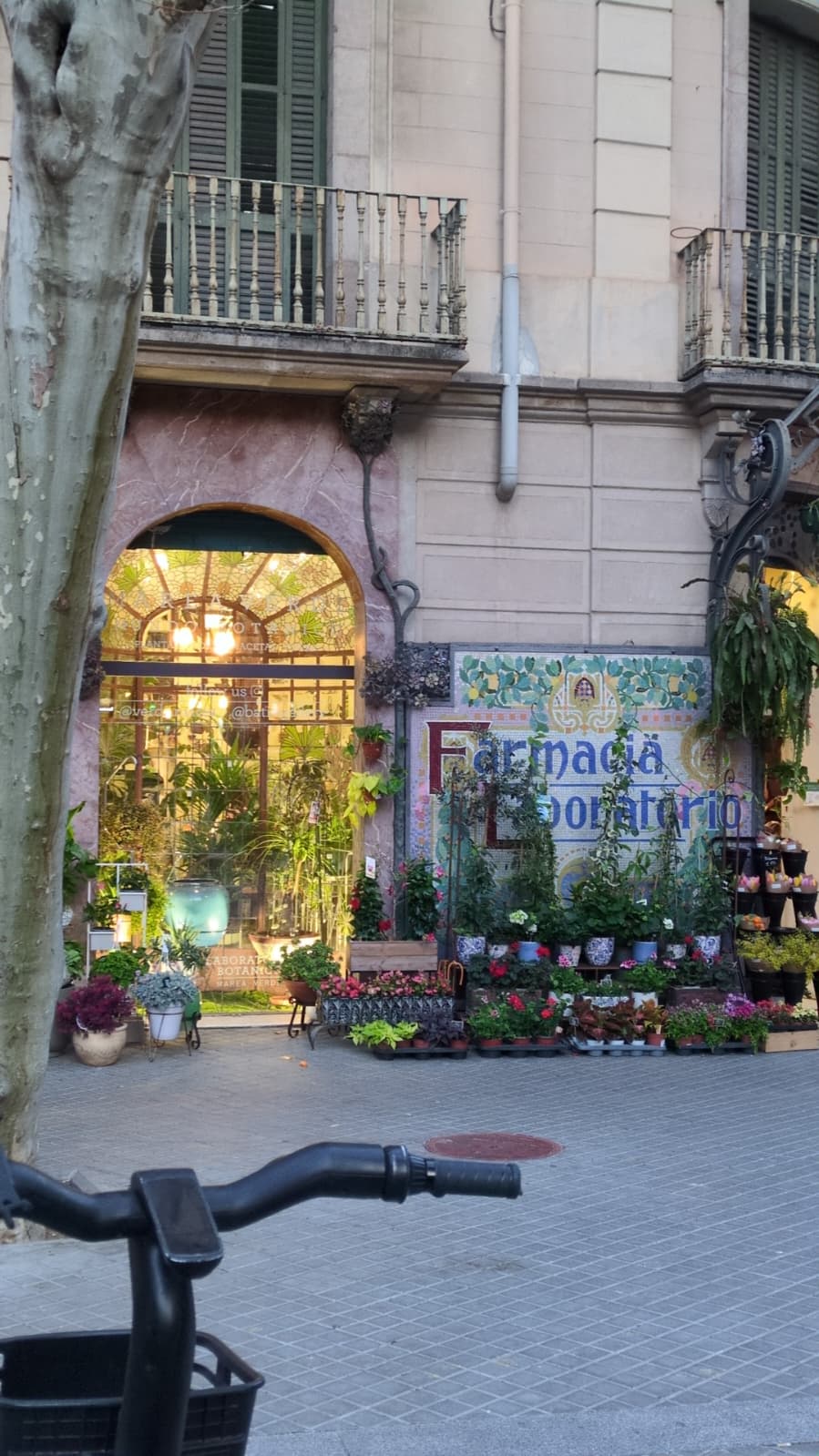
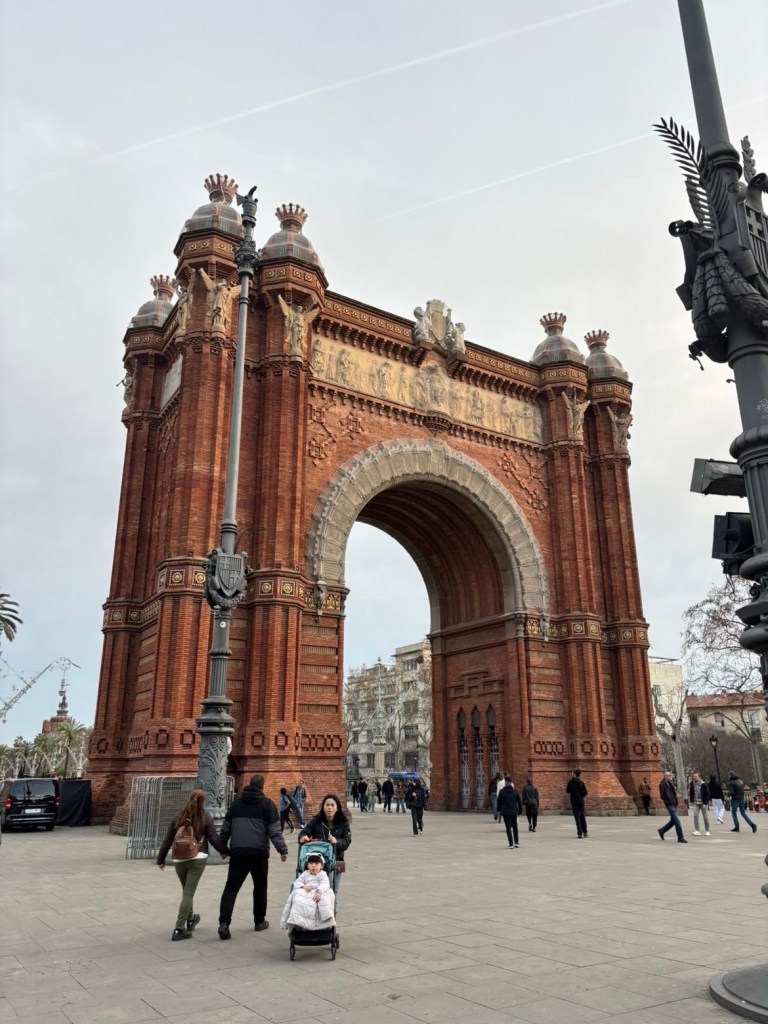
on the walk to dinner!
The Arc de Triomf was built as the main entrance to the 1888 Barcelona World Fair and designed by architect Josep Vilaseca i Casanovas. A fun architecture fact: it features distinctive red brick construction in the Neo-Mudéjar style, blending Moorish and European influences. This is unusual compared to the stone arches seen elsewhere in Europe. She’s an icon 💅.
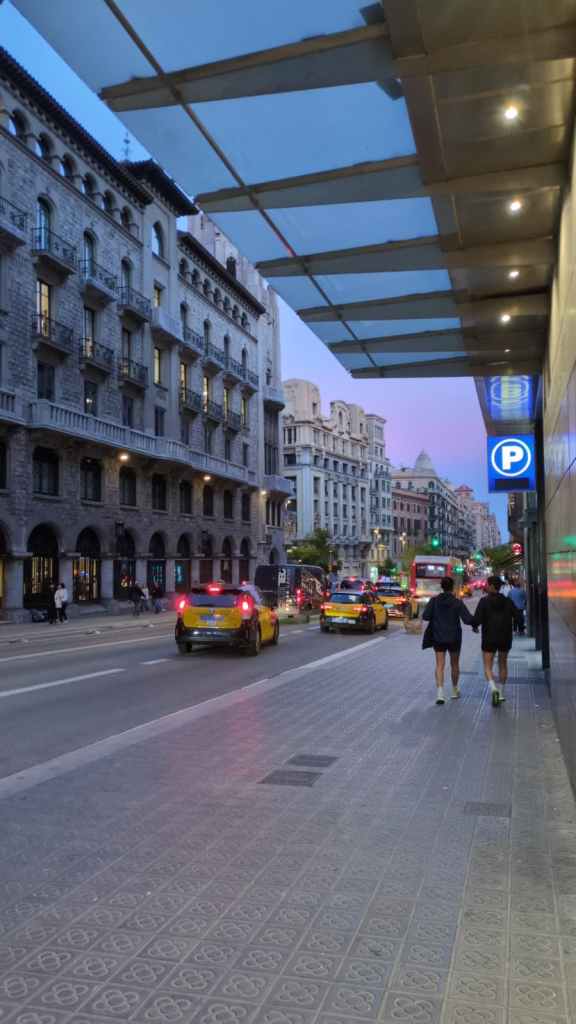
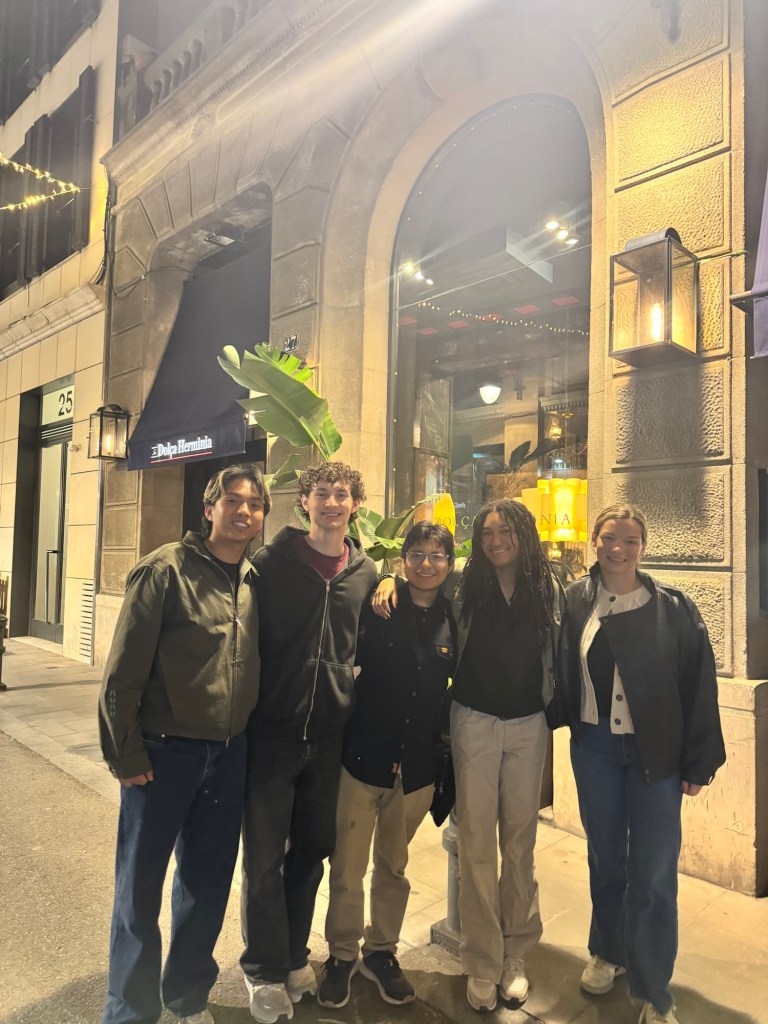
Then, we started the second part of the route from the hotel, going to our group dinner place – Dolca Herminia!
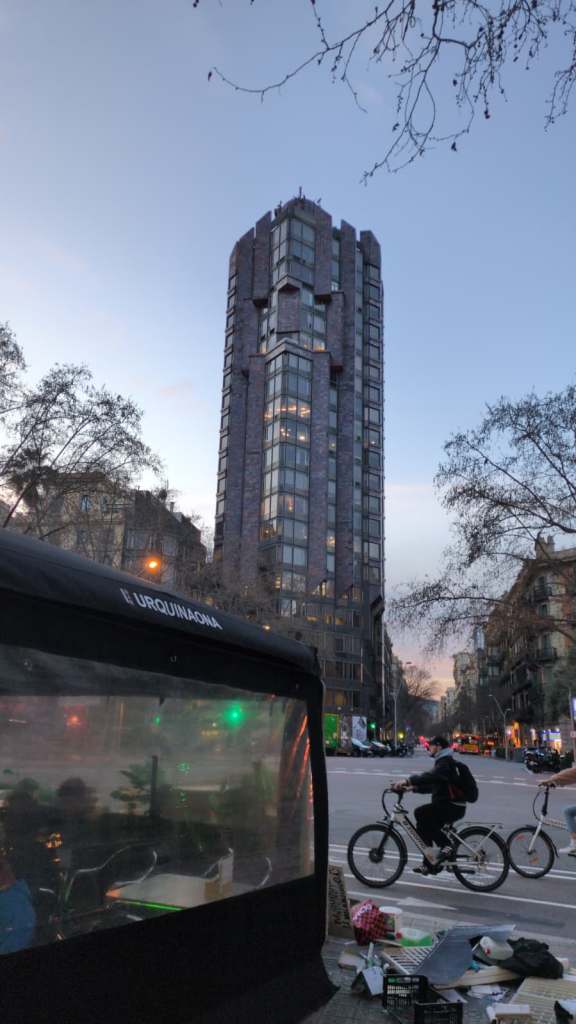
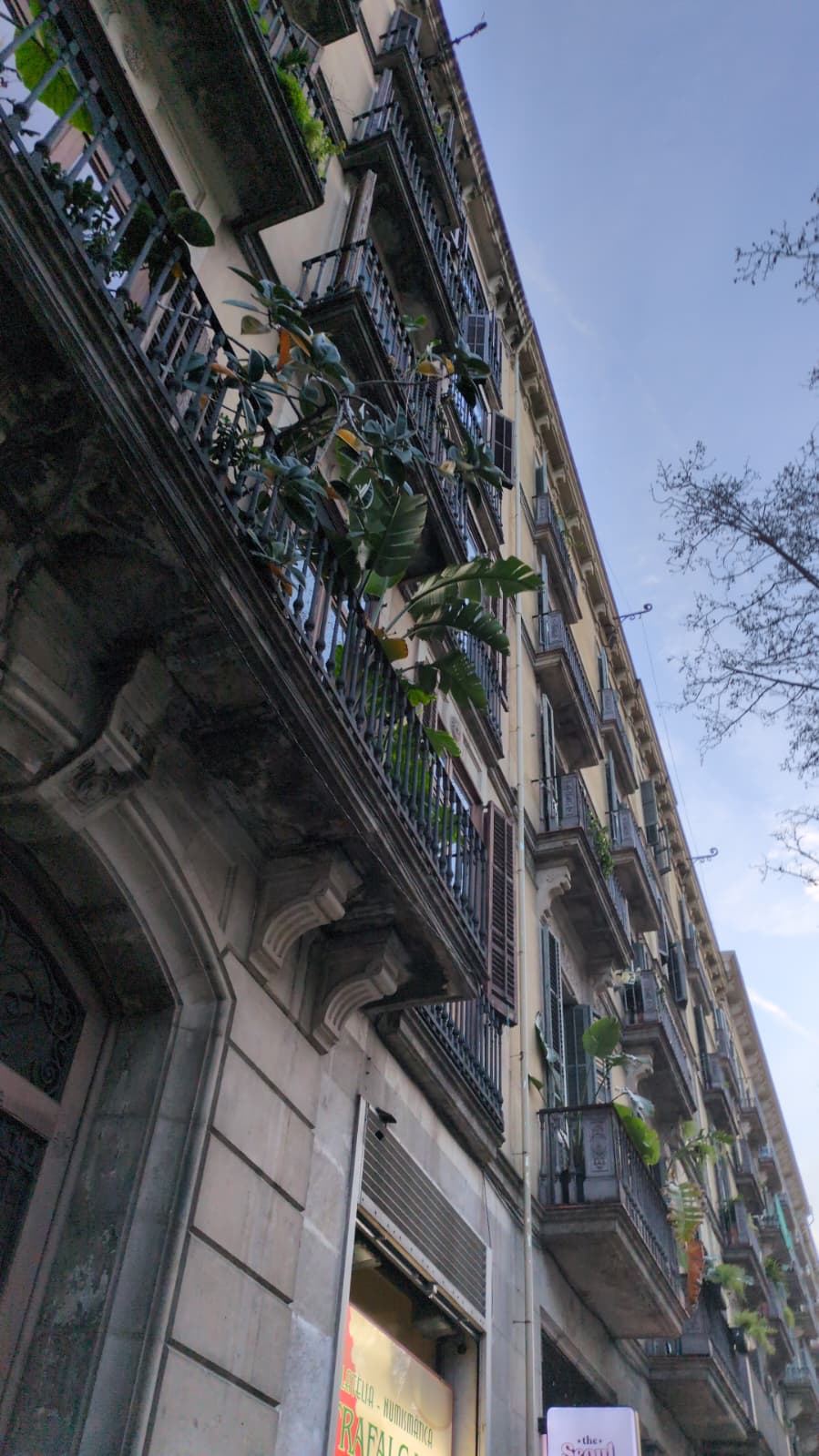
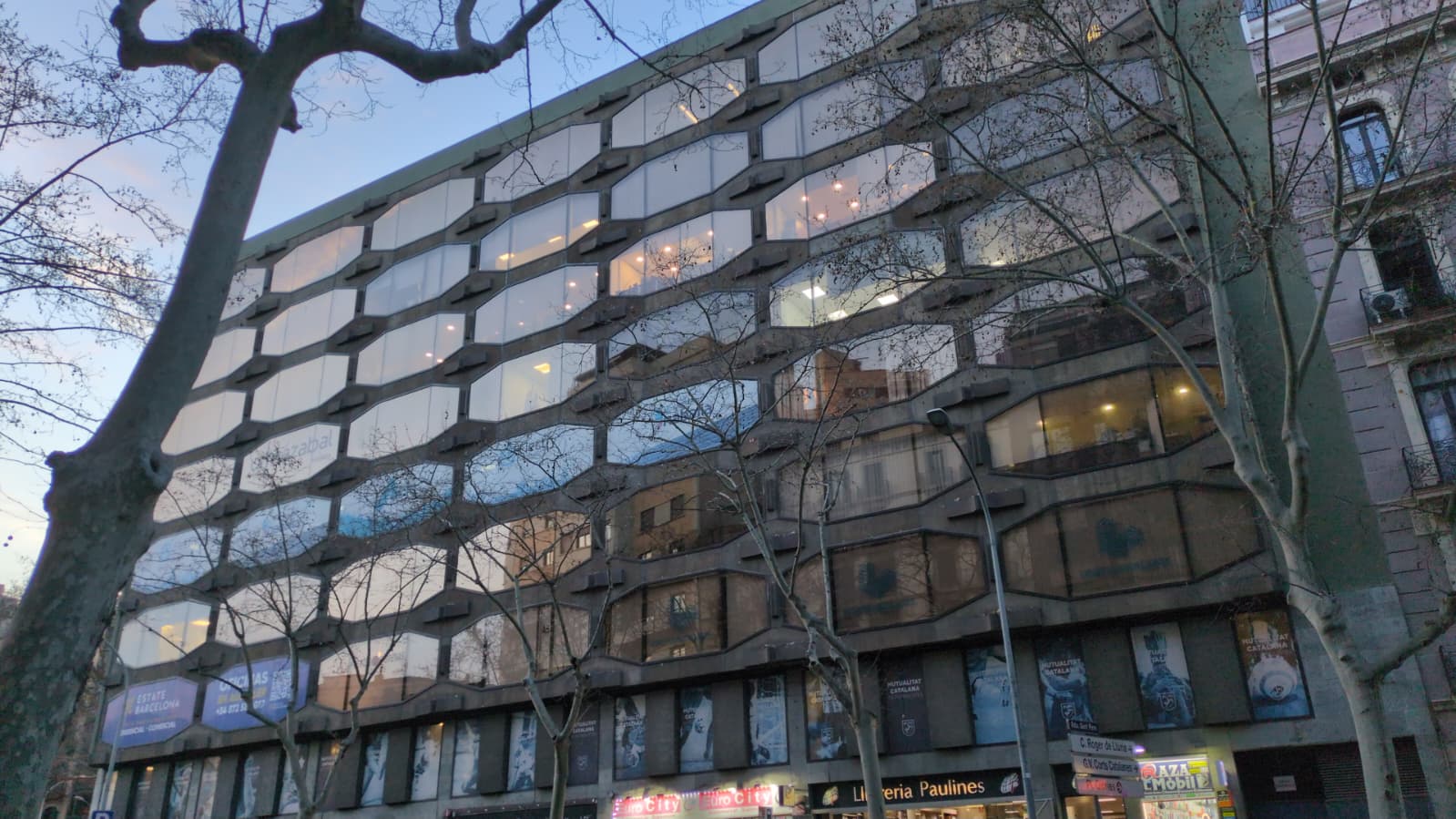
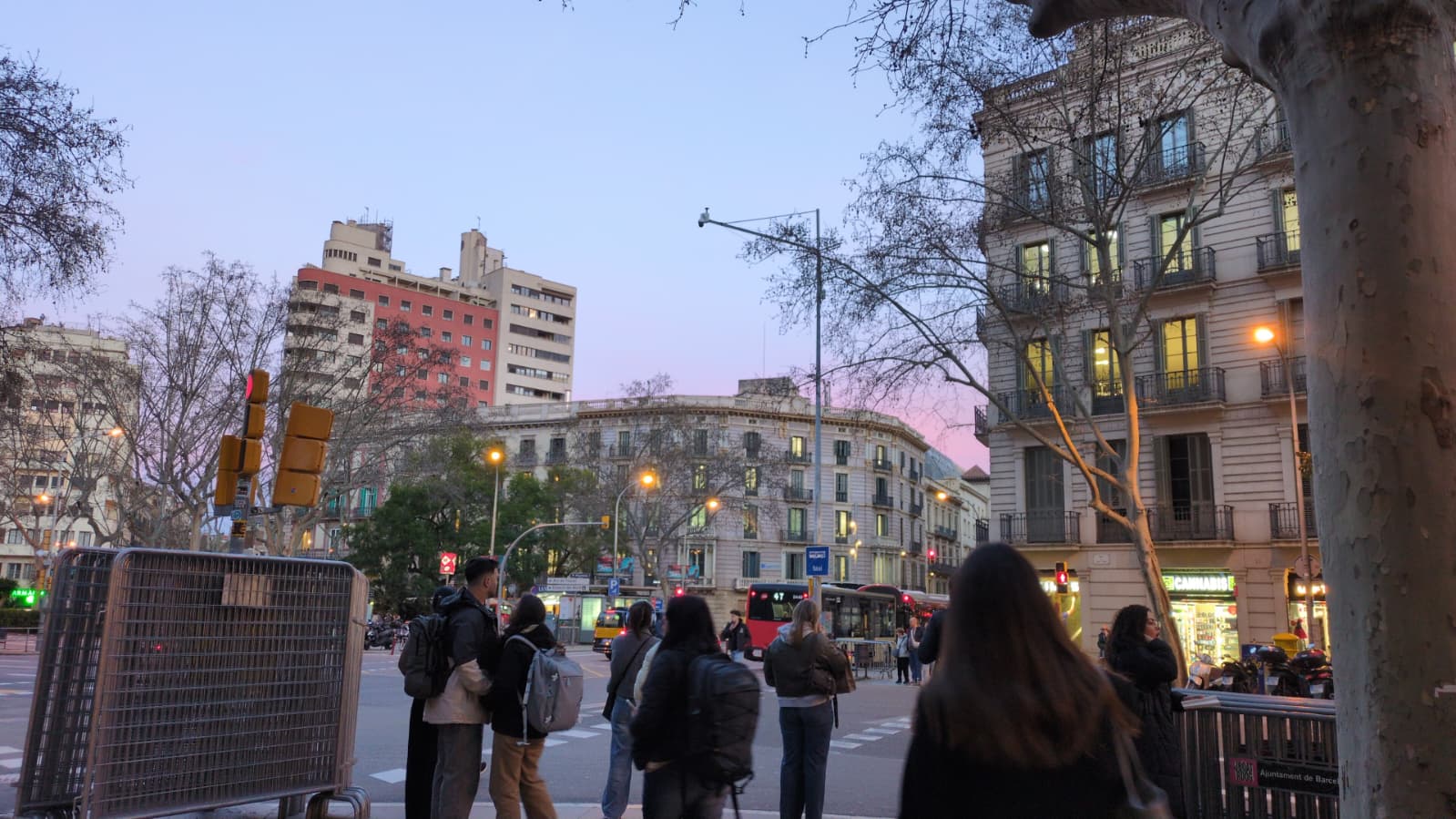
We were surprised to find a great combination of colors, geometry, and styles of the Gothic Quarters in the homes, stores, and buildings around La Rambla, with the sunset as an astonishing background 🌇!
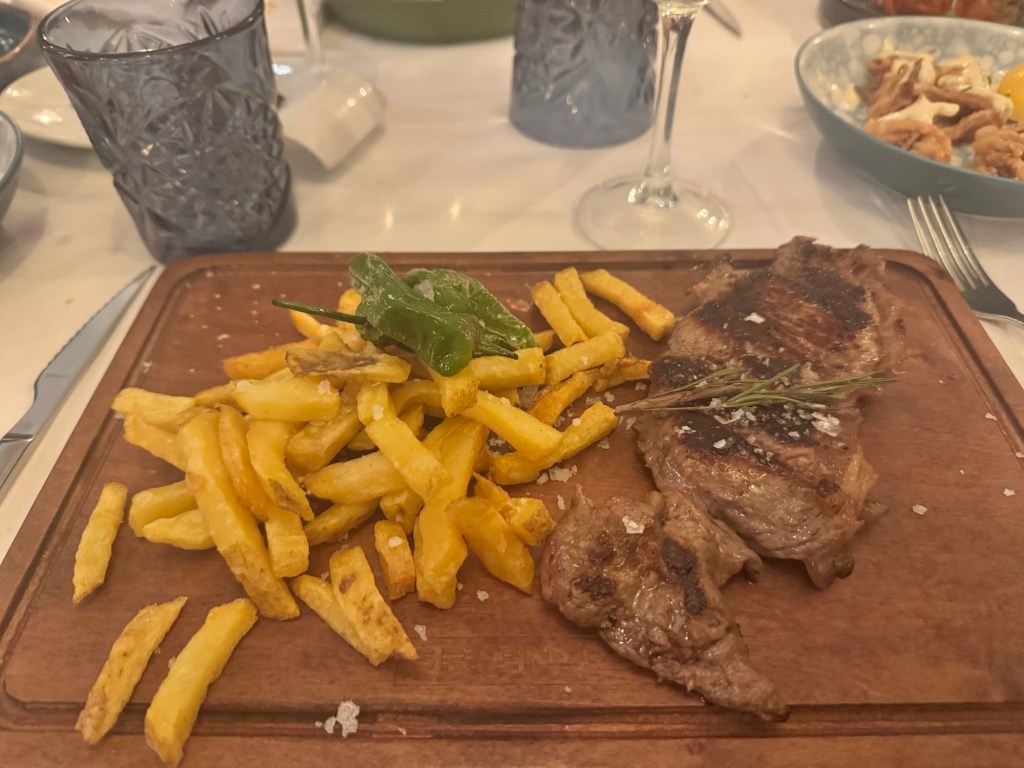
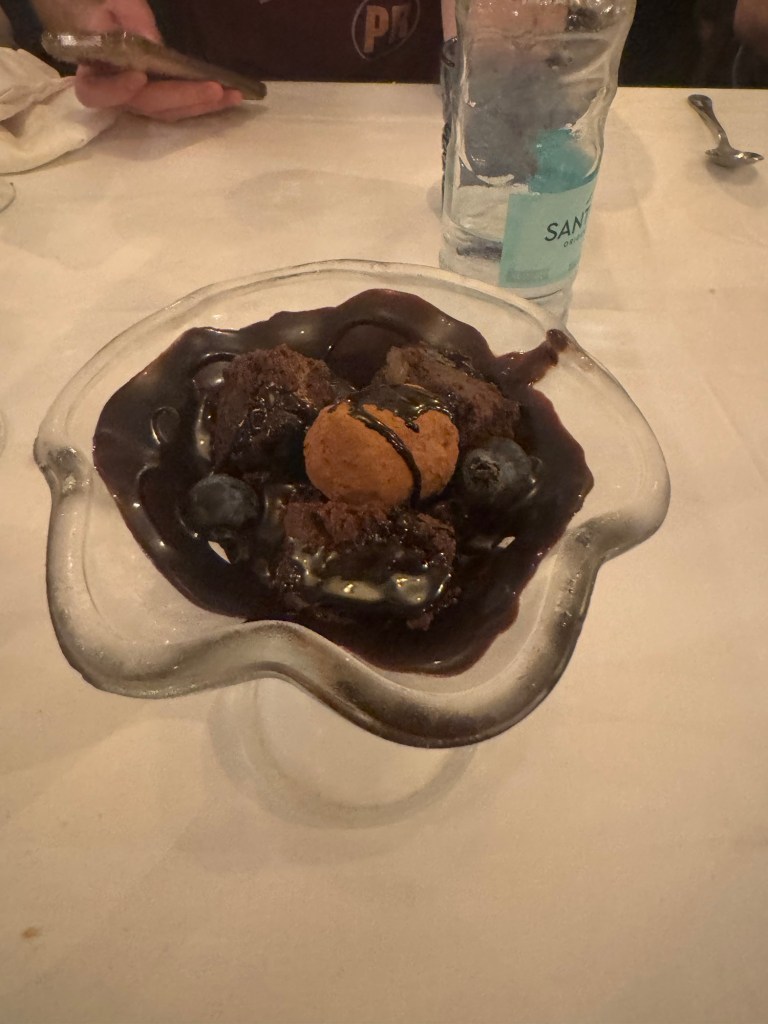
Then we arrived! Bon profit (enjoy)!
Day 4: Group 4
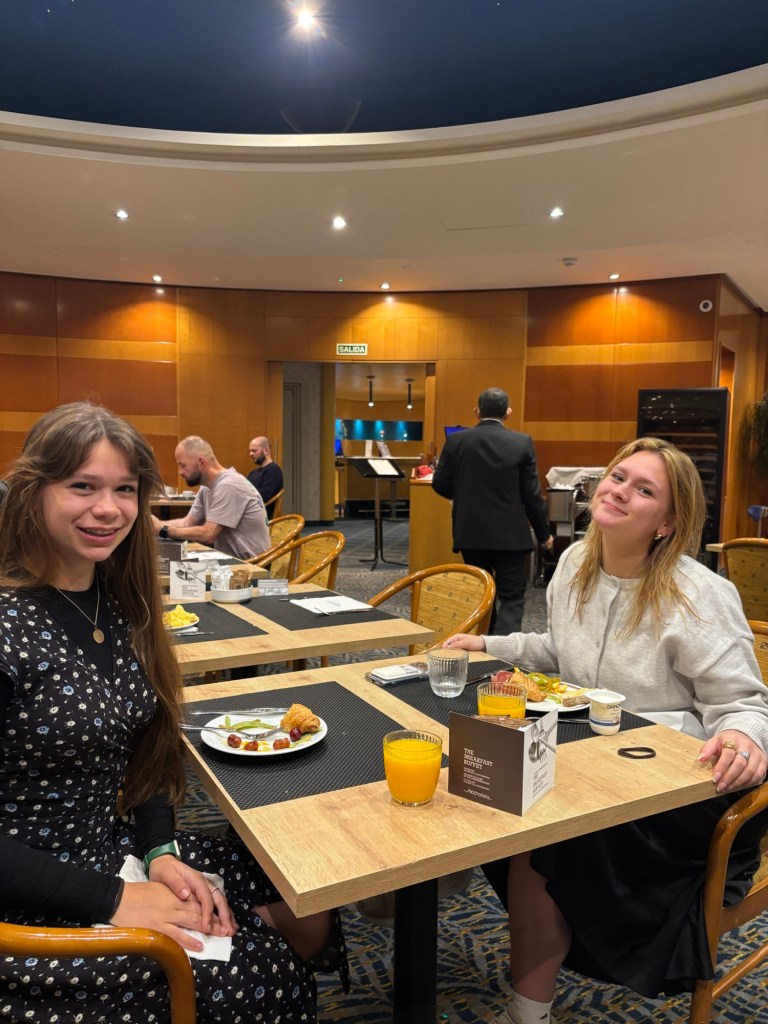
We got to HCC Hotel Montblanc in Barcelona yesterday and had our first breakfast here today! It is very similar to the breakfast in Madrid with lots of pastries, meats, cheeses, and fruits! Today, Charlotte and Emory had croissants, Pan con Tomate, and yogurt.
Walking Tour with Guille!
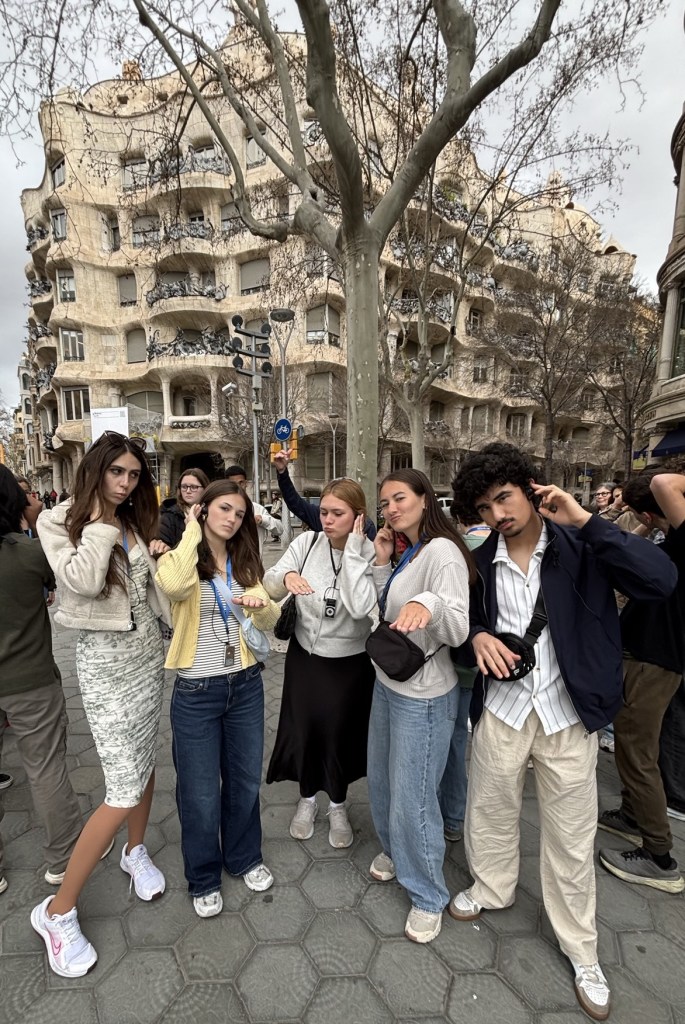
Our tour guide, Guille, gave us an introduction to the street we were on and the great works of Gaudí. He told us about how no buildings on this street are over 160 years old and that Barcelona has 9 UNESCO buildings; 7 out of 9 of these buildings are designed by Gaudí, and the other 2 were by architect Lluís Domènech, who was a mentor of Gaudí. Gaudí was an incredibly influential architect and is considered a pioneer of Catalan modernism.
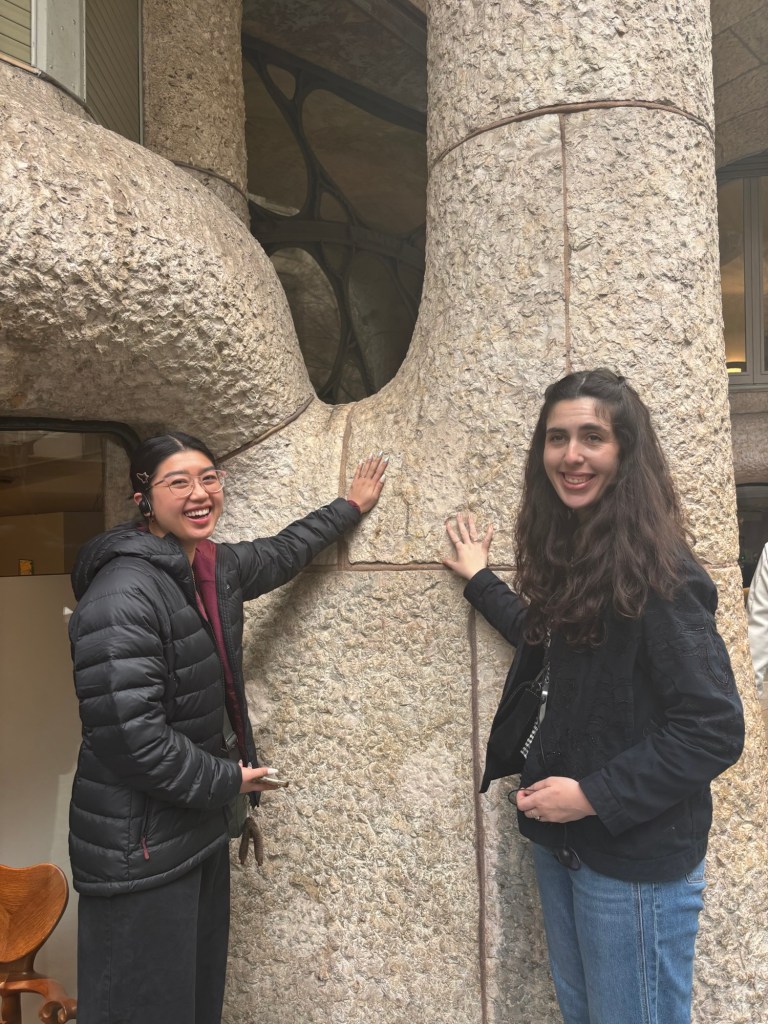
Though we passed by Casa Batlló, the first of Gaudí’s works we officially visited was Casa Milà. Our tour guide informed us that it is also called La Pedrera, meaning “The Stone Quarry” in Catalon, due to its visual resemblance to where its facade materials came from.
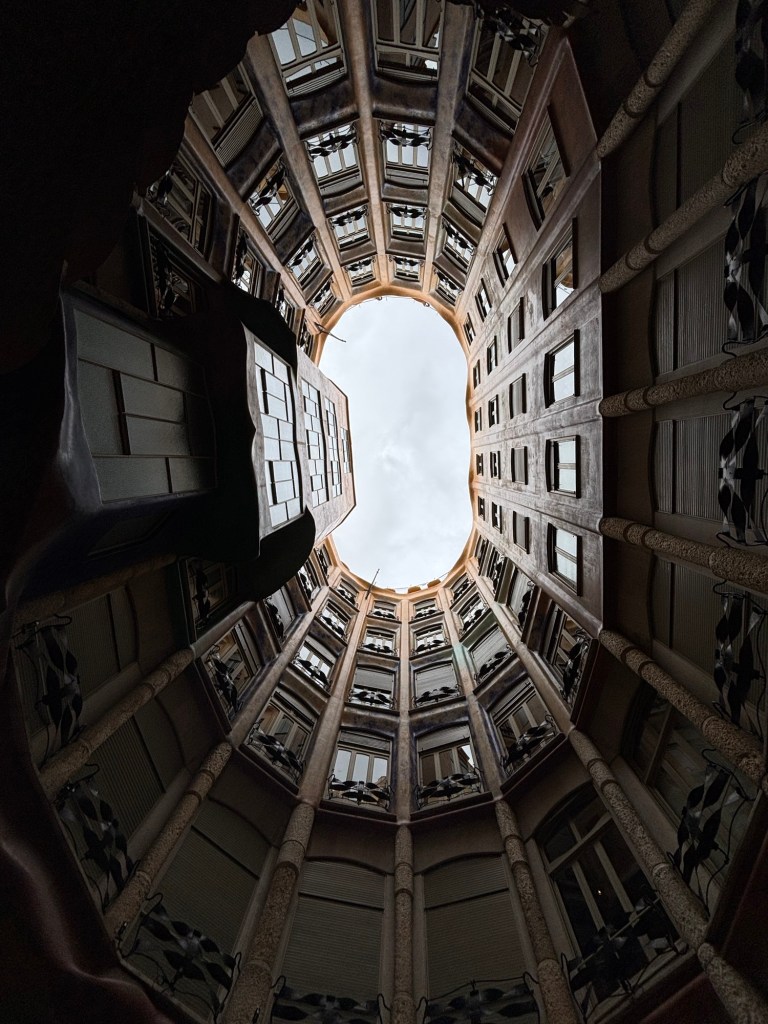
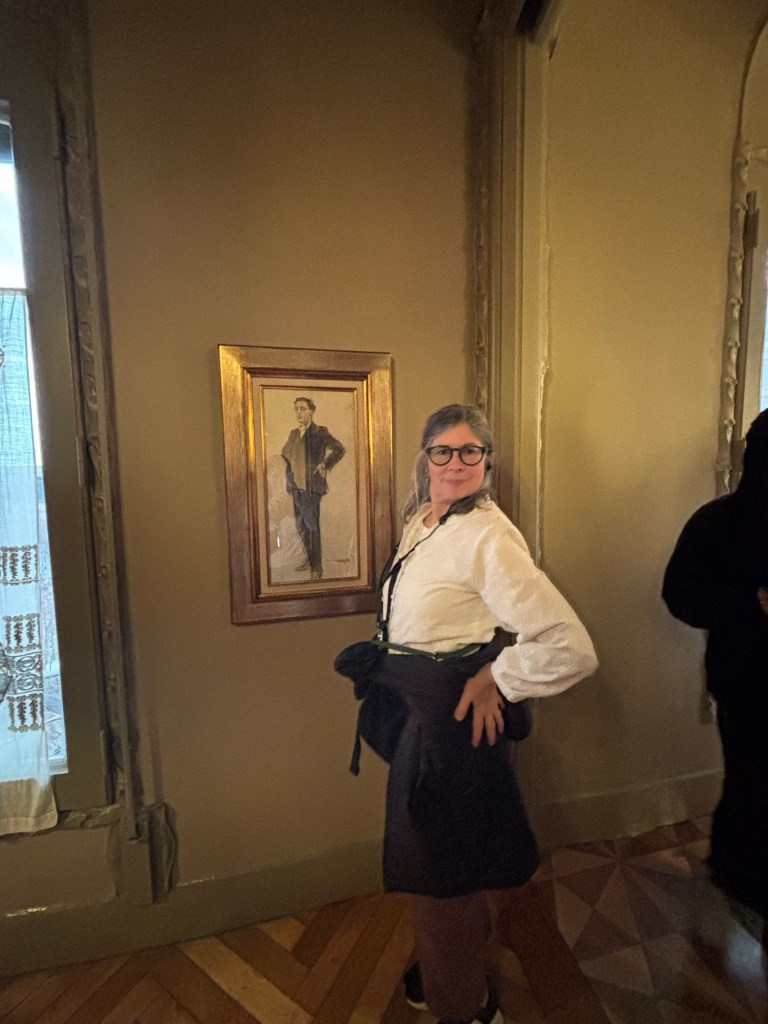
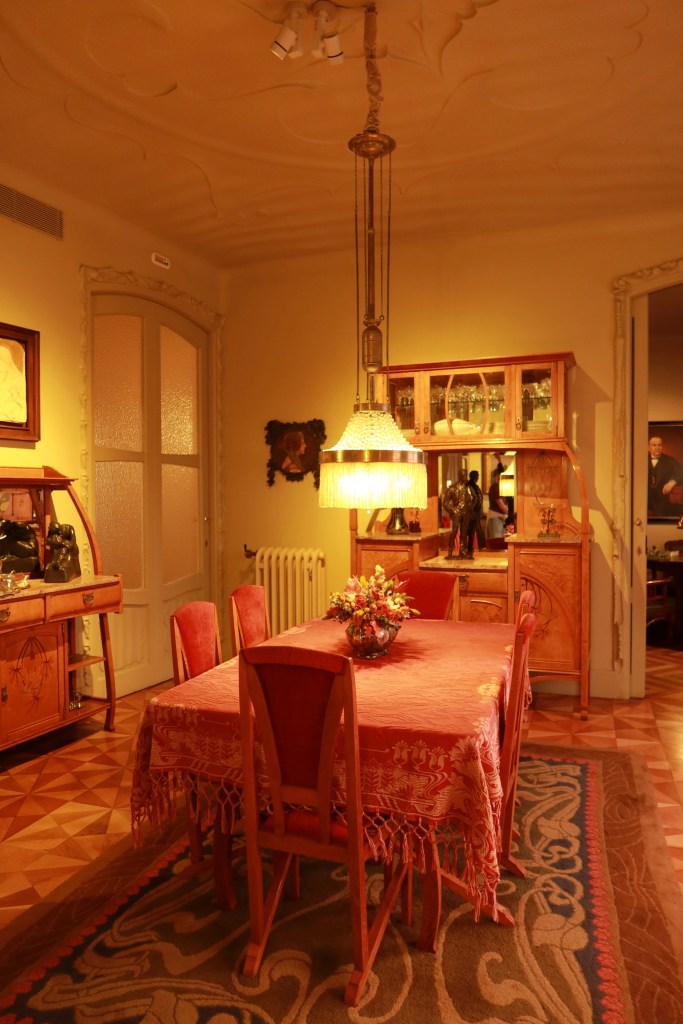
The inside of the building has four open spaces where apartments take up each floor – each apartment is 3000 square feet! The “principal” or primary (2nd) floor is where the owners of the building lived, and every other floor was rented out to others. The top floor is called the penthouse, and the entire floor is all one apartment. The interior is decorated as it used to be 100 years ago. A cool fact we learned was that none of the walls in the apartment are load-bearing, which allowed tenants to renovate the layout of their apartments however they wanted.
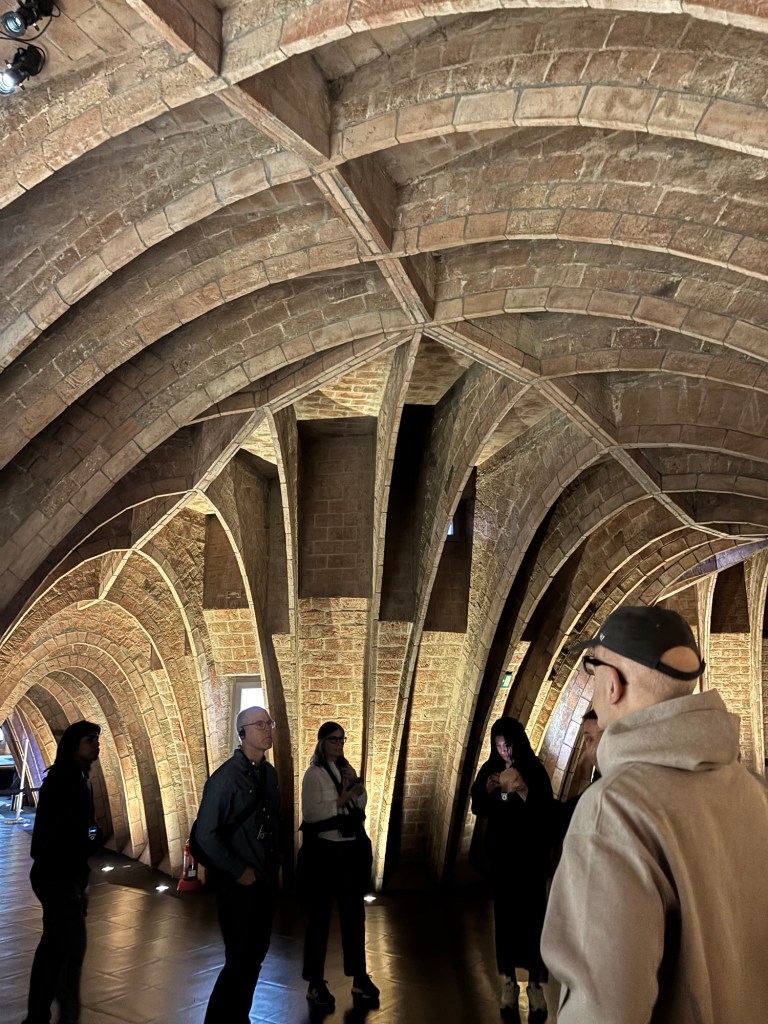
The topmost floor of the Casa Milà served as an insulation buffer for the rest of the building. It was also used for laundry, so only maids went up here. The arched ceilings were designed by hanging a series of strings and flipping them upside down. By using strings, Gaudí was able to calculate all the forces and measurements needed to build the ceiling.
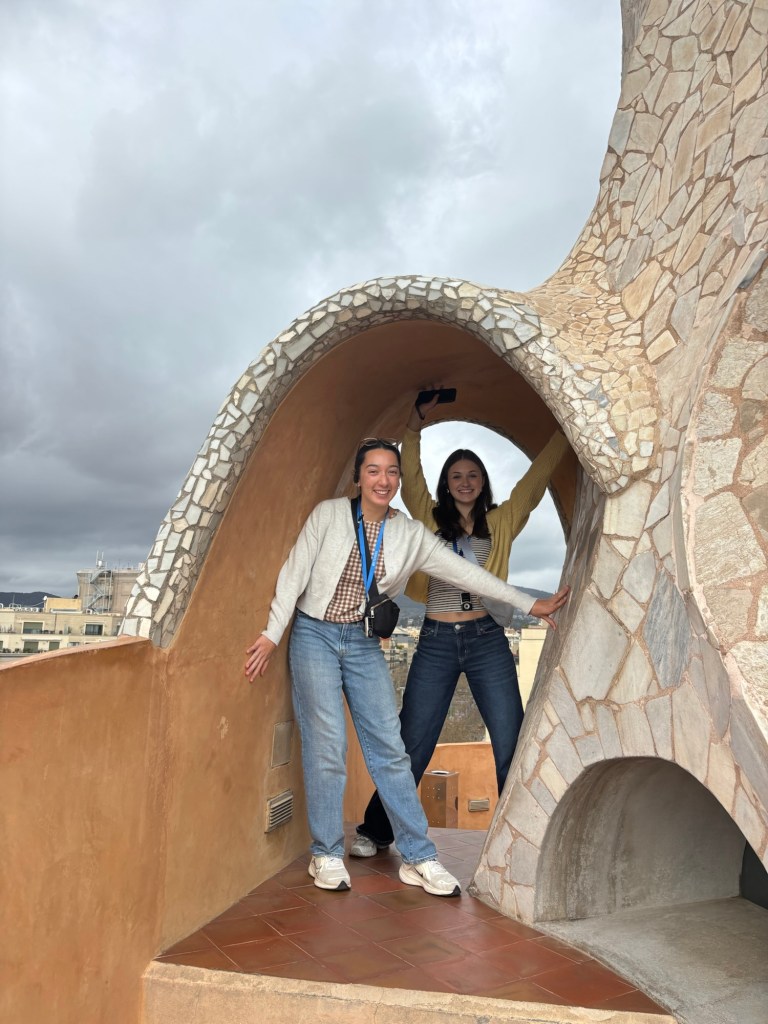
The roof of Casa Milà, also known as La Pedrera, is a testament to Gaudí’s architectural genius. The roof’s shape and details have undergone restoration to preserve its original features and enhance its aesthetic appeal. The roof’s design is a blend of traditional Catalan architecture and modernist principles, reflecting Gaudí’s vision for a harmonious and functional living space.
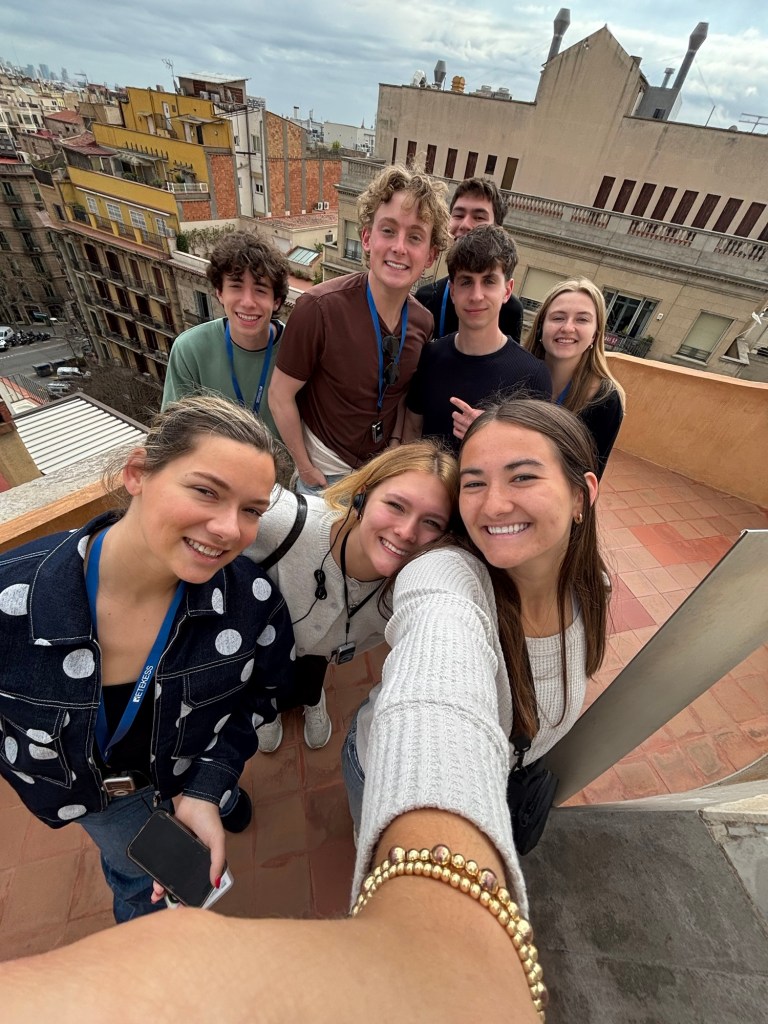
Pics on Gaudí’s roof!
Next up… La Sagrada Família!!
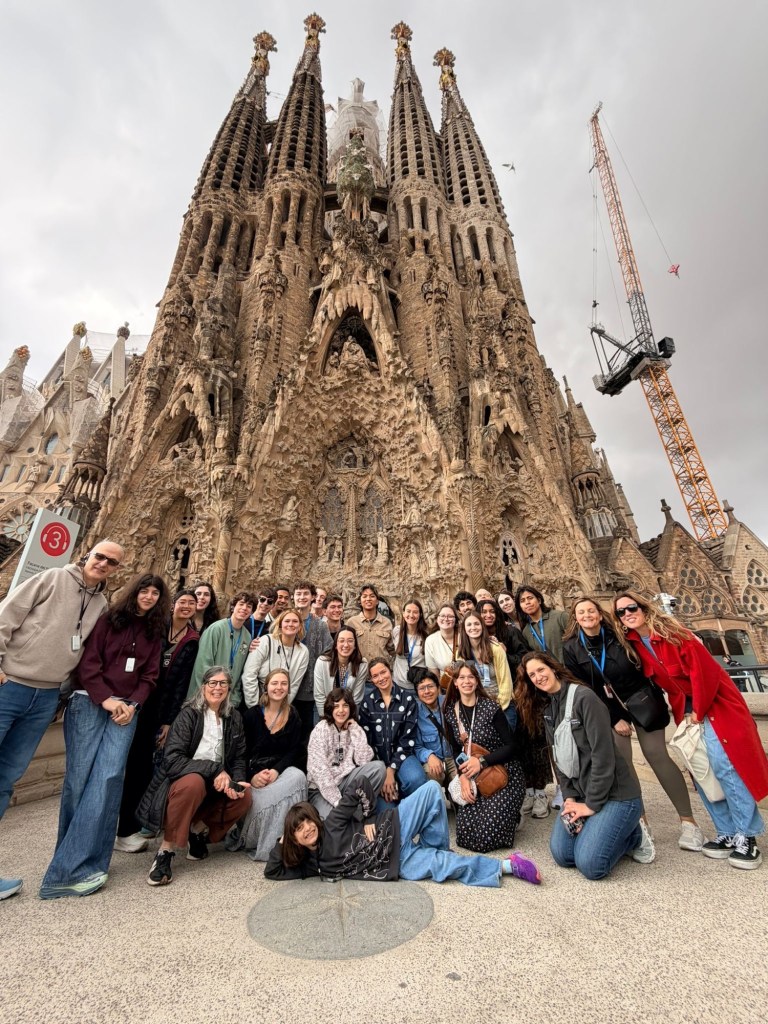
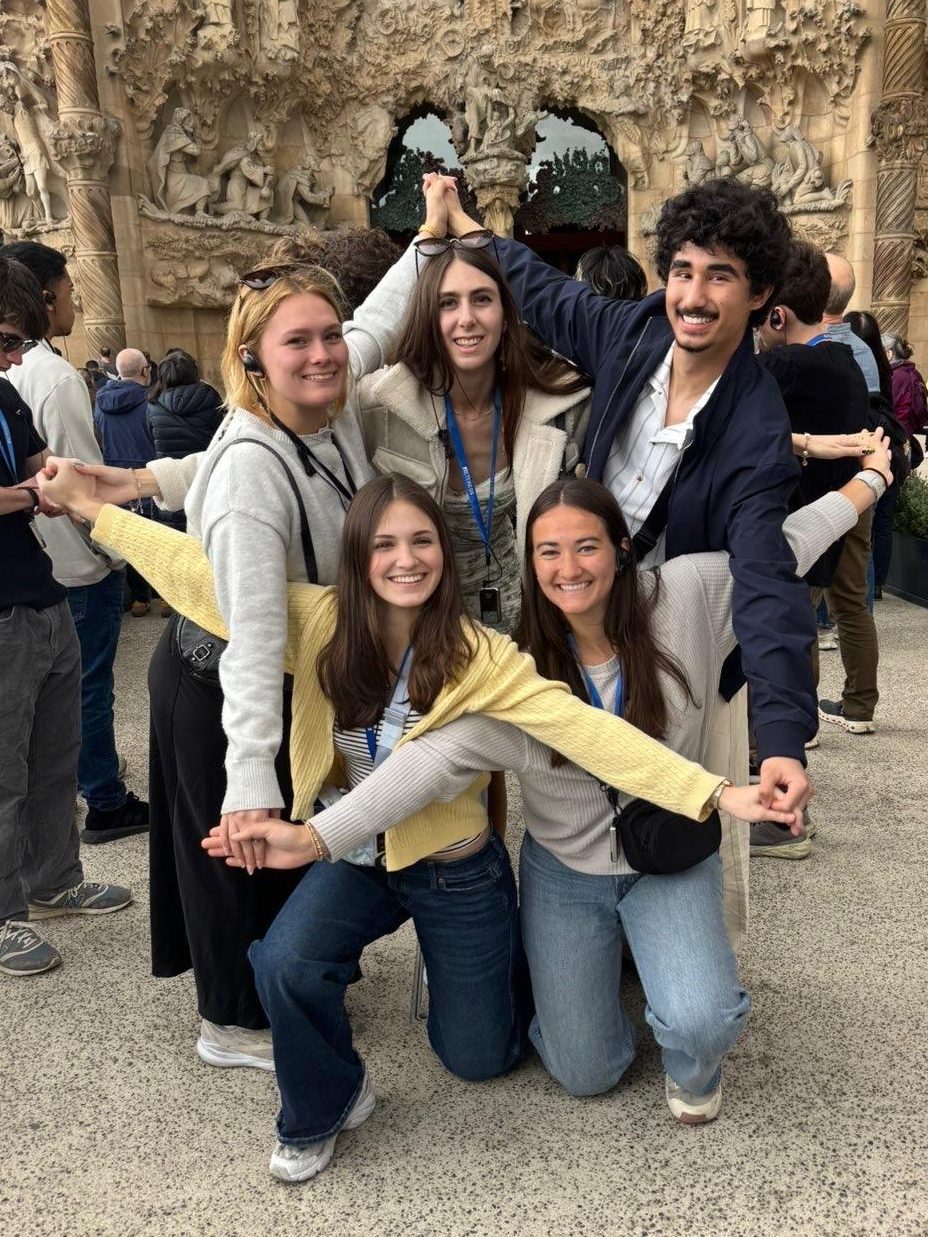
We got tickets to go see La Sagrada Família, which is Gaudí’s most famous work. The church has been under construction since 1882. The church was structurally finished just 10 days ago, and the last bits of construction are hoping to be done over the next 10 years! The finished church will consist of 18 spires, of which 14 have been constructed so far. The structure is impressively designed without any flying buttresses, which Gaudí saw as the ‘crutch’ of artistic architecture. Instead, he shifted the weight from the sides to the many columns throughout, allowing for this abundance of stained glass. Pope Leo XIV will be coming to Barcelona this summer to celebrate the church’s structural completion!
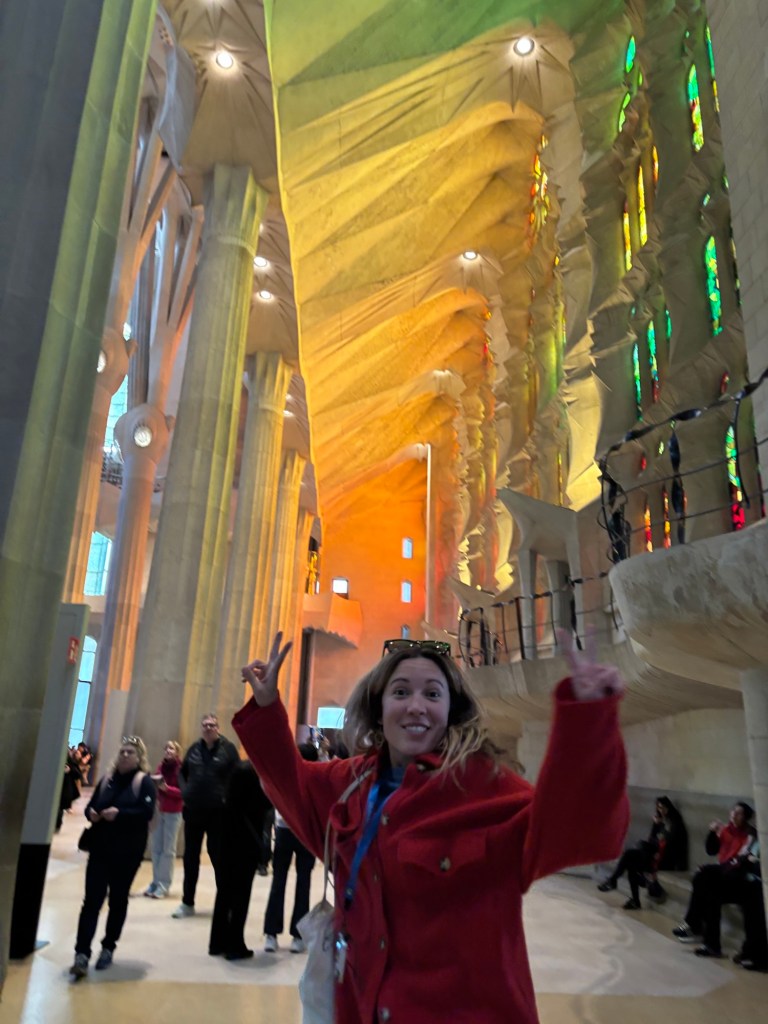
The building is shaped like a cross. The stained glass windows in the basilica created a beautiful rainbow glow all around. The 52 columns – representing the 52 Sundays of the year – also resembled tree trunks, which adds to the organic style of architecture that Gaudí is so well known for. Gaudí, who was deeply religious, believed that the church should reflect the beauty of God’s creations rather than just employ traditional scenes of suffering and martyrdom.
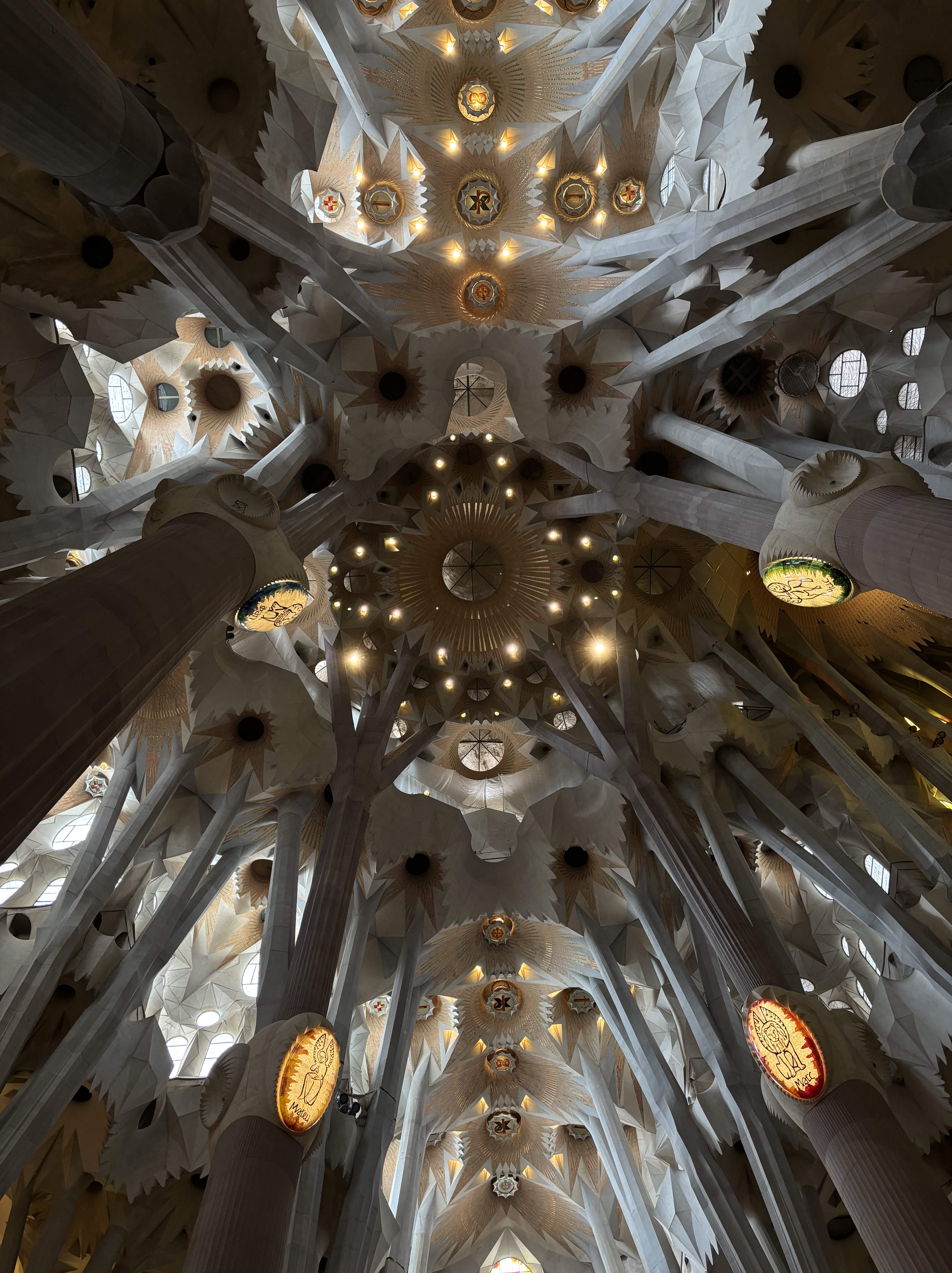
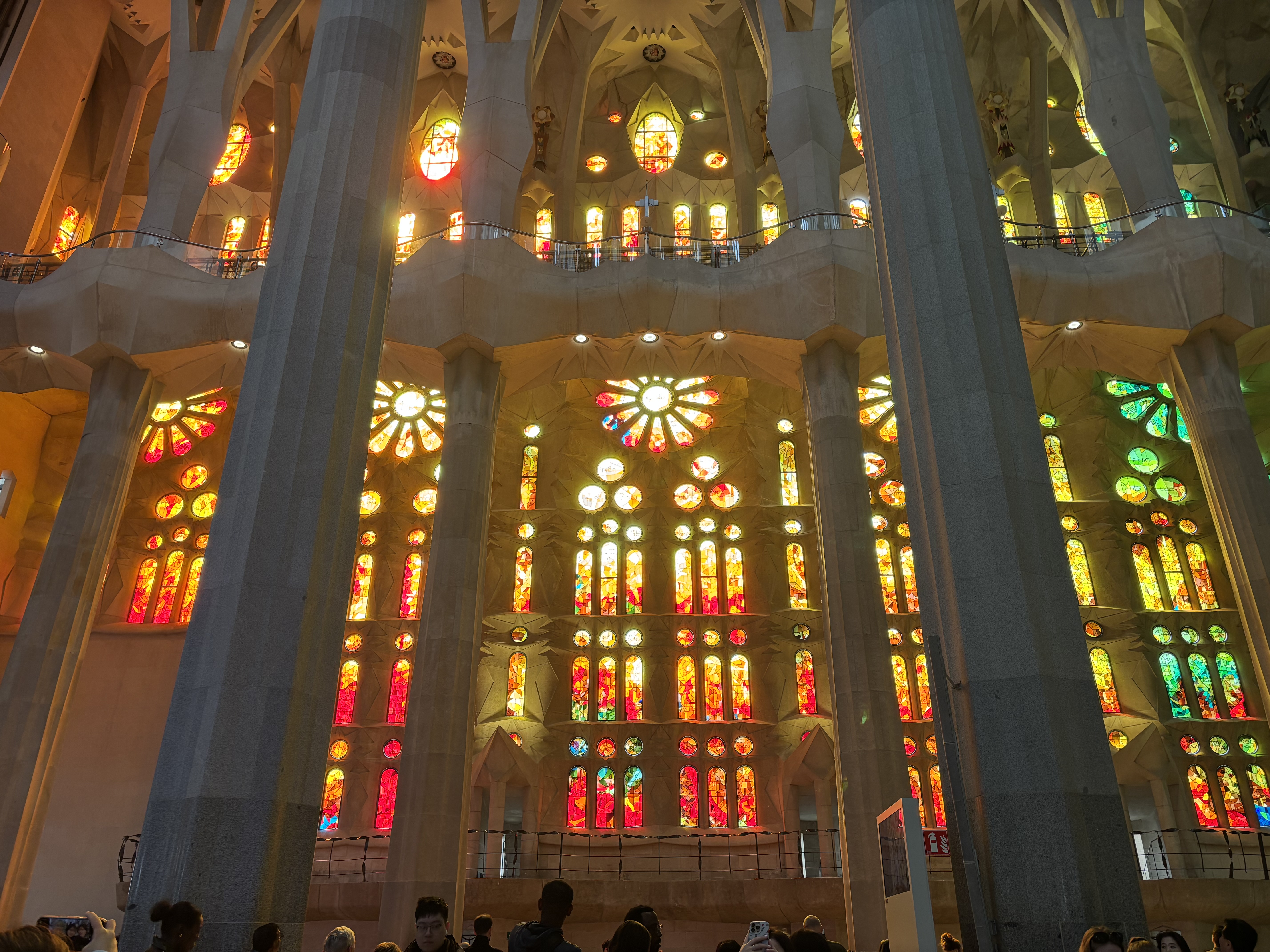
The colors were designed to match the movement of the sun. Cooler-toned glass windows face the East, where the sun rises, while warmer-toned glass (as seen in the picture) faces the West, where the sun sets.
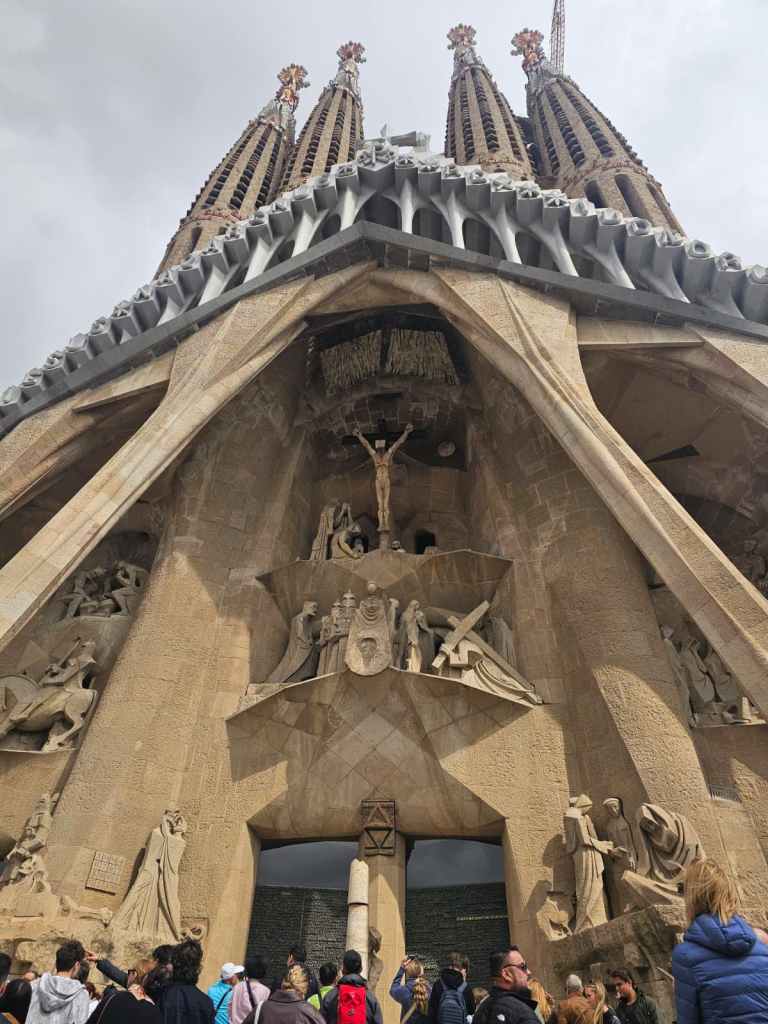
Gaudí had a different view for the Passion facade (back) of the Sagrada Família. Rather than continuing with the natural elements he used throughout the rest of the structure, he wanted this facade to be dark and inspire fear. These angular figures were designed by sculptor Josep Maria Subirachs, decades after Gaudí’s death. There are statues depicting Jesus’s sacrifice and Judas’s betrayal, amongst other biblical scenes.
Besides the Sagrada Familia, there are the Sagrada Familia Schools, with a distinct curved roof. These schools were built by Gaudí from 1908 to 1909 to ensure the children of the construction workers building the Sagrada Familia were not losing out on an education.
Next up is Park Güell!!
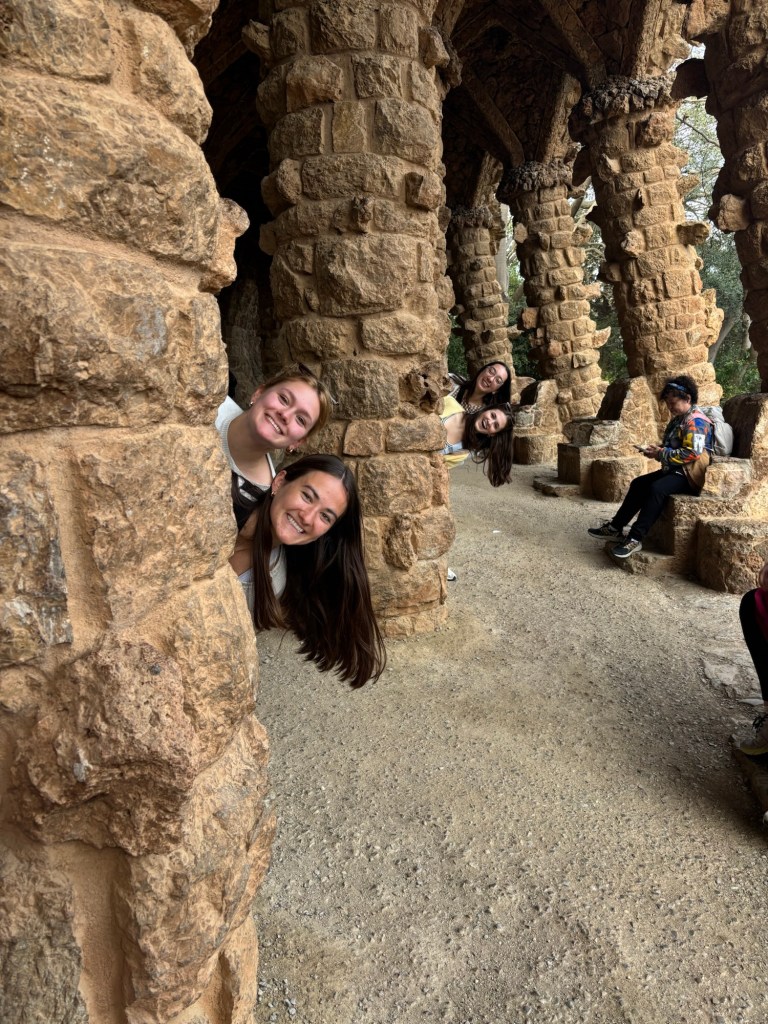
Park Güell was originally conceived as an exclusive residential estate by Eusebi Güell and designed by Antoni Gaudí, later becoming a public park and UNESCO World Heritage Site.
Along the way, we found the beautiful Casa Trias. La Casa Trias was built between 1903 and 1906 and was designed by Juli Batllevell i Arús. It is located on the only two plots ever sold in Park Güell during the original residential period of the area. The house is owned by Martí Trias i Domènech and continues to be a private residence.
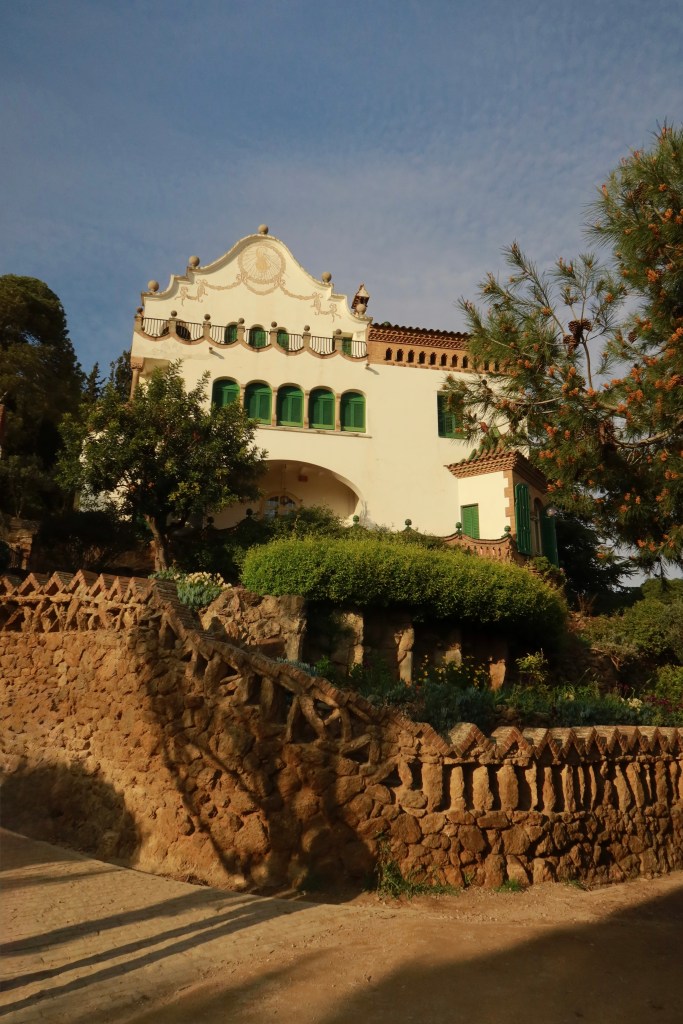
We loved the green accents all around the house and the attention to detail in the balcony railings and roof. There was also a really interesting winding path on the left of the house that led to the front door.
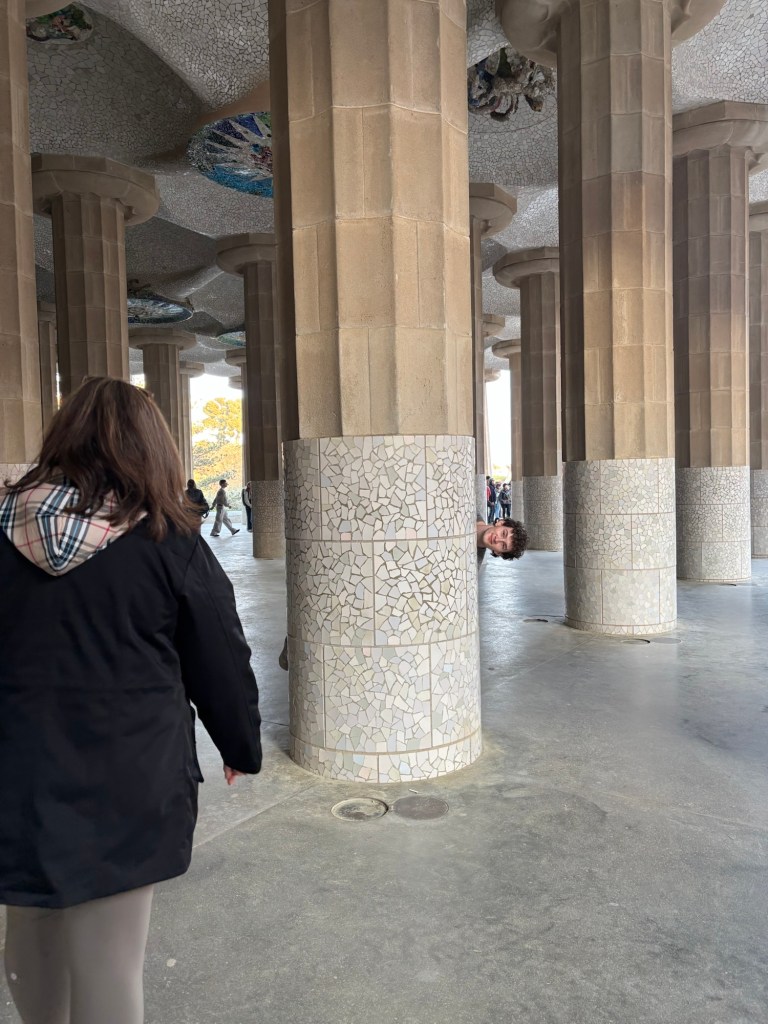
This surprisingly linear area was supposed to serve as a marketplace when Parc Güell was still intended to serve as an estate. These pillars below the elevated pedestrian areas originally served as ways to channel and collect rainwater. Not visible from the outside are the tubes that run through the pillars to the underground hidden reservoir. So cool!
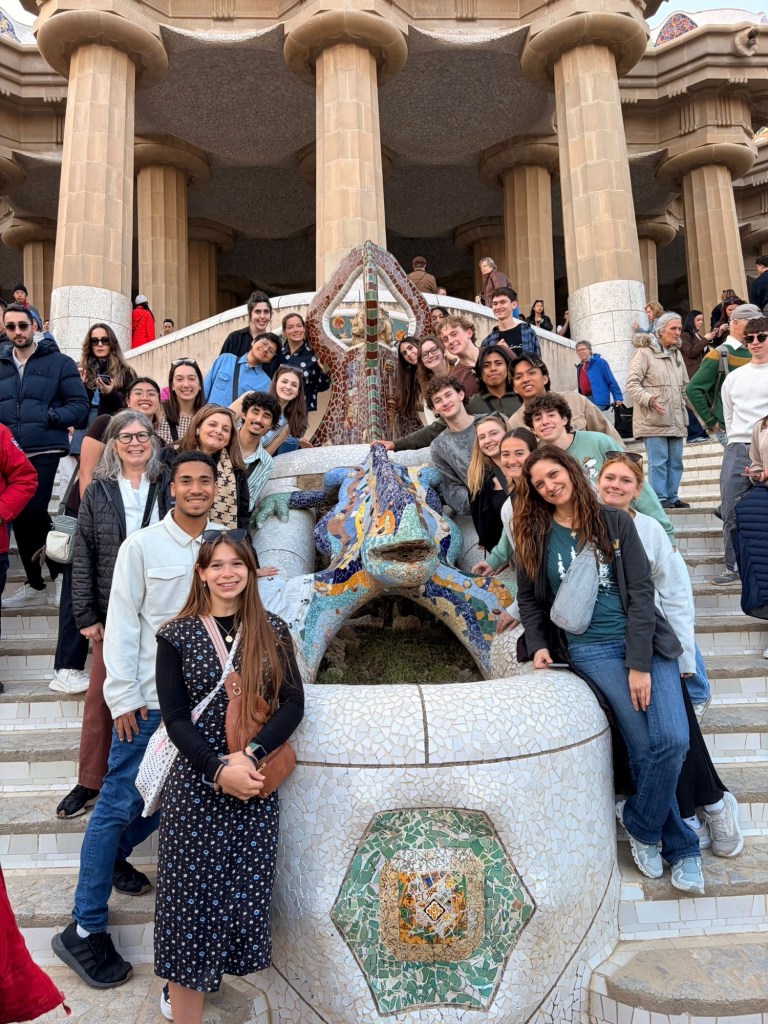
Gaudí is famous for his ceramic masterpieces. Here is the ceramic lizard, known as “El Drac,” designed as a water feature as well as a beautiful statue representing Catalonia.
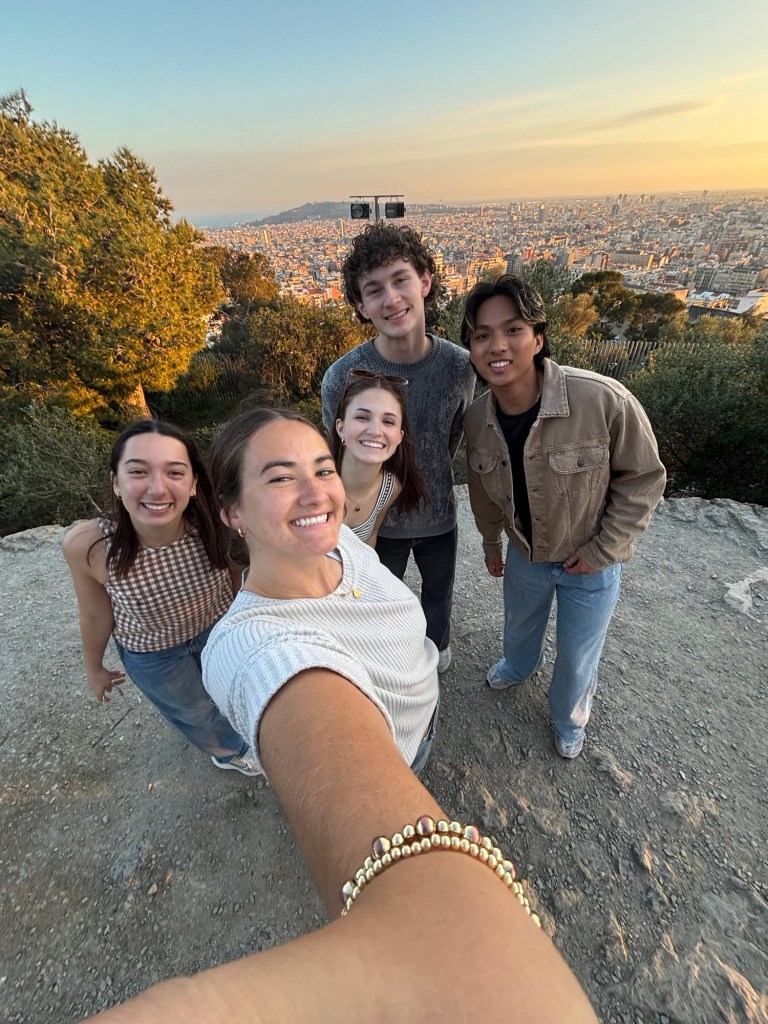
The view from the top of Park Güell was breathtaking, especially during the sunset. If you looked hard enough, you could see the Tibidabo Amusement Park and its Ferris wheel!
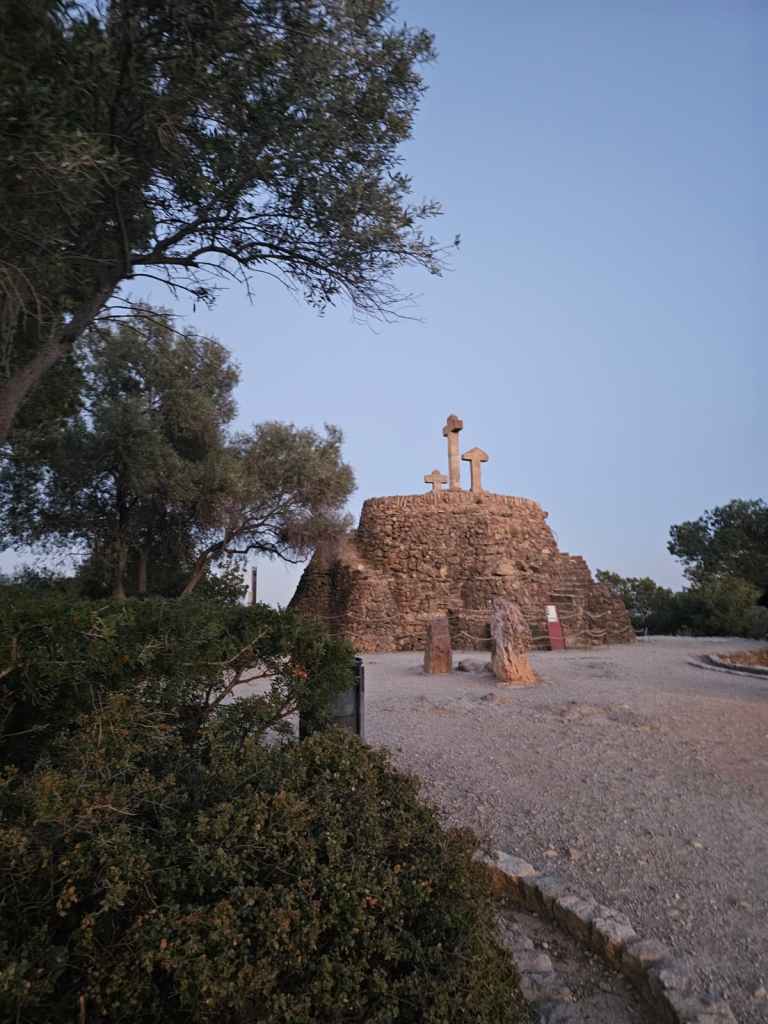
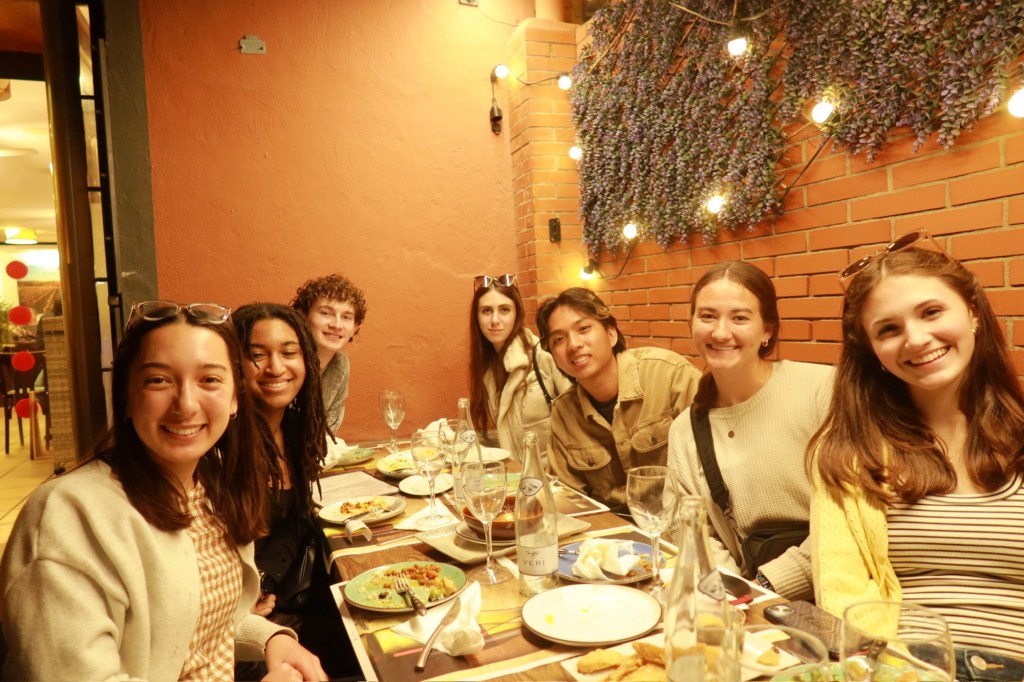
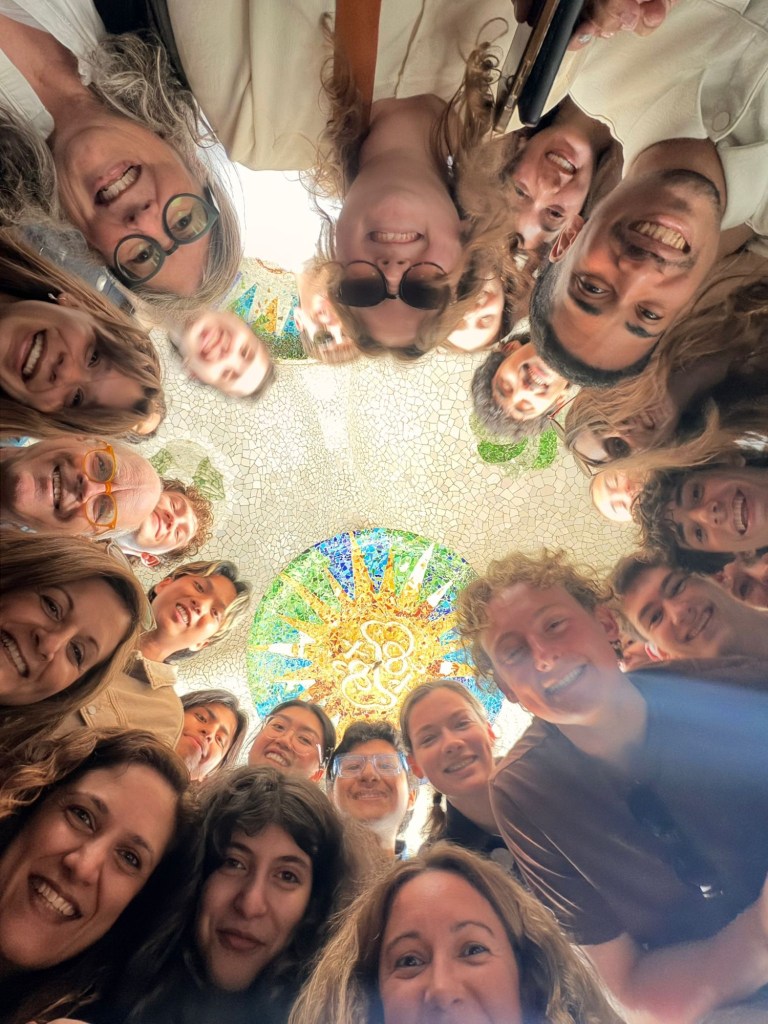
We went to a local restaurant within (a hilly) walking distance from Parc Güell, and it was delicious! We mostly ordered tapas, with our favorites being pan con tomate and ham croquettes!
Day 5: Group 5
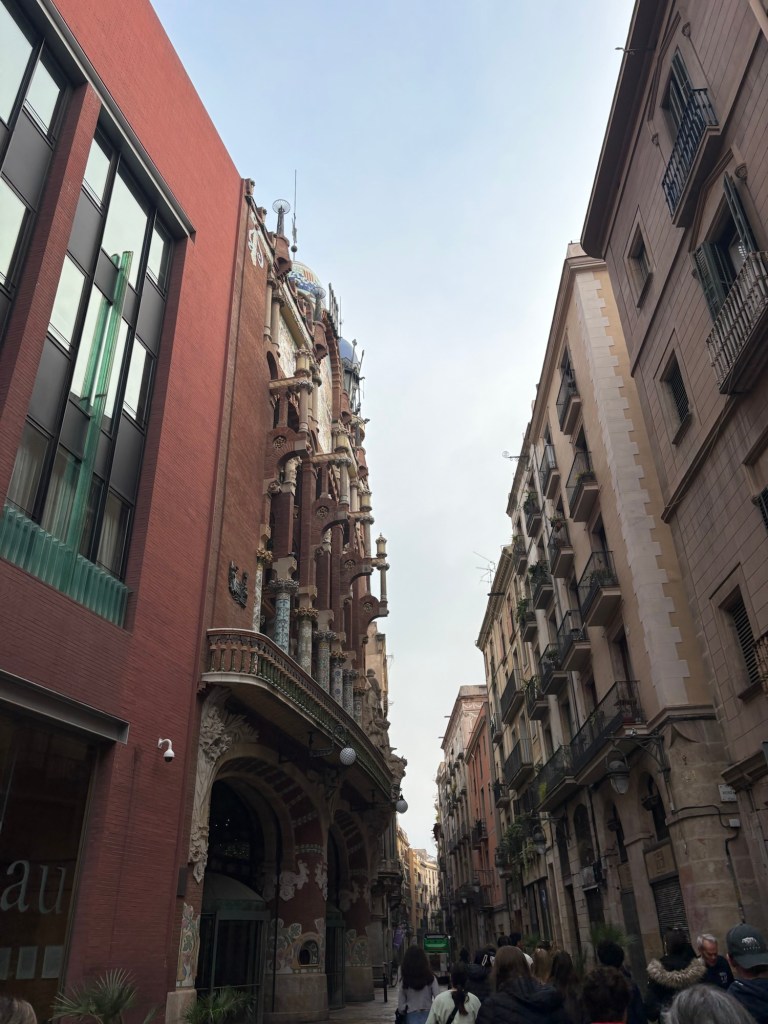
After another breakfast at the hotel, we met up with Carla and walked over to the bus which would take us to Montserrat. There were very few people out in the streets in the morning since the city runs late relative to the US. Their 8:30am seemed like our 6am. The route we took on that walk went through several alleys and small streets, which showed aspects of Barcelona’s character. We stopped briefly outside the Barcelona Music House, which also had cool architecture (of course). Carla told us about the sculptures inside, which can be seen if you go to an orchestral or flamenco concert.
We got on the bus and met our tour guide, Marc. On the way to Montserrat, Marc told us about some Barcelona facts related to architecture and other topics. He told us about the Paraboloid office building which we had been wondering about, and about the new central park built above a tunnel 2 years ago.
Marc also described Barcelona and how it is the second densest city in the European Union containing 17,000 people per square kilometer. Therefore, it isn’t far to leave the city center, but it still takes a while due to traffic.
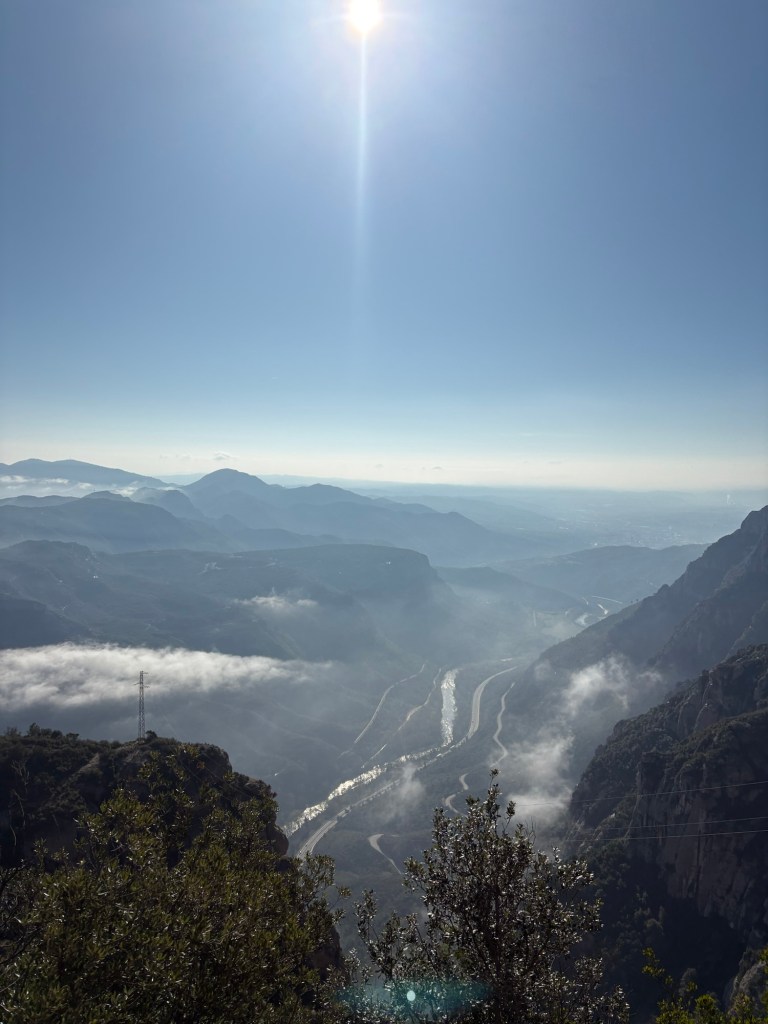
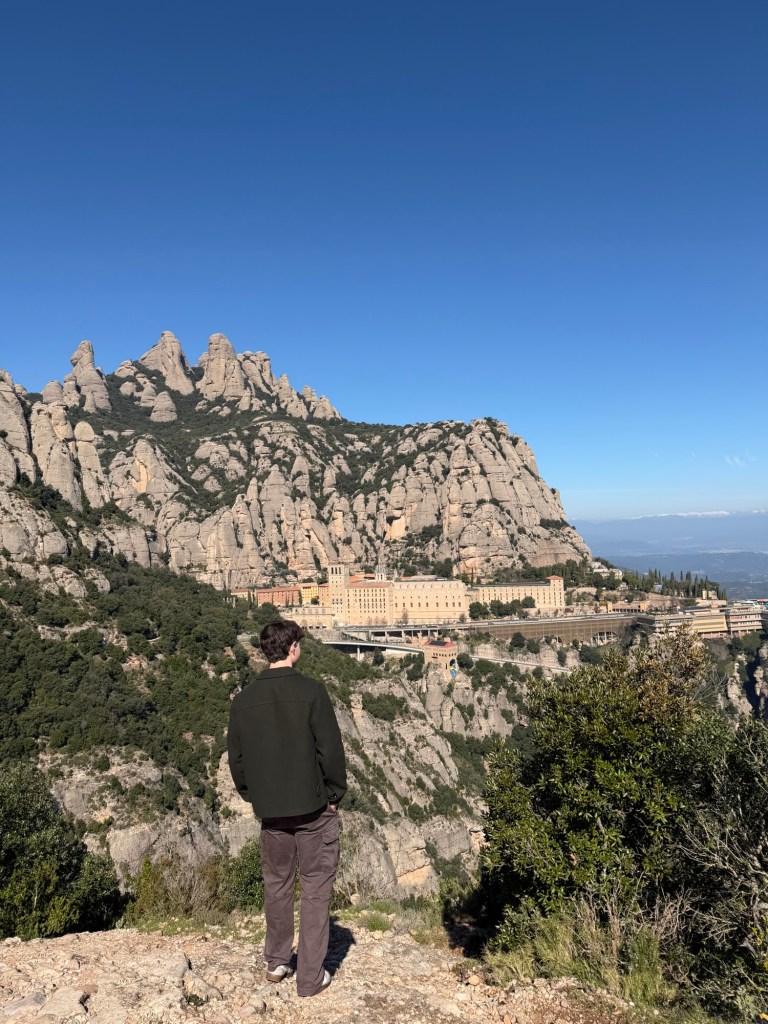
After a 12km long foggy drive up to the monasteries, we arrived at a beautiful viewpoint, and briefly stopped for pictures before continuing towards the small town.
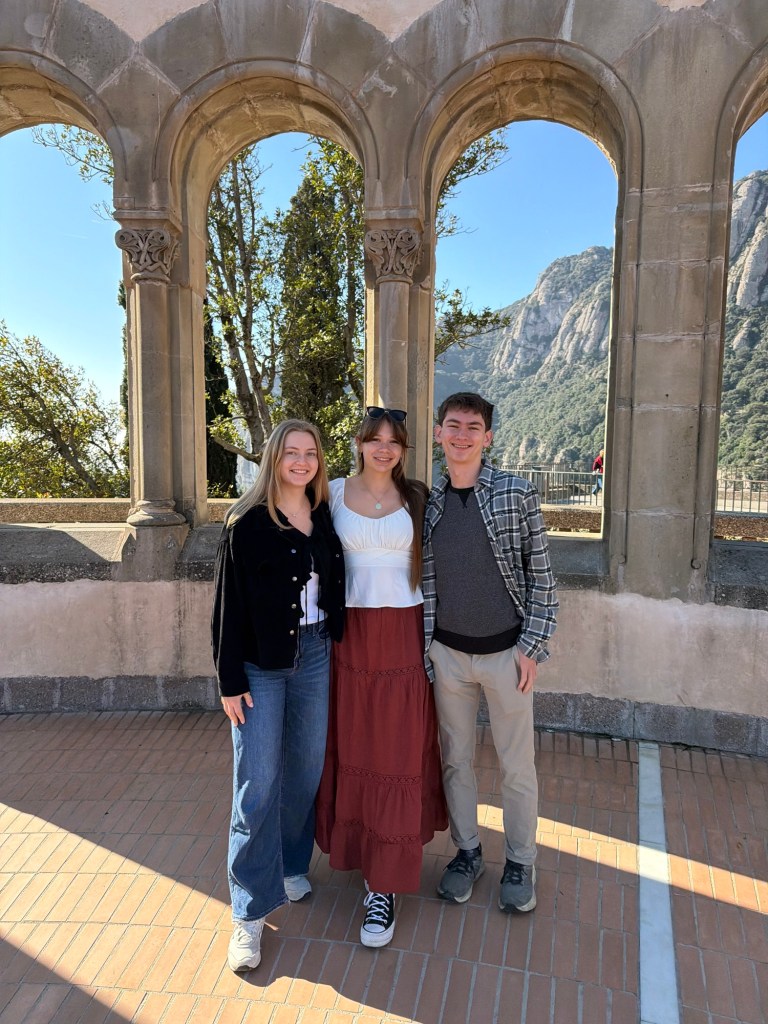
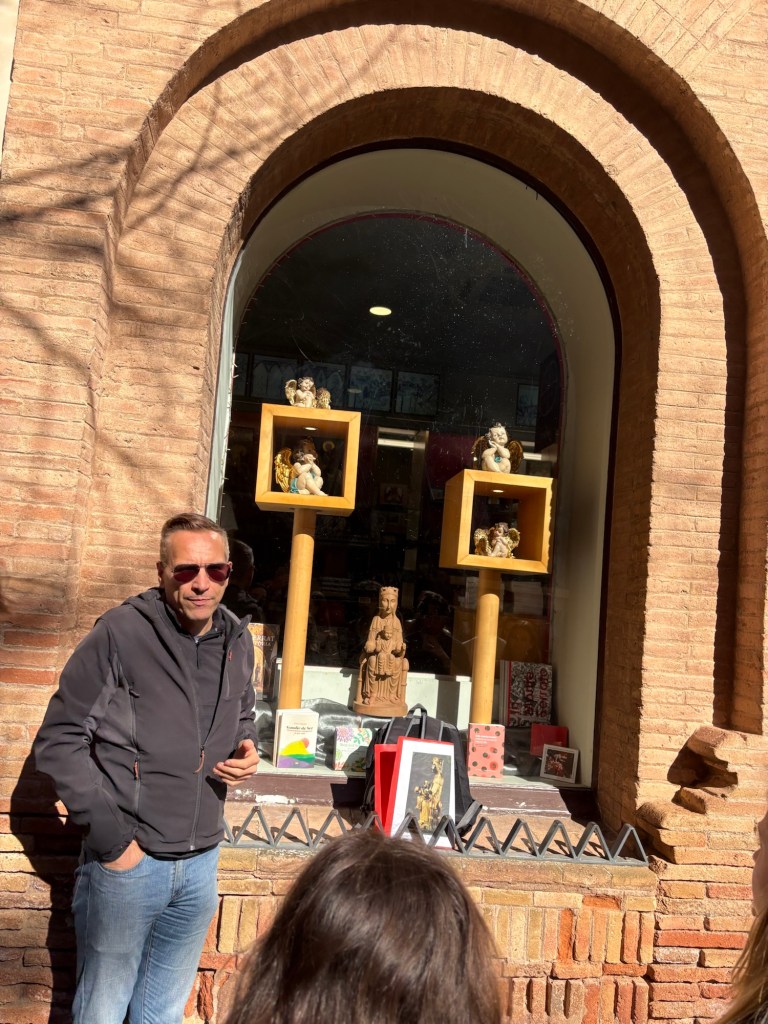
There, Marc took us on a walk and told us about the history of the monasteries and the Black Madonna, and how people stopped in Montserrat along the Path of Santiago in the 1300s, and people today still travel as far as 3 days from Poland to see the Madonna regularly! He said that in 881 the mountain was re conquered and a light was seen coming out of the mountain. This is where the Madonna was found.
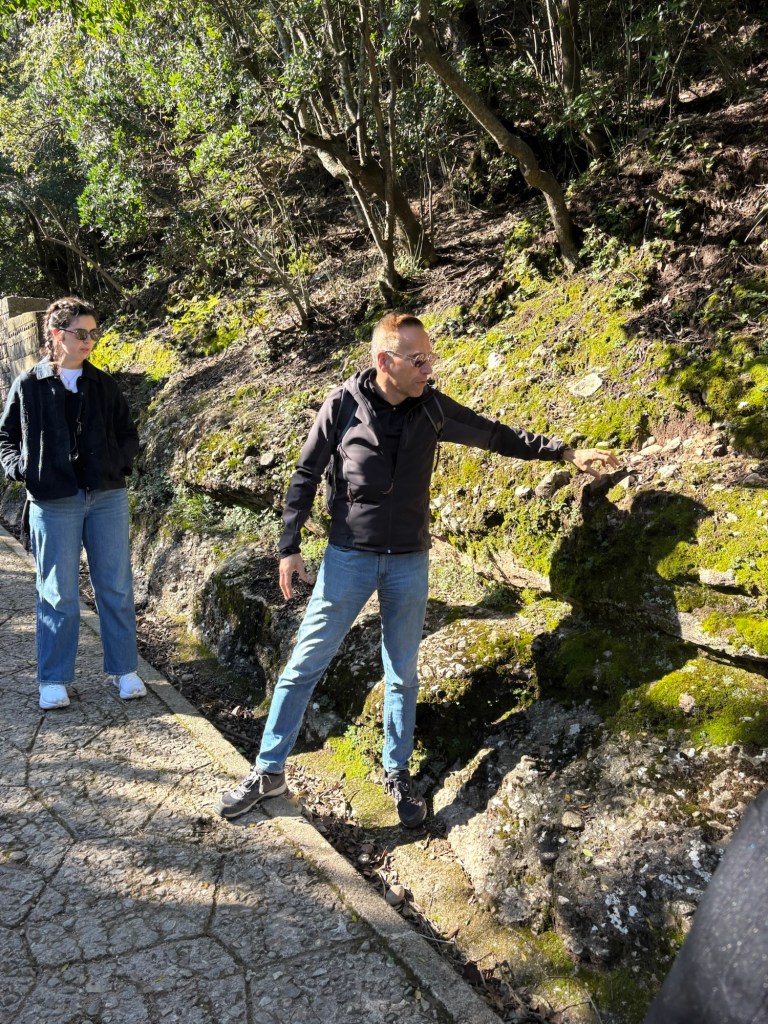
We continued walking towards the cross lookout point. Along the way, Marc told us about the geology of the area. The photo below shows a particular type of conglomerate the mountain is covered in. We learned that it comes from rolling stones of Pyrenees, which mix with mud and create a poly conglomerate. Because of its components, it is unstable to build on due to the fact that it creates weak pockets from undried mud and irregular load path. It was particularly fascinating to learn about where Montserrat’s name came from—“serrated mountain!”
We made it to the overlook point, from which we could see the monastery and surrounding landscape in its entirety, and it was spectacular! We took lots of individual and group pictures and took in the incredible views!
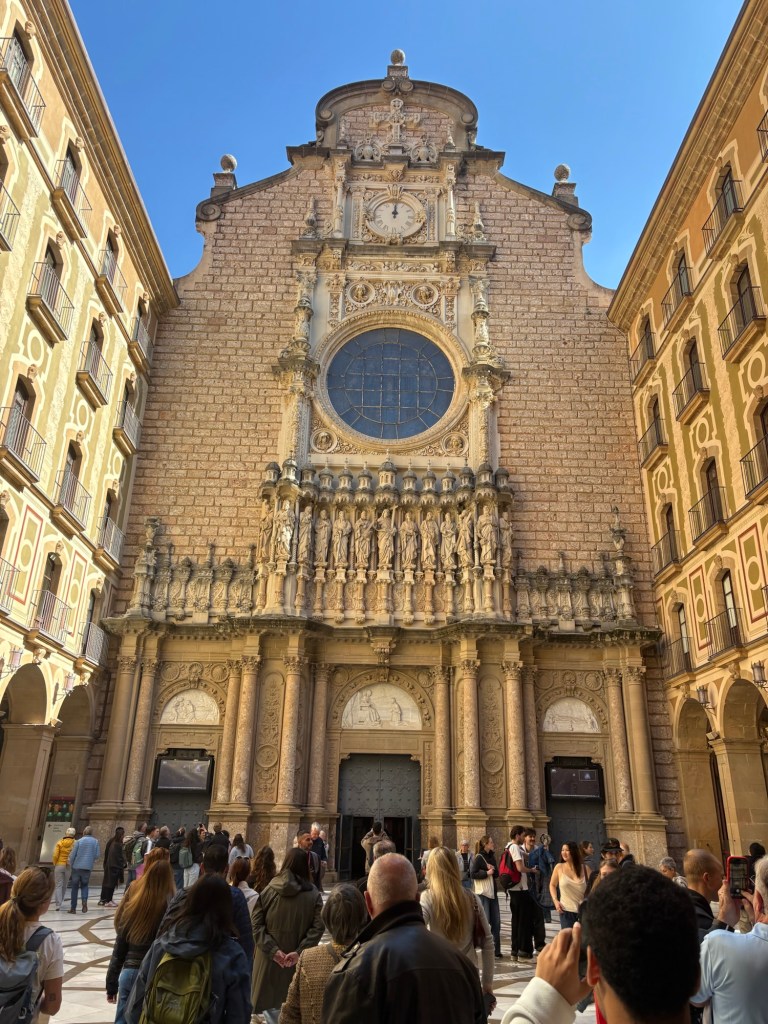
We headed back towards the monastery and got the chance to go inside the main church. We had seen several amazing churches already on this trip, and this one, just like the others, was incredible. We noticed how the decor was very dark in general, hypothesizing that it could’ve been in relation to the Black Madonna.
After taking time to reflect and look around inside, we headed out to explore the shops and pathways of the surrounding town. We went into a chocolate shop and a souvenir shop and bought gifts for family and friends. We also tried some chocolate of different flavors for ourselves!
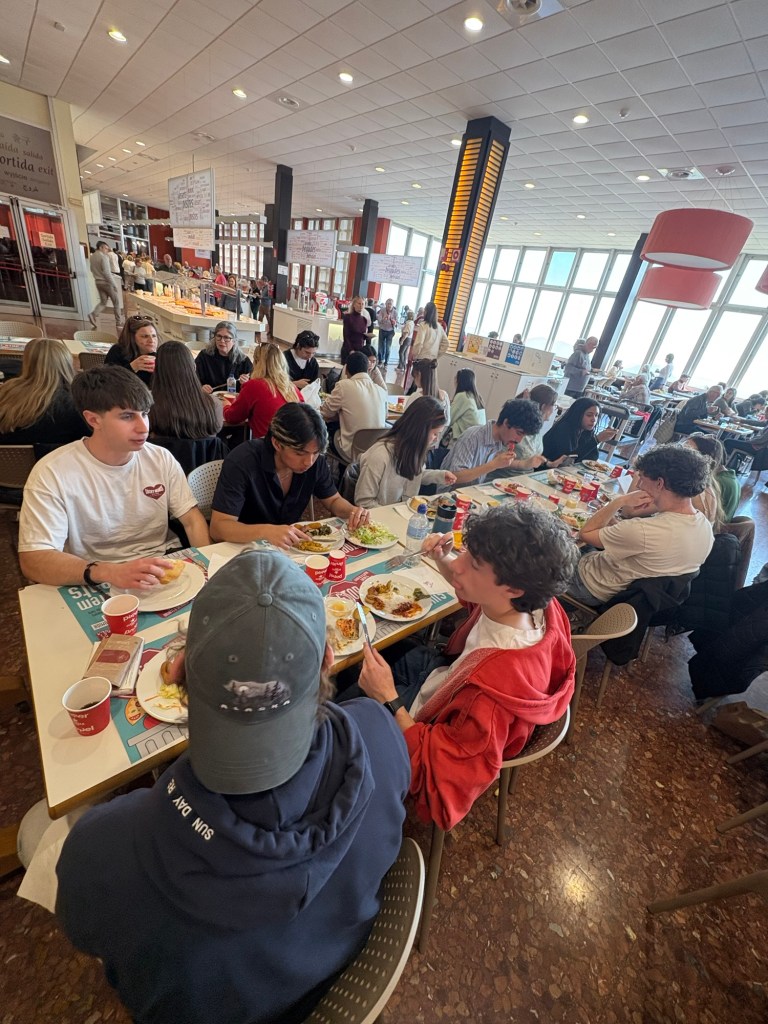
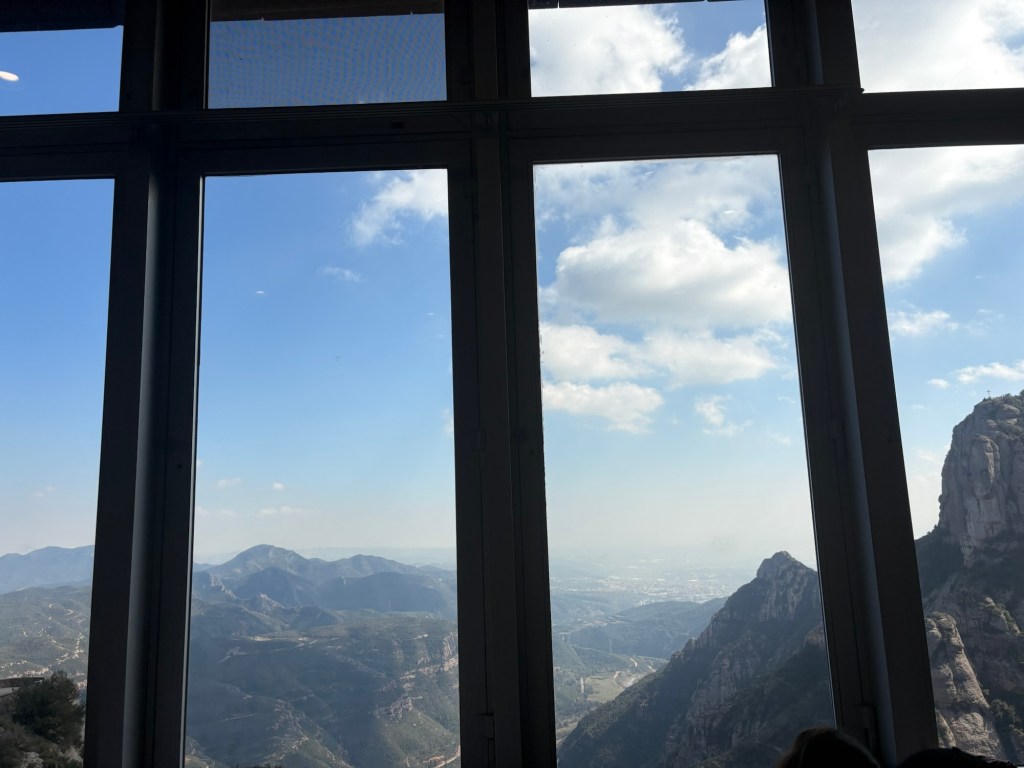
We then headed to lunch which was buffet style with a great view! This included different meats, pasta, rice, some tomato mixture, Catalonian custard, and lots more!
There was a bit more free time before we needed to head back to Barcelona, so we checked out the small market with vendors selling unique cheeses and flavors of honey. We got to sample several types, and the cheeses were SO GOOD!! We had to take some with us.
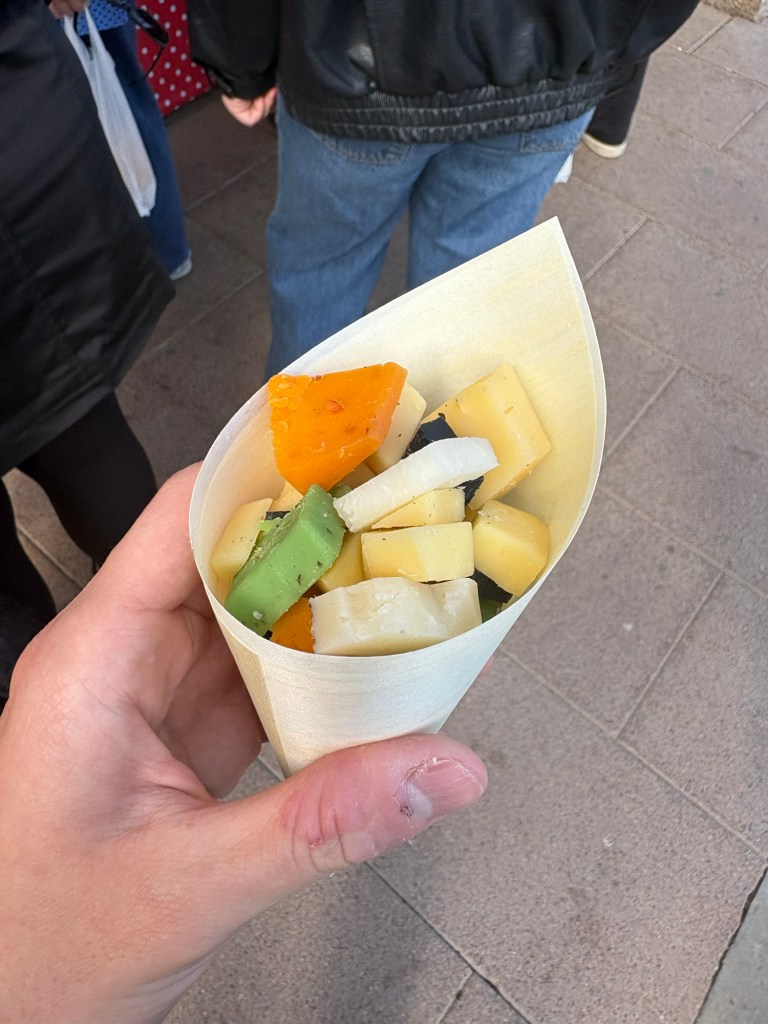
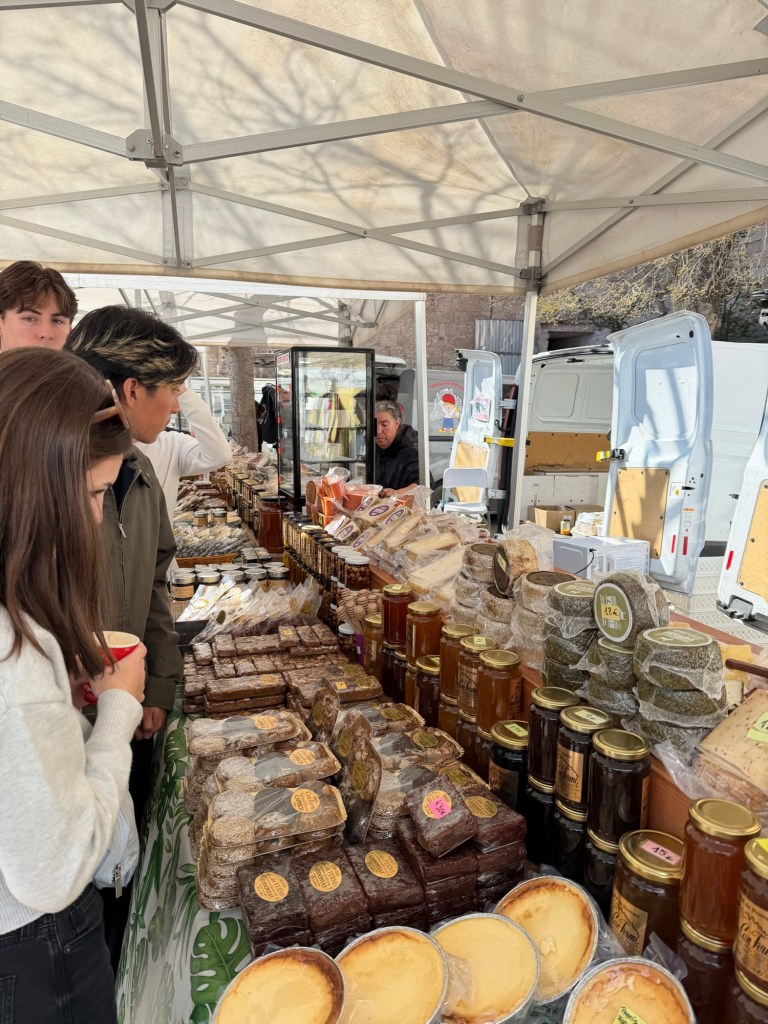
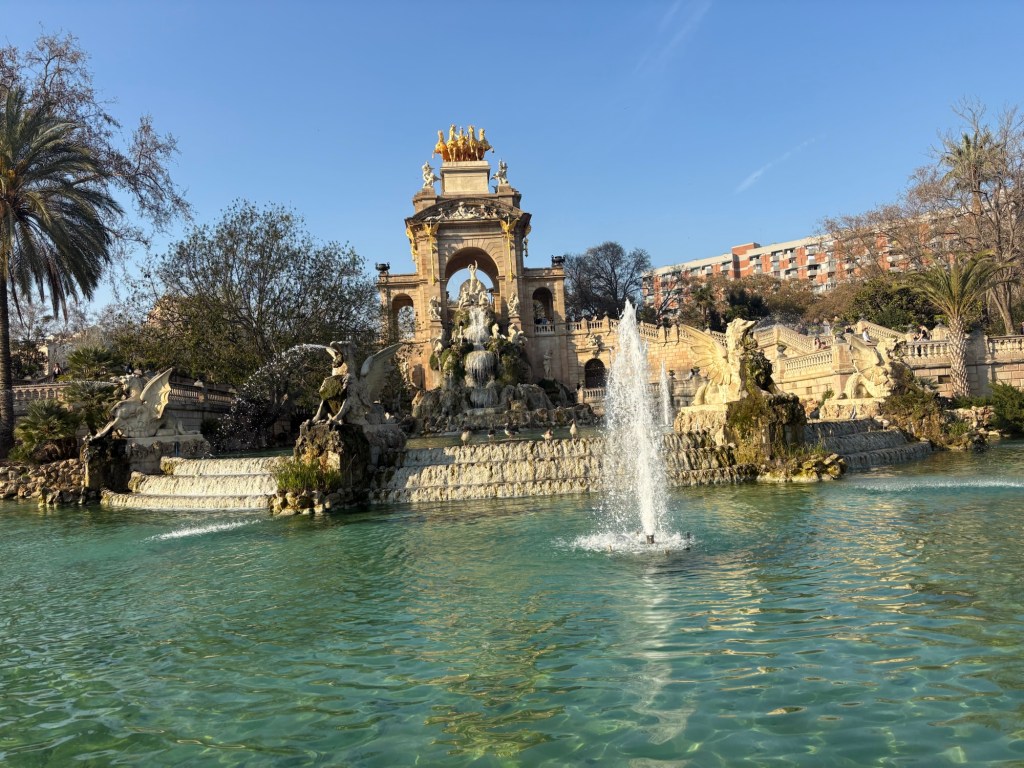
Too soon it was time to say goodbye to Montserrat, so we got back onboard the bus and all fell asleep for the most part after walking around all morning. We got dropped off beside Parc de la Ciutadella and walked around there for a bit, taking pictures beside the epic fountain called the Cascada Monumental. It was a beautiful day to be in the park, and there were tons of people around!
Fun fact: Gaudi worked on the hydraulic system for this fountain!
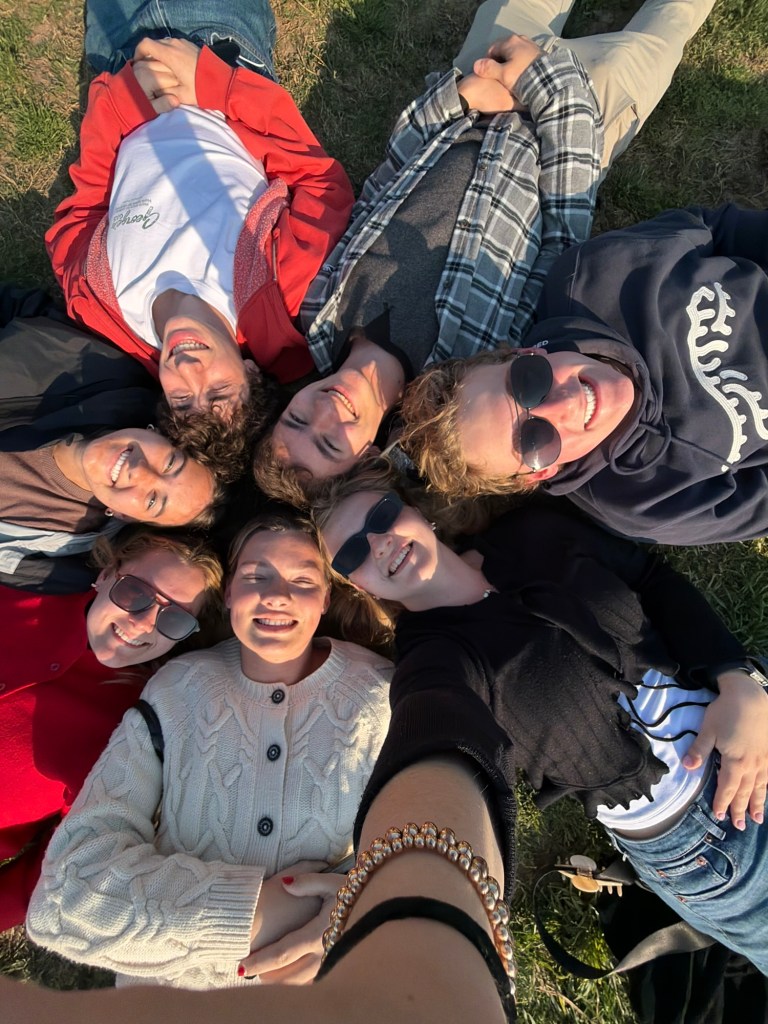
We wandered out of the park and over to the beach, relaxing and dipping our feet in the water a bit. There were plenty of cool rocks and sea glass in the sand which we gathered!
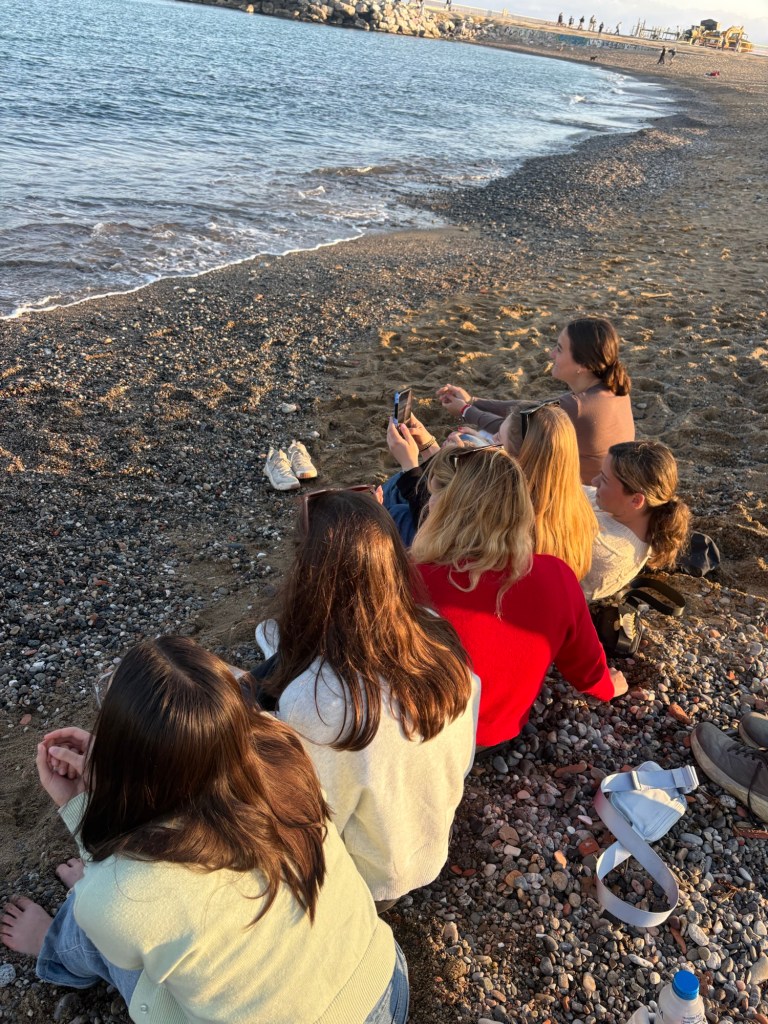
We took a scenic walk back and stopped for bread along the way, before taking a break at the hotel before dinner.
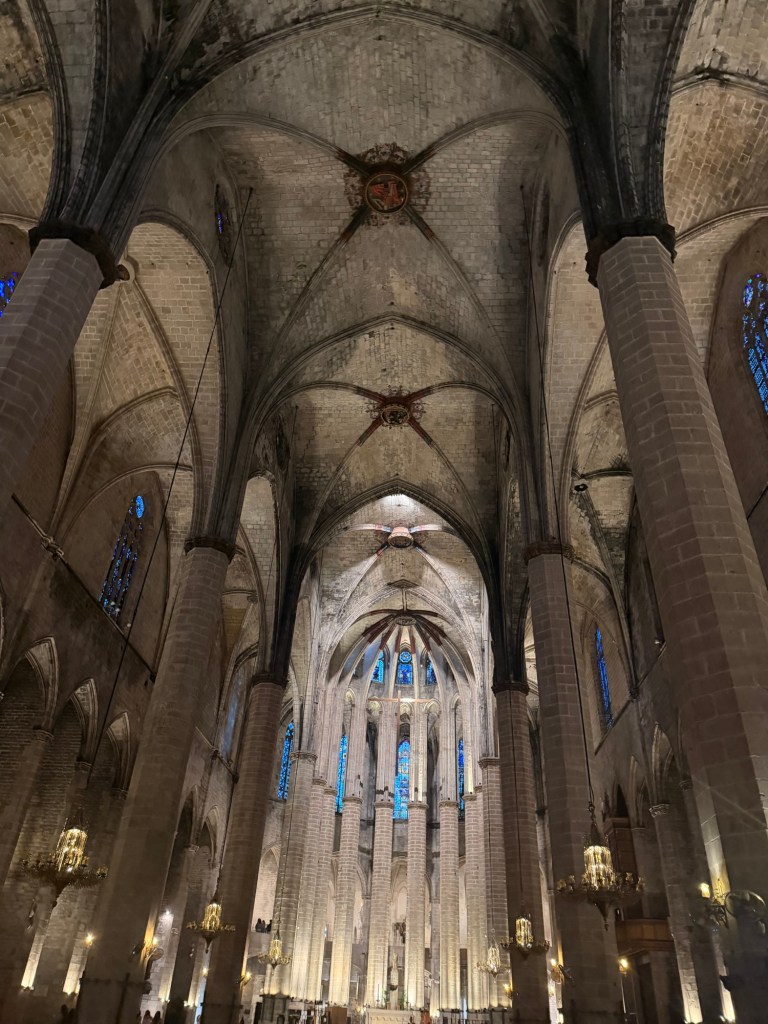
While we were on the way back, we stopped in the Basilica de Santa Maria Del Mar, which is a great representation of Catalan Gothic Architecture.
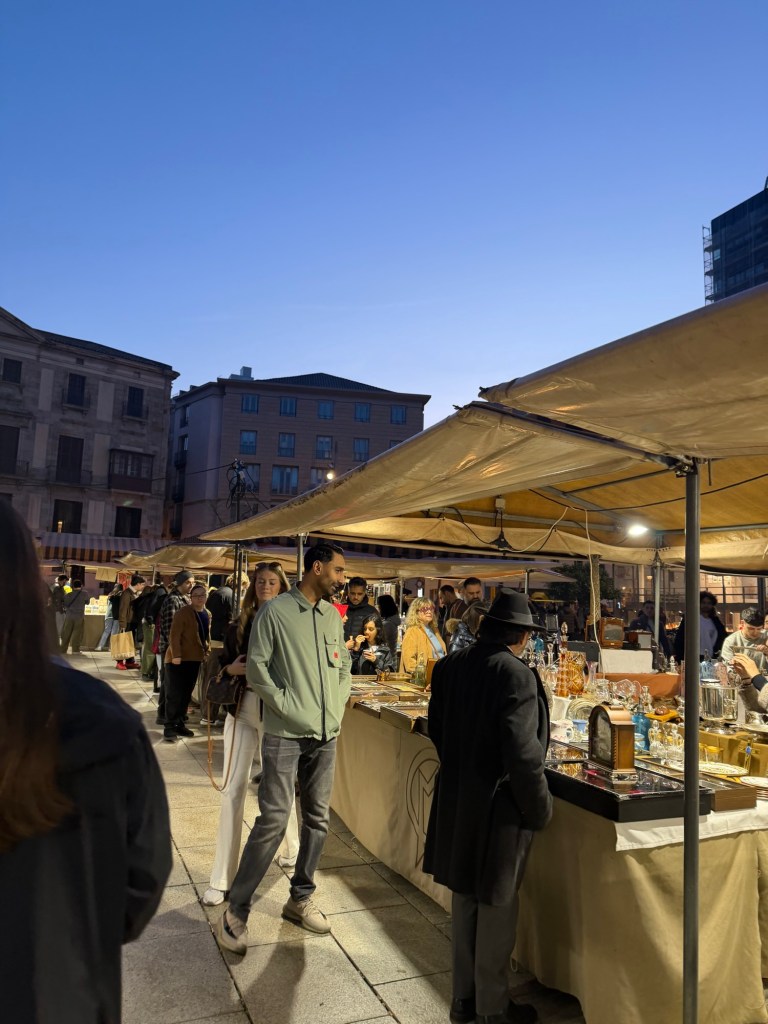
We also saw a market in the Placa Nova and looked around. They had vinyl, jewelry, pottery, and more!
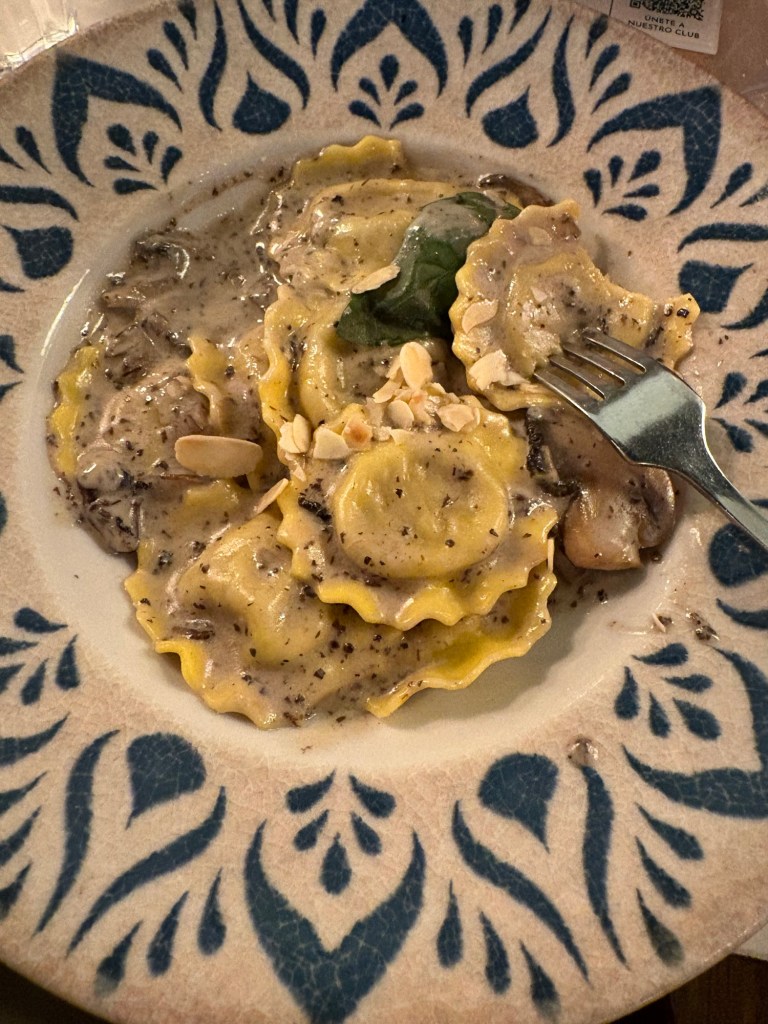
After walking through the market, we went to an Italian restaurant for dinner that was right around the corner from our hotel!
Reflection: Though it was a long day of travel, it was packed with great activities that highlight how civil engineering and architecture are shaped by natural conditions and cultural history! In Montserrat, learning about the unstable conglomerate geometry taught us how important it is to understand material behavior and load paths when designing structures. In Barcelona, landmarks like Parc de la Ciutadella and the Basilica de Santa Maria del Mar emphasized how architectural design is impacted by both environmental context and culture. Overall, the day was a great way to connect what we learn as Vanderbilt students in the classroom to real life!
Day 6: Group 3
Today was our last full day in Spain, and we started off with breakfast at the hotel, followed by a walking architecture tour of Barcelona’s superblocks and a group farewell lunch.
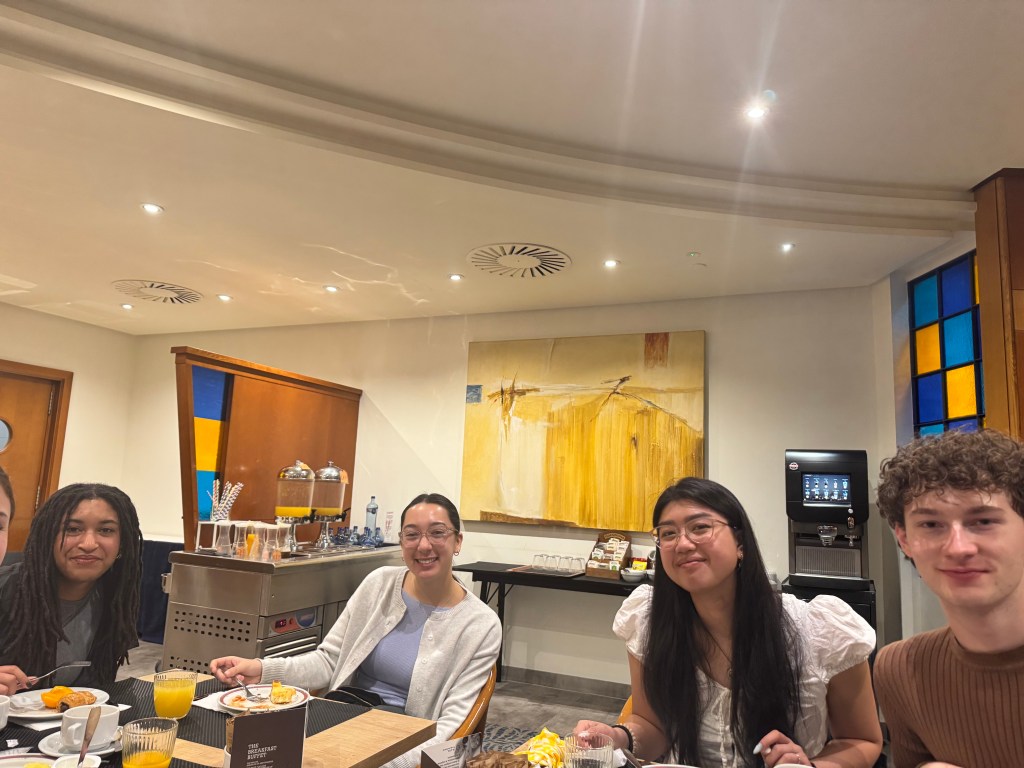
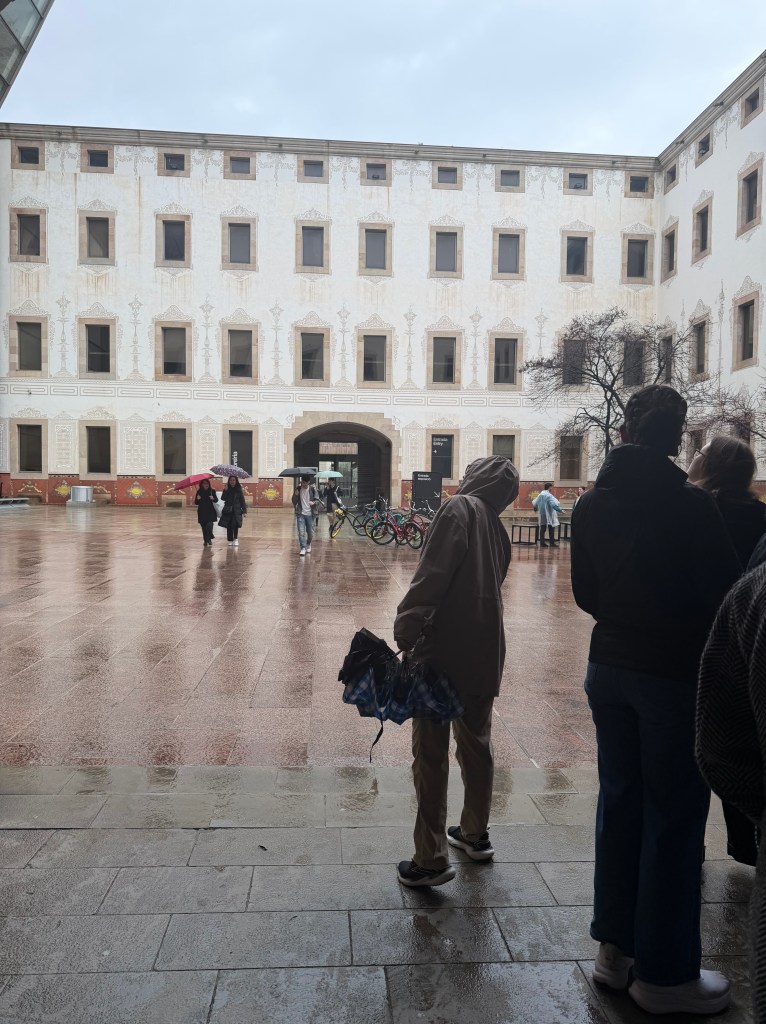
After a nice breakfast, we took the metro to the start of the superblock tour. The weather was not on our side, but we powered through!
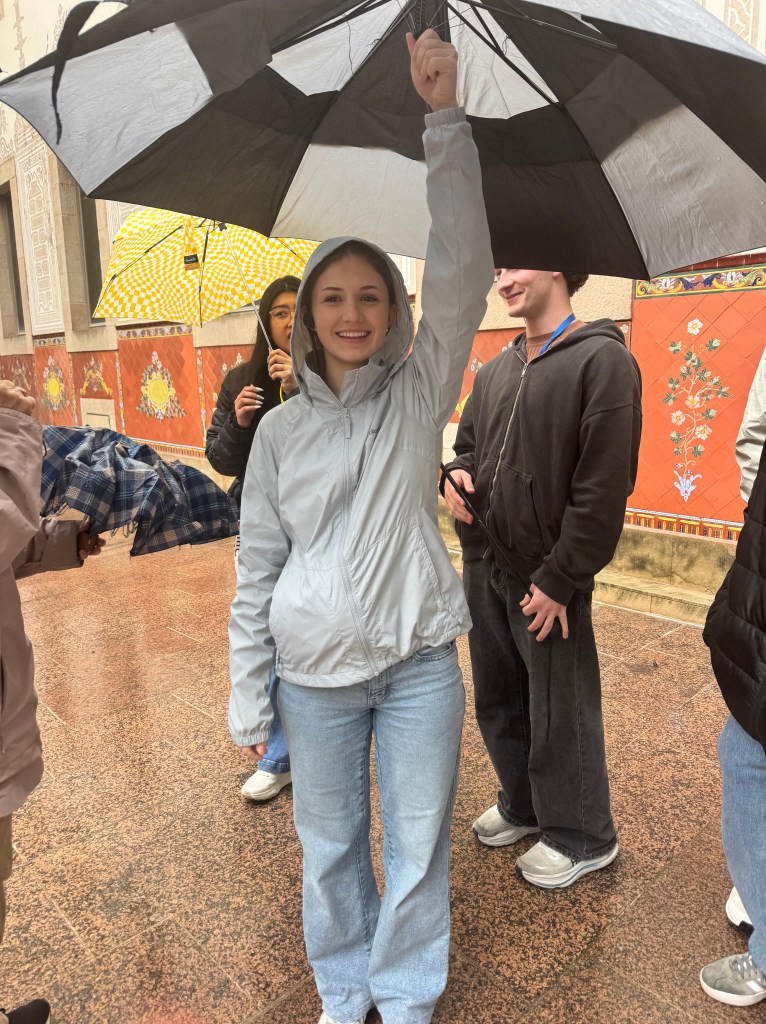
Superblocks were introduced in Barcelona in 1993 in an effort to improve urban livability through reorganizing nine city blocks into car-restricted zones to prioritize pedestrian accessibility, reduce noise pollution, and increase the green space in the city.
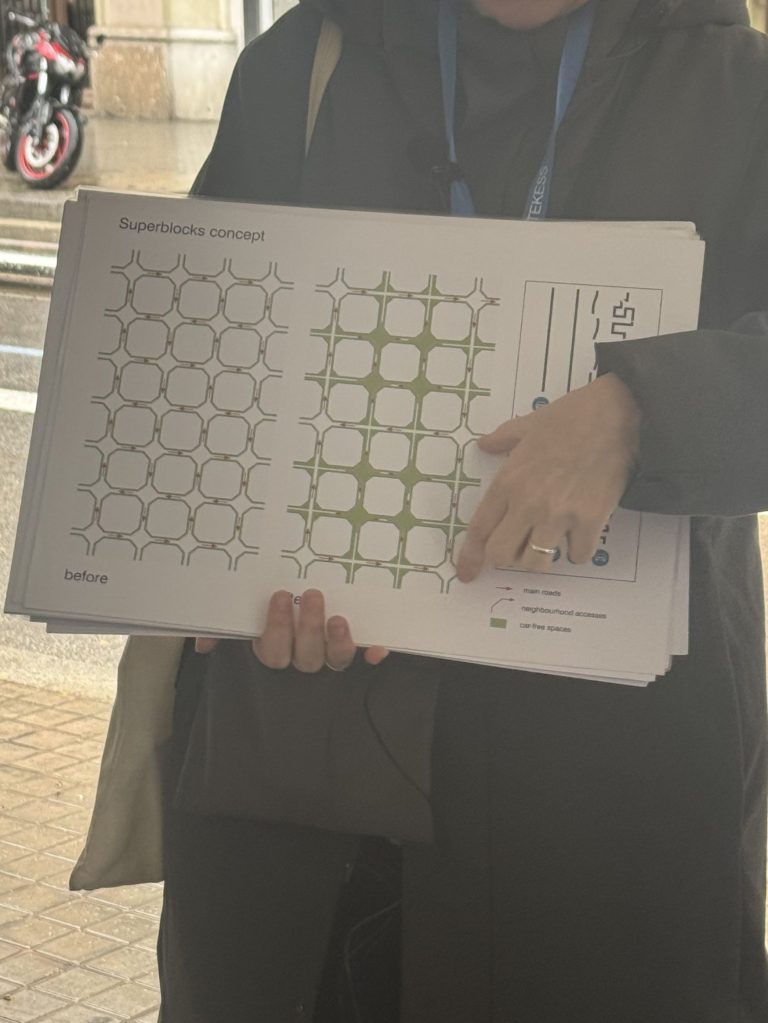
Much of the development of these superblocks relied on the concept of tactical urbanism. Tactical urbanism involves using short-term, low-cost tactics to test solutions to roadway challenges.
The development of the superblocks utilizes different geometric shapes to indicate a divide between a vehicle-friendly street and the end of the pedestrian-centered roadway.
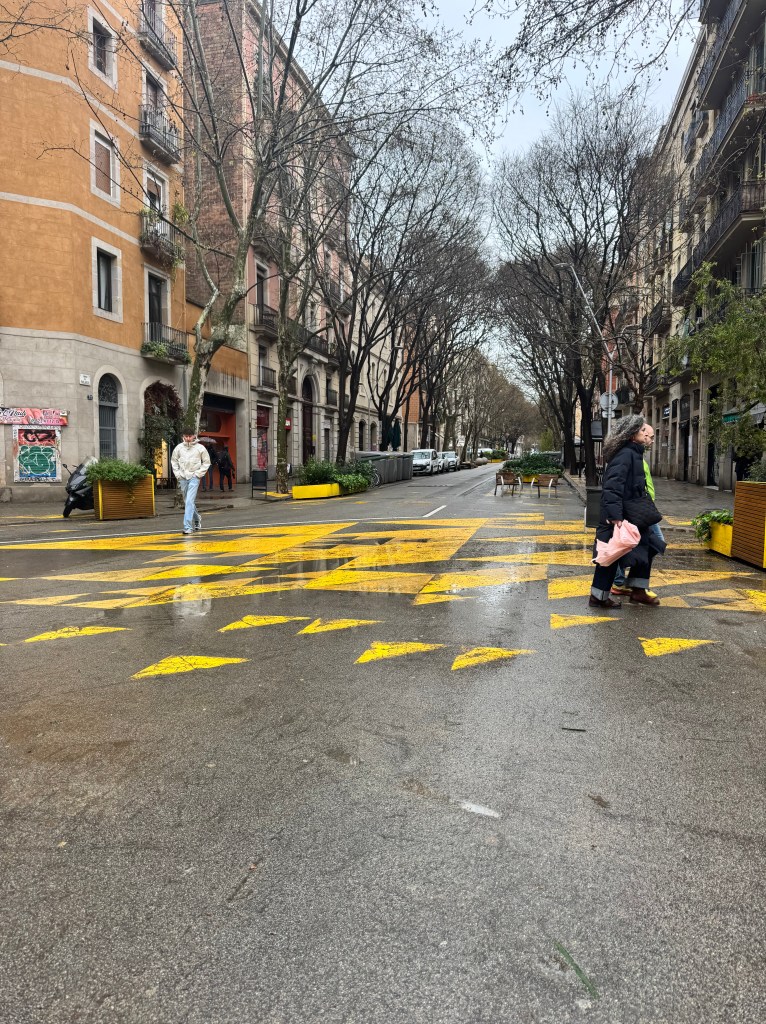
Shown here is one of the oldest parts of the city. Historically, the presence of charity housing and low-income communities contributed to a negative social stigma, often associated with homelessness, drug use, and prostitution. A key goal of the city’s urbanization and redevelopment efforts has been to transform both the physical landscape and public perception of this area.
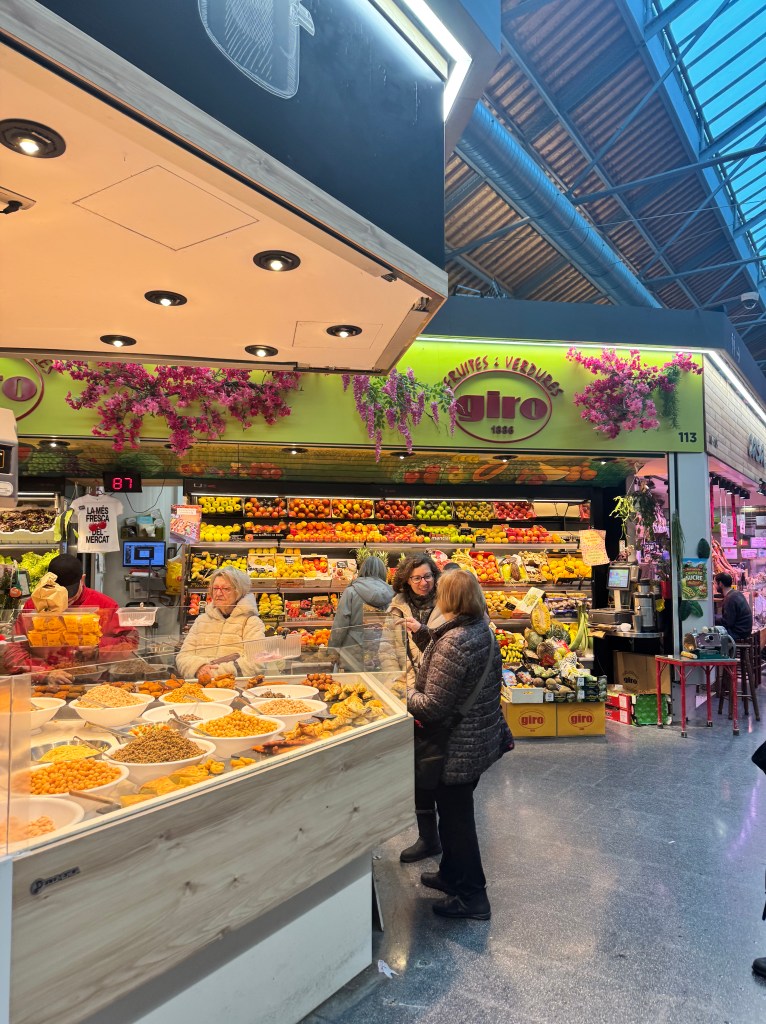
The weather picked up quite quickly, and we decided to take a break and check out the Mercat de Sant Antoni market, selling everything from fresh fish and produce to handmade leather bags
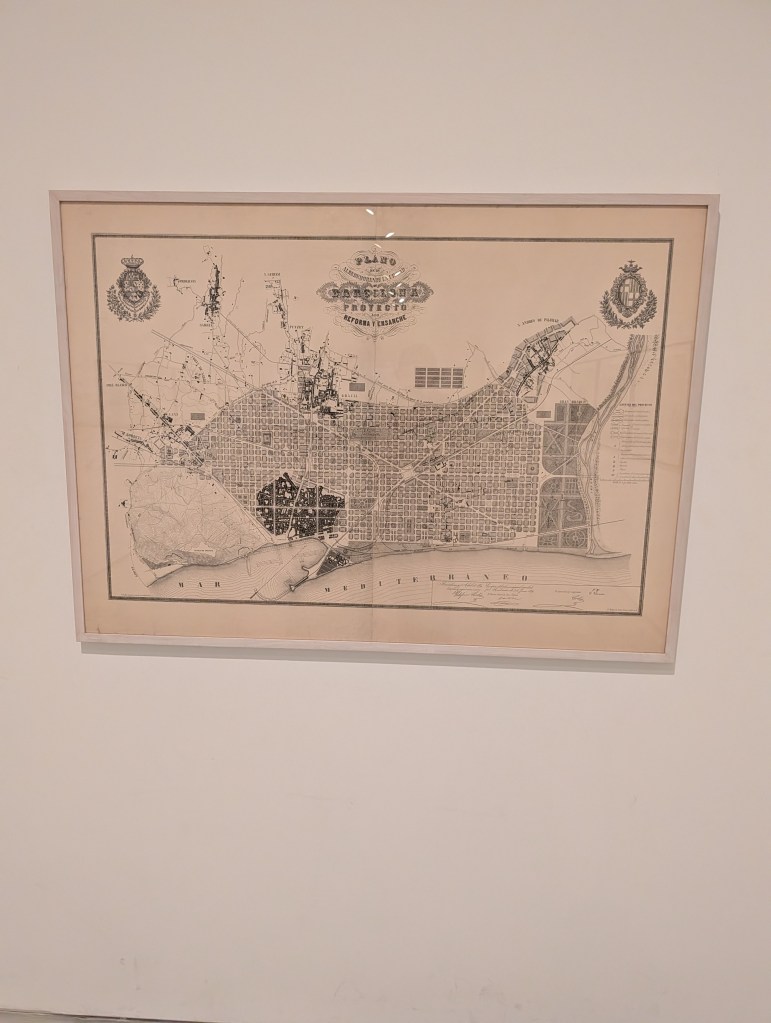
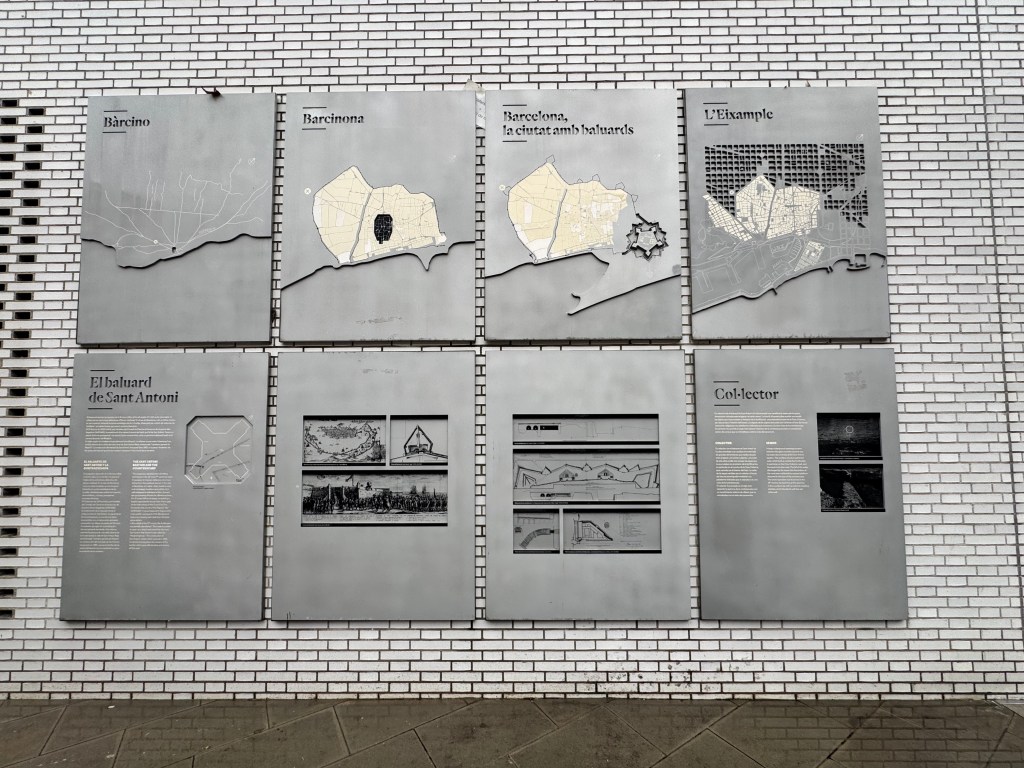
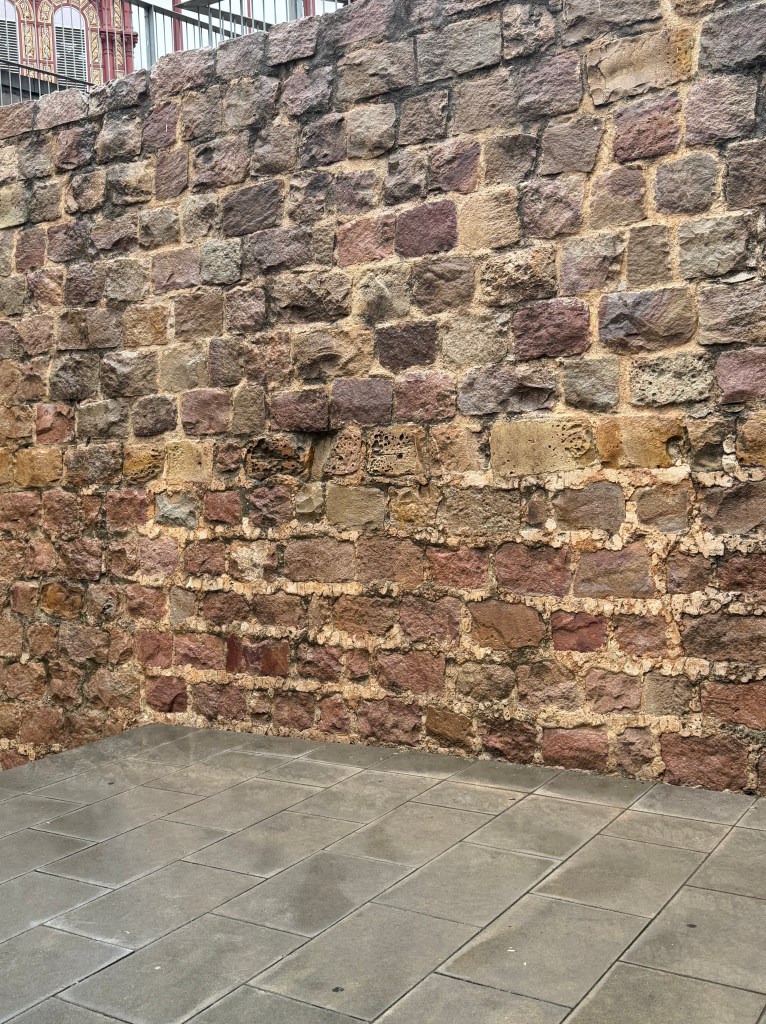
We then finished our tour, learning more about the history of Barcelona’s urban development. The art below shows the process of development, starting with when Barcelona was founded as the Roman settlement Barcino, to when Barcino expanded beyond the Roman walls, and highlights the 19th-century expansion plan.
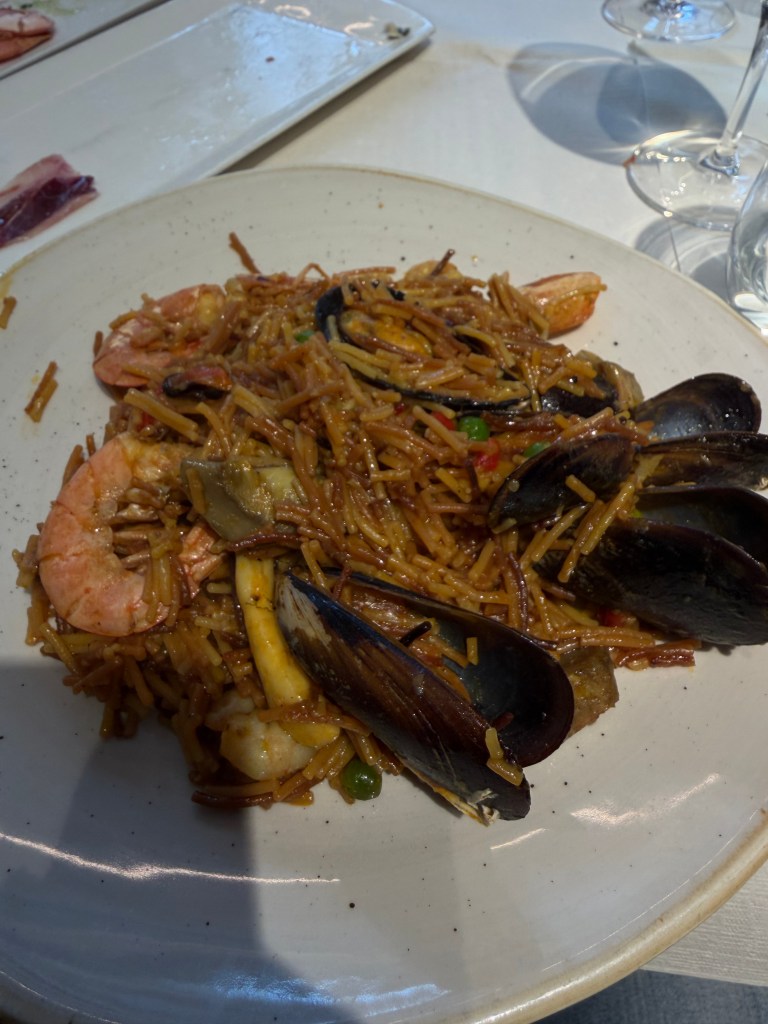
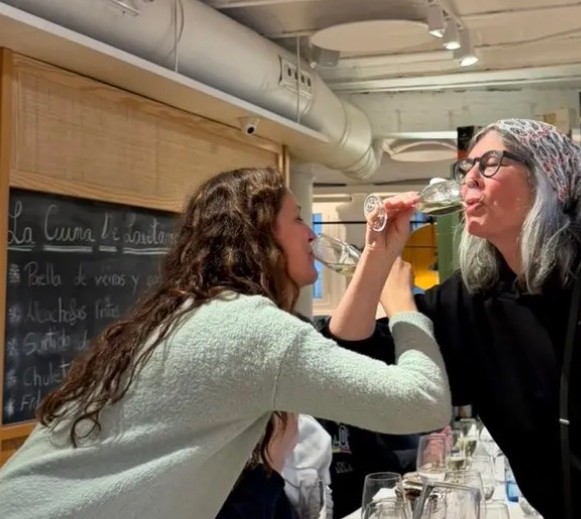
We finished the day with a group lunch at La Cuina de Laietana. Our multicourse meal features everything from mussels to croquettes to paella, allowing us to get one more taste of our favorite foods from the trip.
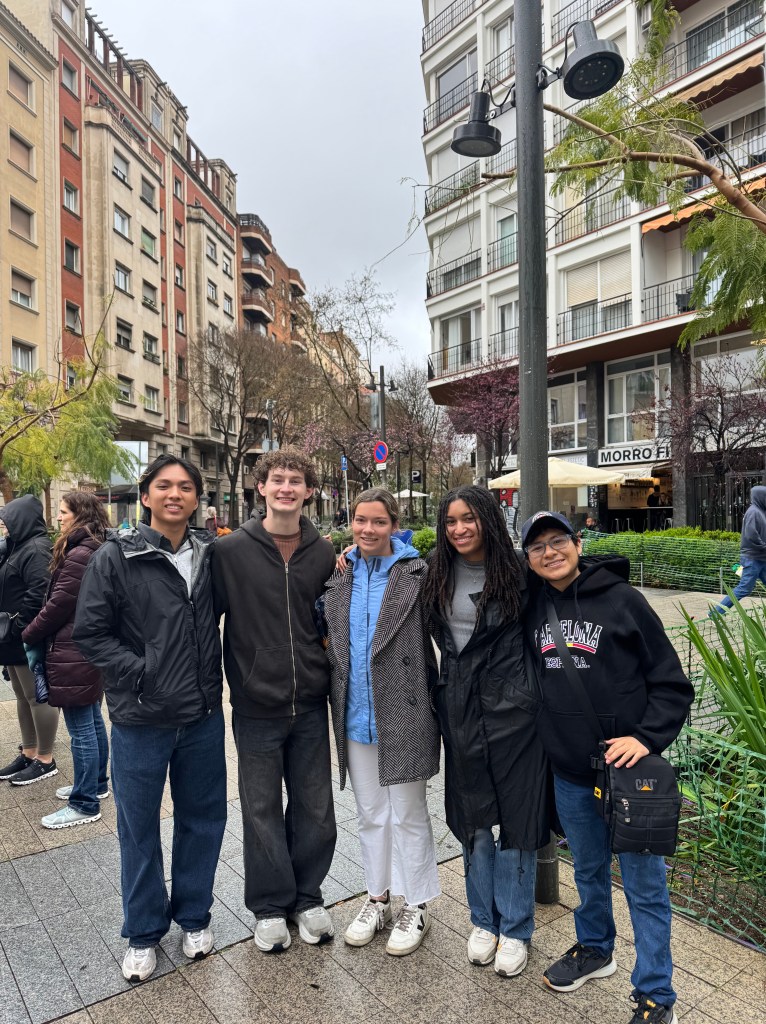
Thank you for everything, Spain 💃🪭!

