CE3890 – Une Semaine À Paris!
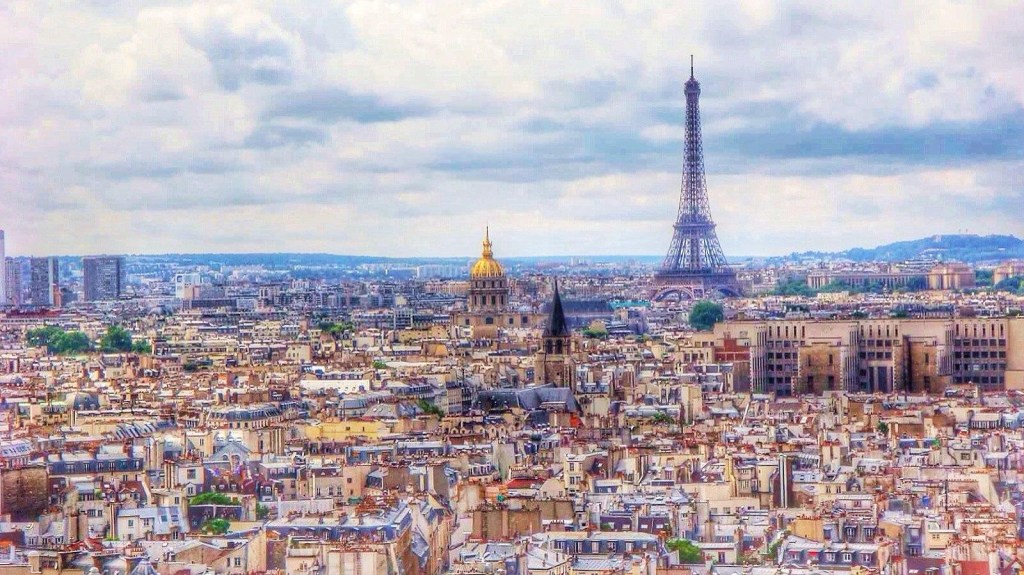
3/10/2024 – 3/17/2024
Days 0 and 0’ : Saturday 3/8 & Sunday 3/9
And the adventure begins!
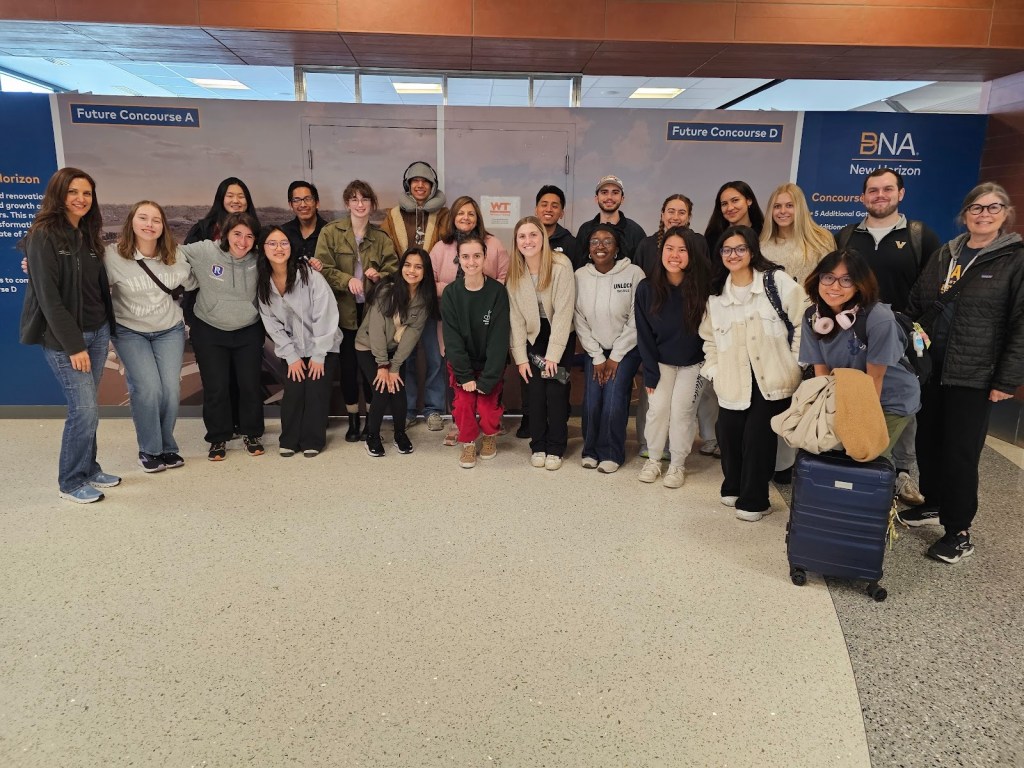
It’s 7.27pm in Philly, our Paris flight was scheduled for 7pm. We were late leaving Nashville, but AA is holding our next plane, so there is hope we’ll make it to Paris in the morning!
It’s 7.45, and we made it to our plane!!! Woohoo!! Next update when we land À Paris!
9.45pm: today was such a whirlwind! After we landed and went thru security, we had to walk thru most of CDG to meet our taxis. Just when we thought the craziness of travel has ended, surprise! Paris it’s hosting a half marathon, and the roads to our hotel were closed. We had to walk with it luggage, up and down stairs, cobbled roads, uneven sidewalks, for one of the longest 15 mins ever… welcome to Paris everyone!
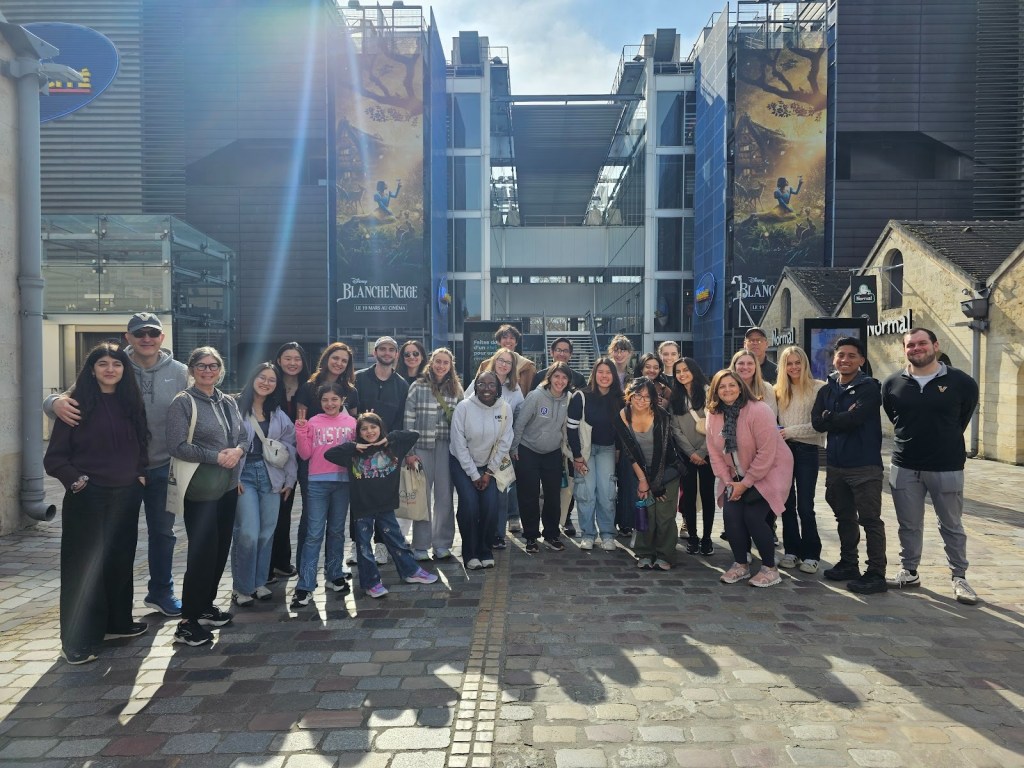
At the hotel, we checked in, had our orientation, and went for a neighborhood walk at Bercy village.
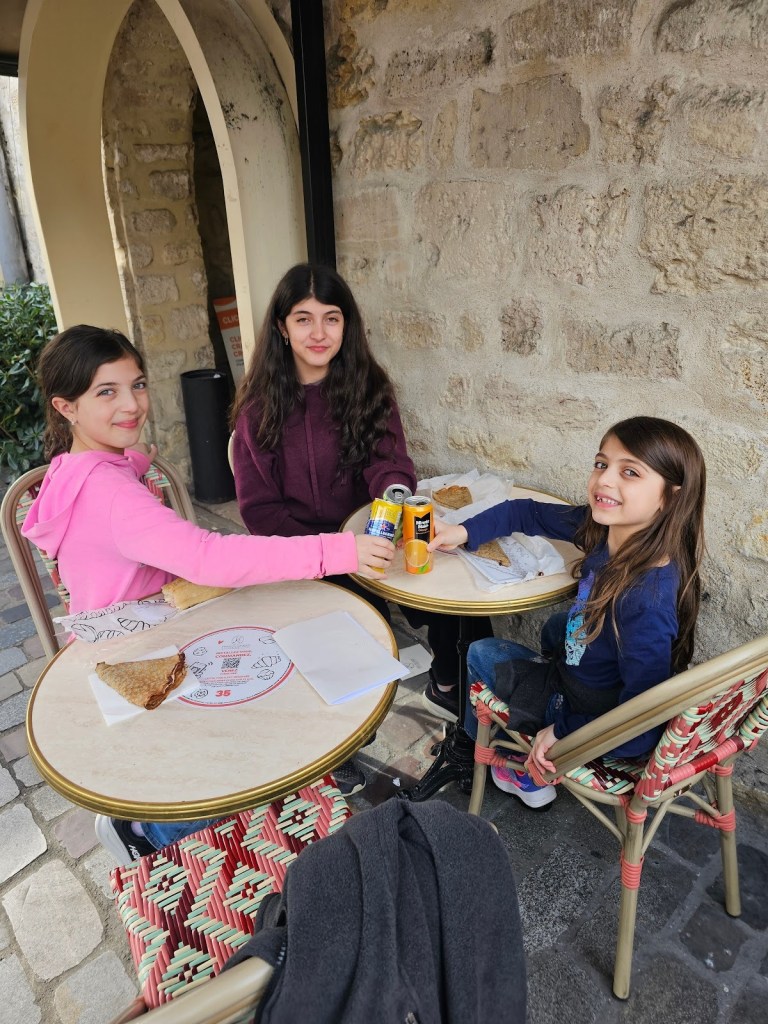
Crepes are so much sweeter in the city of love
After a short rest, we took the metro to dinner, and yes, we had to push and cram ourselves inside, like true parisians.
But the crazy travel was so worth it: CIEE made reservations for us at a French restaurant: Le Bouillon https://www.bouillon-chartier.com/
Quel delice! The food was amazing!
““““““““““““““““
The weather was perfect, so we decided to walk a bit before catching the metro again to go back to the hotel.
Exhausted, we returned, hoping to have a restful night, and praying for good weather tomorrow.
To end this day, and iconic song: Sous le ciel de Paris https://g.co/kgs/FZsFceB
Absi out, Group 1 blogs tomorrow.
Group 1, Day 1: Monday 3/9
Starting the official Day 1 off strong….!
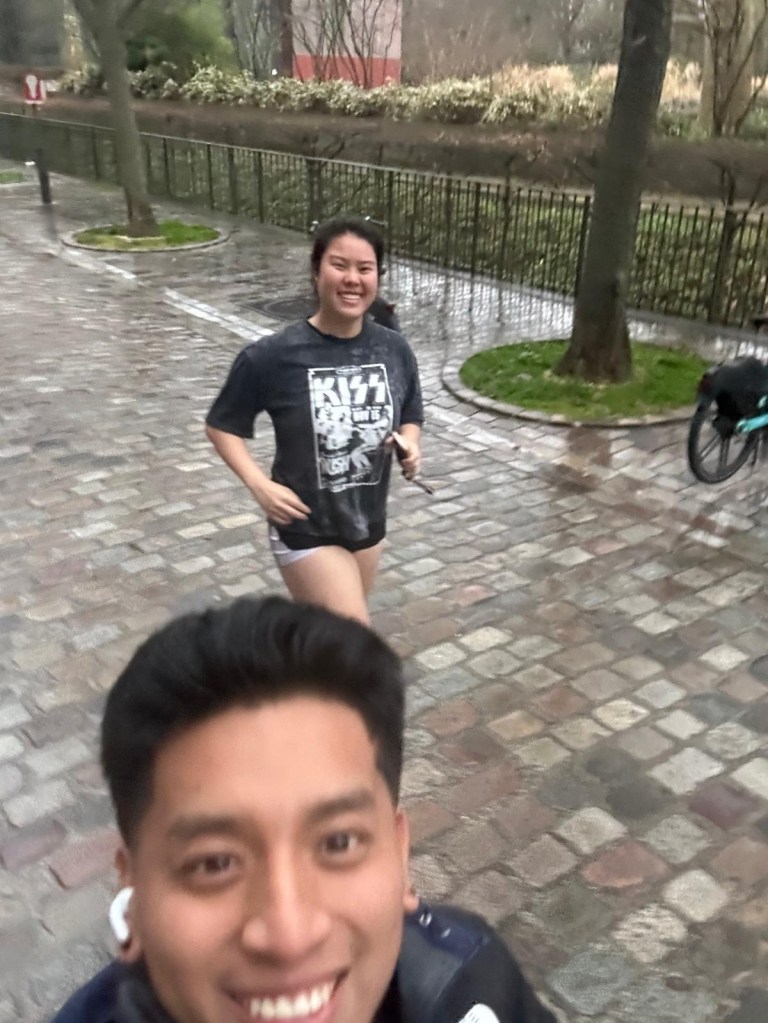
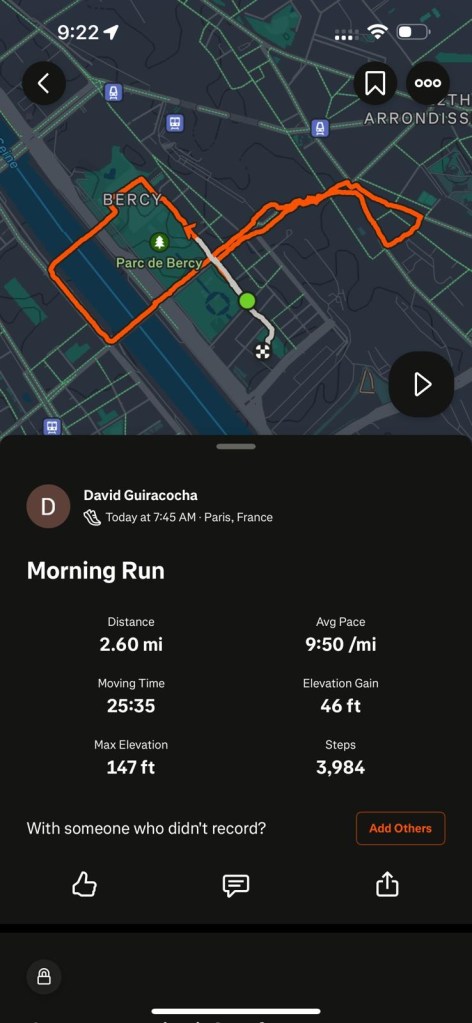
Started the day off early at 7:30AM for a good run (little drizzle) but felt pretty refreshed! Coming back to reflect at the end of the day…might have been an overambitious decision because pretty sore after all the walking.
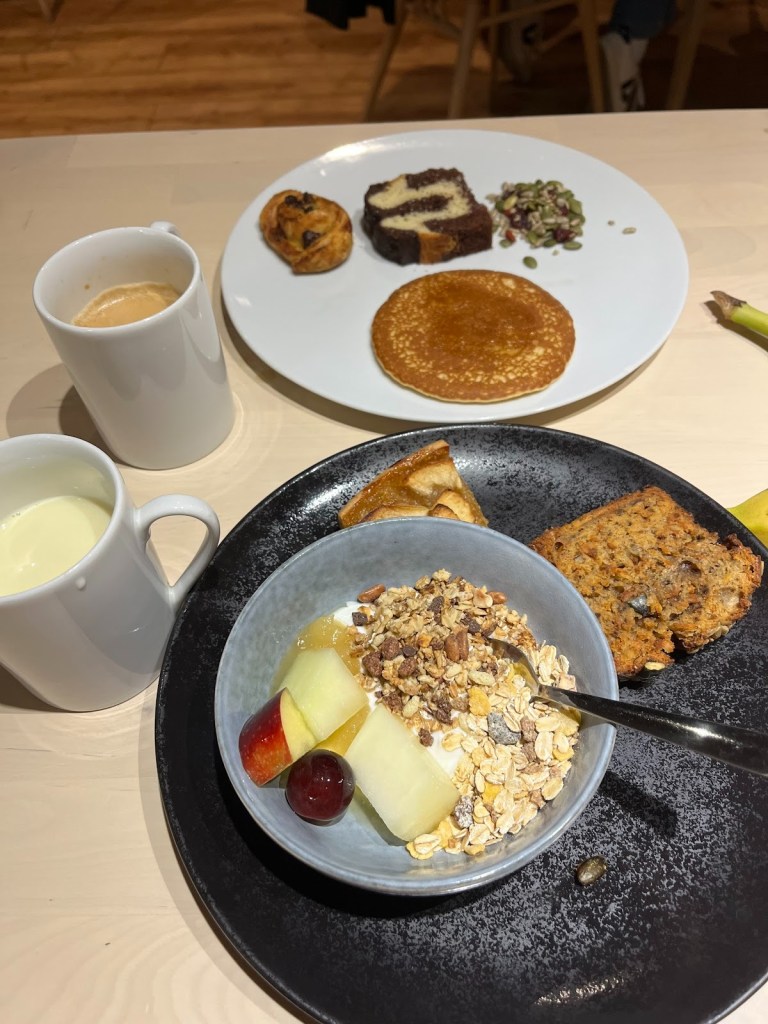
HOTEL Breakfast!
First activity: Boat Ride :))
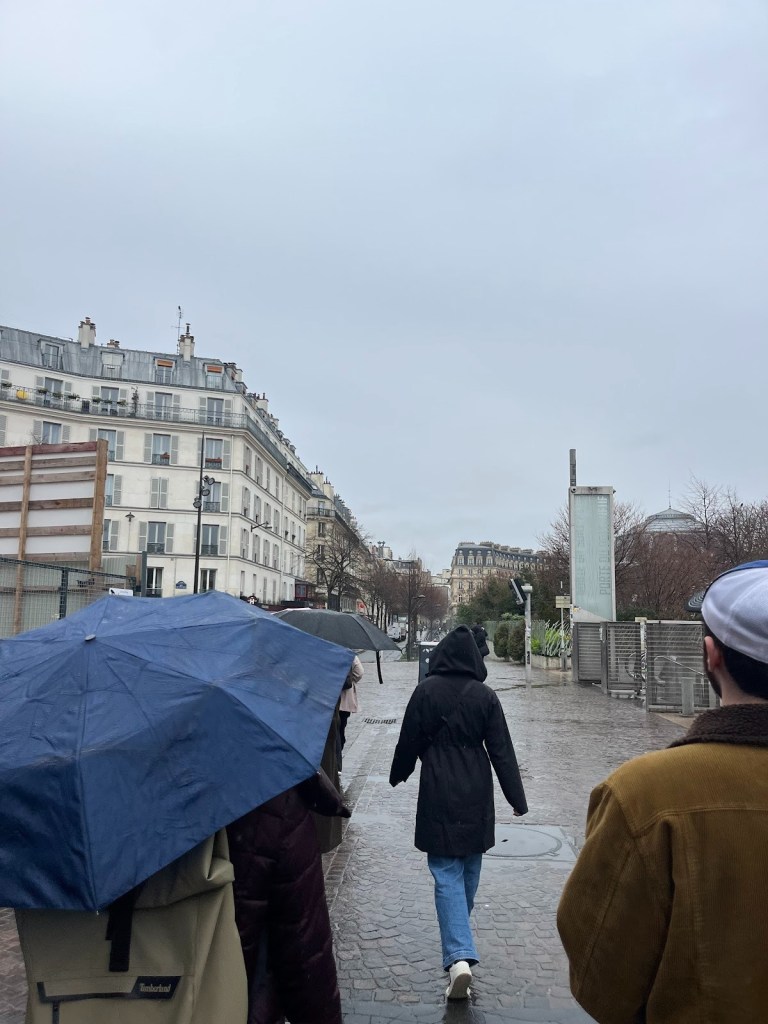
The day started with a rainy walk and metro over to Pont Neuf where we met for the boat and bridges tour. The views along the way were gorgeous. Rain really does equate Paris vibes.
Quick video of the view before going on the boat: here
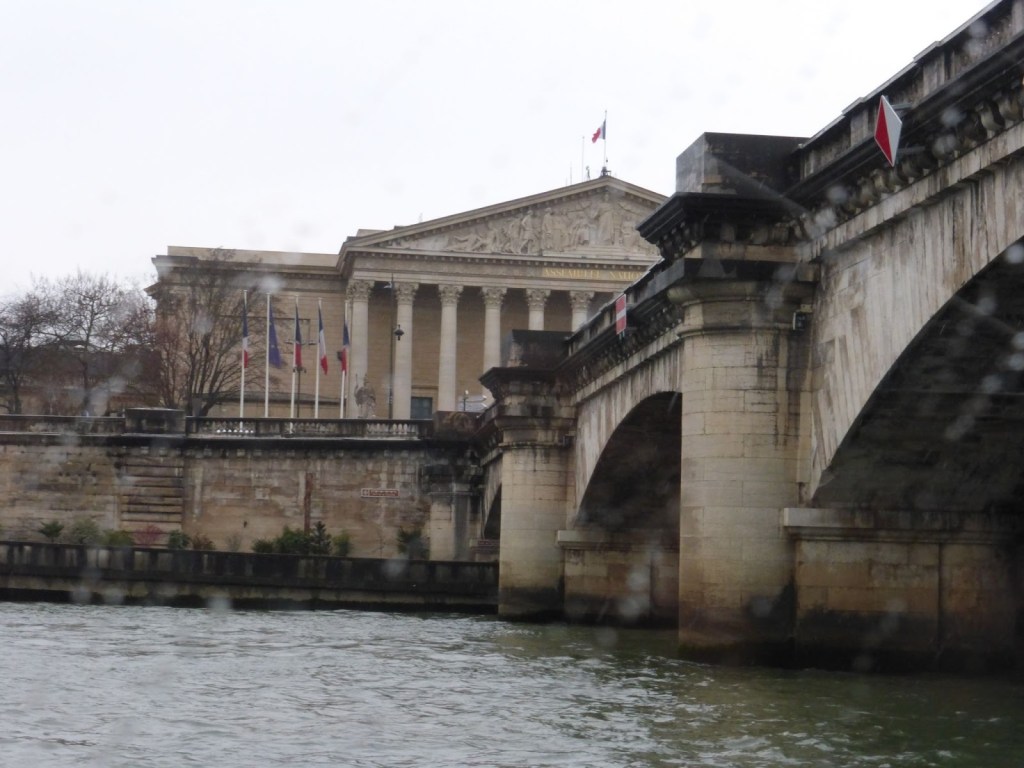
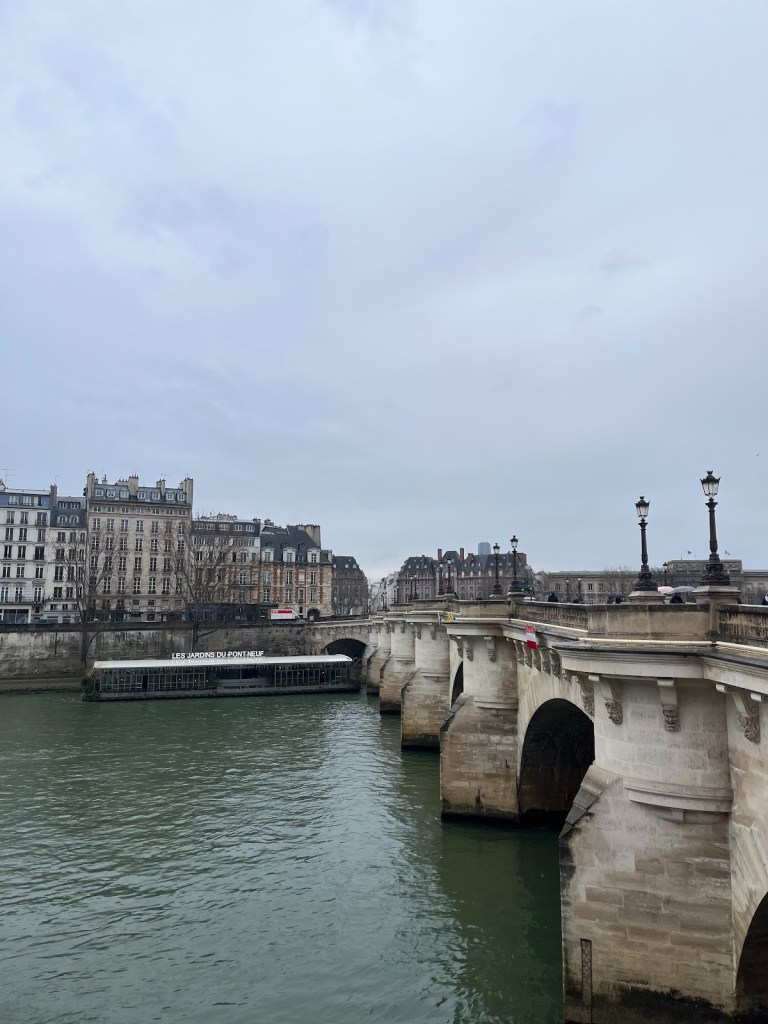
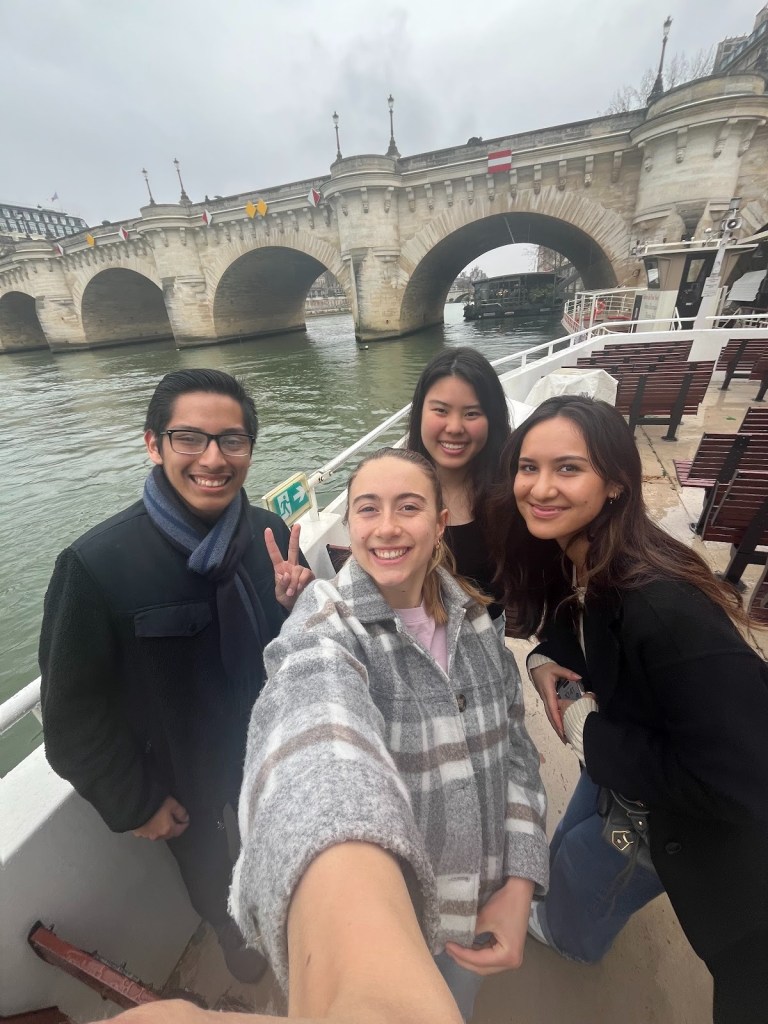
Despite the rain, we boated down the Seine and were able to see Pont Neuf (the first stone bridge in Paris), Pont des Artes (the first steel bridge), and snippets of Notre Dame and the Eiffel Tower.
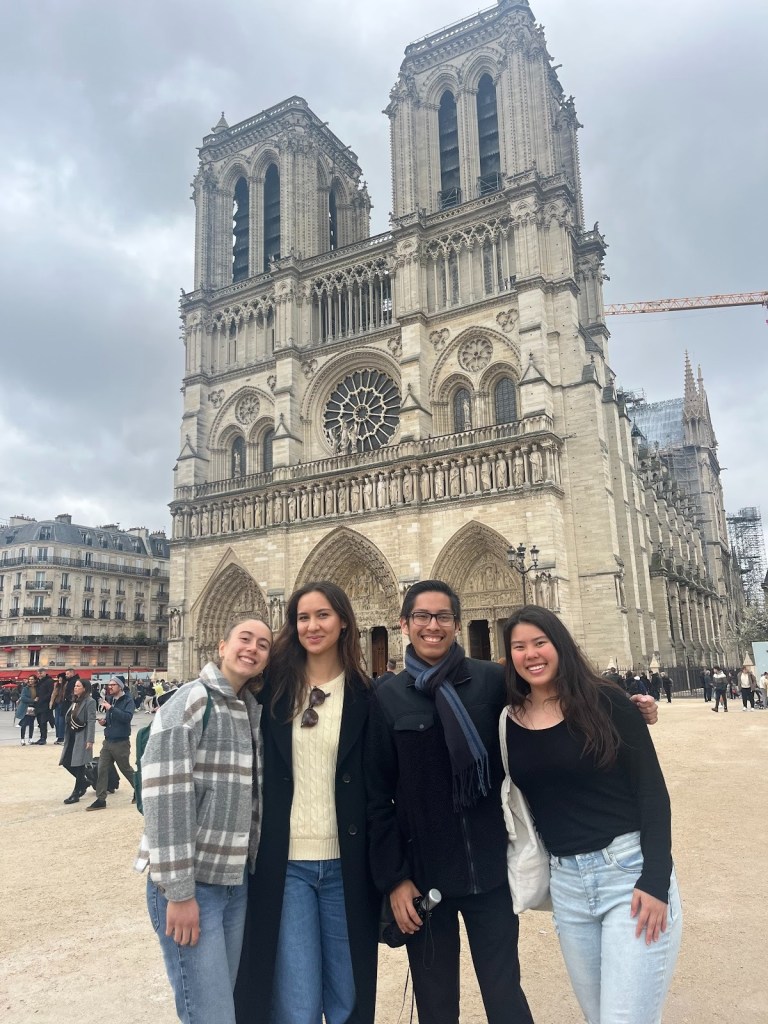
Groups set out for lunch before meeting back in front of the Notre Dame to begin our city planning walking tour. We walked all over and learned property on the Notre-Dame Cathedral of Paris Island cost 30,000 euros per square meter!!
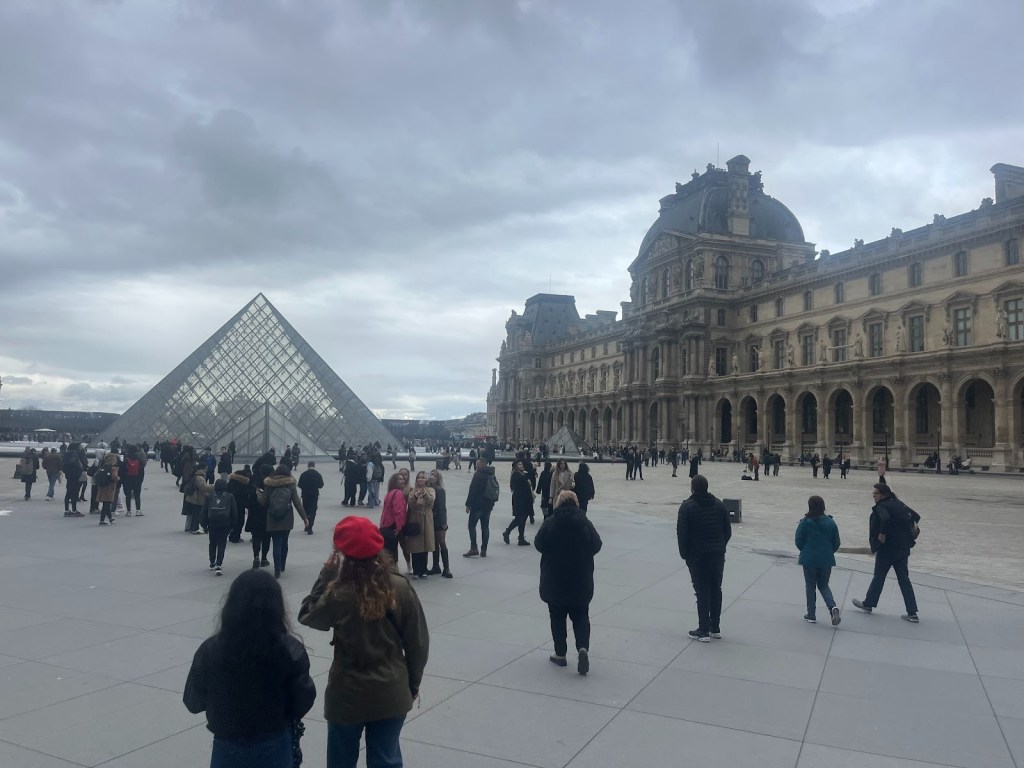
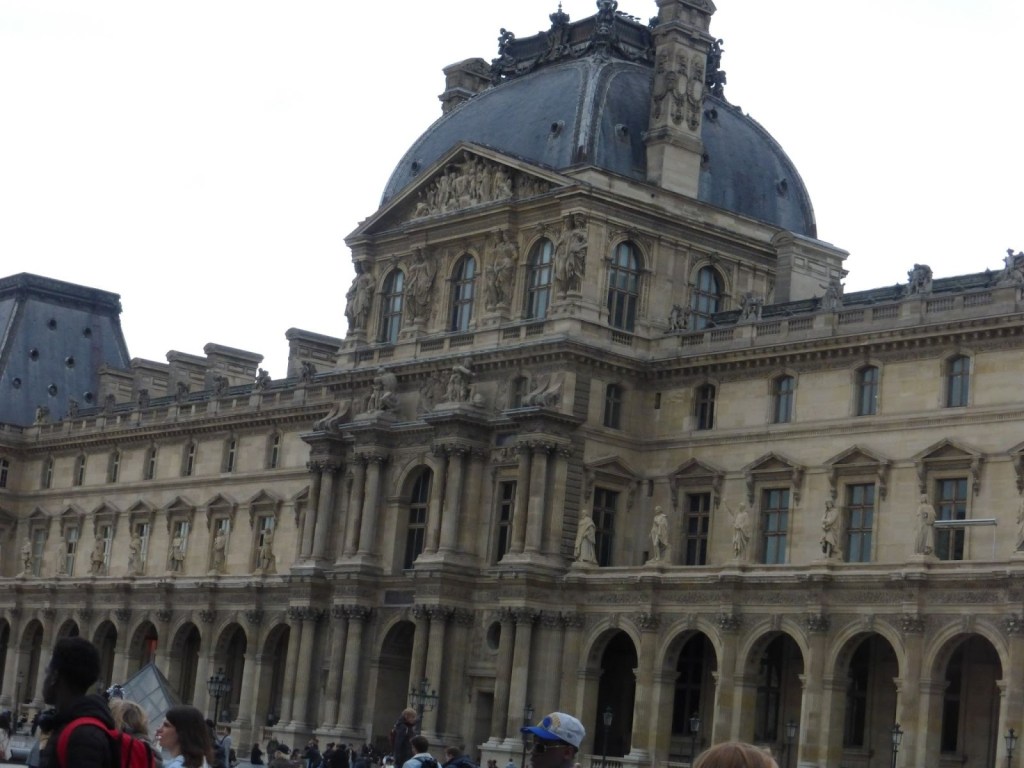
The tour walked through many notable spots including the Louvre, Tuileries, and mixed-use (yay sustainability) areas built by Henry the Fourth (a Henry whose statue still remains post- French revolution). The reason Louvre was such a great design wasn’t just because of the pyramids, but rather the amazing design of the underground system that allows you to visit each area seamlessly (also the natural pour of light into the infrastructure within). Some think the pyramids aspect of the Louvre is too modern while others like the contrast.
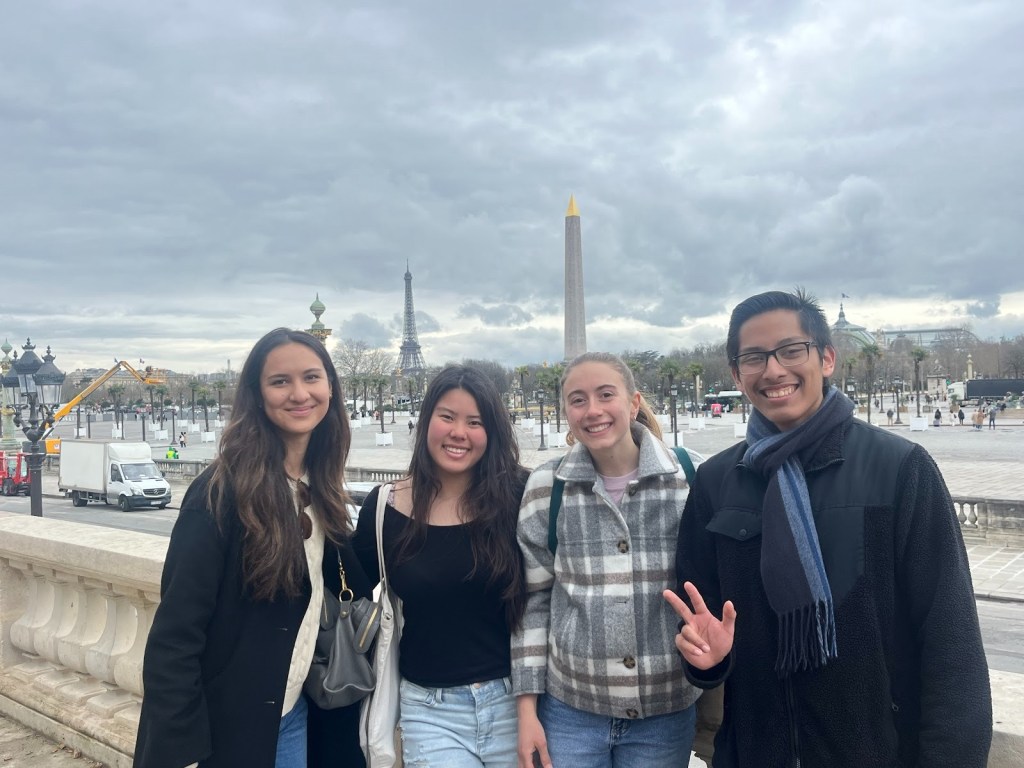
The tour ended with the Obélisques de Louxor, an over 3,000 years old gift from Egypt.
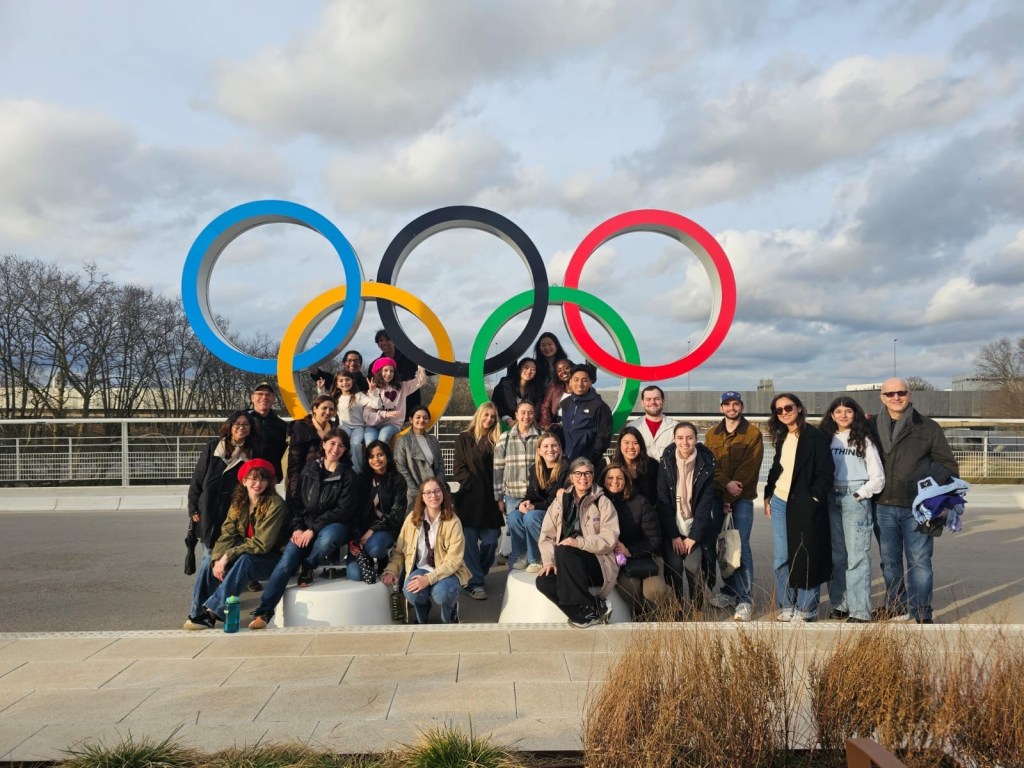
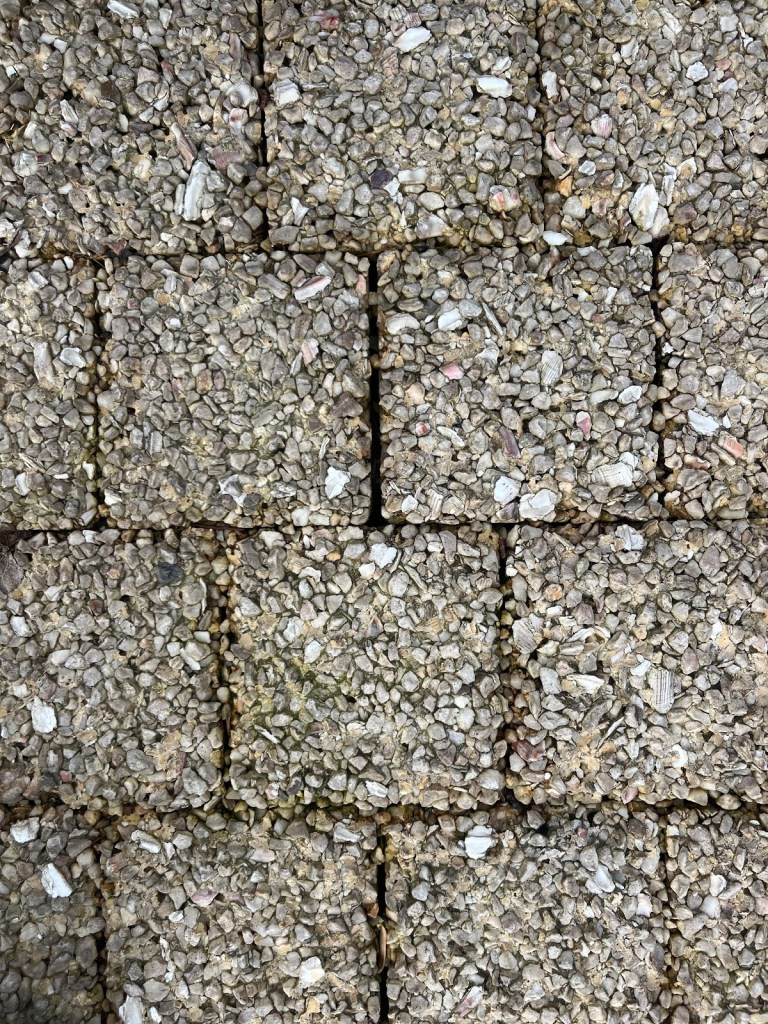
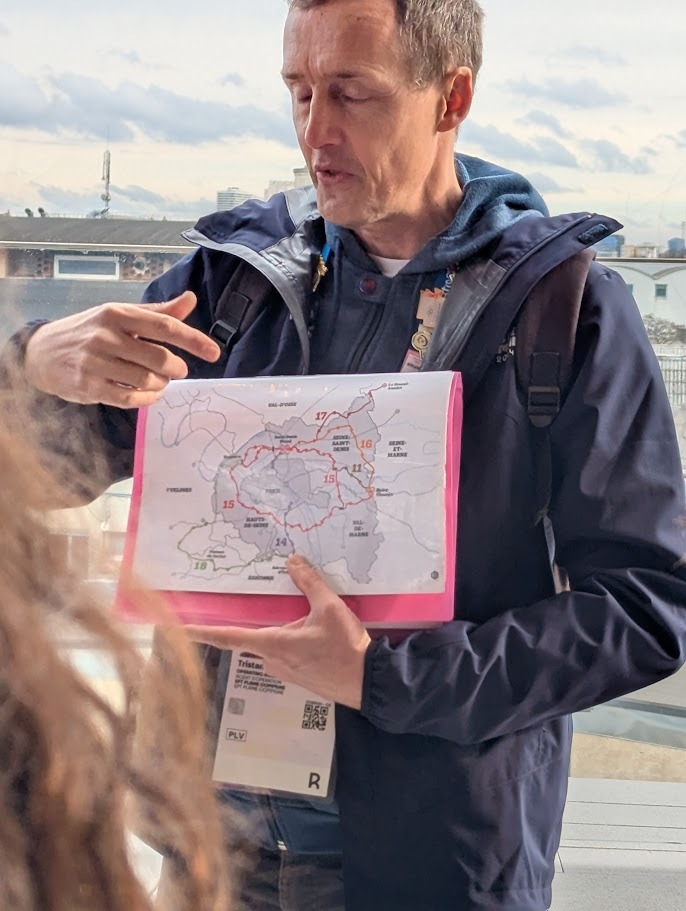
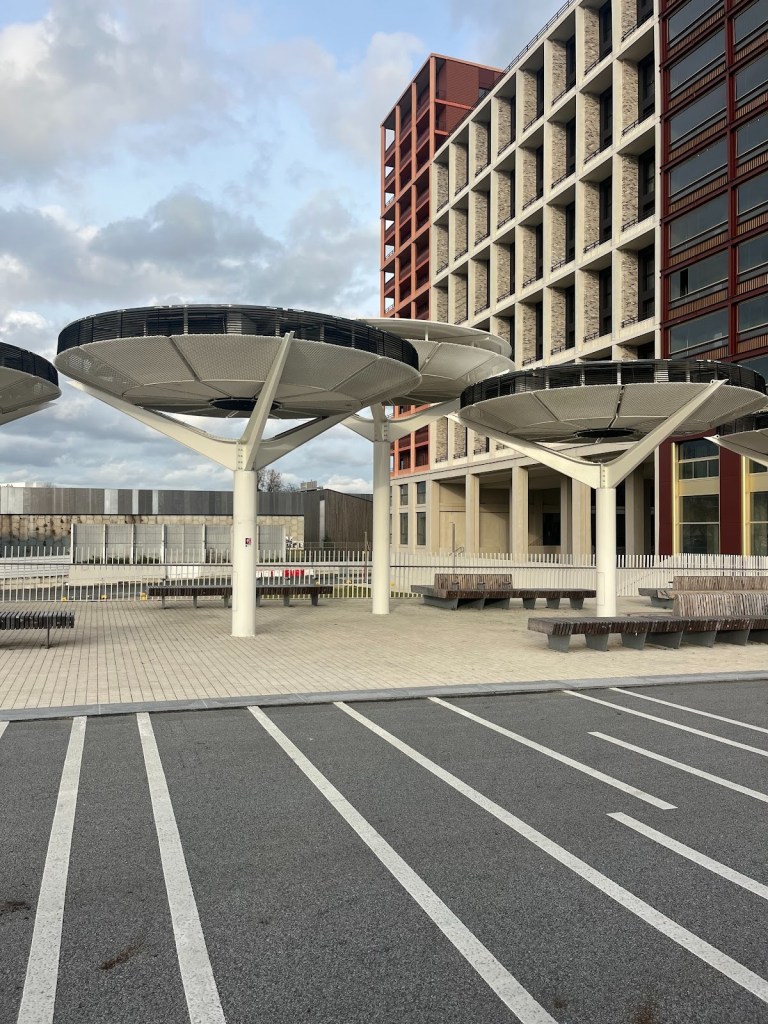
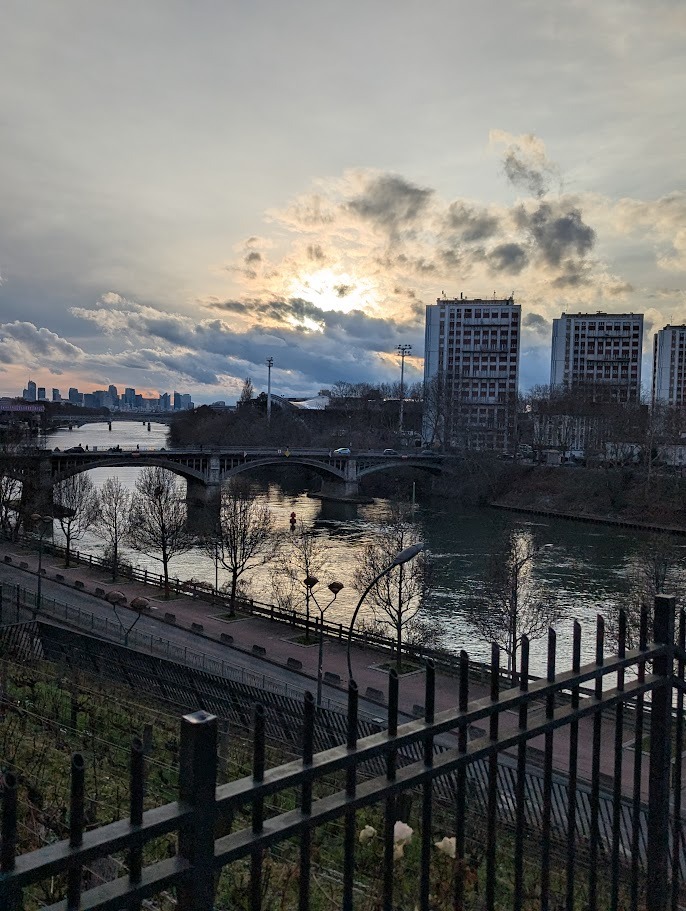
The last stop of the day was a guided tour around Olympic village where we learned about all of the incredible sustainability measures taken by the engineers and team designing the Olympic village (and got quizzed by our tour guide). The decision for the location of the Olympic village was fascinating, it helped increase productivity and advancement of one of the poorer areas (addition of connection bridges such as the fourth one in the group picture above). Some cool innovations were the crushed seashell stone floors and the new air filtrations system.
Ending the day with over 21,000 steps and even more new knowledge about Paris’s history.
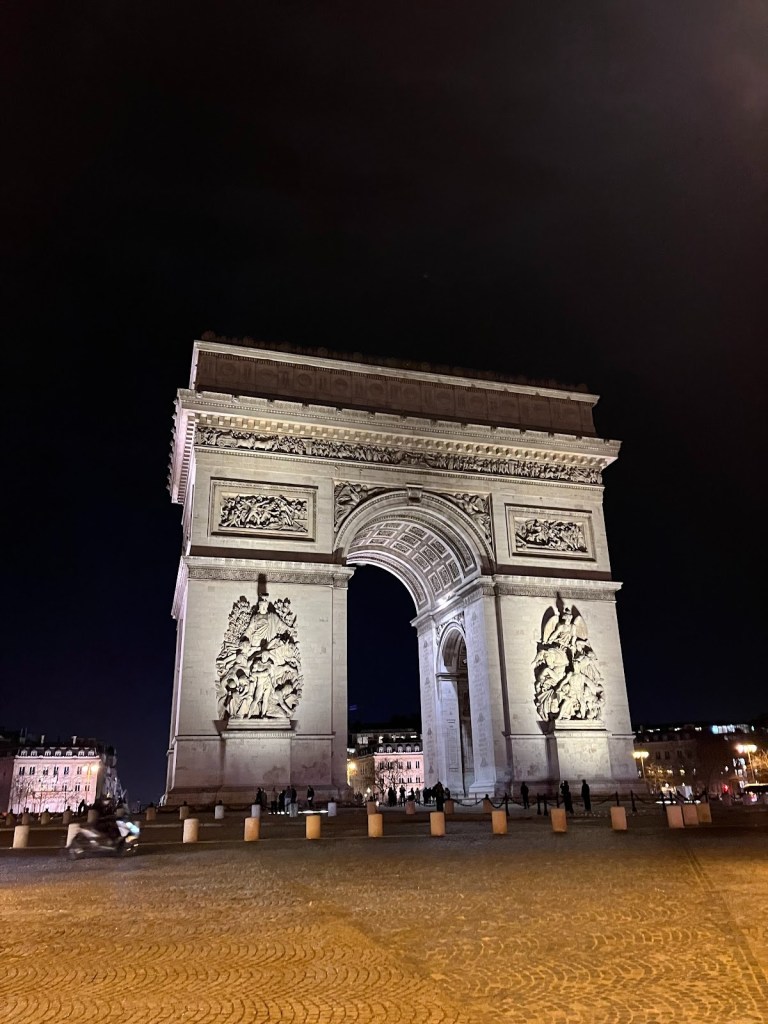
Night Explore (video) – After the city everyone went off to dinner! A few places we explored after were the Arc De Triomphe and the Eiffel Tower (brights us every hour for five minutes starting at 10PM).
Overall, such a productive walking day. The metro is such a great invention (prefer it so much better than buses and cars, saying from experience trying to get to the airport to hotel yesterday), I wish Nashville had one. Hoping that it doesn’t rain tomorrow when we go to Versailles.
Group 2, Day 2: Tuesday 3/10
DAY TWO IS VERSAILLES!!! LET’S GET EXCITED!!! I LOVE PARIS!!!

Note entering day two at Versailles (Something the people may wanna check out) (Currently 1:15am on 3/10/2025):
As I am entering this trip under a little bit of a different lens than others as an art history student, I would like to share this little tid-bit of knowledge for something I will be visiting tomorrow at Versailles. I am currently enrolled in a History of Art course titled “Gothic Paris” and my Professor (and advisor) Dr. Elizabeth Moodey—who specializes in all things Gothic Paris Art and Architecture—told me to visit a false farm set up for Marie Antoinette within the Versailles grounds. Although this doesn’t draw much attention from visitors, it shares a really important aspect of Versailles as a whole. Located out of the city major, Versailles served as a chateau and hunting lodge for French royalty, as commissioned by King Louis XIII in 1623.
The major narrative that this construction creates is a space of escaping the city of Paris (both the bustling nature/responsibilities of the royal family and their selected folk) whether that be for hunting expeditions, hosting extravagant parties, or even simply a weekend away. What is worth noting regarding the false farm set up, known as the Queen’s Hamlet, is that it was completely placing the Queen of France in a setting which was otherwise a complete facade to a life she never lived being the highest ranking female in French royalty. The complex—almost entirely reserved for the Queen and her guests—consists of a grain mill, a farmhouse, a working dairy complex, a dovecote, and other constructions of contemporary agriculture and livestock housing.
Now why would Marie Antoinette want this for personal usage? The answer is simplistic, and do not overthink it, she simply needed an escape of her own and place of pastoral harmony for which she often never possessed within the city proper of Paris. This complex sorta diminished in refinement and upkeep as Versailles was passed down through generations of ruling families of France, until it was later restored by Napoleon I for his wife Marie-Louise of Austria in 1810 under similar reasoning. Just thought I would share a little bit of knowledge I have learned from this course as we enter our second full day in Paris! Wishing everyone a wonderful night of rest and I hope all of you are looking forward to the days to come as much as I am!
10:45 AM
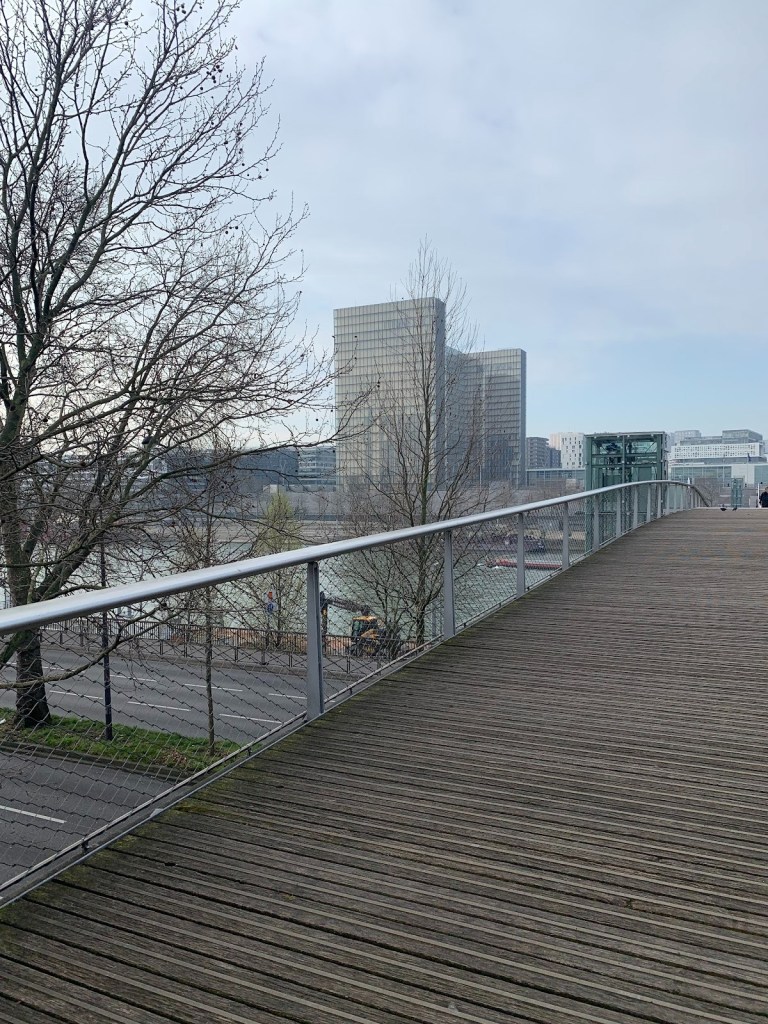
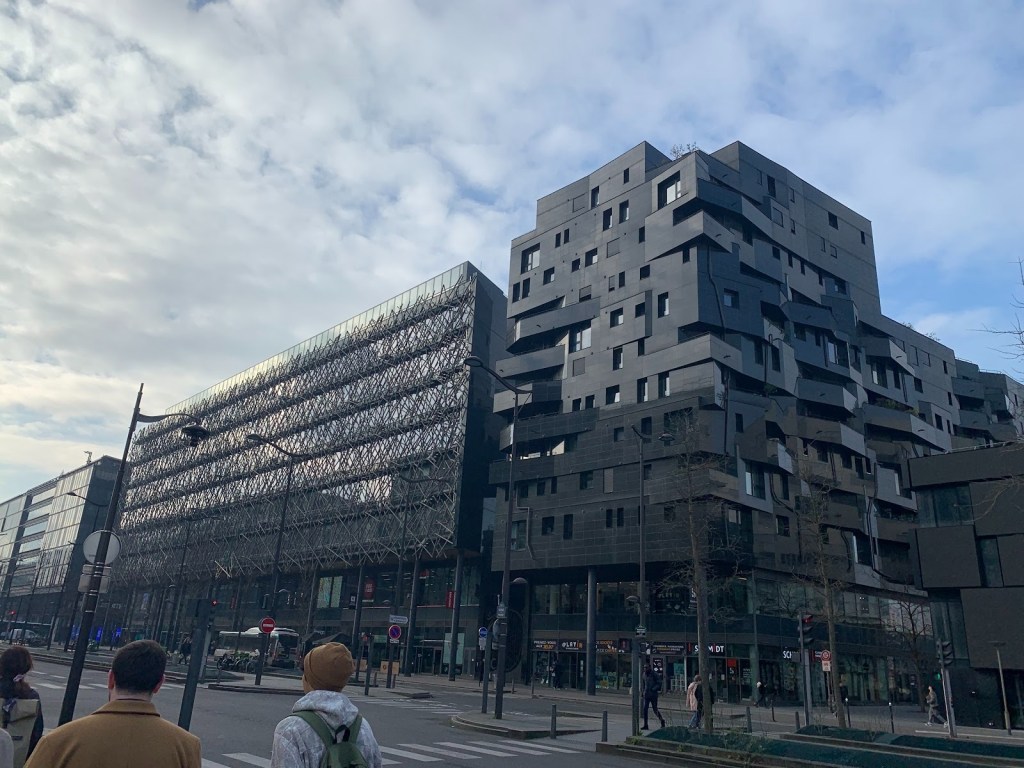
After a moderate walk to the train station, one that goes to more places outside of Paris, we got on a double decker train. During the hour ride, there were clear examples of various French architecture. After seeing the classic inner city architecture yesterday, along with the modern architecture in the Olympic Village, the area we are staying in looks more like the latter. There were large buildings with various geometric designs that continued out into the suburbs. The farther out places had very dense, medium sized houses, more similar to classic perceptions of European architecture. The peaceful train ride gave us the chance to observe the change in geography, architecture, and city planning.
11:00 AM
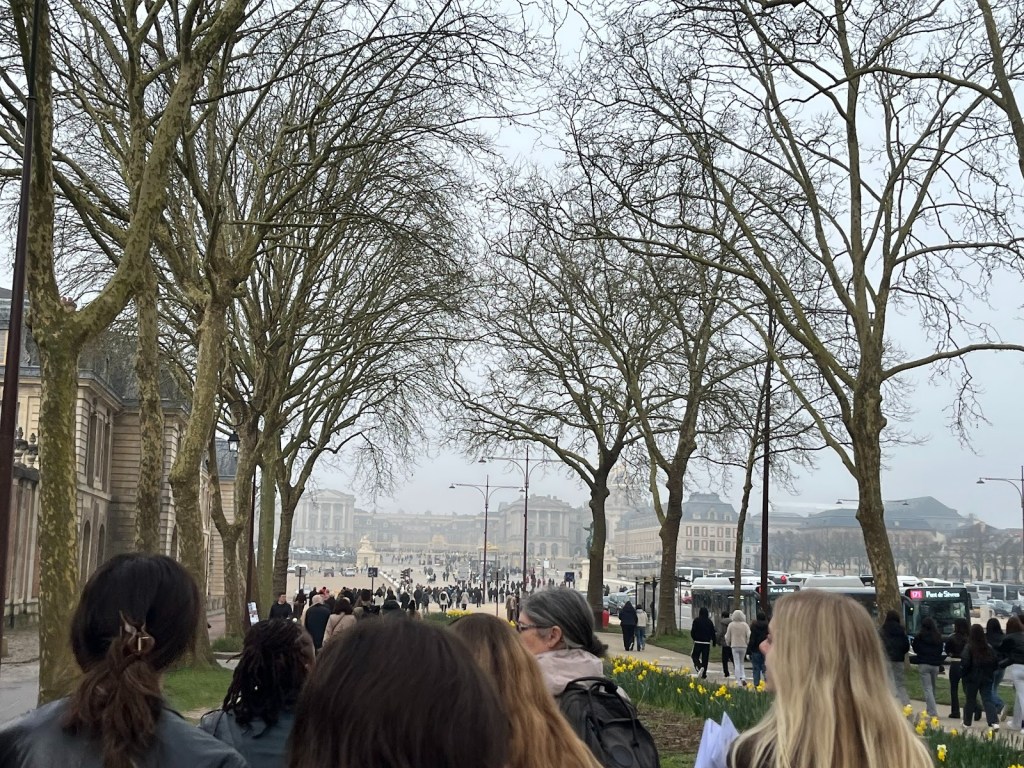
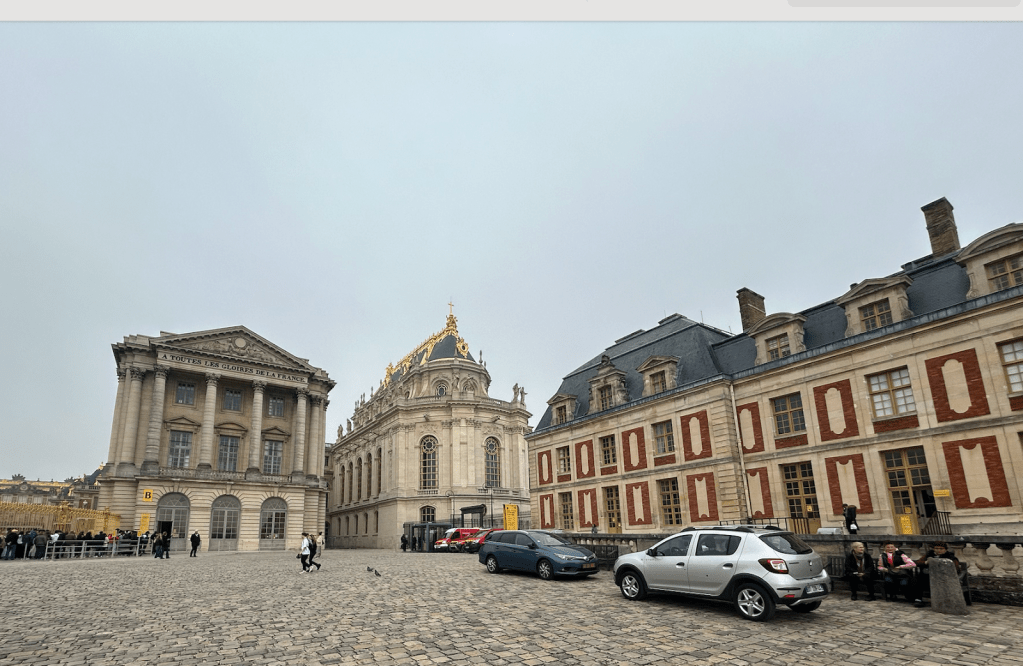
Wow. It’s just…THERE. We arrived at Versailles and as you can see, were greeted by fantastic air quality (possibly fog?? But would love to debate our Olympic Village Tour guide about that one…). The crowds were arriving in the masses to tour the Palace. We were told that Tuesday is the busiest day to visit Versailles because the Louvre is closed on Tuesdays.
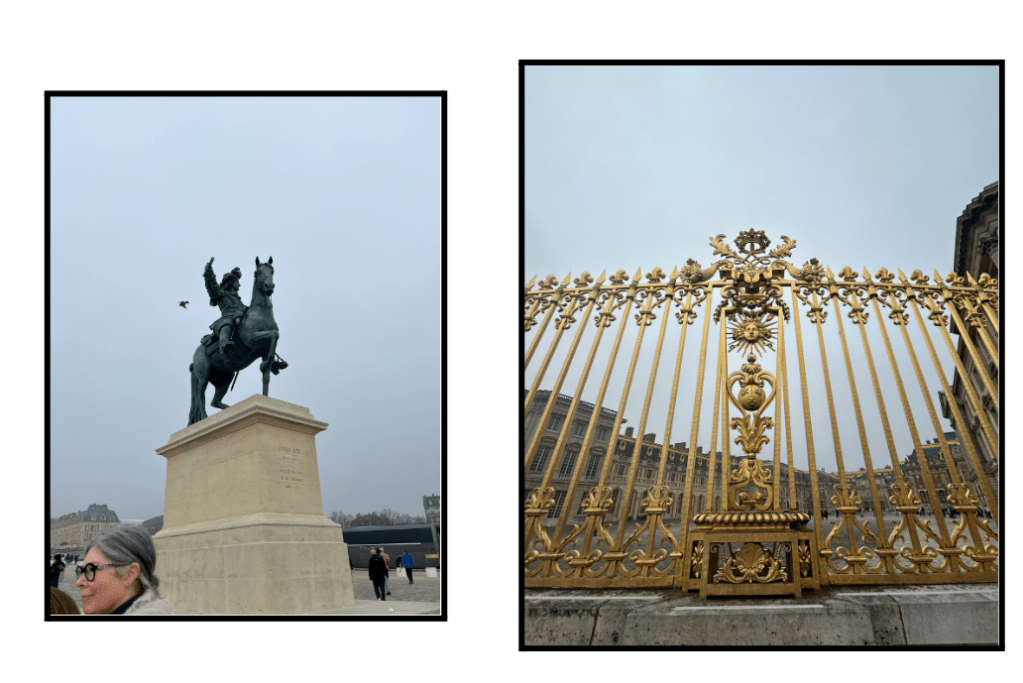
Left : Humble guy…
Right : Front gate to Versailles
Note the Fleur-De-Lis and the Hand of Justice symbol → Promoting the ideal that French rulers were chosen by divine providence (As if they were selected to rule by God)
Also note the sun crest which was the symbol of Louis XIV
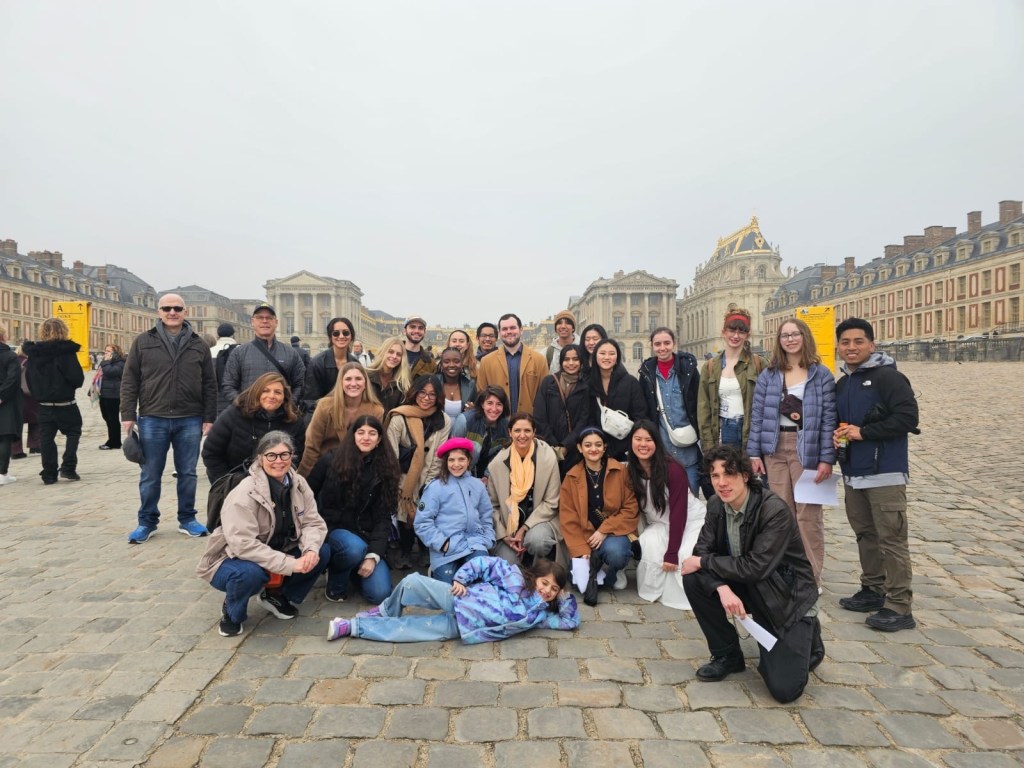
11:30 AM – 12:45
We began our tour of Versailles with our tour guide named Vincent! He guided us through several rooms to discuss the history, artwork, and upkeep of the palace. In the picture below, Vincent is describing the general layout of the palace.
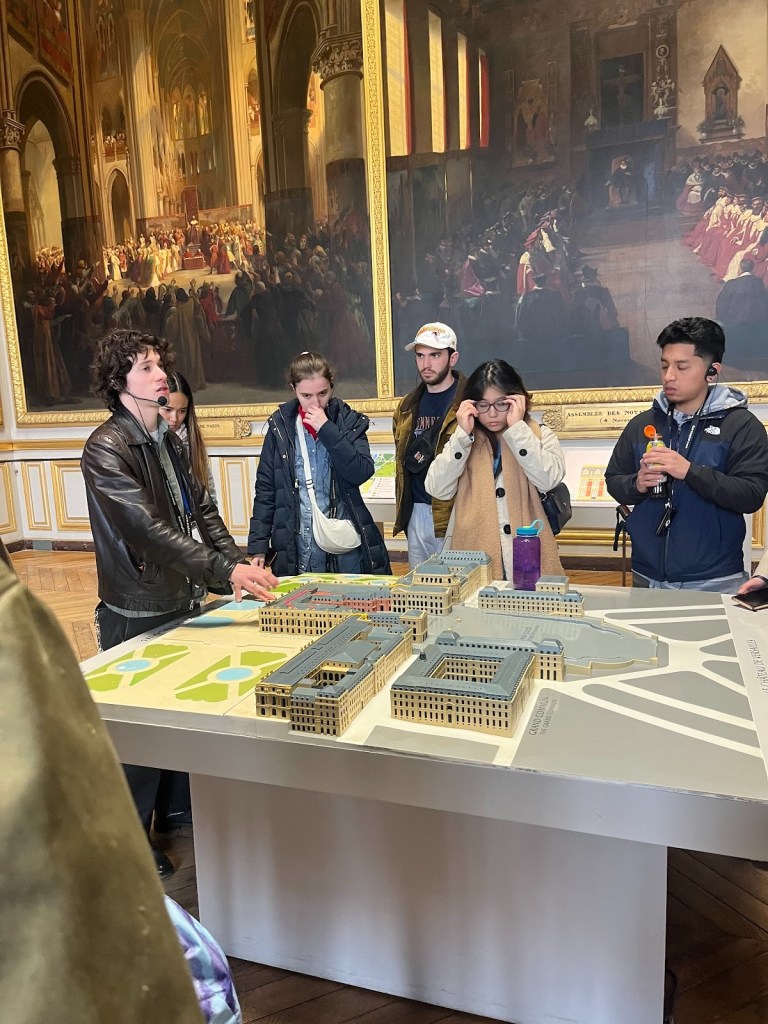
So many arches
Weight support go crazy
So many extravagant rooms decked out with beautiful furniture, sculptures, and paintings
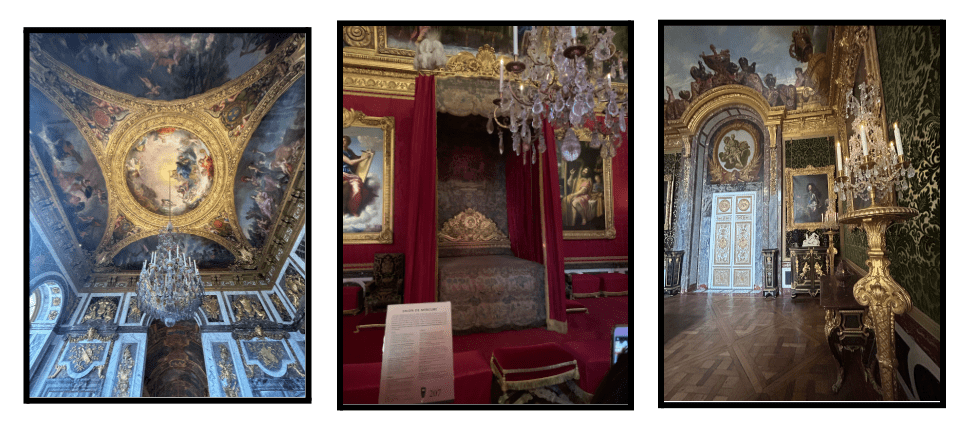
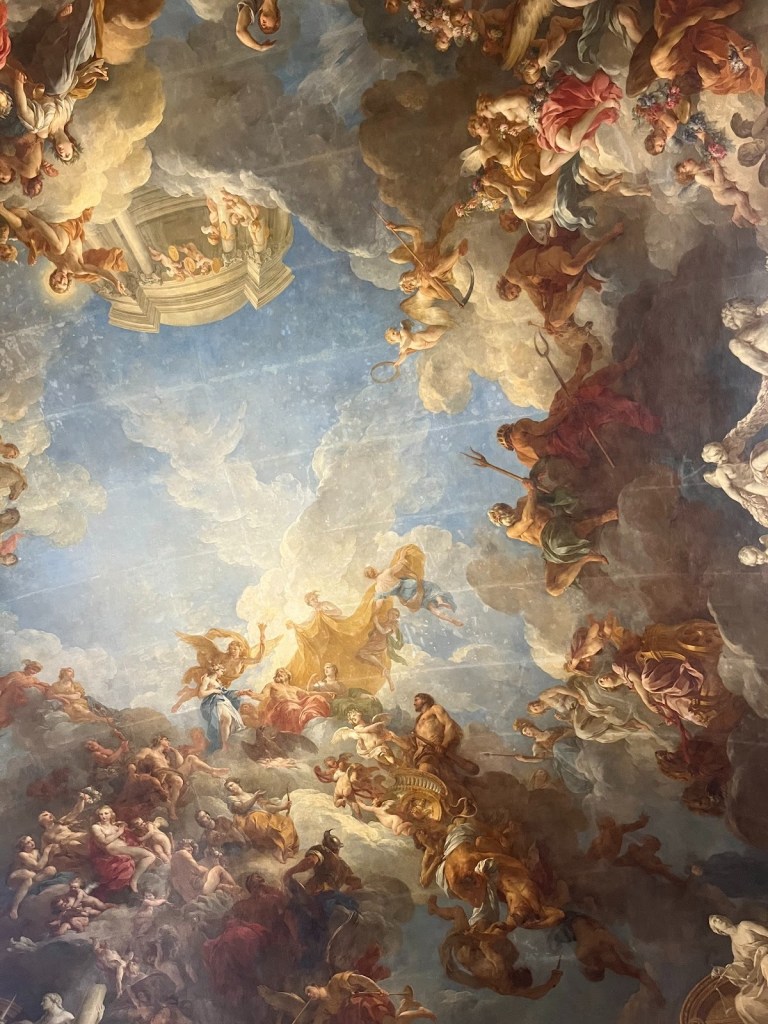
From floor to ceiling, the palace was covered in artwork. This artwork is all centuries old, but historians and artists took careful steps to keep it in perfect and vibrant condition as shown in the painting above. During the restoration of the artwork, layers of dirt had to be cleaned from the paintings and they had to be slightly touched up.
We got to visit different rooms around the original castle. One of the different rooms was the King’s chamber, which was “protected” by the “room of war” right before in order to ensure the protection of the king. We also were able to visit the “Hall of Mirrors” that were glorious in their own way.
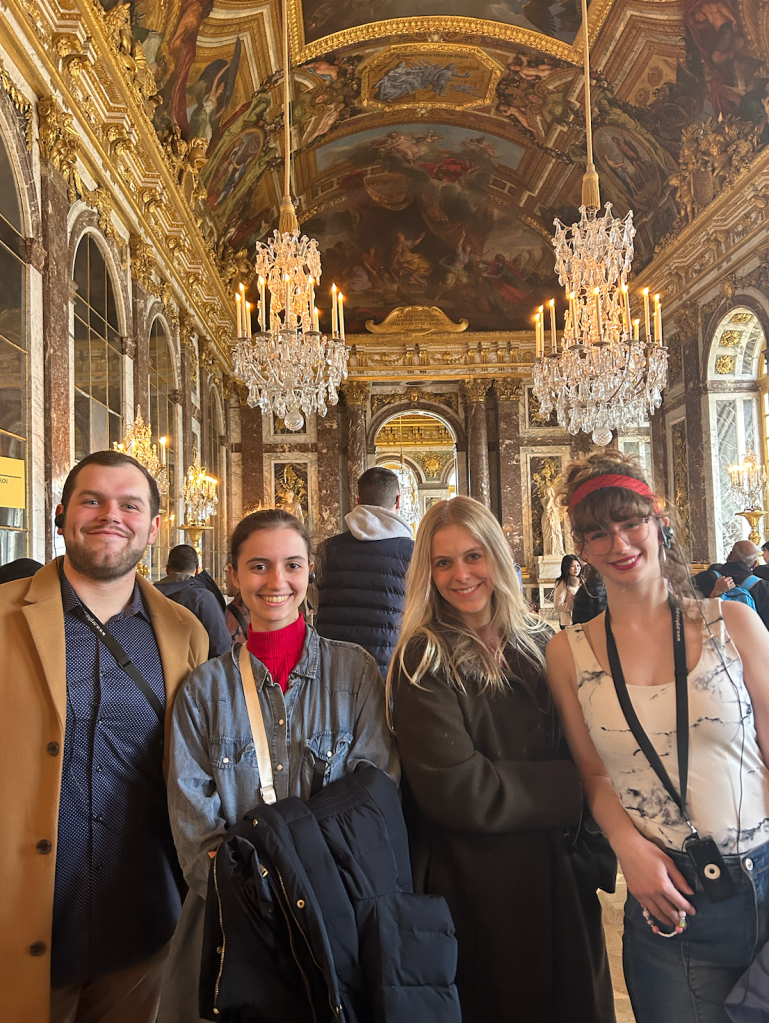
After the main visit, we grabbed lunch as a group at Rue de la Pourvoirie in the town of Versailles. It was very traditional french food that some people liked, while others didn’t.
3:00 PM
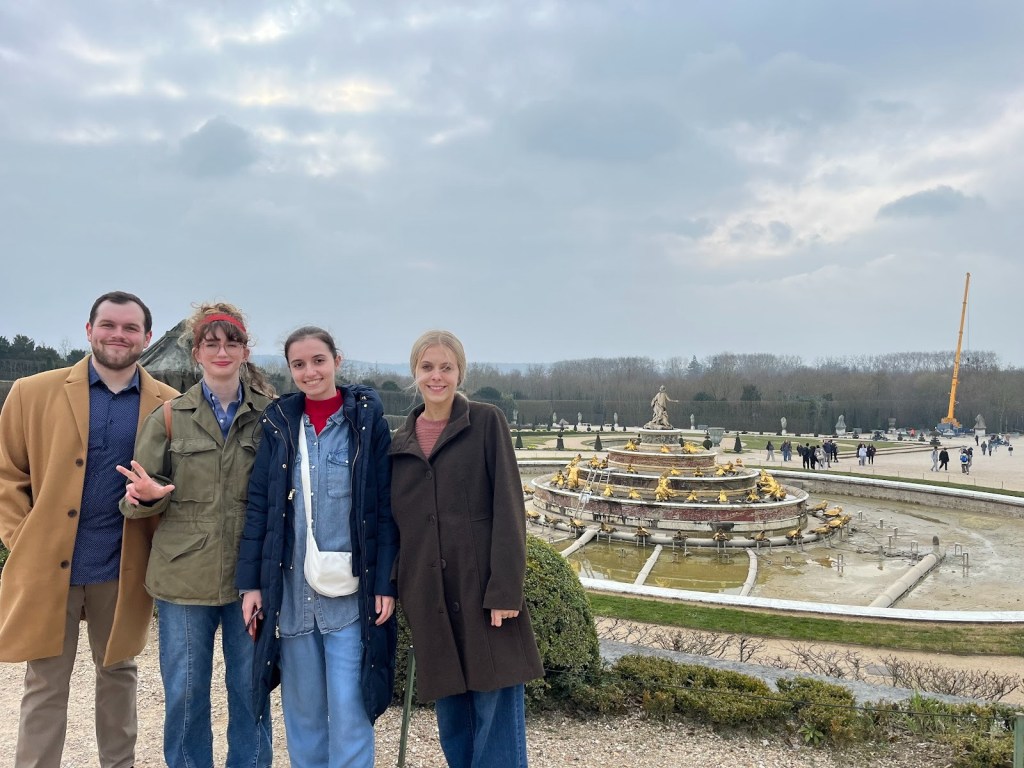
After lunch, we returned to the Palace to tour the gardens. There were so many places to wander around on the way to Marie Antoinette’s house.
A few of our group went for a spin on some row boats in the center pool of the gardens. It gave us a beautiful view of the Palace from the water. We were ridiculed by several of the locals for our rowing skills.
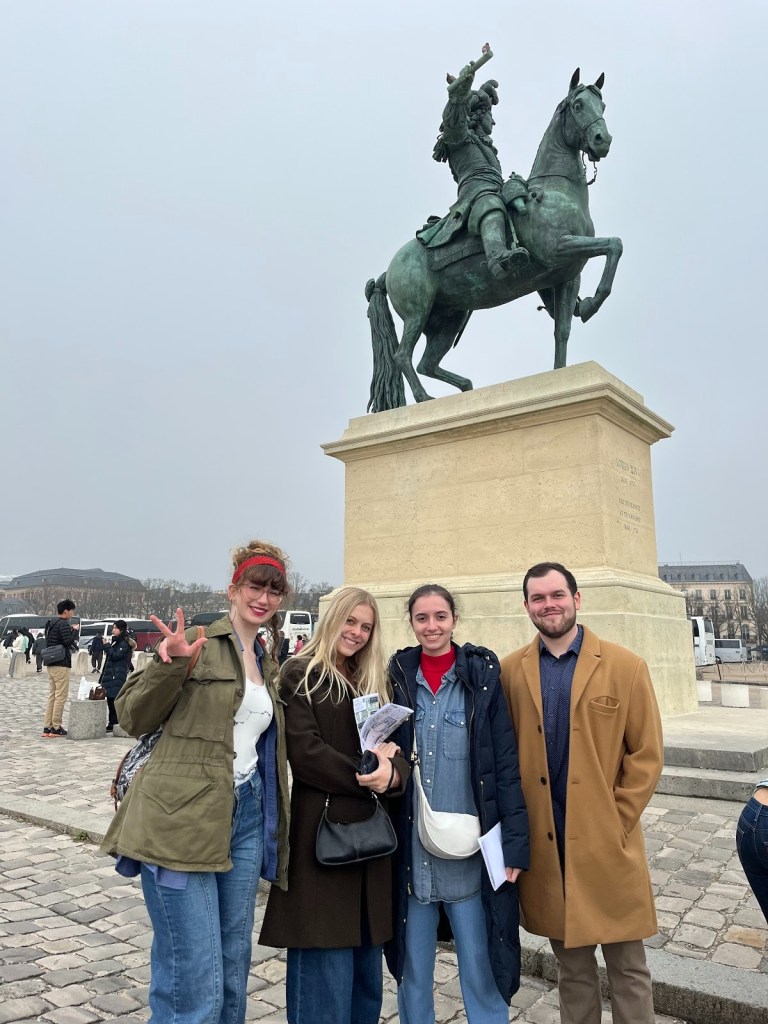
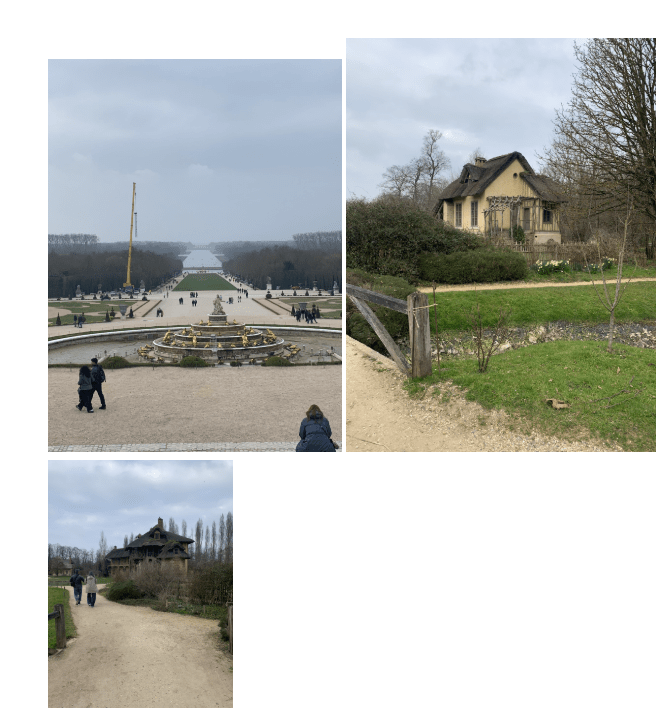
Everyone went on their own little explorations. David and I visited the Hameau (the false farm set up of Maire Ant
For dinner, some of us met up at …”I FORGOT THE NAme”…
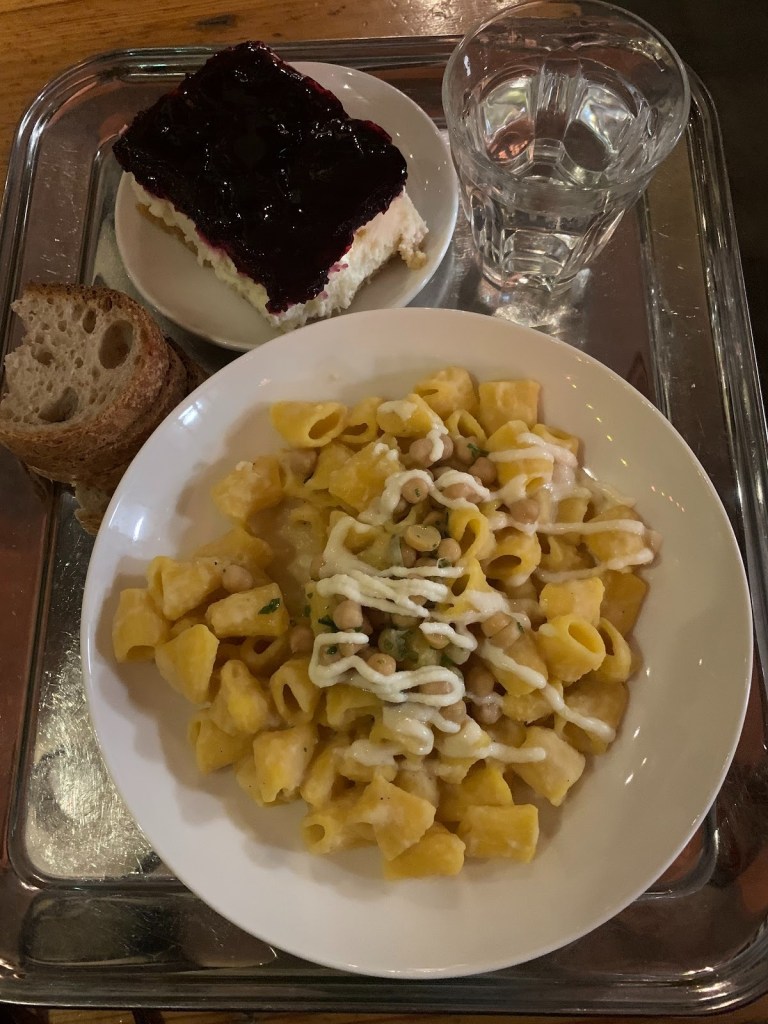
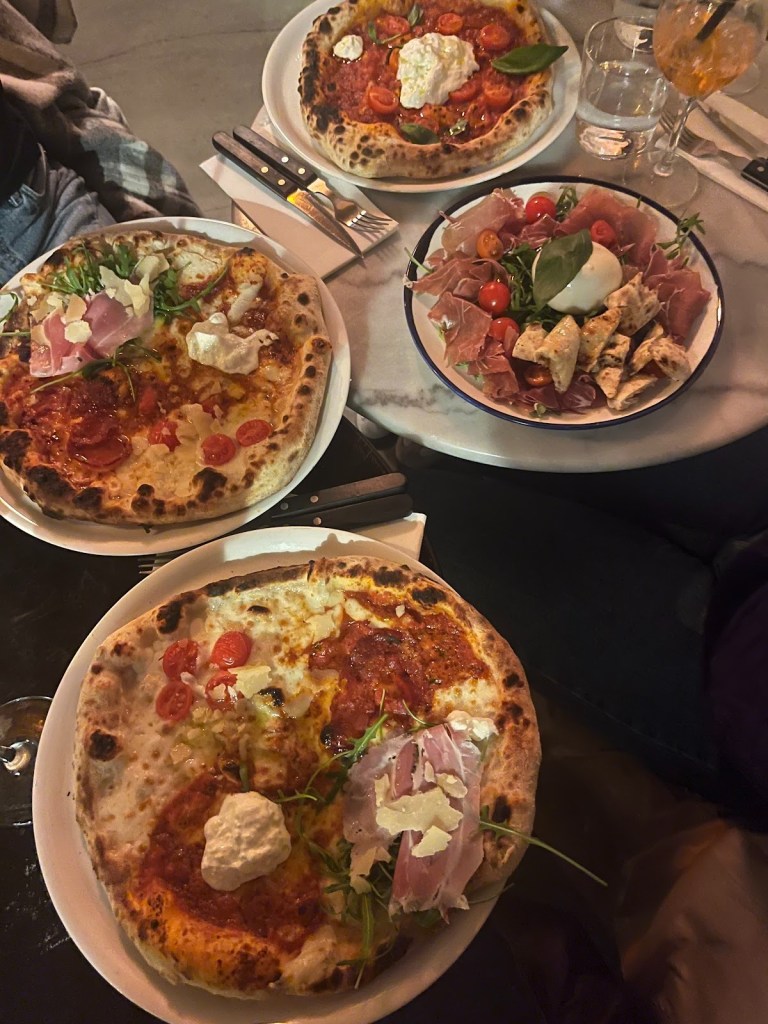
Some of us went to a pizza place called Little Gemma, which was delicious after a long day of walking.
Day 3- Locked Away
(Locked in for Paris)
Introducing the best blog group ever: Cadence, David, Ishita, Subha + Dr. Absi feature! 🙂
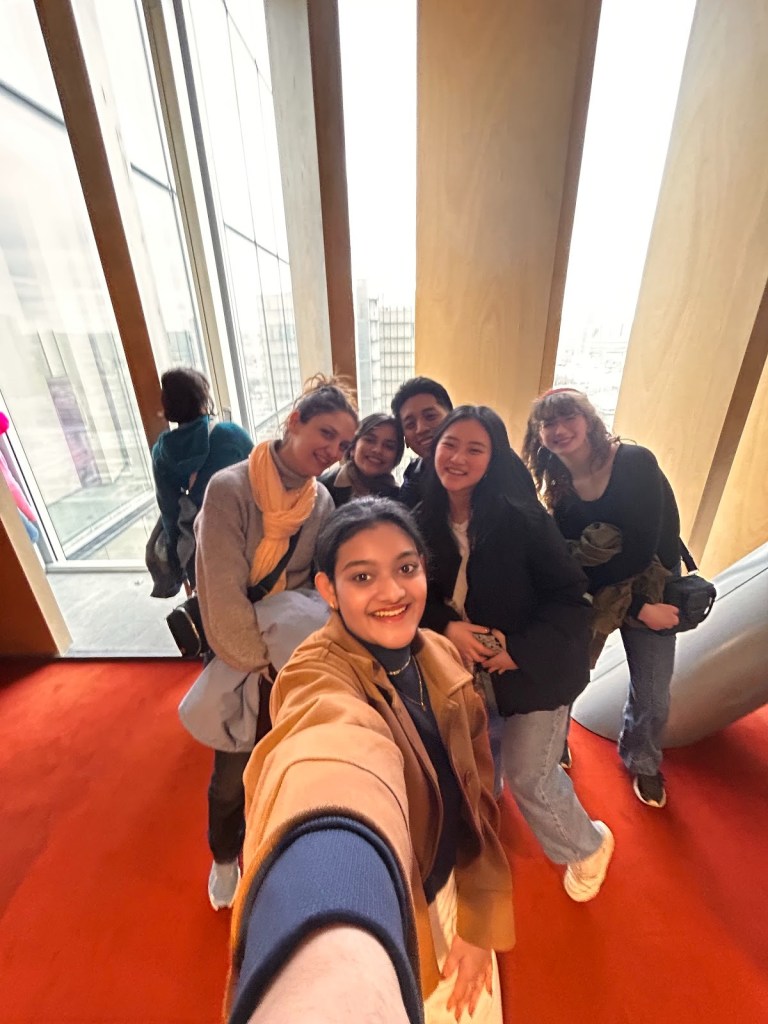
The day started off super bright! We walked through Parc de Bercy, crossed the really cool bridge that was the equivalent to a morning workout!
Bibliothèque nationale de France:
Our first visit of the day was to Bibliothèque nationale de France. Located in the 13th arrondissement, this was a new kind of architecture by Dominique Perrault.
Some fun facts:
- 15 million books
- Biggest in the world!
- The buildings are shaped like books
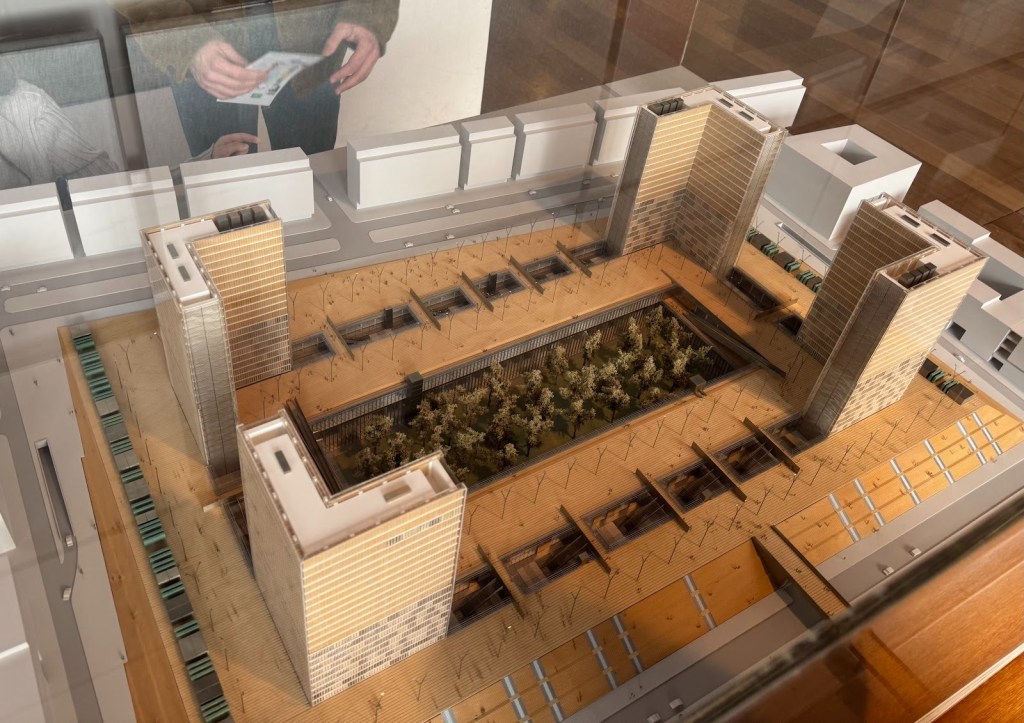
Quick break! Some of us were tired from the night before… Others were hyped by the large windows…
Fun facts about BNF (sounds like BNA!)
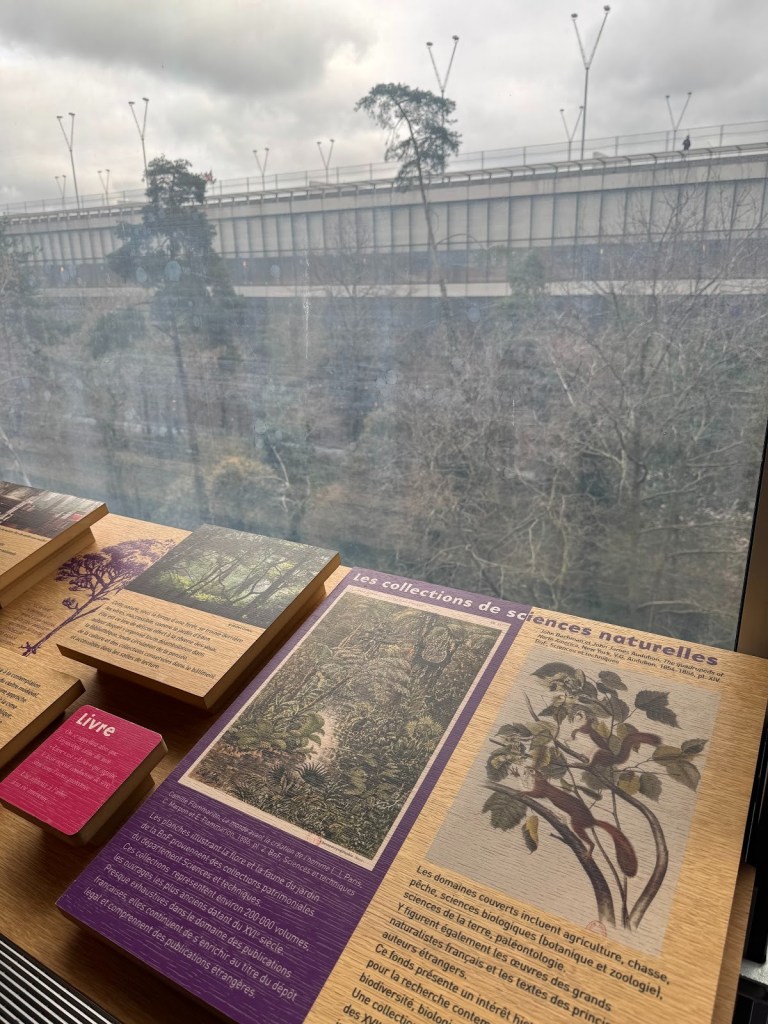
PLANTS! The library essentially has its very own forest.
- There were all sorts of plants in the courtyard of the library.
- This adds to both the aesthetic of the library and also allows the readers and researchers to intersect books with nature.
- It also serves a purpose of expanding the generation’s idea of protecting nature.
- 270 trees and a few hundred plants, biodiversity and a paragon falcon that flies over the garden.
- THEY HAVE GOATS! but not while we were there unfortunately. 😦
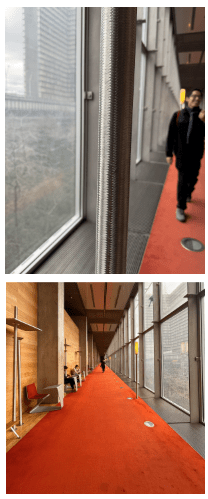
Infrastructure!
- The library interior window slides are made of wooden pieces from brazil. They are strong but no longer used due to efforts to conserve forestry in Brazil and around the world.
- Blue bird stickers to inform birds about glass
- Windows naturally filter the lights
- These poles in the building were composed using recycled metal woven metals. This material was repurposed from old aircraft fluid lines. Talk about innovation that excites! Left side study side, right side nature, to create connection with nature, the red carpet represents African colors, implemented by the architect (forgot the name :)).
The main goal of the BNF is to collect, select and transmit information ! – Lessons from BNF😀
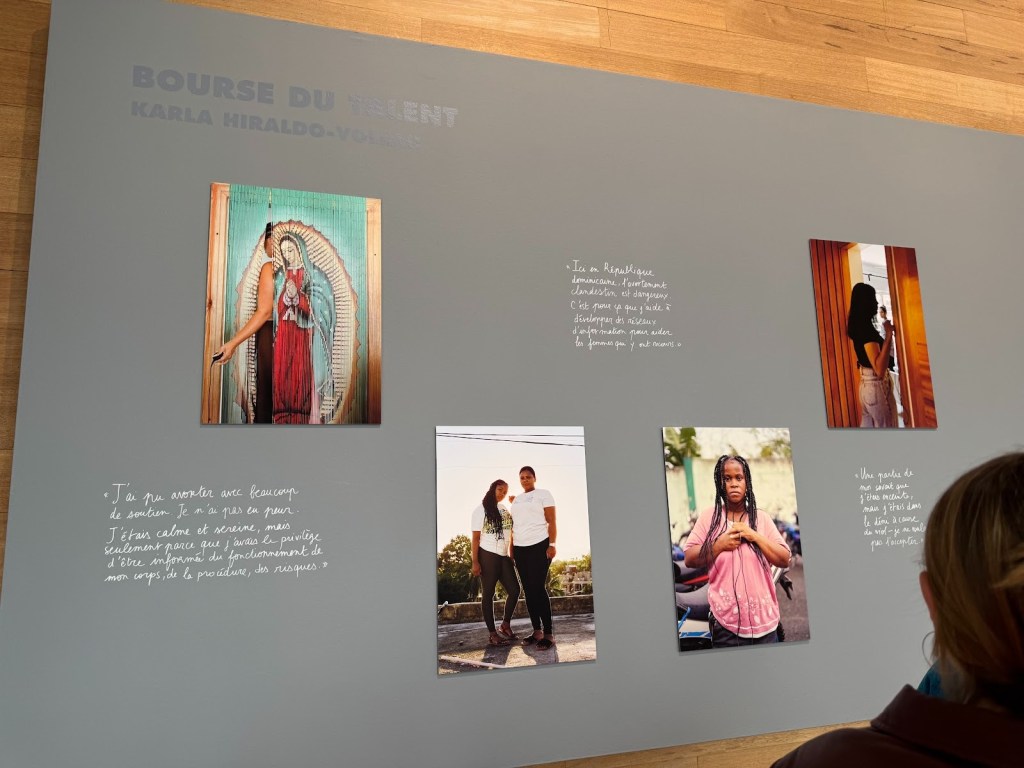
There were several photographs speaking up on stories of women in abusive environments and abortion rights. Lots of these images were connected to a story from each woman in the images, either about how they have been affected by the environment they endured or how access to abortion saved their lives. It was truly empowering and also saddening to see that the world has yet to learn that the right of a woman’s body is hers and hers alone.
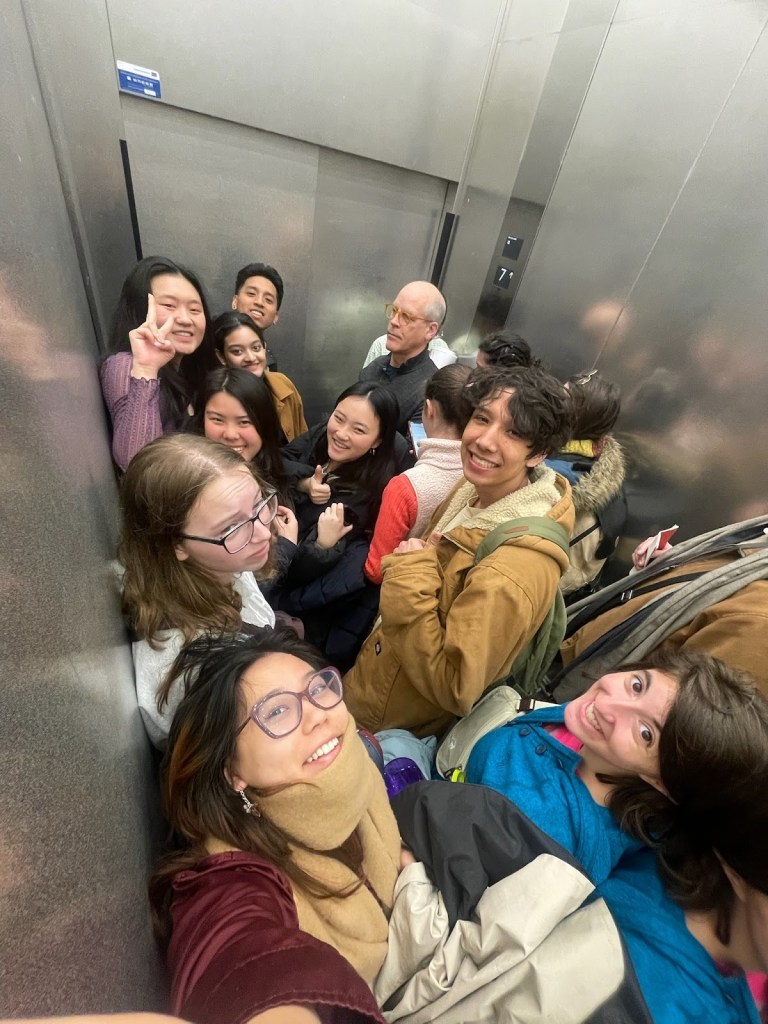
Another Sardine moment because we’re super Parisian and we love being close together 😂
Lock Tour:
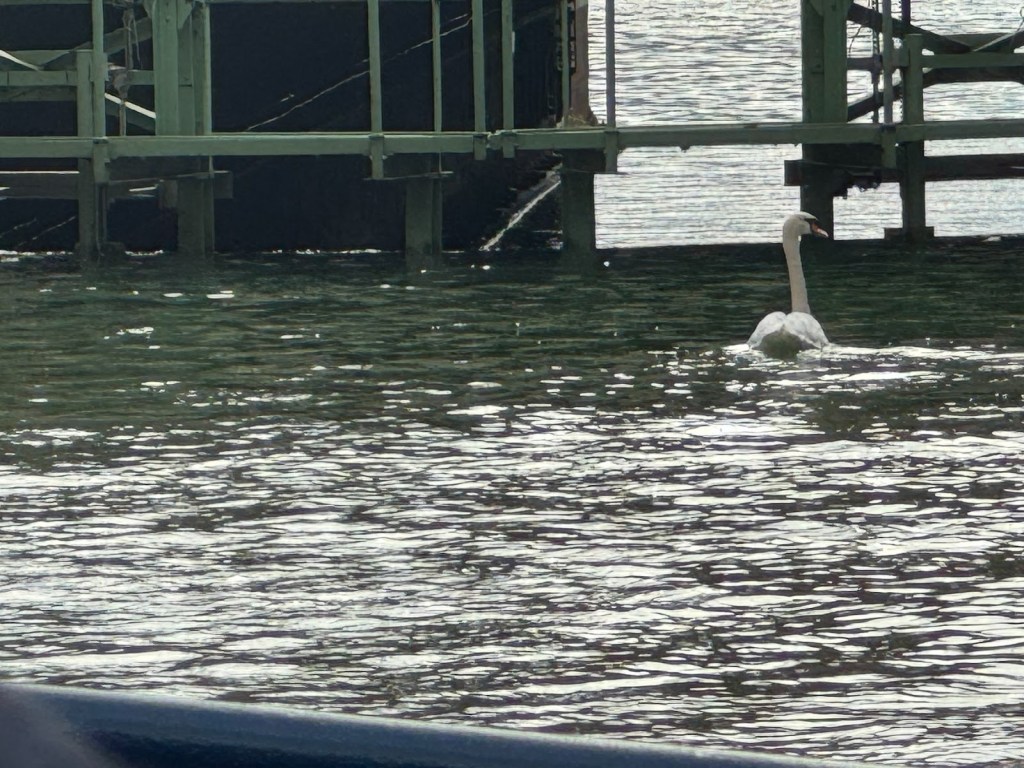
We went on a boat to watch the locks do its thing for the Parisians. Luckily we had a friend tag along! THE SWAN!!!!!
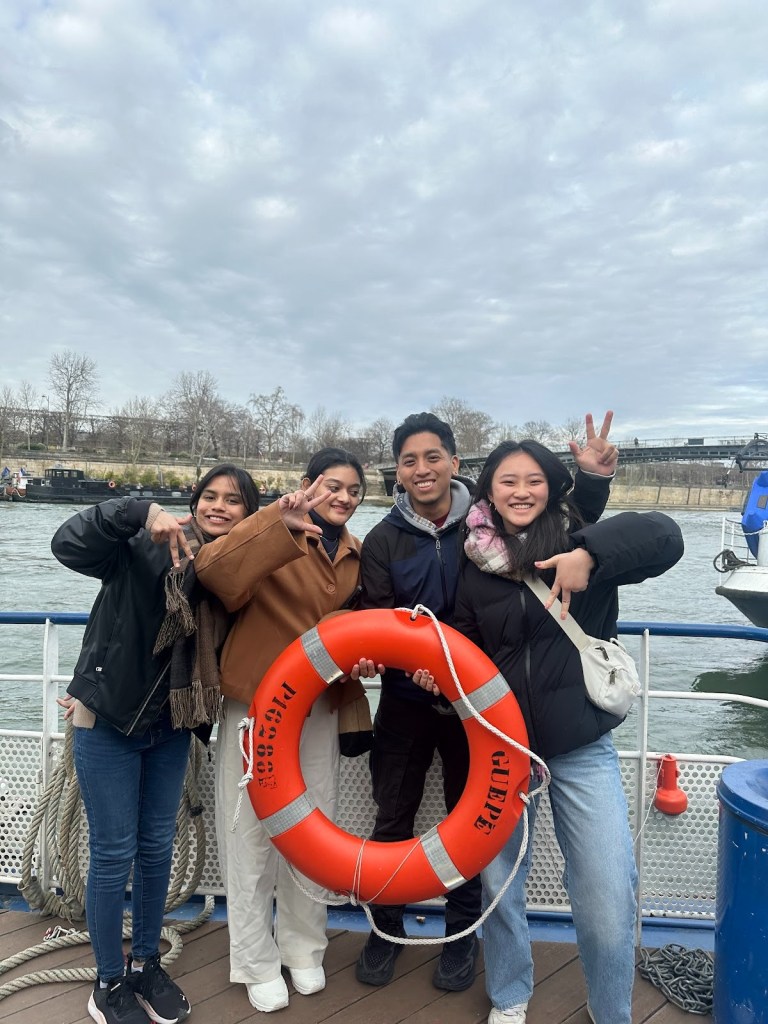
Our good new friend Swan followed us on our journey through the first few locks. Swan is a chill guy (or girl, couldn’t really tell).
Things we learned:
- The canal was a source of drinking water for parisians
- Saint martin and saint denis connects to the Seine river
Lift bridge: it will lift the bridge up so the boat can go under!
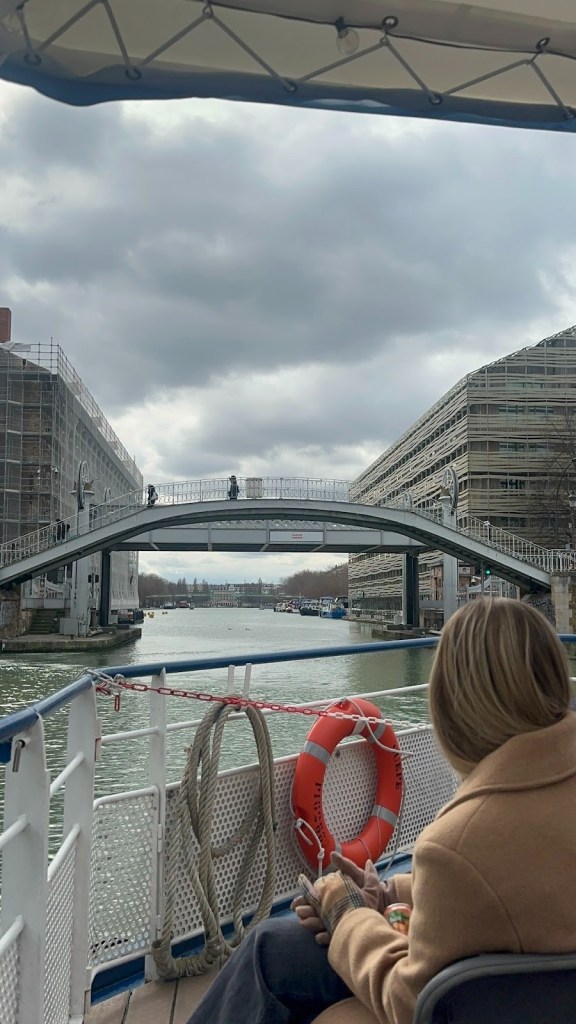
← rotating bridge
There were a lot of moments where we spotted Roman inspired infrastructure.
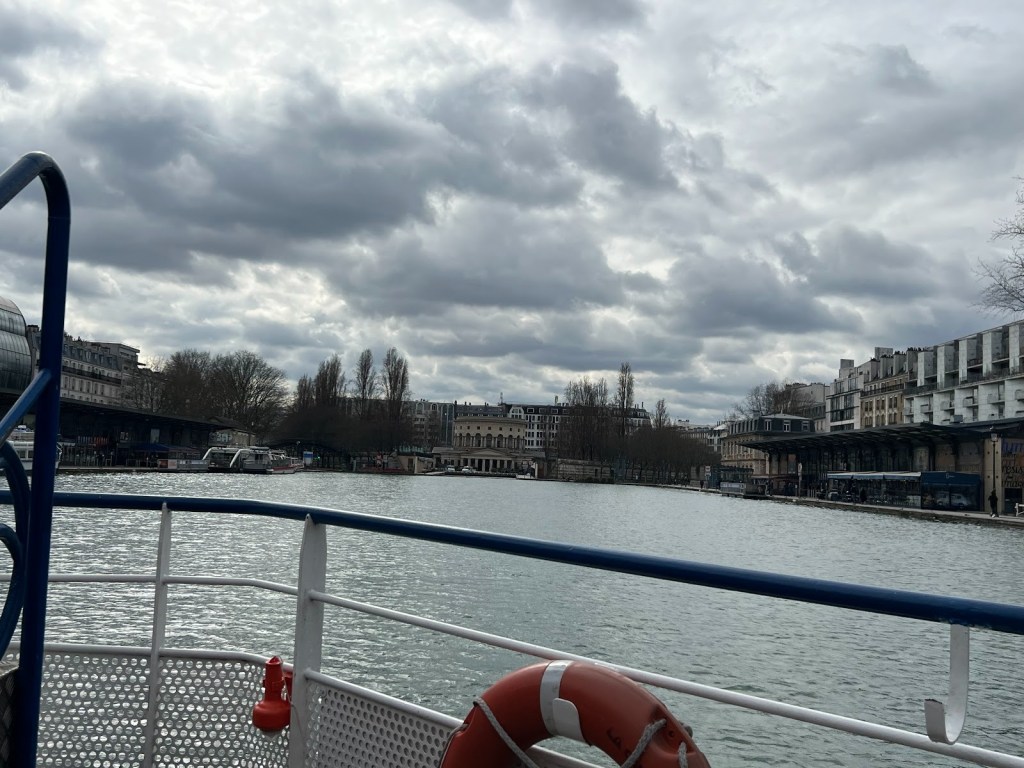
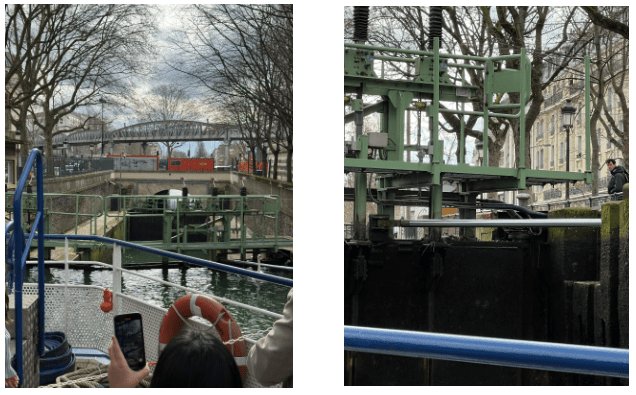
It was FREEZING outside so we moved inside the boat for a bit but we were able to catch some locks in action before caving to the freeze!
Free time:
This is our favorite time of the day! Everyone in the blog group got to explore on their own.
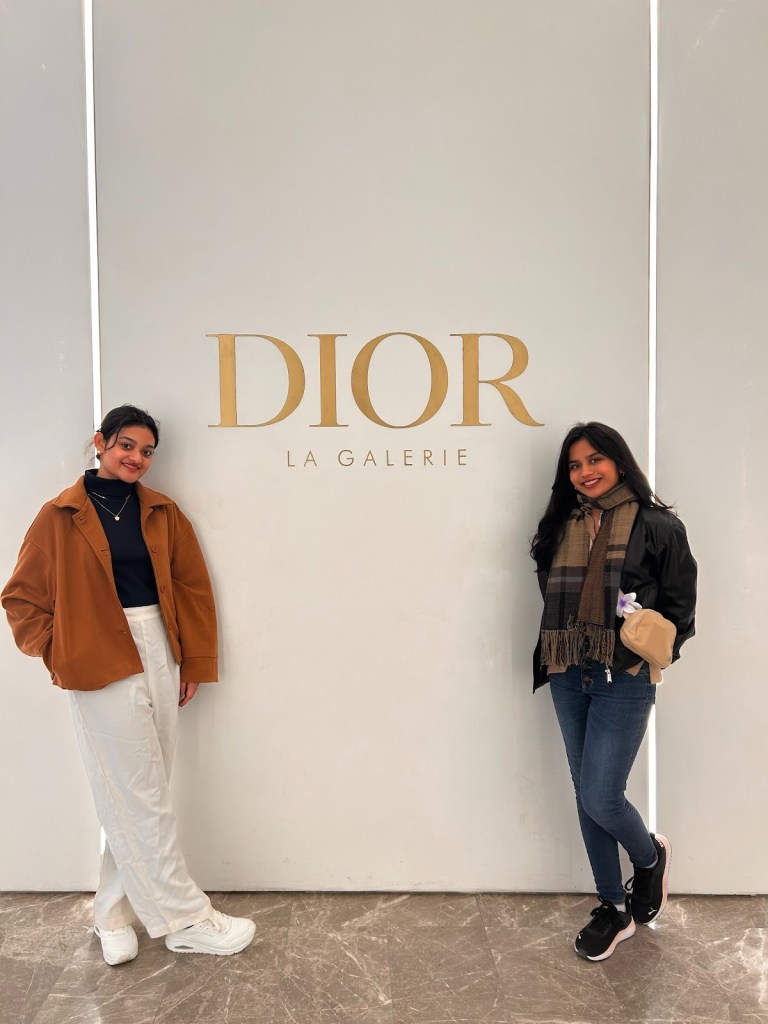
Had a fun visit to Dior Le Gallerie. Oh the collection, the majestic and intricate exhibition. No wonder Monsieur Christian conquered the world with his designs.
Some of us met up with Grace for dinner! It was super fun getting to catch up and yap about our abroad adventures!
Goodnight Paris! See you tomorrow for another full day of fun! 😴
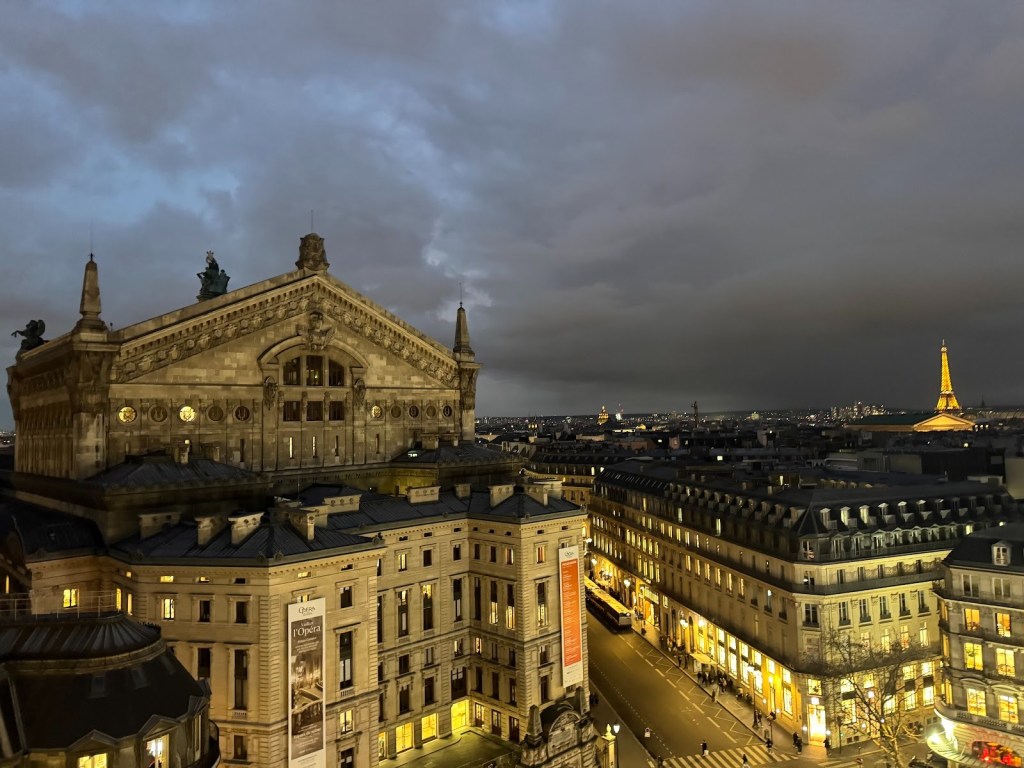
We vlogged the whole day as well to show our day in more detail (cause who doesn’t love a vlog) *insert vlog here*
MERCI!🇫🇷🥐📚🇫🇷
Day 4 – 3/13/25: From Poop Pipes to Aerial Sights
The Big To-Dos:
- Sewer Museum 🛠️
- Louis Vuitton Foundation Museum 🏛️
- Eiffel Tower 🏙️
To be an engineer means to appreciate the often overlooked details in the world around us – from the pipes our poop flows out from to the forces that allow a building such as the Louis Vuitton Foundation to exist.
Day 4 was a fruitful time exploring such core parts of French culture and Paris through the lens of engineering.
BREAKFAST
First, though! We always start with a very yummy hotel breakfast.
Christin made a croissant sandwich.
Pan au Chocolats were smuggled on our adventure and much yogurt was enjoyed!
genuinely gonna miss the breakfast when we leave 😦
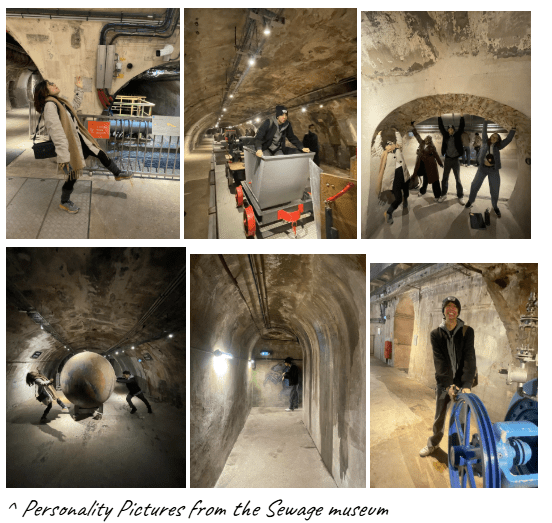
1st Stop: Sewage Museum
It’s always good to start the day with some fresh air, so what better place to go than the Parisian Sewers!
Unlike some of our previous stops, this tour was completely self-guided and we all got to explore the museum at our own pace. Unfortunately for us, the gift shop was closed so we couldn’t pick up any sewer-nirs :(.
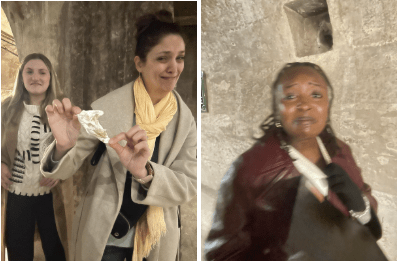
Besides some mishap with a mysterious green stain on Maddie’s jacket, the sewer tour was very interesting.
The water goes through a process that first sifts out the large waste and oil in the water, then from there, solid particles are fermented and dehydrated to be converted into fertilizer. The water that is cleaned gets sent back to the seine.
Notably, there has been research done about the presence of microplastics in the fertilizer. One fun fact is there are over 100K private lines from Parisian homes that connect to the sewage system. There are also gutter systems that allow the rainwater to flow into the tunnels (very fitting because we saw quite a bit of rain on our trip).
The most memorable part though was definitely the odors! We can almost still smell it now …⬇️
Lunch Break
We parted for a brief lunch break.
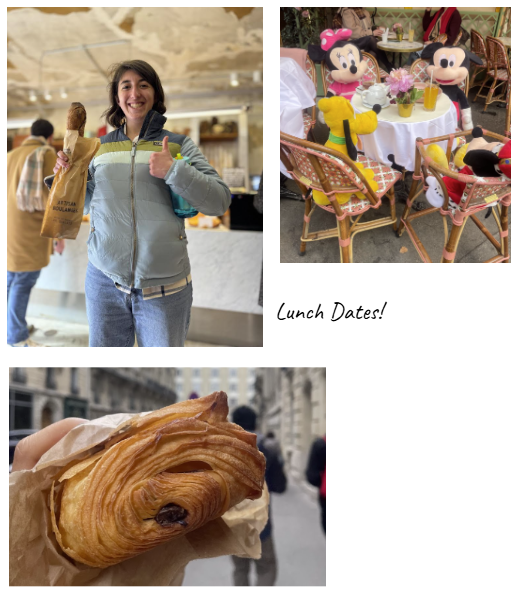
Kayla got to eat a whole baguette, Divine got some shopping done, Peter got pasta, and Christin tried some new pastries.
Lunch Dates!
Fun Fact about Paris: A pan au chocolat is cheaper than a bottle of water in some places!
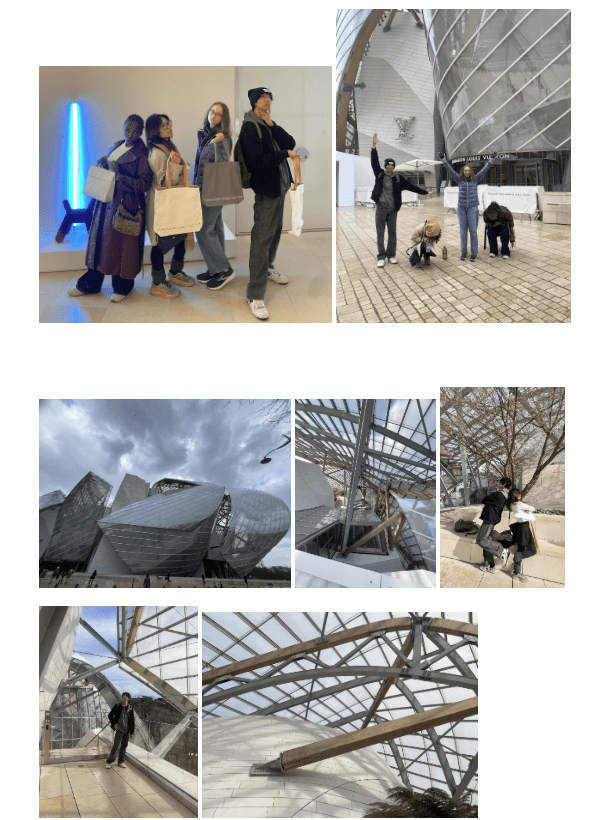
Then, we traversed through hail and woodlands to arrive at the Louis Vuitton Foundation.
The architecture of this building was truly one of the most interesting things we’ve gotten to see on this trip. Frank Gehry is the architect of this building (But tbh, we Would like to know the names of the civil engineers who had to put up with his wacko ideas, especially all the curves). From literal scribbles, unique ideas came to fruition. It took about 3 years to engineer and then 6 to construct.
Fast Facts!
- Over 3000 glass panels covering the exterior
- all of which have a piece of fabric between panes to prevent birds from flying into the glass
- At least some of these panels get washed every day, but the cleaning schedule is three years long
- many beams supporting the massive panels are not all necessary to the stability of the structure
- Gehry didn’t want people to entirely understand the building, so some of the supports are actually entirely superfluous
- They had a problem of birds making their nests on the roof. As Dr. Absi correctly guessed, a hawk is brought in (but only on Tuesdays!!) to scare away smaller birds. What a clever solution!
- Ductile fiber – reinforced concrete was used which allowed for more flexibility
- Can bend but also resist mechanical pressure
- This type of concrete was also first developed by the army – bomb resistance!
- The building is 2x the weight of the eiffel tower!
Before we move onto the next part of the day, s/o to the engineers who brought Gehry’s vision to life! Whoever you are – you are Appreciated!
Is that a two force member I see…
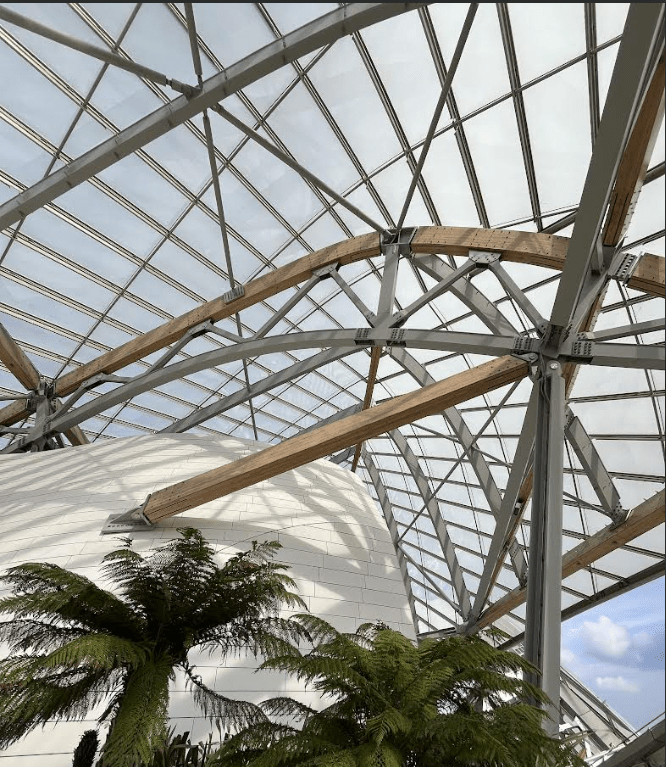
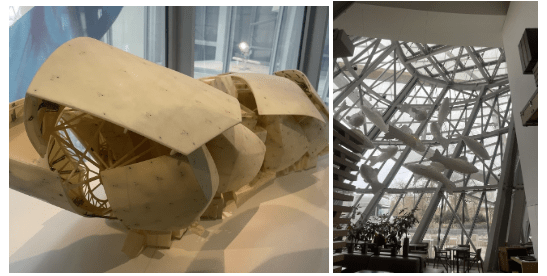
Originally, Gehry thought to take inspiration from greenhouses but instead settled on making the building reseumble a boat. Much of Gehry’s work takes inspiration from aquatic sources – which is why there were suspended fishes in the lobby.
Afternoon Break
Once more, we parted ways to explore the city on our own. Some of us stuck around the area to appreciate the park behind the foundation. While others rushed off to get gelato!
The gardens by the Louis Vuitton Foundation are spectacular and even feature unique animals (different bird species, the peacock above, and alpacas!) and also include a small amusement park.
A new friend we made 🦚!
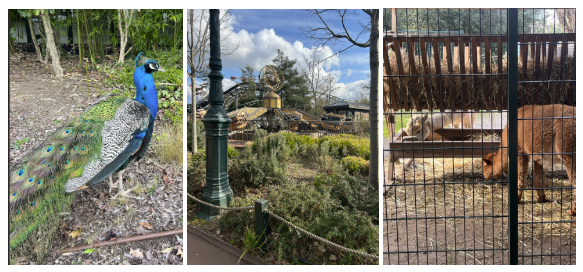
Maybe if they got a parthenon, the park could maybe …. Just maybe compete with Centennial
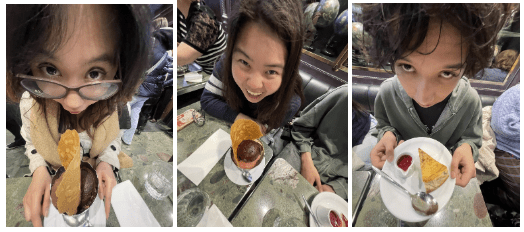
Notes on Gelato:
Although the price was steep ~9 euros for 2 scoops, the gelato was heavenly. To whoever is reading this, Berthillion is a MUST. Peter inhaled his cheesecake (despite not being a cheesecake person). The pear sorbet had a taste equivalent to biting into a pear. The vibes are also delightful 🙂
Final Stop: Eiffel Tower
As the best blog group, It only seems fitting we get to talk about the class’s experience at Paris’s most iconic landmark.
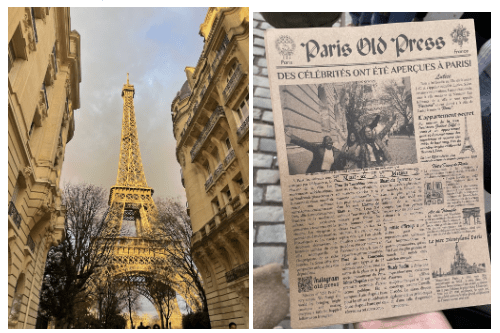
Due to technical difficulties, we were waiting out in the cold for an extra 30 minutes, but the sky was beautiful. It was painted cotton candy over the Seine. (unfortunately, pictures do not do it justice)
We then boarded a series of elevators to make the 300+ meter journey to the very tippy top!
It’s crazy to think that such a significant Parisian symbol was once unwanted by the locals here.
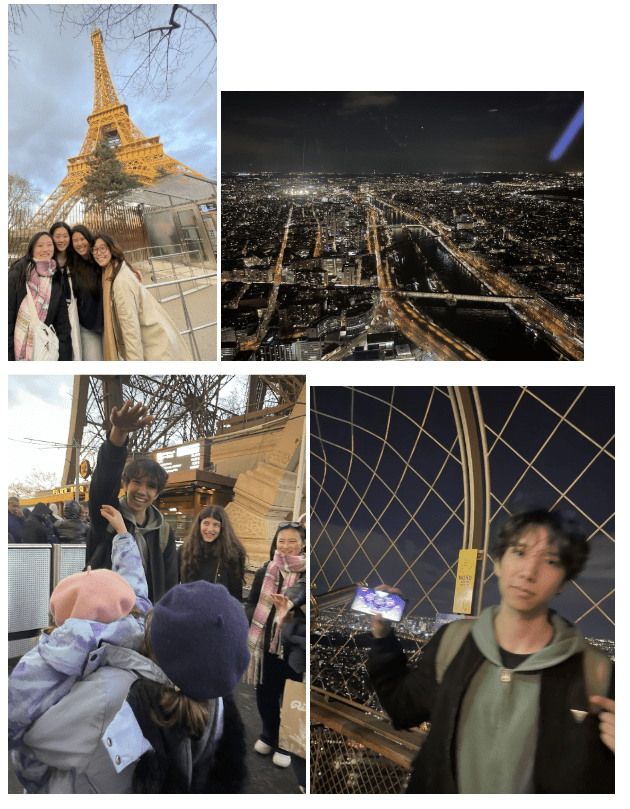
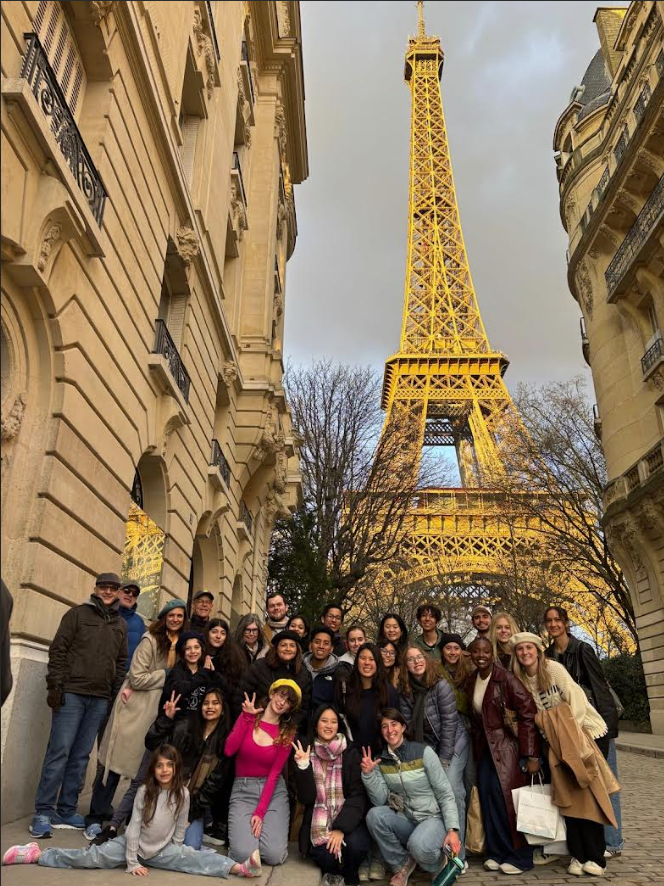
We study our free body diagrams and calculate the forces that hold up steel beams, but perhaps the most important force is not compression nor tension but the strength of friendships formed in these once in a lifetime experiences.
From Day 4 Blog Group – Big shoutout to Dr. Troxel, Dr Abhsi, and everyone in this class who made this trip all the more fun. We are so grateful to experience the city of love with a group of people who have so much love for engineering, architecture, pretty sights (or maybe just a really good croissant)!
After a tiring day, we’ve got some zzz’s to catch …
Bonne nuit Paris!
Day 5- Queens of the Hill
Our day started off by taking the 14 to Châtelet and walking 15 minutes to Notre Dame where we would be getting a guided tour of the inside. Although in the church the guide had to be soft spoken, the information we received about Notre Dame was invaluable.
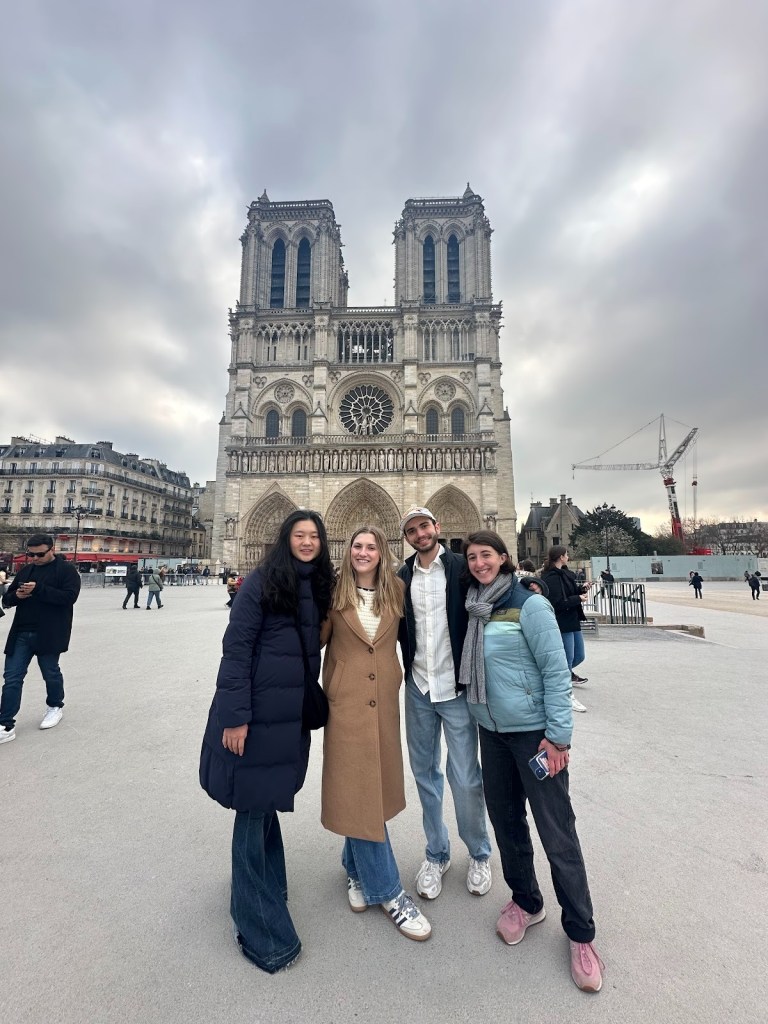
Figure 1. Group photo in front of Notre Dame!
Outside of the church we learned that the origin of Notre Dame is 1160 and that the church is a combination of the periods of the medieval ages as well as the baroque elements added in the restoration process. The gargoyles seen on top are not original, they are from the 19th century, when an architect wanted to make the cathedral more “medieval.“ Additionally the spire that fell down during the fire was recreated to be higher.
Looking at the front of the cathedral you can see the 3 portals,virgin mary, last judgement, and st anne (left to right) which contain rich storytelling aspects within their designs. Above the portals is the gallery of kings which were decapitated during the French Revolution then restored later. Next the rose window lies above the gallery featuring Adam and Eve. The two towers are bell towers and there is a lead covering over the roof.
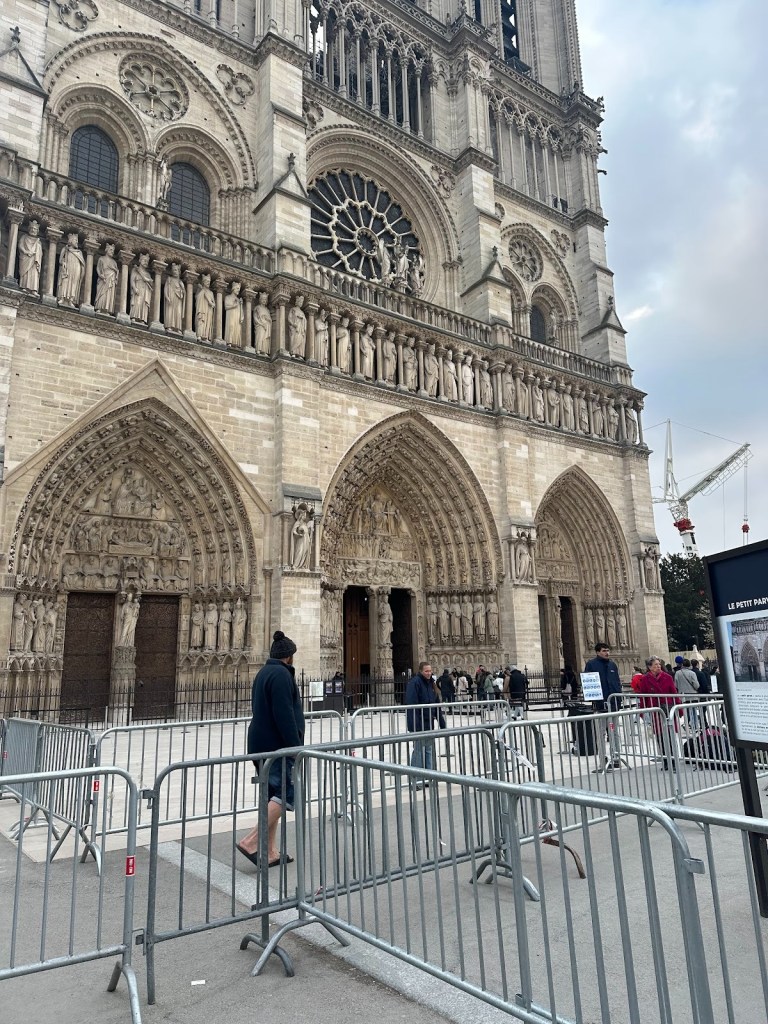
Figure 2. The portals (aka the entrance we took to get in).
Now, let’s go inside!
Initially when you walk inside, you may notice thick columns. These actually could have been thinner but they didn’t have the calculations so they wanted them thick to enable the support of the elements above. In fact the Notre Dame is the highest cathedral in France, featuring its gothic pointed arches.
Next feature is the altar which looks like Noah’s arc which contains the cathedra which is a large chair for the bishop. They hold 4-5 masses a day and utilize the organs which are the largest organs in france.
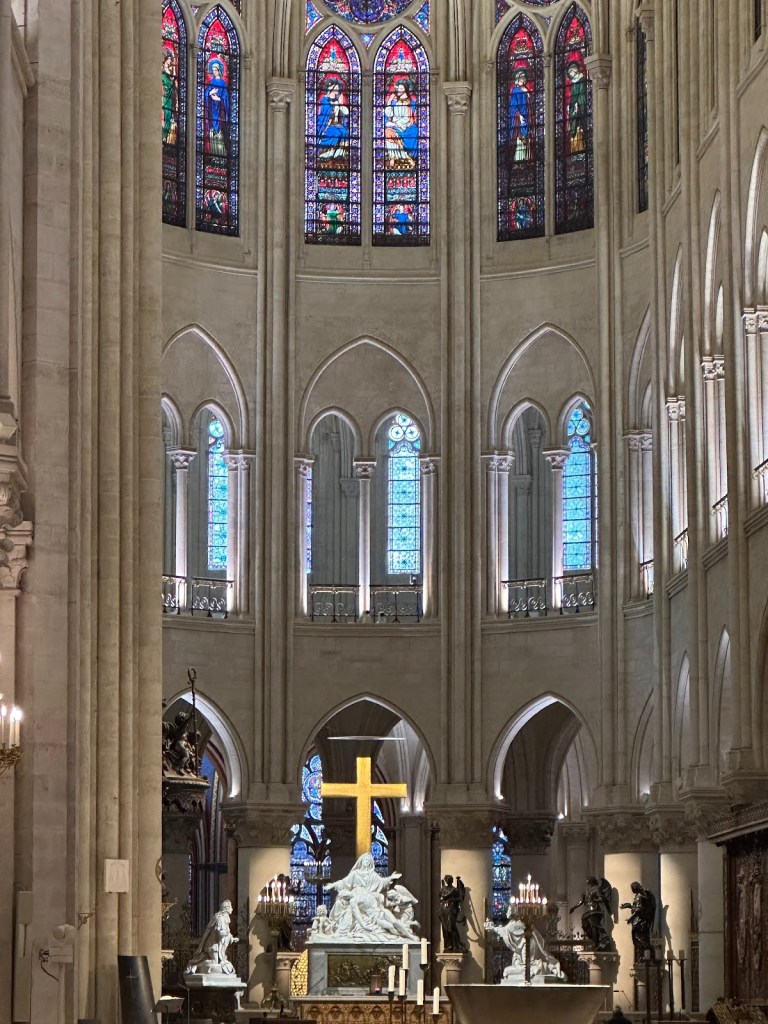
Figure 3. Alter representative of Noah’s arch.
As we walked around and admired the stained glass especially within the chapels, the guide shared that the French president wants to replace the stained glass with a contemporary version of the current glass, which we thought was tragic. Additionally the chapels are progressional and contain old testament figures as well as new testament figures linked to the city of Paris to tell the story of the catholic religion.
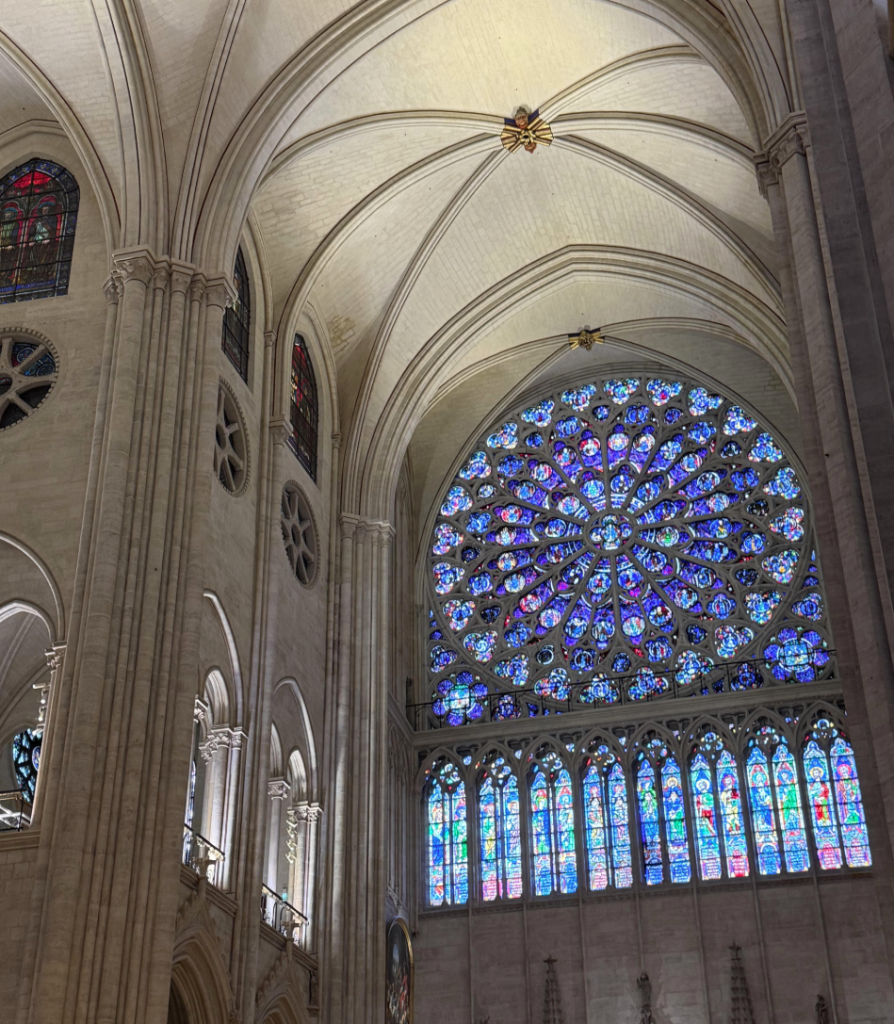
Figure 4. South rose window
Next up was the south rose window which is more exposed to the elements and was replaced in the restoration. On the opposite side, the north rose window is more intact and features the virgin mary.
Zooming in on the roof everyone was fascinated and confused by this scary looking face. Not sure what we’re looking at and when we asked the tour guide, she didn’t really give an answer. It doesn’t really match the aesthetic of other features (like the gargoyles, statues of kings on the west facade, and the statues of saints on the inside). The guide said that it relates to the hunchback of Notre Dame, monsters, sirens, and other medieval elements around the cathedral.
FUN FACT: Disney was one of the donors in the restoration process of the church because of the famous hunchback of Notre Dame movie.
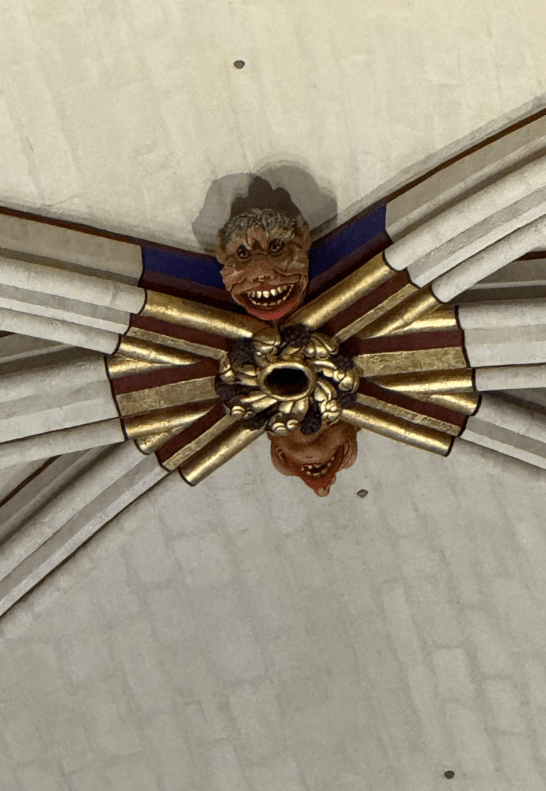
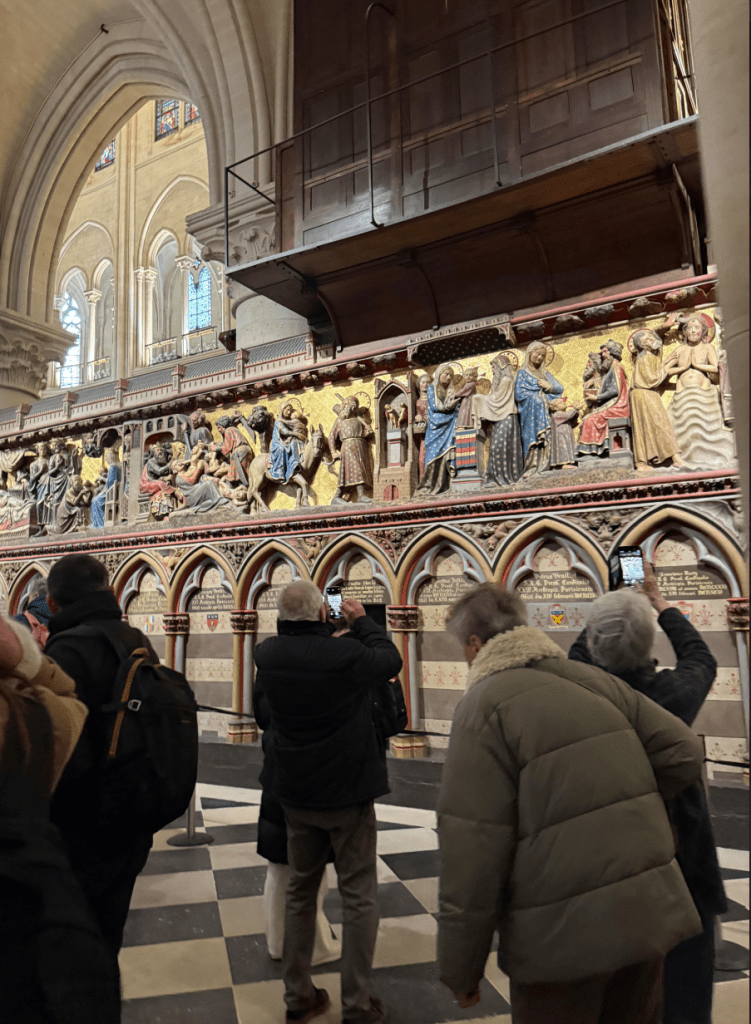
Figure 5. Choir area
We then progressed to the choir areas pictured here. Coolest fact of the day was that there used to be a stone wall to the left of the choir wall that separated the clergy from the faithful. However it was removed and turned into a choir screen at some point in history, and they buried the stones underground around the church. These stones were discovered in the archeology that was done during the restoration process and are now presented in an exhibit.
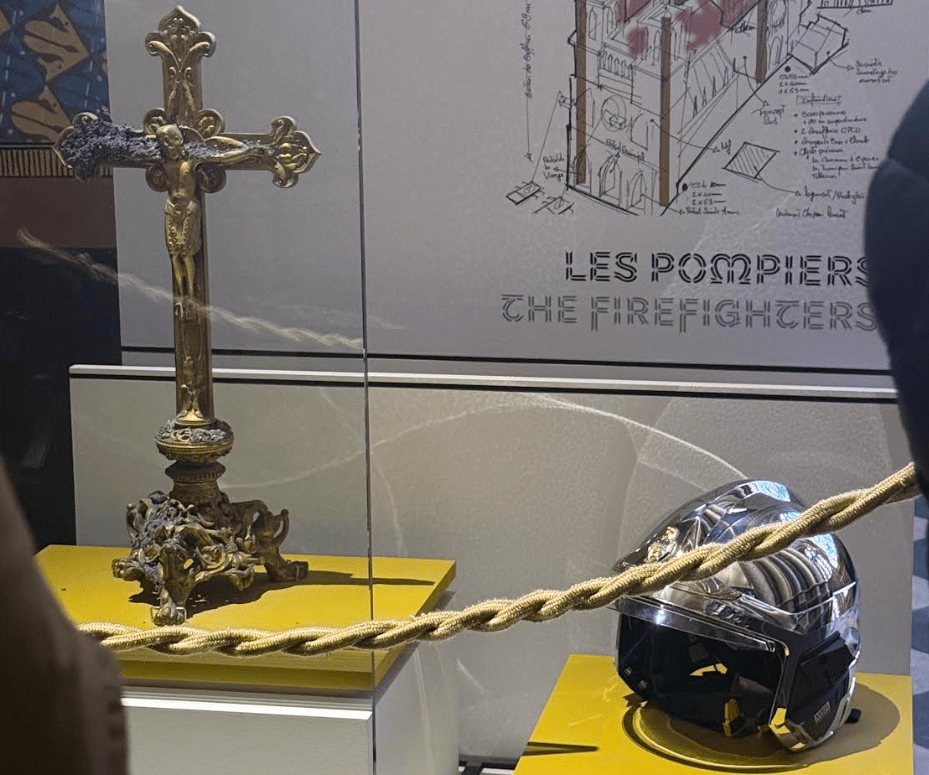
At the back of the church we viewed the crown, a firefighter hat, a cross with original ashes, and the old rooster that was on top of the cathedral before the fire. FUN FACT: the new golden rooster on the top of the church is stuffed with relics from the church.
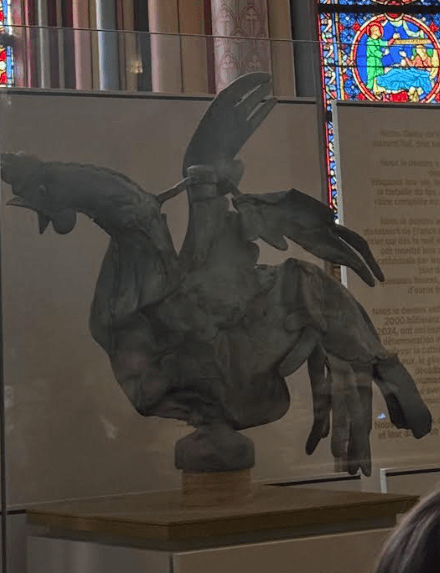
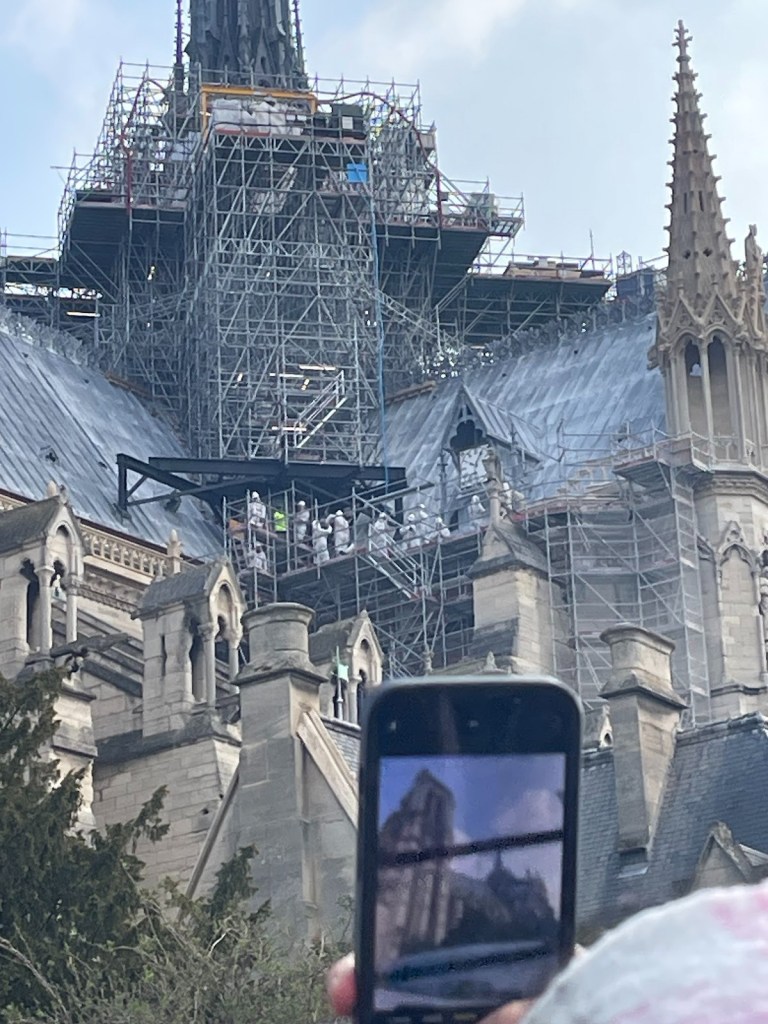
Figure 6. Workers on the roof
Why are the workers on the roof wearing large white suits you may ask. Well that’s because they are helping repair the roof and in order to restore it to the way it was before the fire, which means working with lead which we now know is very dangerous.
IN CONCLUSION: “It’s tall and it’s old” – Thank you Dr. Troxel for telling us everything we need to know.
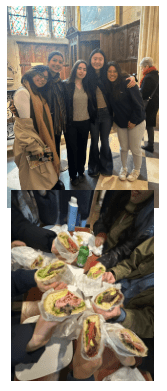
Figure 6. Vandy crossover with another travel class.
Eventually, we were able to find the rest of the group and then headed to have self-guided lunch time.
12:00 pm: It is currently hailing as Maddie, Kayla, John Henry, Divine, Payton, Bella and Sienna wait for lunch.
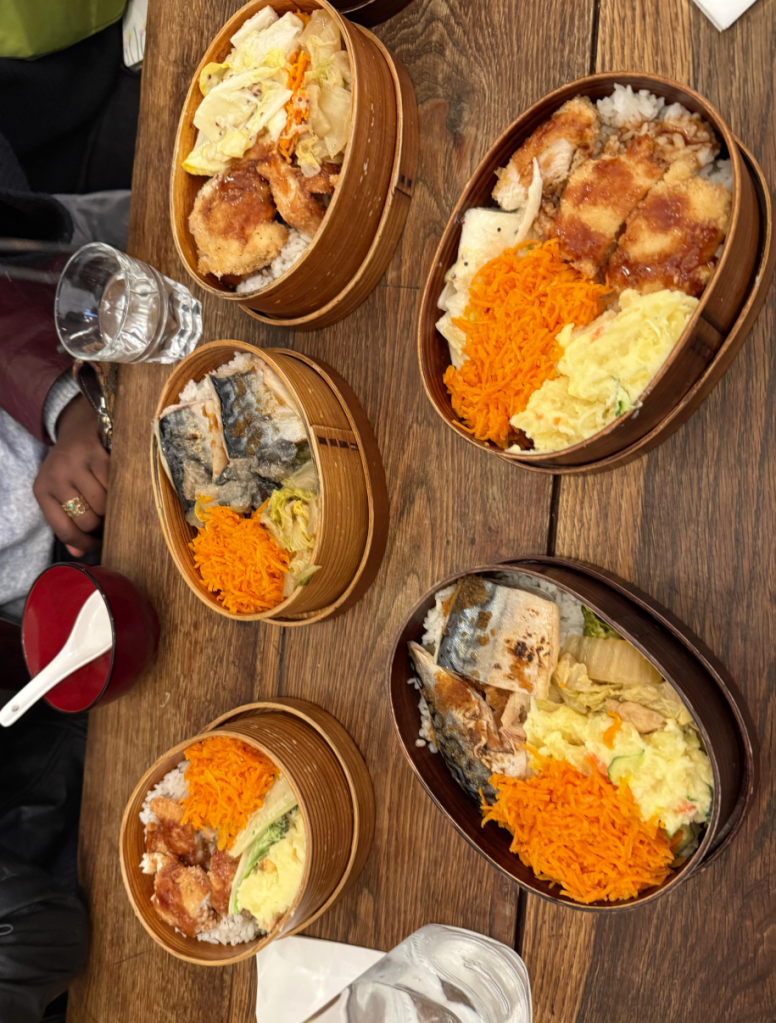
Figure 8. A peak of lunch @ Chez Alain Miam Mian (Kathleen) and Tsubame (Maddie, John Henry, Kayla)
After Lunch we took the bus to Montmartre where we saw a variety of churches and sights.
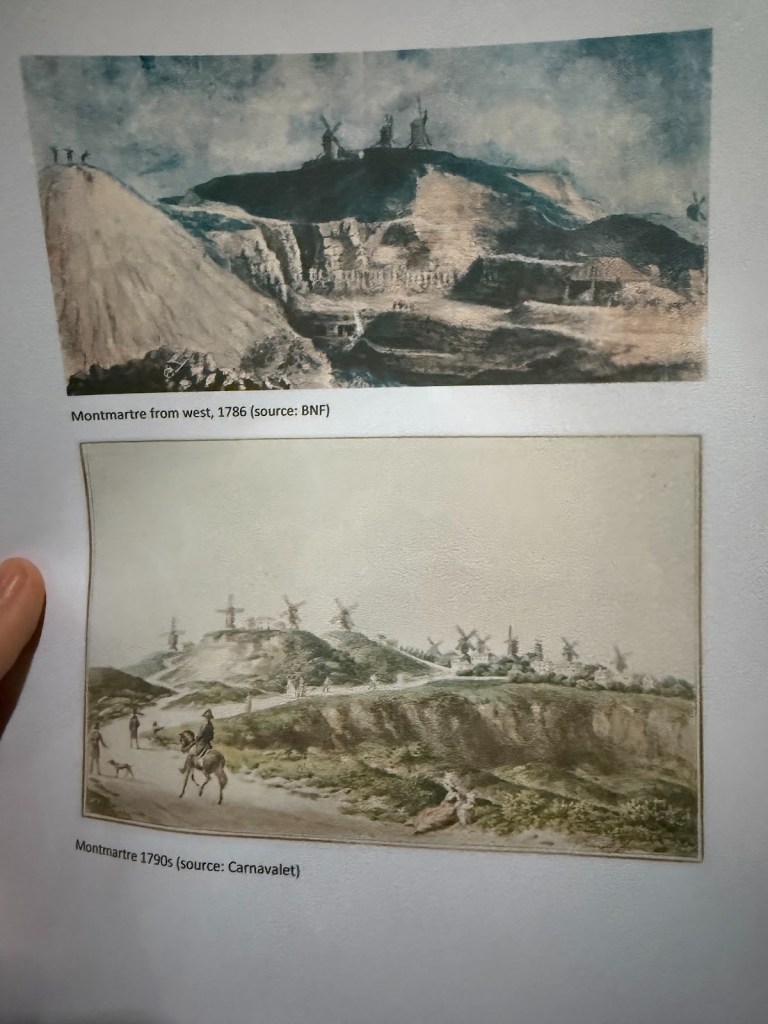
Figure 9. Some pictures that were shown during the tour of the 1st church.
There were up to 15 windmills at one point in time, gypsum mines, and many vineyards in Montmartre. The windmills were used to ground and manufacture many products. The area was always somewhat separated from central Paris, it had its own economy and was more like a village. However, as urbanization of Paris increased the vineyards and windmills began to disappear. As the residents began to witness this area succumb to urbanization, a group of 9 residents came together to create Le Verdeux Montmartre. This preservation society helps preserve various structures and culture that are historical to Montemart. The area today has become very popular, with it having one of the highest percentages of Airbnbs in the Parisian area and many people looking to live in the neighborhood.
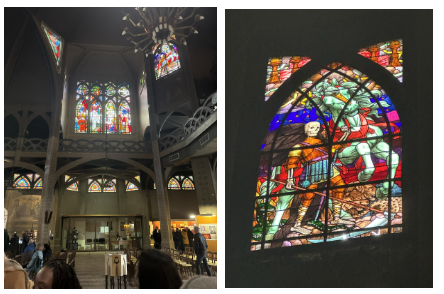
Figures 10 & 11. Pictures of the stained glass at the 1st church.
Crypt Saint Jean De Montemart began construction in 1897 and finished in 1904. The Corta San system was used to build the columns of the church. It was reinforced concrete, there was iron rebar, cement, and brick used in the making. The roof was made as well out of a web of iron rebar and cement. In between the inside and outside layers of the roofs is a thin layer of cork and ash (used for insulation). The city of Paris didn’t believe that the roof and design of the church could hold itself up so they came in with 1,000 lb sandbags and left them for months. After coming back, nothing had moved significantly and the church was allowed to finish construction.
Some repairs have been done on the outside but it is clear some need to be done on the inside. However, sometimes movement is slow on the restoration projects because of the preservation society.
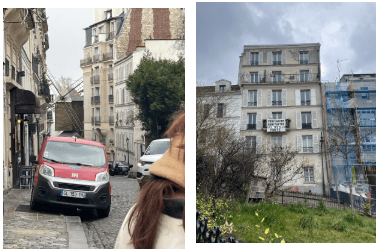
As we walked we were able to see one of the remaining windmills from 1717 and while this one doesn’t have the motor anymore, there is one slightly behind it that is even older and on someone’s private property. It still had a motor and could still be used. I think it would be pretty cool to have a windmill Figures 12 & 13. Windmill and older property.
from the 17th century in my backyard.
Figures 14 & 15. Group pics at some iconic locations around Montmartre.
We also saw how the locals are very supportive of the preservation society and they want to keep their area with such a rich history the way that it should be
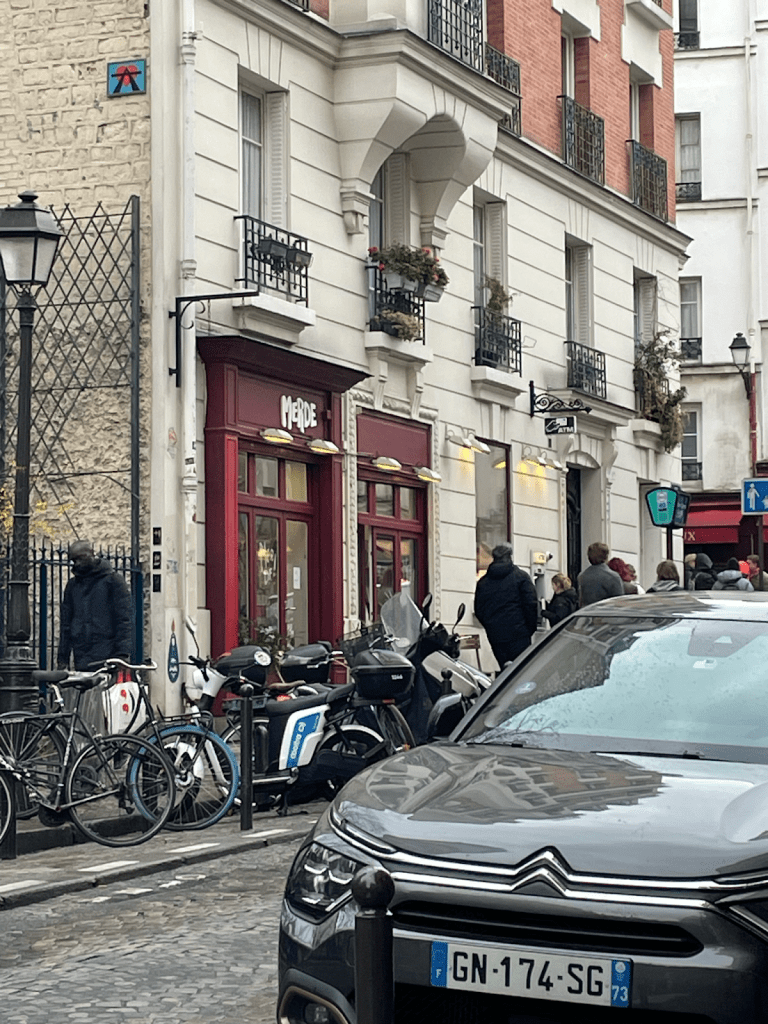
Figure 16. Art gallery.
After seeing where Picasso spent some time, we kept walking up the hill we saw an art gallery with a funny name
Fun Fact: There are 107 of the green water fountains around Montmartre
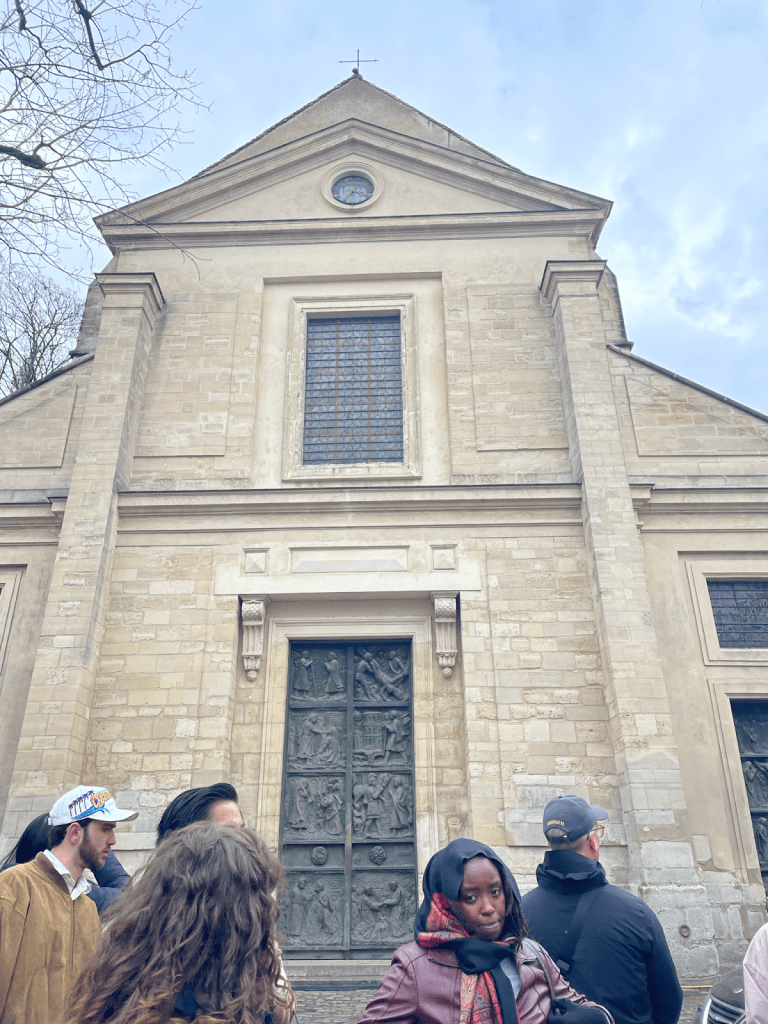
Figure 17. Saint-Pierre Church.
The second church (Saint-Pierre Church) we saw was from 1134. We did get kicked out after being inside for two seconds but we still learned some cool facts. It is most likely very close to where the original Roman temple of Mars was. Also, it was almost destroyed when Crypt Saint Jean De Montemart was created but it was preserved. We overheard a tour guide say that Picasso created the stained glass at the end of the chapel but were pretty sure he was just trying to impress the casuals.
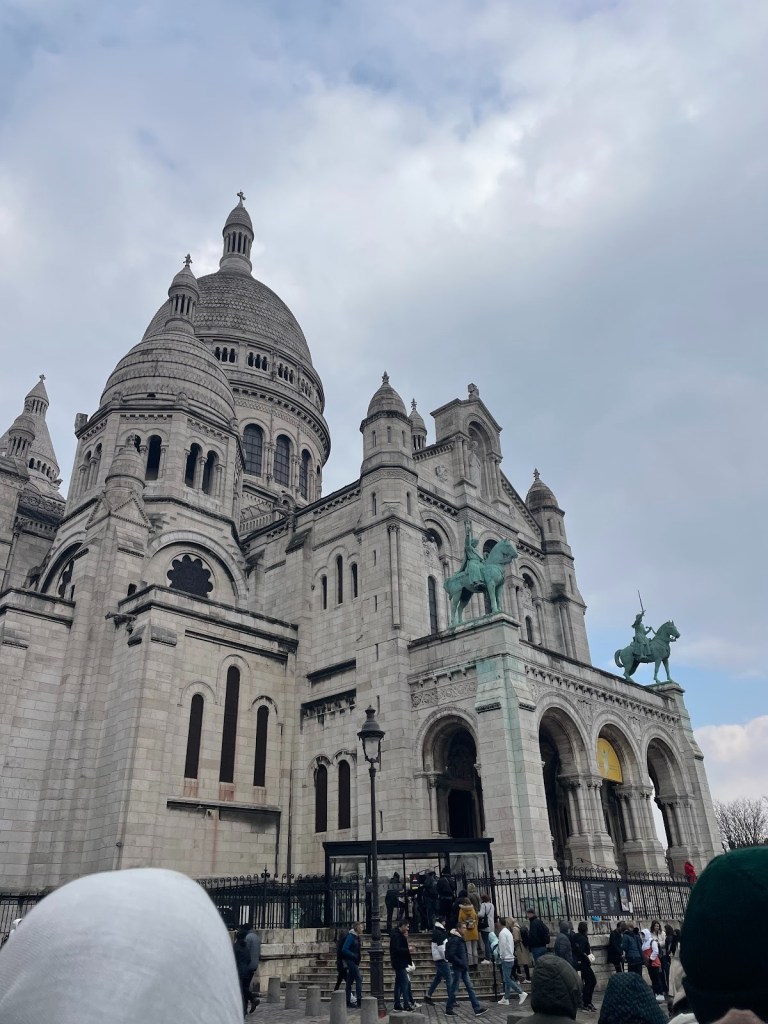
Figure 18. Our final stop!
Here is our final stop which is the second most visited place in Paris even though it was very controversial. It was also only added to the preservation society within the past couple years.
Kayla and Kathleen spent the rest of the day shopping in Montmarte and other places and enjoying good food.
Videos:
VLOG
Friday Reflection:
Notre Dame was absolutely beautiful, and learning about its history gave us a much better understanding of its cultural and religious importance. Walking through the crowded cathedral made it clear how much of a community it continues to create, welcoming people from all over—even if we did get a little lost along the way.
Even though the weather was rainy (with some hail!) when we got to Montmartre, the tour was still a highlight. Seeing the town’s humble roots and hearing about its history made it easy to appreciate how much it has grown into the lively, artistic neighborhood it is today.
 Vanderbilt University - CEE - Travel Course Blog